

In five current low-carb bread examples checked for this guide, standard sandwich loaves provide 5 to 7 grams of protein per slice. A protein-focused loaf reaches 11 grams, but its slice is also much larger. The number on the front of the package is not enough to compare breads fairly: serving size, protein source, fiber, sodium, allergens, and what you put between the slices all matter.
Quick answer
- Most standard examples below: 5–7g protein per slice
- Two-slice sandwich: 10–14g from the bread alone
- Protein-focused example: 11g per 45g slice
- Best comparison: grams of protein per labeled serving and per gram of bread
Protein in Low-Carb Bread: Five Current Labels
The figures below come from official manufacturer pages reviewed on August 21, 2026. Formulas can change, so treat the package in your kitchen as the final source. This is a label comparison, not a taste test or a ranking.
Affiliate disclosure: As an Amazon Associate, we may earn from qualifying purchases at no extra cost to you. Product names link to manufacturer nutrition sources; the separate Amazon links are optional shopping links.
| Bread | Serving | Protein | Amazon |
|---|---|---|---|
| Hero Classic WhiteA standard low-carb white slice | 1 slice | 5g | Check availability |
| Hero SeededOne gram more than the brand’s white loaf | 1 slice | 6g | Check availability |
| Carbonaut OriginalHighest of the standard-size examples | 1 slice | 7g | Check availability |
| Lewis Better Way KetoSame protein as Hero Seeded in this snapshot | 1 slice (28g) | 6g | Check availability |
| Lewis Better Way ProteinA larger, protein-focused slice | 1 slice (45g) | 11g | Not currently available on Amazon |
The table’s apparent winner needs context. Lewis Better Way Protein Bread lists 11 grams per slice, but that slice weighs 45 grams. Lewis Better Way Keto lists 6 grams in a 28-gram slice. A larger serving can deliver more protein without necessarily being more protein-dense.
How to Compare Protein Fairly
Start with the serving size at the top of the Nutrition Facts panel. The FDA’s guide to using the Nutrition Facts label explains that every nutrient number applies to the stated serving. One brand may define a serving as one thin slice, another as one thick slice, and another as two slices.
Use this quick calculation
To compare breads with different slice weights, calculate protein per 30 grams:
Protein per 30g = protein per serving ÷ serving weight in grams × 30
For example, 11 grams of protein in a 45-gram slice works out to about 7.3 grams per 30 grams of bread. Six grams in a 28-gram slice works out to about 6.4 grams per 30 grams. The larger slice still leads, but the gap is narrower than 11 versus 6 suggests.
Count the bread you actually eat
If the label lists one slice and you make a two-slice sandwich, double every value, not just protein. A bread providing 6 grams per slice contributes 12 grams from two slices. Sodium, calories, carbohydrate, fiber, and any sugar alcohols also double.
Why Low-Carb Bread Can Be Higher in Protein
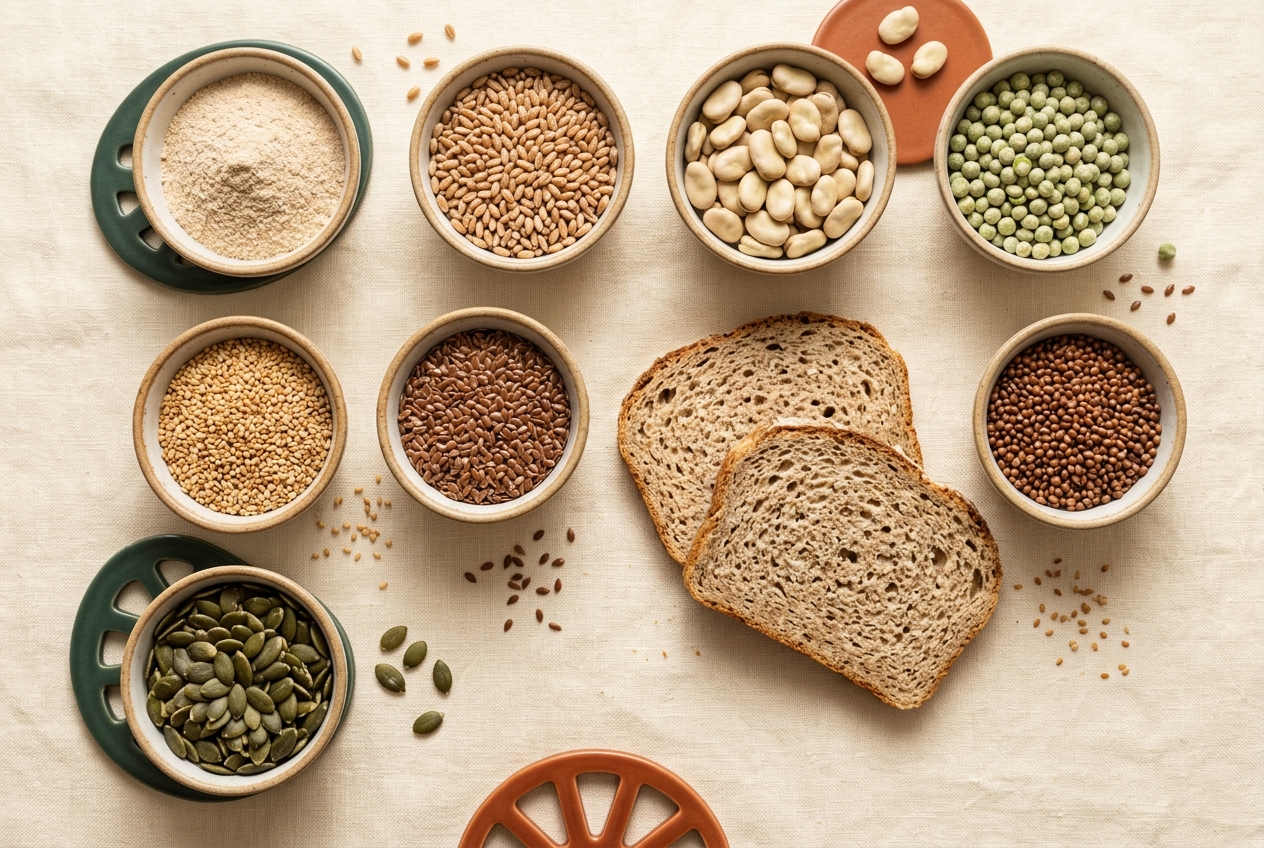
Many low-carb loaves replace part of the conventional flour with ingredients that add structure while changing the carbohydrate profile. Common examples include wheat protein or vital wheat gluten, fava bean protein, pea protein, seeds, and nut flours. The exact formula determines both protein content and texture.
Carbonaut Original, for example, lists wheat protein among its ingredients and reports 7 grams of protein per slice. Lewis Better Way Protein Bread uses wheat protein and fava bean protein to reach 11 grams in its larger slice. Hero says fava bean protein raises the protein in its Classic White Bread, which provides 5 grams per slice.
For a broader explanation of what these ingredients do, see our guide to low-carb bread ingredients. Protein helps form structure, but more is not automatically better. Some shoppers may prefer a softer loaf, a shorter ingredient list, a gluten-free formula, or a lower sodium number.
Does Bread Protein Count Toward Your Daily Total?
Yes. Protein from bread counts toward total dietary protein. The body breaks food proteins into amino acids used to build and maintain tissues. MedlinePlus explains dietary protein sources and notes that animal foods generally provide complete proteins, while many individual plant proteins contain lower amounts of one or more essential amino acids. Eating a varied diet helps cover those differences.
The National Academies’ adult reference value is 0.8 grams of protein per kilogram of body weight, although needs vary with age, pregnancy, health conditions, and activity. That reference is not a personal prescription. The FDA’s Daily Value guidance uses 50 grams for protein on Nutrition Facts labeling, based on a 2,000-calorie diet, to help shoppers compare products.
Two slices that provide 12 grams of protein can make a useful contribution, but bread does not need to carry the whole meal. A sandwich filling or toast topping often supplies more protein and a broader amino-acid mix.
Build a More Protein-Rich Sandwich or Toast
Choose the bread for its full label and then add a filling that suits your eating pattern. Practical options include:
- Eggs with tomato or leafy greens
- Tuna, chicken, turkey, or salmon
- Cottage cheese or plain Greek yogurt used as a spread
- Tofu, tempeh, or a bean-based spread
- Cheese paired with vegetables and mustard
- Peanut or seed butter, with the allergen label checked carefully
Our low-carb sandwich bread guide can help narrow the loaf, while the three-way avocado toast recipe shows how to turn one slice into a quick breakfast. Add eggs, smoked salmon, cottage cheese, or another protein food if you want a more substantial meal.
Protein Is Only One Line on the Label
A high protein number should not hide the rest of the package. Before buying, check:
- Serving size: Is the nutrition panel for one slice or two?
- Total carbohydrate and fiber: Review the actual numbers rather than only the front label. Our net-carb label guide walks through the calculation.
- Sodium: Two slices plus a salty filling can add up quickly.
- Ingredients: Protein isolates, gluten, fibers, sweeteners, and oils differ widely.
- Allergens: Wheat is common; some loaves also contain soy, milk, egg, sesame, or nuts.
- Tolerance: Large amounts of added fiber or sugar alcohols may not agree with everyone.
Is High-Protein Low-Carb Bread Better?
It is better only when the extra protein supports your goals and you also like the bread’s taste, texture, ingredients, and price. A 5-gram slice is not automatically inferior to an 11-gram slice. The smaller number may come from a much lighter serving, and your sandwich filling can change the meal far more than a one- or two-gram difference between loaves.
If protein is your main priority, compare equal weights and look for a formula that clearly lists its protein sources. If your priority is toast texture or a simple lunch, a standard loaf in the 5-to-7-gram range may be enough.
Frequently Asked Questions
How much protein is in two slices of low-carb bread?
In the standard examples above, two slices provide about 10 to 14 grams. Check whether your brand’s label already defines a serving as two slices before multiplying.
Does gluten-free low-carb bread have less protein?
Not always, but removing wheat protein changes the formulation. Gluten-free loaves may use egg, seeds, nuts, legumes, or added plant proteins. Compare the labels rather than assuming the gluten-free option is higher or lower.
Can low-carb bread replace a protein food?
It contributes protein, but most people will get a more balanced meal by pairing bread with another protein source. Bread also brings fiber, sodium, and other ingredients that deserve consideration.
Why is protein percentage sometimes missing?
The grams of protein must appear on the Nutrition Facts label, but the FDA does not always require a protein % Daily Value for foods intended for adults and children age four or older unless a protein claim is made. Use the gram amount for a direct comparison.
A Practical Way to Choose
For a quick store decision, compare protein per slice first, then check slice weight. The five current examples in this guide run from 5 to 11 grams per slice, with standard loaves clustered at 5 to 7 grams. Choose the bread whose full label, allergens, texture, and serving size fit your needs; then use the filling to build the rest of the meal.
Save This Post on Pinterest
Keep the label-checking guide for your next bread comparison.
Label note: Manufacturer information was checked August 21, 2026. Recipes and nutrition panels can change. Verify the package you are buying, especially if you manage an allergy or follow a medically prescribed diet.
Plan Your Week with Our Free Meal Planner
Choose seven days of meals, adjust portions, and download your shopping list. No email signup needed.
Open the Free Planner →
