

A low-carb panini works best when you use sturdy sandwich bread, a thin layer of fat on the outside, and fillings that are flavorful without being wet. This method gives you a crisp, pressed sandwich in about 10 minutes and includes three filling combinations for quick lunches.
At a glance: Prep 5 minutes · Cook 4–6 minutes · Makes 1 sandwich · Equipment: panini press, grill pan, or skillet
What makes low-carb bread work in a panini?
Choose slices that are broad enough to hold the filling and firm enough to lift without tearing. Very soft or airy loaves can compress too much under the press. If you are deciding among store-bought options, this guide to low-carb sandwich bread explains the texture differences that matter.
Toasting is only half the job. Moisture control matters just as much. Pat watery vegetables dry, drain pickled ingredients, and spread sauces thinly. Put cheese next to the bread when possible; as it melts, it helps hold the sandwich together.
Affiliate disclosure: As an Amazon Associate, LessCarby earns from qualifying purchases at no extra cost to you.
Hero Classic White
A sandwich-style low-carb loaf that can be used for any of the three panini combinations. Check the current package label for ingredients, allergens, serving size, and carbohydrate information.
Carbonaut White
A mild white-bread option for turkey, ham, or vegetable panini. Check the current package label because formulations, allergens, and nutrition information can change.
These shopping links are optional. Any sturdy low-carb bread that fits your dietary needs and stays intact when pressed can work.
Basic low-carb panini recipe
Ingredients
- 2 slices sturdy low-carb sandwich bread
- 1 teaspoon softened butter or olive oil, divided
- 1 to 2 ounces sliced cheese
- 2 to 3 ounces cooked protein or vegetables
- 1 teaspoon mustard, pesto, or mayonnaise, optional
Allergen note: Check the bread and fillings for wheat, milk, egg, soy, sesame, and tree nuts. Many low-carb breads contain wheat gluten or added fibers, even when the front label emphasizes “keto.”
Instructions
- Preheat the press. Heat a panini press to medium. If your appliance has no temperature control, let it warm fully before adding the sandwich.
- Dry the fillings. Blot tomato, roasted peppers, pickles, or cooked vegetables with a paper towel. This small step prevents a soggy center.
- Build the sandwich. Spread sauce lightly on the inside of each bread slice. Add one layer of cheese, the remaining fillings, then the second layer of cheese or top slice.
- Coat the outside. Brush or spread a very thin layer of butter or olive oil over the outer faces of the bread.
- Press gently. Put the sandwich in the press and close the lid without forcing it down. Cook for 4 to 6 minutes, until the bread is crisp and the cheese is melted.
- Rest and cut. Wait 1 minute before slicing. The cheese firms slightly, so the filling is less likely to slide out.
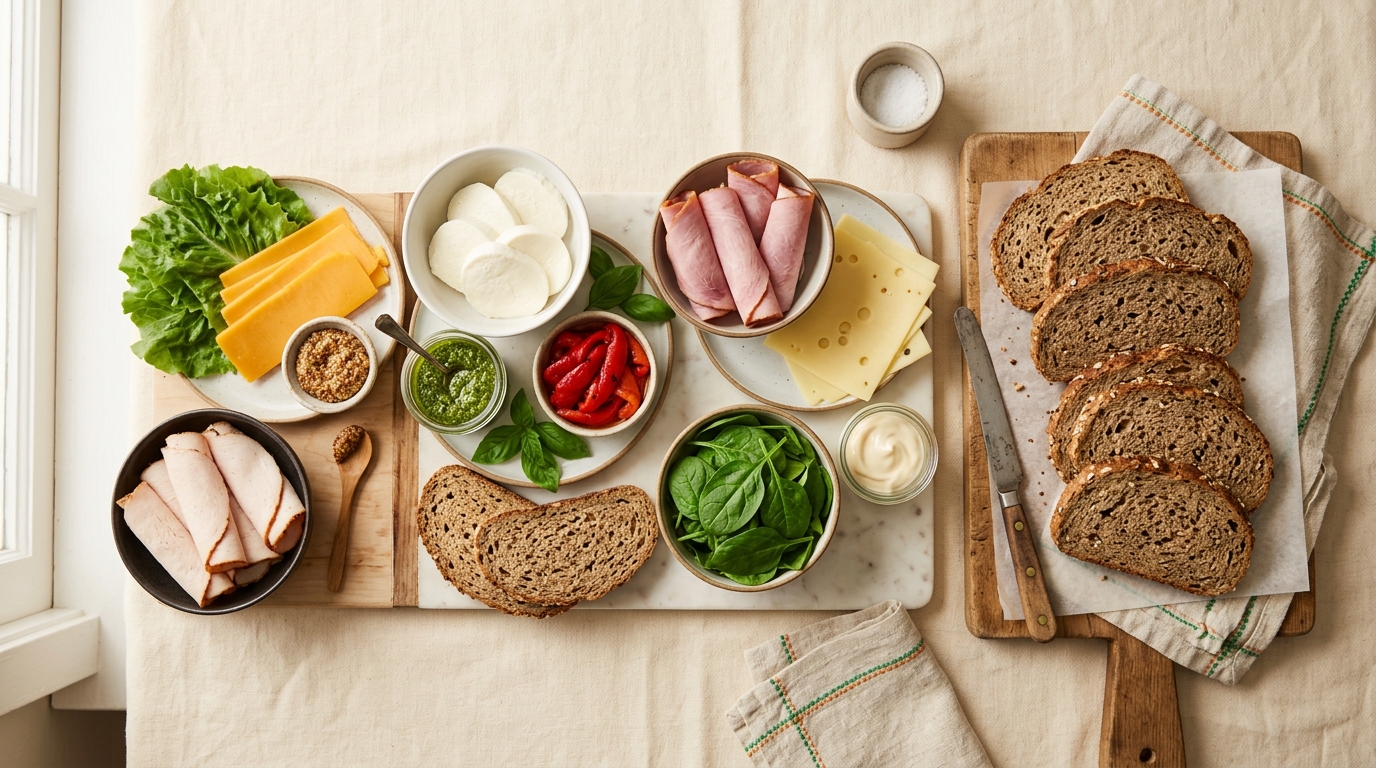
Three easy panini combinations
Turkey, cheddar, and mustard
Use 2 to 3 ounces sliced cooked turkey, 1 ounce sharp cheddar, 1 teaspoon Dijon mustard, and a few well-dried pickle slices. The sharp cheese and mustard add flavor without a heavy sauce.
Mozzarella, pesto, and roasted pepper
Layer 1½ ounces mozzarella, 1 teaspoon pesto, and ¼ cup drained roasted red pepper. Pat the pepper dry before assembling. Fresh basil can be added after pressing for a brighter flavor.
Ham, Swiss, and spinach
Combine 2 ounces cooked ham, 1 ounce Swiss cheese, and a small handful of dry baby spinach. Add 1 teaspoon mustard if you like. Keep the spinach layer thin so the center heats evenly.
How to make a panini without a press
A skillet and a second heavy pan make a good substitute. Heat a skillet over medium-low heat, add the sandwich, then set another clean skillet on top as a weight. Cook for 2 to 3 minutes per side. Turn the sandwich carefully and reduce the heat if the bread browns before the cheese melts.
A grill pan adds ridges but is not essential. Even contact and moderate heat are more important than grill marks.
How to keep low-carb bread from burning
Low-carb loaves vary widely. Some contain added proteins, fibers, or sweeteners that brown faster than conventional bread. Start at medium heat, check after about 3 minutes, and lower the temperature if the surface is darkening too quickly.
Use only a light coating of butter or oil. Too much can make the bread greasy and may encourage uneven browning. The same controlled-heat approach is useful for a crisp low-carb grilled cheese.
Meal-prep tips
- Prep fillings, not assembled sandwiches. Slice cheese and portion proteins ahead, but keep bread separate until cooking.
- Cool cooked vegetables. Warm vegetables release steam inside a sandwich stored for later.
- Pack wet ingredients separately. Add tomato, pickles, or sauce immediately before pressing.
- Reheat with dry heat. A skillet, toaster oven, or air fryer restores crispness better than a microwave.
Estimated nutrition and net carbs
The bread determines most of the carbohydrate count. Check the serving size on your package because some labels list one slice while others list two. To estimate net carbs, subtract fiber and eligible sugar alcohols only when the label and your eating plan support that calculation. The LessCarby net carb calculator can help with the math.
For one turkey-cheddar panini made with two slices of bread labeled at 1 gram net carb each, turkey, cheddar, mustard, and 1 teaspoon butter, a rough estimate is 350–430 calories, 24–30 grams protein, and about 3–5 grams net carbs. This is a calculated estimate, not laboratory data. Brands, slice sizes, and portions can change the result substantially.
Blood sugar note: “Low-carb” does not guarantee the same response for everyone. If you monitor glucose, compare your usual portion and fillings rather than assuming the front-of-package claim predicts your personal response.
Frequently asked questions
What is the best low-carb bread for a panini?
A firm, evenly sliced sandwich loaf is the easiest choice. Avoid bread that tears when lifted or collapses with light pressure. Toast one slice first if you are unsure how quickly a new loaf browns.
Can I use mayonnaise on the outside?
Yes. A very thin layer can brown well, but its flavor is more noticeable than butter or olive oil. Use whichever option fits the filling and your preference.
Why is my panini soggy?
The usual causes are wet vegetables, too much sauce, or a press that was not fully preheated. Dry the fillings, use sauce sparingly, and wait for the cooking surface to heat before pressing.
Can I freeze an assembled panini?
You can, but the texture is better when bread and fillings are stored separately. If freezing an assembled sandwich, leave out tomato, leafy greens, and watery sauces; add them after reheating.
Your quickest weekday version
Start with turkey, cheddar, and mustard because the ingredients are easy to portion and relatively dry. Preheat the press while you assemble the sandwich, cook until crisp, and give it a one-minute rest. That is the simplest route to a low-carb lunch that feels like a hot café sandwich rather than a compromise.
Save these panini ideas
Keep either version handy for your next quick lunch.
Plan Your Week with Our Free Meal Planner
Choose seven days of meals, adjust portions, and download your shopping list. No email signup needed.
Open the Free Planner →
