

The best low-carb grilled cheese cooks over medium-low heat with finely grated cheese and a covered skillet. That slower method gives the filling time to melt before high-fiber bread becomes too dark or dry. Two slices of low-carb sandwich bread, 2 ounces of a good melting cheese, and 1 tablespoon of softened butter make one crisp, satisfying sandwich.
This recipe fulfills the LessCarby recipe request for “Grilled Cheese, Perfected.” It uses store-bought low-carb bread, so there is no separate loaf to bake and no unusual sandwich batter to prepare.
The short version
Use room-temperature bread, grate the cheese, butter the outside edge to edge, and cook gently. Cover the pan for the final minute if the center needs help melting.
Why low-carb grilled cheese needs gentler heat
Many low-carb breads rely on added fiber, wheat protein, resistant starch, seeds, or nut flours. That can make them toast differently from conventional white bread. Some brown quickly at the edges, while others dry out before the cheese softens.
Medium-low heat gives you more control. The bread can crisp gradually while the grated cheese settles into an even layer. If you are still choosing a loaf, our guide to the best store-bought low-carb sandwich breads compares options for everyday sandwiches.
Choose bread that can handle the skillet
Look for slices that are intact, evenly cut, and not unusually damp. Very thin or fragile bread can tear when flipped. Frozen bread should be thawed first so the surface browns at the same pace as the center warms.
A neutral sandwich loaf lets the cheese lead. Seeded bread adds more texture and works especially well with sharp cheddar, Swiss, or Gruyère. Check the serving size and carbohydrate information on your own package because formulas vary by brand and can change.
Need help comparing labels? Use the LessCarby Net Carb Calculator, or review our guide to reading a nutrition label for net carbs.
Which cheese melts best?
Freshly grated cheese usually melts more evenly than thick, cold slices. A medium or young cheddar offers more reliable melting than a very aged, dry cheddar. Combining two cheeses can give you both flavor and a smoother center.
| Cheese | What it brings | Good pairing |
|---|---|---|
| Medium cheddar | Classic flavor and dependable melt | Neutral white or wheat-style bread |
| American | Very smooth, cohesive center | One slice layered with cheddar |
| Gruyère or Swiss | Nutty flavor and a fluid melt | Seeded low-carb bread |
| Provolone or low-moisture mozzarella | Mild flavor and stretchy texture | Tomato, pesto, or Italian-style fillings |
| Pepper Jack | Creamy melt with gentle heat | Avocado or pickled jalapeño |
Low-carb grilled cheese recipe
Skillet Low-Carb Grilled Cheese
Ingredients
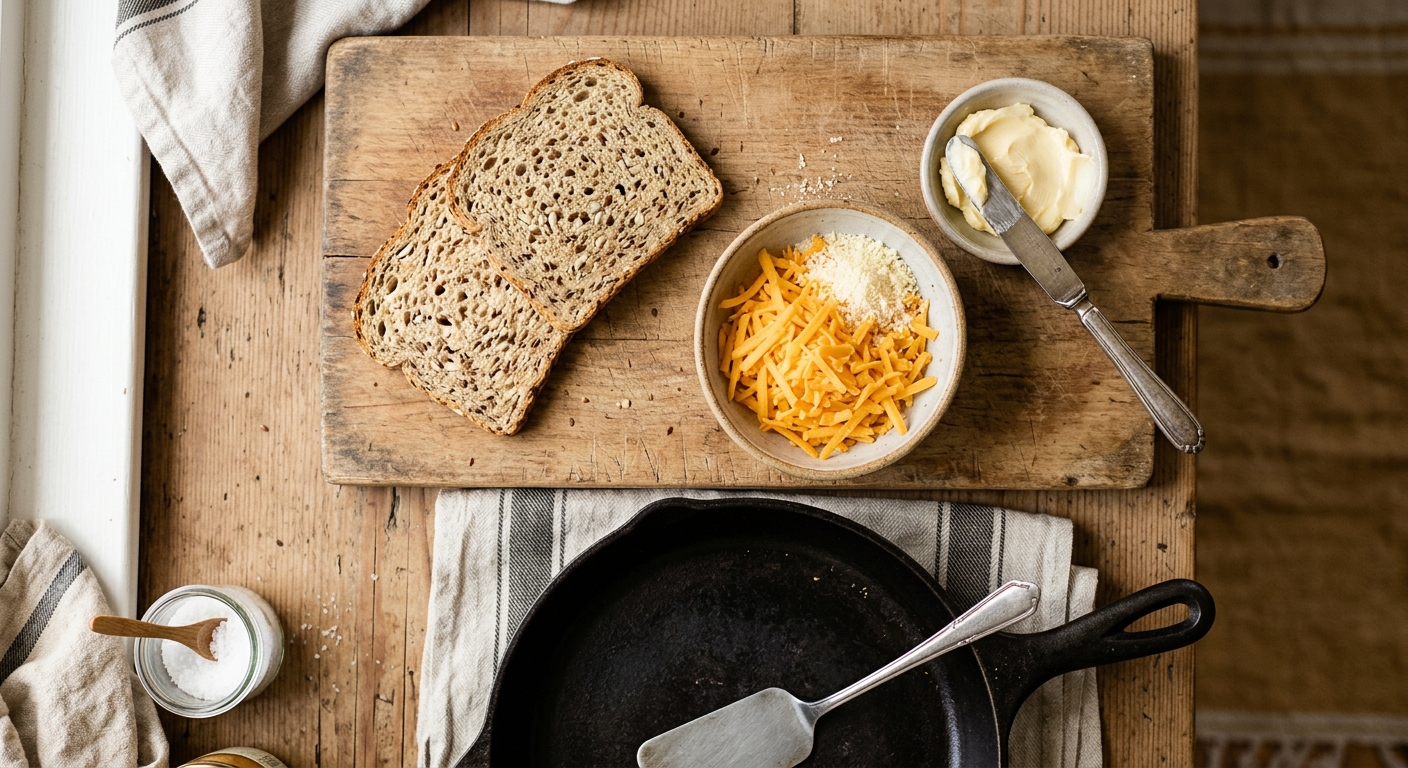
- 2 slices low-carb sandwich bread, thawed if frozen
- 2 ounces medium cheddar or another good melting cheese, freshly grated
- 1 tablespoon softened butter, divided
- Optional: 1 teaspoon Dijon mustard or a small pinch of garlic powder
Instructions
- Warm the pan. Place a heavy skillet over medium-low heat for about 2 minutes.
- Build the sandwich. Spread butter evenly over one side of each bread slice. Place one slice butter-side down, add the grated cheese in an even layer, and add Dijon or garlic powder if using. Top with the second slice, butter-side up.
- Brown the first side. Transfer the sandwich to the skillet. Cook for 3 to 4 minutes, checking after 2 minutes, until the bottom is evenly golden. Press very lightly with a spatula only to keep the bread in contact with the pan.
- Flip and melt. Turn the sandwich carefully. Cook for another 3 to 4 minutes. If the bread is browned but the center is not fully melted, lower the heat and cover the skillet for 1 to 2 minutes.
- Rest briefly. Move the sandwich to a cutting board and wait 1 minute before slicing. The short rest helps the cheese stay inside instead of running onto the board.
Five details that make the biggest difference
Spread the butter all the way to the edges
Bare patches toast differently and can leave a pale center with dark corners. A thin, complete layer works better than a thick knob of butter in the pan.
Grate the cheese instead of stacking thick slices
Small pieces warm more evenly and leave fewer cold pockets. Keep the filling level rather than piling it in the center.
Do not start with high heat
A dark exterior does not mean the center is ready. If your bread browns rapidly, lower the burner before the first flip.
Cover only when needed
A lid traps heat and helps the cheese soften, but leaving it on for the entire cook can make the bread less crisp. Use it near the end.
Let wet additions drain
Tomato, pickles, and cooked vegetables can release moisture. Blot them before adding, and keep the layer thin so the sandwich remains crisp.
Easy variations
- Tomato and cheddar: Add two thin, well-blotted tomato slices and a little black pepper.
- Jalapeño Jack: Use Pepper Jack with a few drained pickled jalapeño rings.
- Turkey melt: Add 1 to 2 ounces of thinly sliced cooked turkey and use provolone. The extra filling may need another covered minute over low heat.
- Garlic Parmesan crust: Mix a small pinch of garlic powder into the softened butter and dust the exterior lightly with finely grated Parmesan.
Keep additions modest. A heavily filled sandwich takes longer to warm, and delicate low-carb bread may struggle to hold it. For more loaf ideas, see our low-carb bread brand rankings.
What to serve with it
A simple green salad, cucumber slices, pickles, or a cup of tomato soup can turn the sandwich into a fuller meal. Check packaged soup labels carefully; sweeteners and starches can add more carbohydrate than expected.
Grilled cheese is best eaten right away. If you do save it, cool and refrigerate it promptly, then reheat in a dry skillet or toaster oven rather than a microwave. The USDA advises using refrigerated cooked leftovers within 3 to 4 days; see its leftovers and food-safety guidance.
Frequently asked questions
Can I make low-carb grilled cheese in an air fryer?
Yes. Secure the top slice so circulating air does not lift it, and follow the appliance manufacturer’s temperature guidance. Check early because low-carb breads vary widely in thickness and browning speed.
Can I use mayonnaise instead of butter?
Yes. Spread a thin layer on the outside of each slice. Mayonnaise browns evenly, but it gives the crust a slightly different flavor from butter.
Why is my bread browned before the cheese melts?
The pan is probably too hot, the cheese is too thick or cold, or both. Lower the heat, use grated cheese, and cover the skillet briefly near the end.
Is this recipe gluten-free?
Only if every ingredient is labeled gluten-free. Many low-carb breads contain wheat protein or modified wheat starch. Cheese contains milk, and some breads may also contain eggs, soy, sesame, or tree nuts. The FDA’s food-allergen guidance explains the nine major allergens that packaged foods must identify.
The takeaway
For a crisp low-carb grilled cheese with a fully melted center, keep the heat moderate and the filling even. Start with intact bread, grate 2 ounces of cheese, and use the lid only if the center needs extra help. Once you know how your loaf behaves in the skillet, the method is easy to repeat.
Save This Post on Pinterest
Recipe note: This recipe was developed for home cooks but has not been laboratory tested. Nutrition varies substantially by the bread, cheese, and optional fillings used, so calculate it from your exact product labels.
Plan Your Week with Our Free Meal Planner
Choose seven days of meals, adjust portions, and download your shopping list. No email signup needed.
Open the Free Planner →
