

The Quick Answer
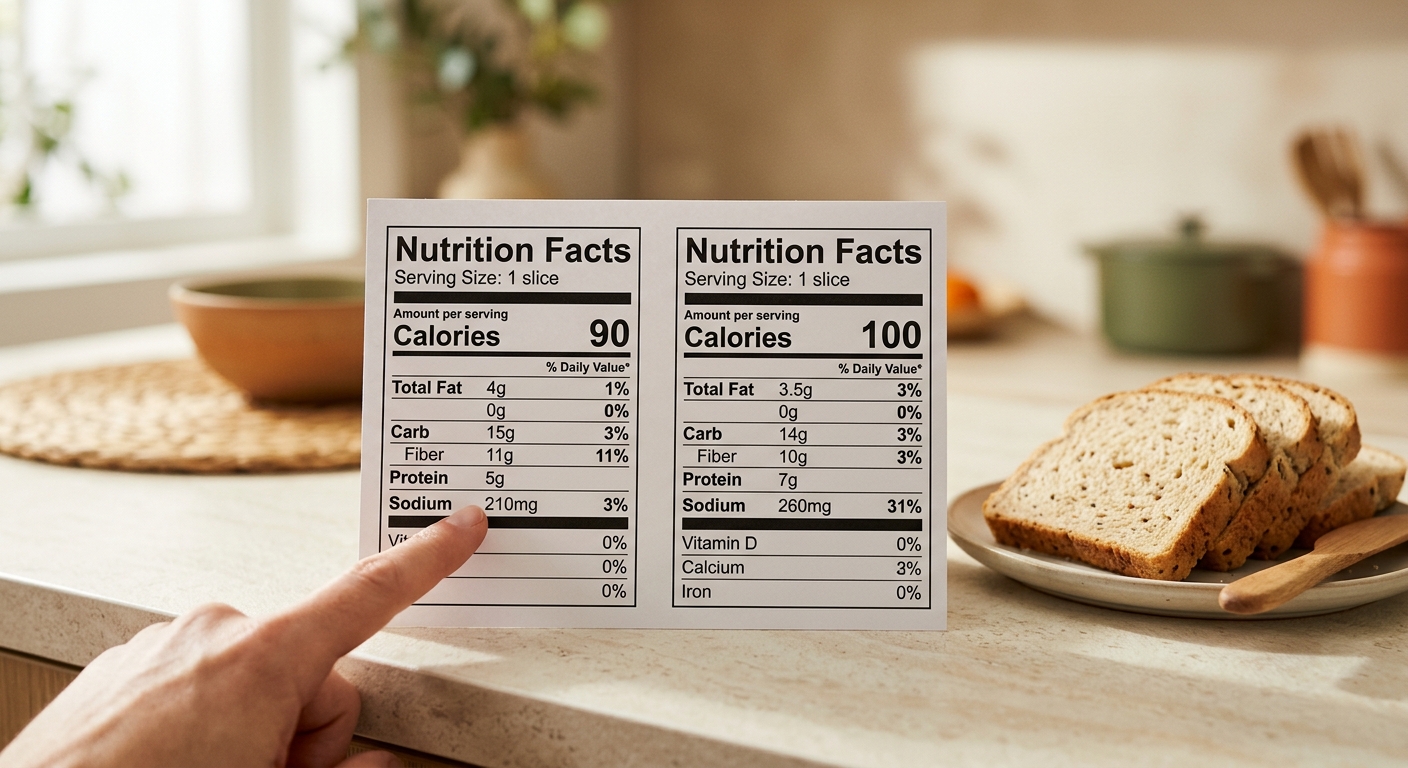
Low-carb bread is not automatically low in sodium. The carb number and the sodium number answer different questions, so check both on the Nutrition Facts label. For a quick comparison, look at sodium per slice, multiply it by the number of slices you will actually eat, and add the sodium from fillings, cheese, spreads, soup, or other foods in the meal.
The U.S. Food and Drug Administration sets the Daily Value for sodium at less than 2,300 milligrams per day. On a label, 5% Daily Value or less per serving is considered low, while 20% or more is considered high. Those percentages are useful screening tools, but your personal target may be different if a clinician has recommended a lower-sodium eating plan.
Why Bread Can Matter More Than It Seems
A single slice may not look like a major sodium source. The total changes when bread becomes a two-slice sandwich, toast appears at breakfast and lunch, or the loaf is paired with salty ingredients. Sodium is also easy to overlook because shoppers choosing low-carb bread naturally focus on total carbohydrate, fiber, sugar alcohols, and net carbs first.
That does not mean a loaf is “bad” because it contains sodium. Salt helps with flavor and also plays technical roles in breadmaking, including dough strength and fermentation control. The practical goal is not to judge a bread by one nutrient. It is to understand how the serving fits into the rest of the day.
A Simple Three-Step Label Check
1. Confirm the serving size
Start at the top of the Nutrition Facts panel. Some breads list one slice as a serving, while others may use a different serving amount. All the numbers below it—including sodium—apply to that stated serving. If you eat twice the serving, double the sodium as well as the carbohydrates, calories, fiber, and protein.
2. Read milligrams and % Daily Value
The sodium line gives an exact amount in milligrams and a percentage of the Daily Value. Milligrams make side-by-side comparisons precise. The percentage gives faster context:
- 5% DV or less: considered low per serving.
- 20% DV or more: considered high per serving.
- Between those points: evaluate it in the context of the meal and your day.
Do not compare only the percentages if the serving sizes differ. First put both breads on the same basis—usually one slice or the amount you normally eat.
3. Calculate the meal, not just the bread
For a two-slice sandwich, multiply the bread’s per-slice sodium by two. Then consider the fillings. Deli meats, cheese, bacon, pickles, canned soup, prepared sauces, and seasoning blends can each contribute sodium. A bread that fits comfortably by itself may be part of a high-sodium meal once everything is assembled.
Low Carb and Low Sodium Are Separate Claims
“Low carb,” “keto,” and “zero net carbs” do not tell you how much sodium a bread contains. Net carbs are generally calculated from total carbohydrate by subtracting certain types of fiber and, depending on the brand’s method, some sugar alcohols. Sodium is reported separately and is not part of that calculation.
This is why a front-of-package carb claim should never replace the Nutrition Facts panel. Our guide to reading a nutrition label for net carbs explains the carbohydrate side. Use that process together with the sodium check rather than treating either number as the whole story.
How to Compare Two Low-Carb Breads Fairly
Use the same portion for both products. If Brand A lists sodium for one slice and Brand B lists it for two slices, convert both to one slice before comparing. Then check whether the slices are roughly similar in weight. A heavier or unusually small slice can make a per-slice comparison misleading.
Next, compare the complete label rather than selecting the lowest sodium number automatically. Depending on your priorities, you may also care about:
- Total carbohydrate and the brand’s net-carb calculation
- Fiber amount and fiber sources
- Protein per slice
- Added sugars and sugar alcohols
- Serving weight
- Ingredients and allergen statements
For a broader comparison framework, see our ranking of low-carb bread brands. Product formulas can change, so always let the package in your hand outrank an older online listing or article.
Ways to Keep a Bread-Based Meal Lower in Sodium
If the bread you prefer is not especially low in sodium, you may still be able to build a meal that fits your needs. The most useful changes often happen around the bread:
- Use freshly cooked chicken, turkey, eggs, tuna without added salt, or another less-processed protein instead of a heavily seasoned deli meat.
- Add tomato, lettuce, cucumber, avocado, herbs, or roasted vegetables for flavor and texture.
- Compare cheese and condiment labels; sodium can vary considerably between choices and portions.
- Measure spreads and sauces instead of assuming a thin layer contributes very little.
- Pair the sandwich with fresh produce rather than a salty packaged side.
- If one meal is sodium-heavy, make the other meals that day simpler and less processed when appropriate.
These are general shopping and meal-building ideas, not a personalized medical plan. Anyone managing hypertension, kidney disease, heart failure, fluid restrictions, or another condition affected by sodium should follow the target provided by their healthcare professional.
What About “Reduced Sodium” or “Low Sodium” on the Package?
Nutrient-content claims have specific meanings under FDA labeling rules. A “reduced sodium” product is being compared with a reference food; it does not necessarily mean the final food is low in sodium. A product can contain less sodium than its regular counterpart and still contribute a meaningful amount per serving.
The best habit is to treat the front claim as an invitation to turn the package around. Check the milligrams, serving size, and % Daily Value on the Nutrition Facts panel. That information lets you compare the actual products you are considering.
Sodium and Blood Pressure
Sodium is an essential nutrient, but excess intake can raise blood pressure in many people. The American Heart Association recommends no more than 2,300 milligrams per day and describes 1,500 milligrams per day as an optimal goal for most adults, especially for people with high blood pressure. Individual needs can vary, including for people who lose substantial sodium through prolonged heavy activity or who have medical circumstances requiring different guidance.
Low-carb bread can be part of a balanced eating pattern, but its carb claim does not provide cardiovascular information. If blood pressure is one of your concerns, sodium belongs on the same shopping checklist as carbohydrate, fiber, and ingredients.
A Practical Shopping Checklist
- Is the serving one slice, two slices, or a weight in grams?
- How many slices will you actually eat?
- What are the sodium milligrams and % Daily Value per serving?
- Are you comparing equal portions between brands?
- What will the fillings, toppings, and side dishes add?
- Does the package match the manufacturer’s current online information?
- Has your healthcare professional given you a personal sodium target?
Frequently Asked Questions
Is low-carb bread usually high in sodium?
There is no single answer for the category. Sodium varies by recipe, brand, slice size, and serving size. Compare current labels rather than assuming all low-carb breads are similar.
How much sodium is low on a Nutrition Facts label?
The FDA’s general guide considers 5% Daily Value or less per serving low and 20% or more high. Your personal daily target may differ.
Should I choose total carbs or sodium when comparing bread?
They measure different things. Choose based on your complete nutrition priorities and the meal you are building. Someone monitoring blood glucose may focus closely on carbohydrate and ingredients, while someone managing blood pressure may also need to prioritize sodium.
Does toasting bread reduce sodium?
No meaningful amount of sodium is removed by ordinary toasting. Toasting changes moisture and texture, not the label’s sodium contribution for the slice.
Can I trust nutrition information listed online?
Use online information as a starting point, but check the physical package before buying or eating. Formulas and serving sizes change, and retailer pages may lag behind current labels.
Bottom Line
Low-carb bread is not automatically low in sodium, and sodium is easy to underestimate when you count only one slice. Read the serving size, milligrams, and % Daily Value; calculate the portion you will eat; and include the rest of the meal. The best loaf is not simply the one with the smallest carb number—it is the one whose complete label fits your priorities.
Sources
- U.S. Food and Drug Administration: Sodium in Your Diet
- American Heart Association: How Much Sodium Should I Eat Per Day?
- Centers for Disease Control and Prevention: About Sodium and Health
Save This Post on Pinterest
Choose the graphic that is most useful to you and save it for your next low-carb bread shopping trip.
Plan Your Week with Our Free Meal Planner
Choose seven days of meals, adjust portions, and download your shopping list. No email signup needed.
Open the Free Planner →
