
Protein isolates in low-carb bread do two main jobs: they raise the protein number and help replace some of the structure lost when a recipe uses less conventional flour. Wheat, soy, pea, and milk-based proteins can make a loaf stronger and easier to slice, but too much can also make bread firm, dry, rubbery, or noticeably “protein-like” in flavor.
The practical takeaway: a protein isolate is not automatically good or bad. Check which source it comes from, where it appears in the ingredient list, the protein per serving, and the allergen statement. Then judge the bread by how it fits your needs for texture, carbs, protein, and digestion.
What is a protein isolate?
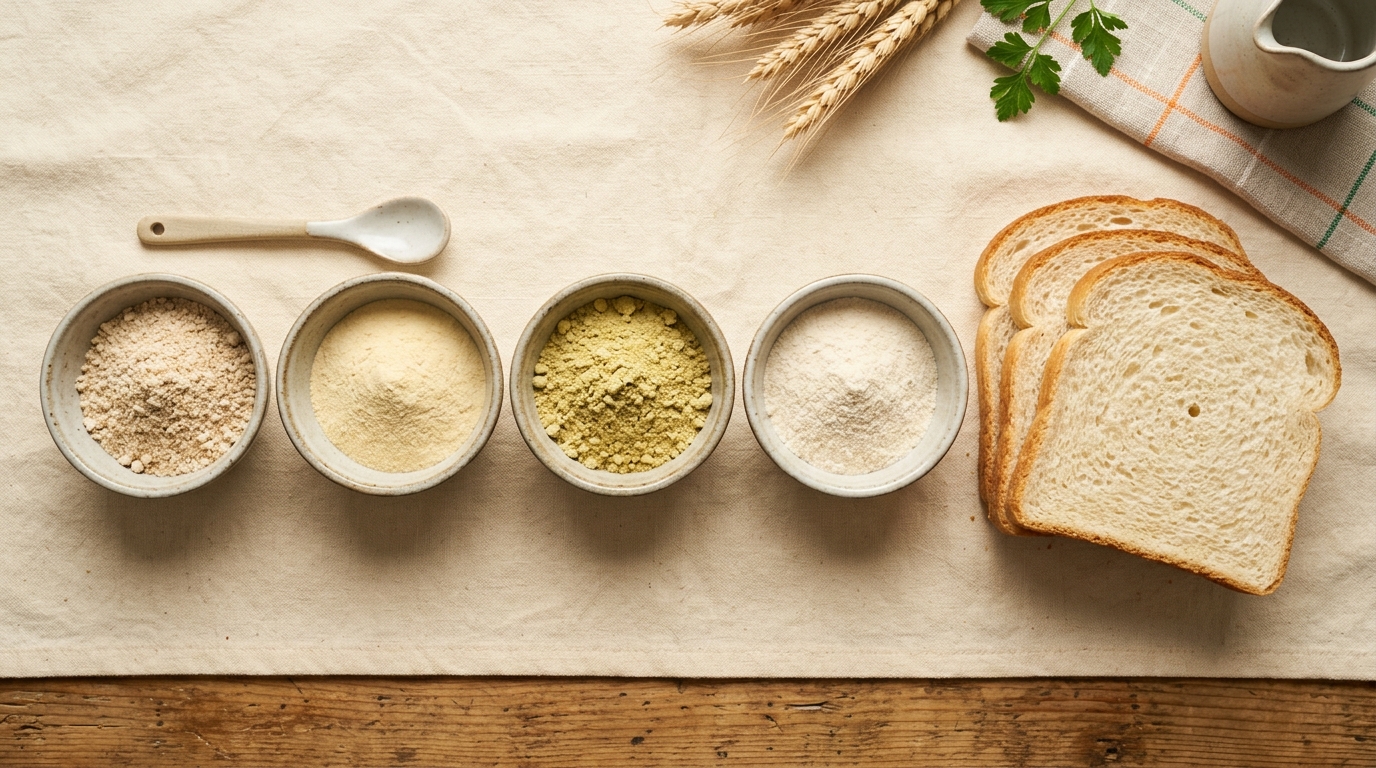
A protein isolate is an ingredient made by separating much of the protein from the carbohydrate, fat, and other parts of a food. The result is more concentrated than the original grain, bean, pea, or milk. In bread, an isolate can add protein without adding the same amount of starch that whole flour would contribute.
“Isolate” describes a processing step, not a health verdict. Wheat protein isolate, soy protein isolate, pea protein isolate, and whey protein isolate come from different sources and behave differently in dough. They also carry different allergen and dietary considerations.
Why low-carb bread uses protein isolates
Traditional wheat bread depends on flour starch and gluten to build a dough that can stretch, trap gas, rise, and set into a tender crumb. Low-carb formulas often replace part of that flour with fiber, modified starch, seed meals, or other ingredients. Those substitutions change how the dough behaves.
Protein isolates help manufacturers rebuild some of that structure. They may improve dough strength, add body, help bind water, and support a slice that survives packaging and sandwich fillings. The University of Minnesota Extension notes that gluten proteins give wheat dough its cohesive, elastic, and gas-retaining properties. That is why wheat gluten and wheat protein ingredients appear so often in low-carb sandwich bread.
They can raise the protein number
Protein isolates are concentrated, so even a modest amount can raise the grams of protein shown on the Nutrition Facts panel. That can be useful for a shopper comparing two breads with similar calories and carbohydrates. Still, the word “protein” on the front of a bag does not tell you the serving size or the source. Compare grams per slice and per meal.
They can support a bread-like texture
Low-carb dough can be fragile when flour is reduced and fiber is high. Wheat protein can reinforce elasticity. Soy and pea proteins can add structure and water-binding, although their effect depends on the complete formula. Research on protein-enriched breads shows that different proteins can change dough behavior, loaf volume, firmness, flavor, and consumer acceptance. More protein does not always mean a softer or better loaf.
They can help reduce reliance on flour
Using a concentrated protein ingredient lets a formula include less conventional flour while maintaining a sliceable loaf. That does not mean the isolate itself “cancels” carbohydrates. The final carbohydrate and fiber amounts come from the whole recipe and must be checked on the Nutrition Facts panel.
Common protein isolates in low-carb bread
| Ingredient | What it may add | What to check |
|---|---|---|
| Wheat protein isolate | Strength, chew, gas retention, added protein | Contains wheat; not gluten-free |
| Soy protein isolate | Protein, structure, water binding | Soy is a major U.S. allergen |
| Pea protein isolate | Plant protein and body | Not one of the nine major U.S. allergens, but individual pea allergy can occur |
| Whey or milk protein isolate | Protein, browning, structure | Contains milk; not vegan |
Wheat protein isolate: the most bread-like option
Wheat protein isolate is closely related to the proteins that make wheat dough elastic. It is often used with vital wheat gluten, modified wheat starch, or added fibers. In a low-carb loaf, that combination can create a familiar sandwich shape and a crumb that holds together better than a fiber-only formula.
The tradeoff is chew. A formula with a lot of concentrated wheat protein may feel springy or rubbery, especially before toasting. It also remains a wheat ingredient. A “keto-friendly” claim does not make the bread gluten-free, and it is not suitable for celiac disease or wheat allergy.
Soy protein isolate: useful structure with a major-allergen flag
Soy protein isolate can add protein and help a dough hold water. Studies comparing soy and whey additions show that each changes dough and bread quality differently; the result depends on the level used and the surrounding formula.
For shoppers, the most important label point is simple: soy is one of the major allergens that must be identified on U.S. packaged-food labels when used as an ingredient. Read both the full ingredient list and the “Contains” statement. The FDA recommends checking the entire ingredient list because not every product uses a separate Contains box.
Pea protein isolate: plant-based, but not invisible
Pea protein isolate offers a plant-based way to increase protein and add body. FDA GRAS notices describe its use in conventional foods, including bakery products. Pea is not currently one of the nine major allergens that receives the same special U.S. labeling treatment as wheat, soy, or milk, but pea allergy is still possible.
Pea protein can affect flavor and texture. Research on pea-protein breads has found changes in firmness and sensory quality as the amount increases. In plain language, a little may help the formula, while a high amount may make the loaf denser, drier, or more noticeably earthy. Toasting and flavorful fillings can make those differences less obvious.
Does protein isolate make bread healthier?
Not by itself. A higher protein number may be useful, but bread quality still depends on the full label and how you eat it. Look at serving size, total carbohydrate, fiber, sodium, calories, ingredients, and allergens. A bread can be high in protein and still be too high in sodium for your preference, unusually high in added fiber for your digestion, or simply unpleasant to eat.
Protein also does not guarantee a smaller blood-glucose response for every person. The carbohydrate source, portion, meal combination, and individual response all matter. If glucose response is important to you, our guide to what continuous glucose monitors show about low-carb bread explains why the same loaf can affect people differently.
How to read protein isolates on a bread label
- Start with the serving size. Compare one slice with one slice, not a thin slice with a larger serving.
- Find the protein source. Look for wheat protein isolate, soy protein isolate, pea protein isolate, whey protein isolate, milk protein isolate, or vital wheat gluten.
- Check its position. Ingredients appear in descending order by weight. An isolate near the beginning plays a larger role than one near the end.
- Read the allergen statement. Wheat, soy, and milk are major U.S. allergens. Also scan the full ingredient list.
- Compare the whole Nutrition Facts panel. Protein is only one number. Check total carbohydrate, dietary fiber, sodium, calories, and the portion you actually eat.
- Think about texture and use. A firm loaf may be excellent for toast but less enjoyable for a soft cold sandwich.
For help with the carb calculation, use our guide to reading a nutrition label for net carbs. To compare the protein number itself, see how much protein is actually in low-carb bread.
Who may want to limit or avoid these ingredients?
- People with celiac disease or wheat allergy should avoid wheat protein isolate and vital wheat gluten.
- People with soy or milk allergy must avoid isolates from those sources.
- Anyone sensitive to very firm, chewy bread may prefer formulas lower in concentrated wheat protein.
- People who get digestive discomfort from highly fortified bread should compare the entire fiber and ingredient profile, not blame protein alone.
- Shoppers following a vegan diet should check for whey, milk protein, egg, or other animal-derived ingredients.
Frequently asked questions
Is wheat protein isolate the same as gluten?
They are not identical names, but wheat protein isolate contains concentrated wheat proteins and is not gluten-free. Anyone avoiding gluten for celiac disease should treat it as a wheat ingredient, not a safe substitute.
Is pea protein isolate better than soy protein isolate?
Neither is automatically better. Pea avoids soy for people who need that, while soy may work differently in dough. Taste, texture, allergens, serving size, and the complete formula matter more than choosing one isolate by name.
Can protein isolate lower net carbs?
It can replace some higher-carbohydrate flour in a formula, but the isolate does not erase carbohydrates. Use the final Nutrition Facts values and your chosen net-carb method.
Why does high-protein bread sometimes feel rubbery?
Concentrated proteins can create a stronger, tighter network. When the balance of protein, fiber, starch, fat, and water is off, the crumb may feel firm or elastic. Toasting often improves the eating texture.
Save This Post on Pinterest
Want to revisit the ingredient checklist? Save either graphic for later.
Sources
Key sources include the FDA’s food-allergen label guidance, the University of Minnesota Extension explanation of gluten and bread structure, a peer-reviewed review of vital wheat gluten quality, research on soy and whey protein in bread, and FDA information on pea protein use.
Plan Your Week with Our Free Meal Planner
Choose seven days of meals, adjust portions, and download your shopping list. No email signup needed.
Open the Free Planner →
