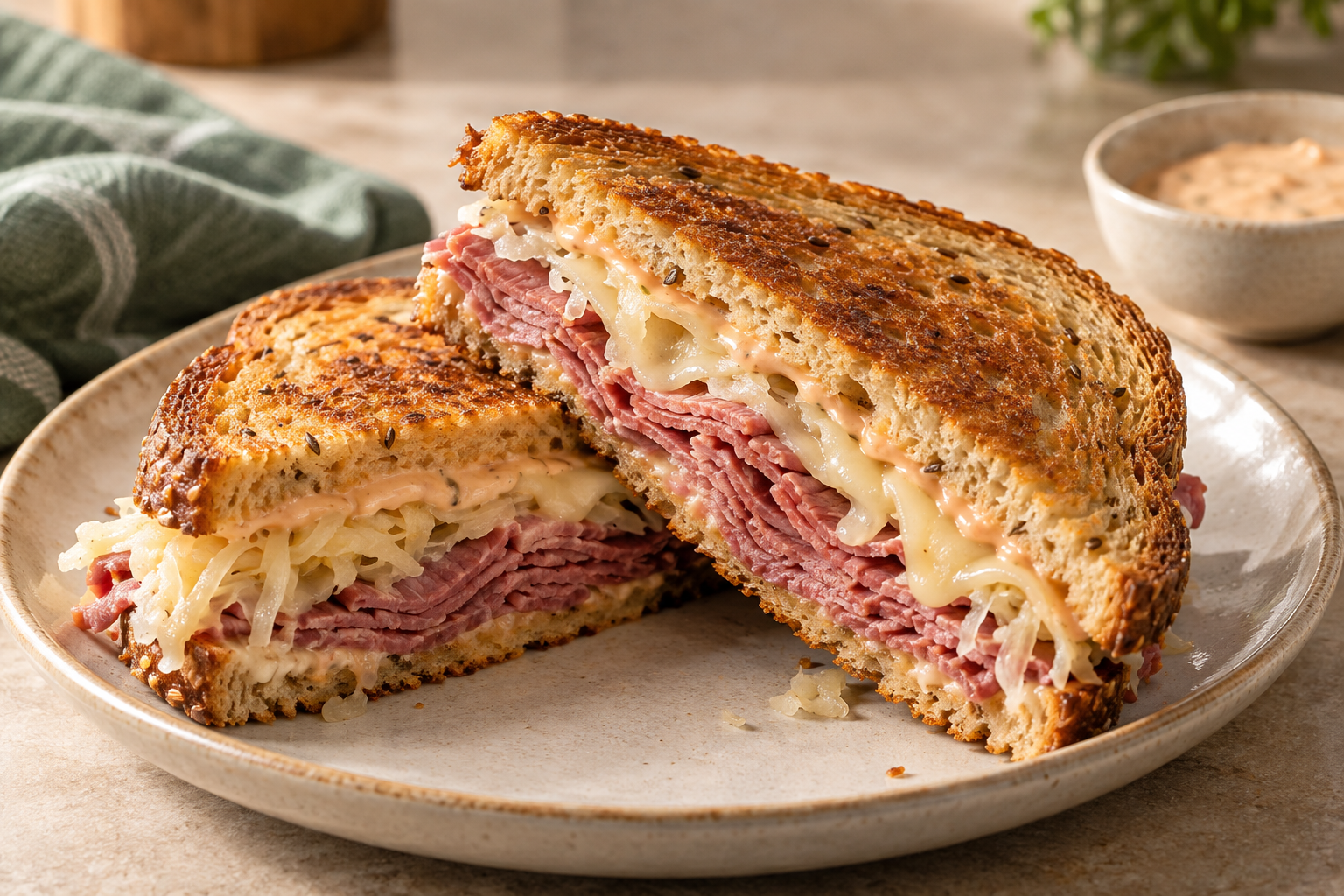
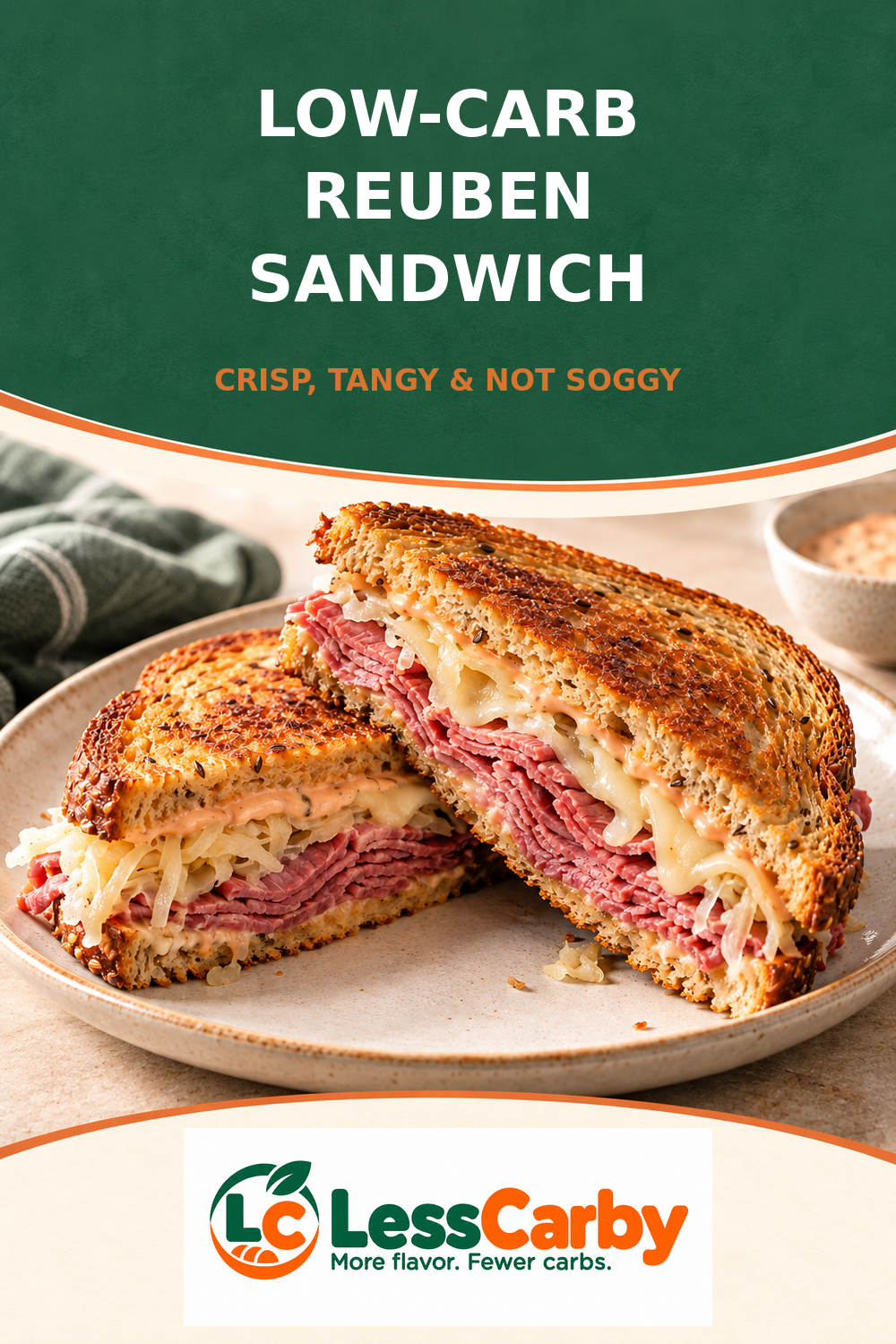
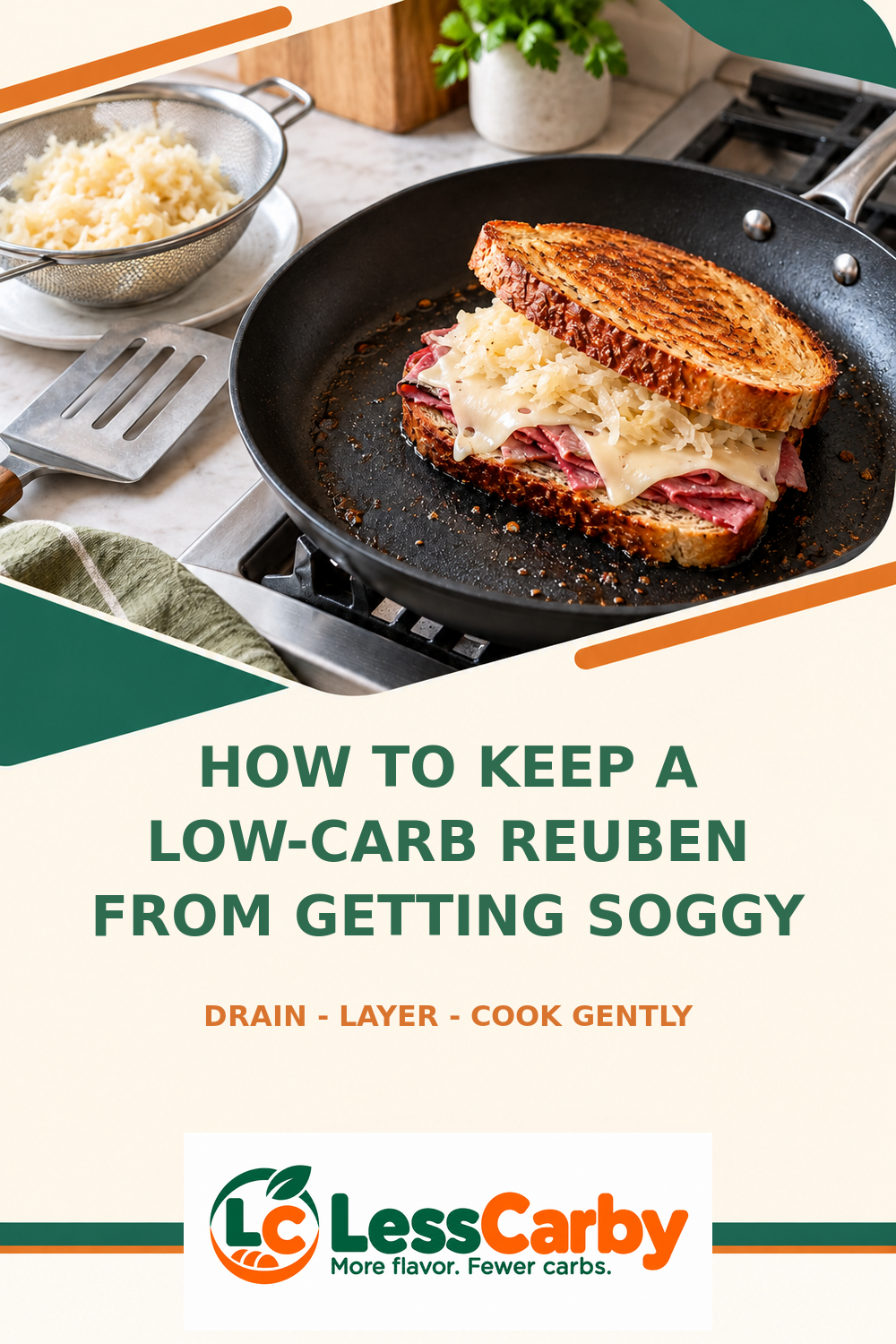
The easiest way to keep a low-carb Reuben crisp is to drain the sauerkraut well, keep the filling modest, and put Swiss cheese next to both slices of bread. The cheese creates a useful barrier while the sandwich cooks over medium-low heat. A thin layer of dressing brings the familiar tang without soaking the crumb.
This small-batch method makes two skillet sandwiches with fully cooked corned beef, Swiss, sauerkraut and prepared dressing. It is an original LessCarby recipe proposal, not a claim of a completed kitchen test. Bread brands vary, so use the browning, melting and temperature cues below instead of treating the clock as exact.
What belongs in a Reuben?
A familiar Reuben combines rye bread, corned beef, Swiss cheese, sauerkraut and Russian or Thousand Island dressing. Here, the main change is the bread. Choose a low-carb sandwich loaf that browns without becoming brittle. Caraway seeds can add rye-like flavor if your loaf is plain, but they are optional.
“Low-carb” does not describe the whole sandwich. The bread, dressing, sauerkraut and other packaged ingredients all contribute to the final numbers. Compare the portion you will actually use, not only the largest claim on the front of the package. The FDA’s Nutrition Facts guide explains why serving size is the starting point.
Three moisture checks that matter
Drain and press the sauerkraut
Measure the sauerkraut, drain it in a fine strainer, then press it with a spoon or clean paper towel. It should still feel juicy, not bone-dry, but no liquid should pool when it sits. Chopping long strands once or twice also makes the sandwich easier to bite.
Use dressing as a seasoning
Spread a thin, even layer inside each sandwich. Too much dressing makes the center slippery and can turn a delicate low-carb crumb gummy. If you like extra dressing, serve it on the side instead of pouring it into the pan.
Build cheese barriers
Place Swiss against both bread slices, with corned beef and sauerkraut between them. As the cheese softens, it helps hold the layers together. Keep every filling just inside the crust so the cheese does not burn on the skillet.
Recipe: two low-carb Reuben sandwiches
Yield: 2 sandwiches; 1 per serving. Estimated time: about 15 minutes total. Actual cooking time depends on the loaf, skillet and starting temperature.
Ingredients
- 4 slices low-carb sandwich bread
- 4 ounces (113 g) thinly sliced, fully cooked corned beef
- 3 ounces (85 g) sliced Swiss cheese
- 1/2 cup (about 75 g) sauerkraut, measured before draining
- 2 tablespoons prepared Russian or Thousand Island dressing
- 2 teaspoons softened butter, or enough for a thin coating on the bread
- 1/4 teaspoon caraway seeds, optional
Check every label if you manage allergies or a specific carb target. Bread may contain wheat, soy, sesame, milk, eggs or nuts. Dressing often contains egg, and Swiss contains milk. Corned beef, sauerkraut, cheese and dressing can also add substantial sodium, so taste before adding salt.
Method
- Prepare the sauerkraut. Drain it well and press out extra brine. Roughly chop very long strands. If using caraway, stir it into the drained sauerkraut.
- Set up the filling. Divide the corned beef into two loose, even portions. Separate the cheese slices so you can build quickly once the pan is warm.
- Assemble. Lay out the bread. Spread 1/2 tablespoon dressing on the inside of each slice. Add Swiss to every slice. Divide the corned beef and sauerkraut between two slices, stopping just short of the edges. Close with the remaining cheese-topped slices.
- Butter the outside. Spread a very thin coat over the top faces. Put the sandwiches buttered-side down in a cool or barely warm nonstick skillet, then coat the new top faces.
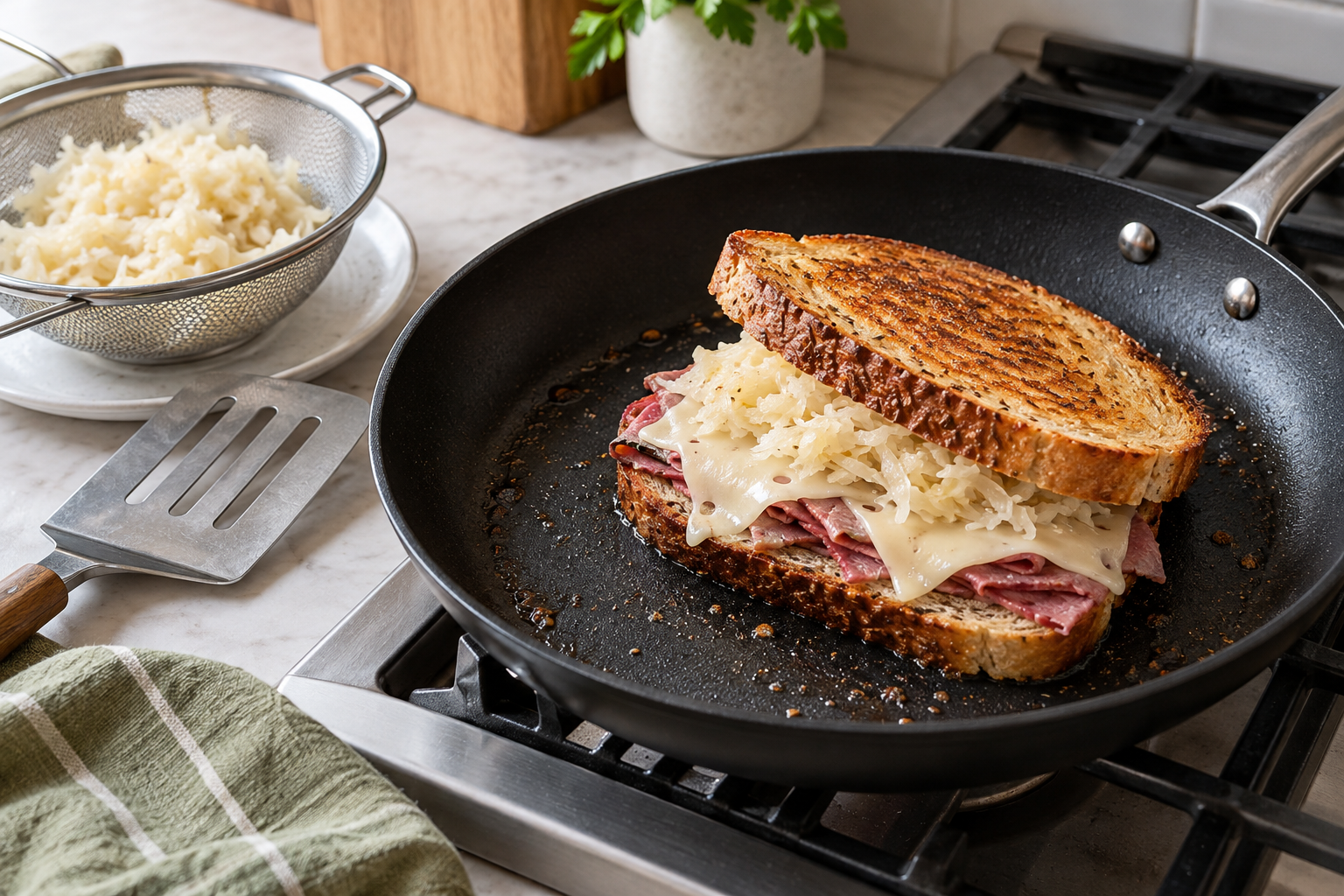
- Cook gently. Set the skillet over medium-low heat. Cook until the first side is evenly golden and the bread releases easily, about 3–5 minutes. Turn with a wide spatula. Cook the second side until golden and the cheese is melted, another 3–5 minutes. Lower the heat if the bread colors faster than the center warms.
- Check the center. If the corned beef is leftover or has been previously heated and chilled, USDA guidance calls for reheating leftovers to 165°F (74°C). Insert a thin thermometer from the side into the middle of the filling. Continue gently if needed; do not use dark bread alone as the safety check.
- Rest briefly. Move each sandwich to a board for 1–2 minutes before cutting. This lets the cheese settle and reduces filling spill.
The USDA’s leftover safety guidance supports the 165°F reheating target and recommends prompt refrigeration. Follow the product label when using a different type of corned beef.
How to fix a soggy or uneven sandwich
| Problem | Best next move |
|---|---|
| Wet center | Press the next portion of sauerkraut more firmly and use less dressing. |
| Bread browns before cheese melts | Lower the heat, cover briefly, then uncover to finish the crust. |
| Filling slides out | Use a thinner, even layer and let the first side set before turning. |
| Bread stays pale | Give the pan time to heat and use a thin, edge-to-edge coat of butter. |
Do not press hard with the spatula. That can squeeze brine and dressing into the crumb. A gentle turn is more useful than trying to flatten the sandwich into faster cooking.
Choose the bread by structure and label
A sturdy sandwich slice is more helpful here than the softest loaf in the bag. Look for intact slices without large holes. If your bread is very flexible, toast the inside faces lightly and cool them before assembly. Frozen slices should be fully thawed so the crust and center warm at a similar pace.
For the carbohydrate calculation, start with the exact serving size on your loaf. Our guide to reading a bread label shows how total carbohydrate, fiber and serving size fit together. Keep the dressing and sauerkraut labels nearby because their serving sizes and added sugars can differ.
Calculate your actual serving
This recipe does not have one honest nutrition total without named products. For one sandwich, add two bread slices, 2 ounces corned beef, 1.5 ounces Swiss, half the drained sauerkraut, 1 tablespoon dressing and about 1 teaspoon butter. Use each current package label and the amount you actually spread.
Record total carbohydrate first. If you also track a net-carb estimate, subtract only the fiber and any other deduction your chosen method supports, and keep the total visible. The bread is not necessarily the only carb source. Dressing and sauerkraut can contribute, too. Sodium is worth checking across the whole sandwich, not ingredient by ingredient in isolation.
Useful variations
- Open-faced: Toast two slices, add half the filling to each, and melt the cheese under a broiler only if your bread and cookware can handle it. Watch continuously.
- Turkey Reuben: Fully cooked turkey can replace corned beef. The result is often called a Rachel, and the flavor is milder. Recalculate from the turkey label.
- Mustard-forward: Replace part of the prepared dressing with Dijon. This changes moisture and nutrition, so start with a small amount.
- No butter: A light layer of mayonnaise can brown, but it changes allergens and flavor. A dry nonstick skillet can work with some loaves, though the surface may be less even.
None of these substitutions is guaranteed to cook identically. Keep the filling thin and use the same center cues.
Make ahead, store and reheat
Prepare the drained sauerkraut and portion the filling in advance, but keep them separate from the bread. Assemble just before cooking. This protects the crumb and lets you check whether the sauerkraut released more liquid in the refrigerator.
Refrigerate cooked sandwiches within 2 hours in a shallow covered container. Use cooked leftovers within 3–4 days, or sooner if a package gives a shorter limit. Reheat to 165°F (74°C). A covered skillet over low heat warms the middle; uncover near the end to recover some crispness. The microwave is quicker but usually softens the bread.
If you want another hot sandwich next, try the low-carb tuna melt or our savory Monte Cristo. You can also browse the full LessCarby recipe hub.
Save This Post on Pinterest
Choose a graphic to open its Pinterest pin and save this recipe.
Both graphics point to this English recipe. No Spanish Pinterest version is planned.
Plan Your Week with Our Free Meal Planner
Choose seven days of meals, adjust portions, and download your shopping list. No email signup needed.
Open the Free Planner →
