Choose a food processor first if your low-carb kitchen prep mostly means chopping vegetables, making crumbs or using slicing and shredding discs. Choose a blender first if you mainly want smooth sauces, blended soups or drinks. We would buy for the job you repeat every week, then add the second appliance only when it solves a regular problem.
There is overlap, but owning both is optional. Before shopping, list the last few tasks that made prep feel slow. Include how much you made and whether washing the equipment afterward felt worth it. That list is more useful than choosing the machine with the longest feature list.
Start with the result you want
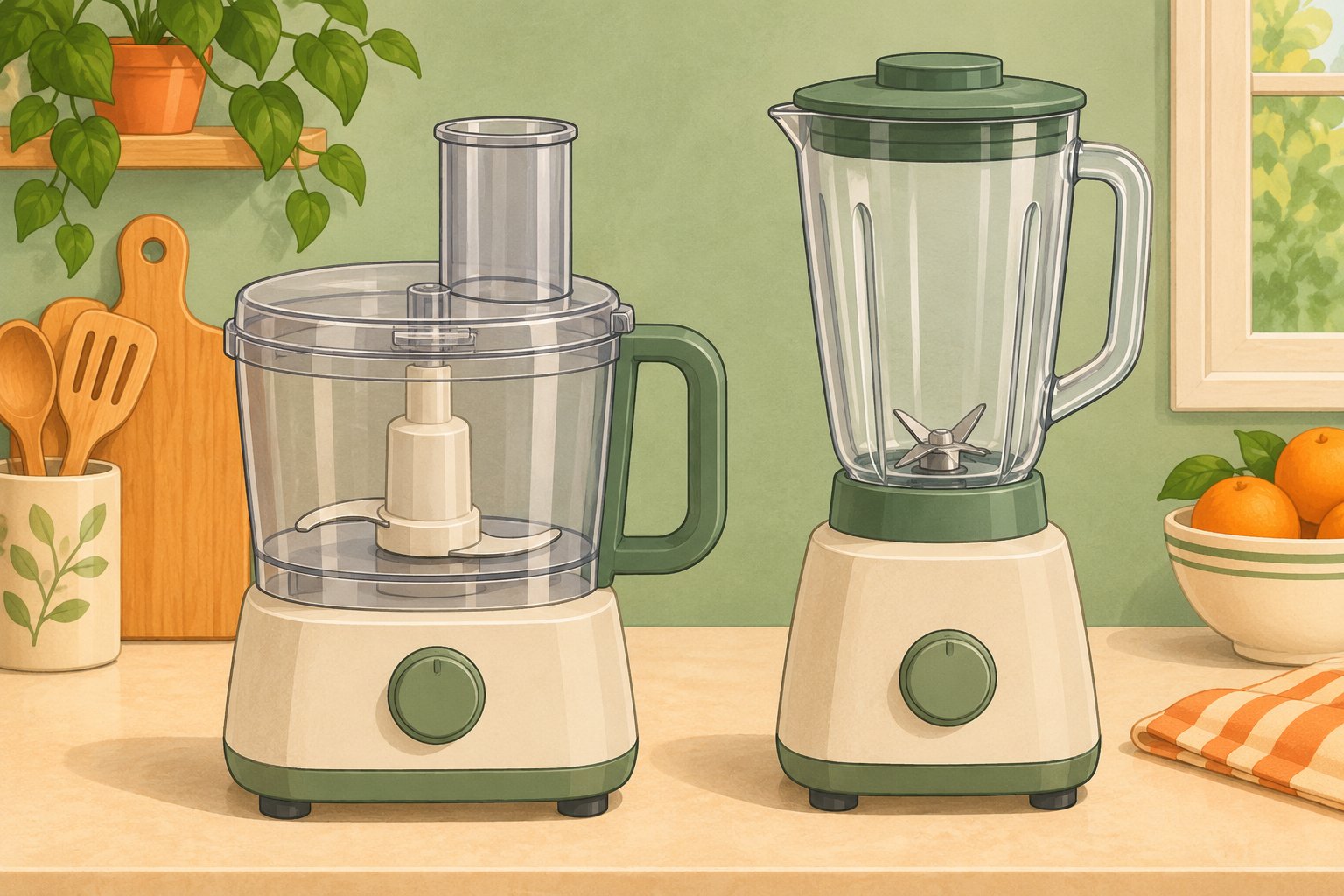
KitchenAid’s processor-versus-blender guide distinguishes the processor’s broad work bowl and interchangeable cutting tools from a blender’s tall jar and emphasis on liquid mixtures. We use that distinction as a starting point, then check the exact attachments and permitted tasks of the model being considered.
For a household that often prepares vegetables for casseroles or toppings for low-carb bread, we lean toward a processor. If most of your meals start with a smooth sauce or blended soup, a blender may save more effort. An appliance can be capable of a task without being the most convenient choice for your usual portion.
| Your frequent task | Our starting choice | What to check |
|---|---|---|
| Vegetable prep with separate pieces | Our starting choiceProcessor | What to checkSuitable blade or slicing/shredding disc |
| Smooth, pourable mixtures | Our starting choiceBlender | What to checkJar size and approved ingredients |
| Small amounts of crumbs or chopped nuts | Our starting choiceProcessor or small chopper | What to checkMinimum practical batch and permitted tasks |
| Occasional single portions | Our starting choiceEquipment you already own | What to checkWhether a knife or hand tool is simpler |
Food processors: look beyond the bowl size
A wide bowl gives you room to monitor pieces and scrape down a mixture while the appliance is stopped. The tool matters as much as the bowl. A chopping blade and a slicing disc do different work, and a compact chopper may not accept discs at all. Read the included-accessory list instead of assuming that every machine called a food processor does the same jobs.
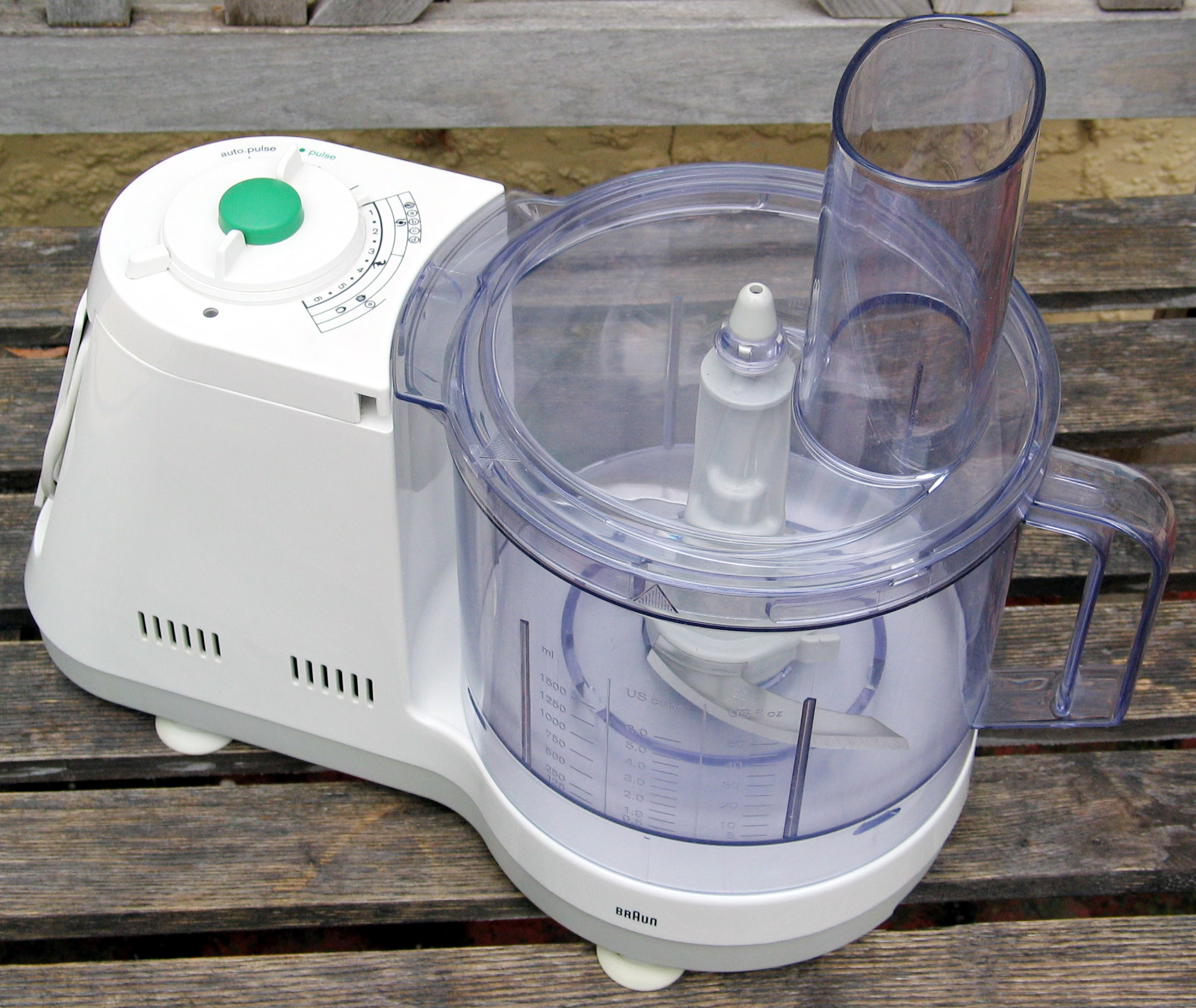
As one specification example, KitchenAid’s KFP0718 manual identifies a 7-cup (1.7 L) bowl, multipurpose blade and reversible slicing/shredding disc. That makes the KFP0718BM a useful reference when comparing a bowl-and-disc setup with a simple chopper. Confirm the exact package; a tool included with another model is not automatically included with this one.
We would prioritize a processor you can assemble without a struggle and store with its useful tools together. If you only chop a small onion occasionally, a large bowl and several discs may add more washing than convenience. Keep the comparison tied to your normal batch.
Blenders: the jar belongs in the decision
Think about how you will pour, scrape and wash the jar. A tall vessel may suit the mixtures you usually make, but it also needs room under a cabinet. Check the assembled height and how much clearance is needed to remove the lid. A machine that fits only after dismantling it may be inconvenient if you plan to use it daily.
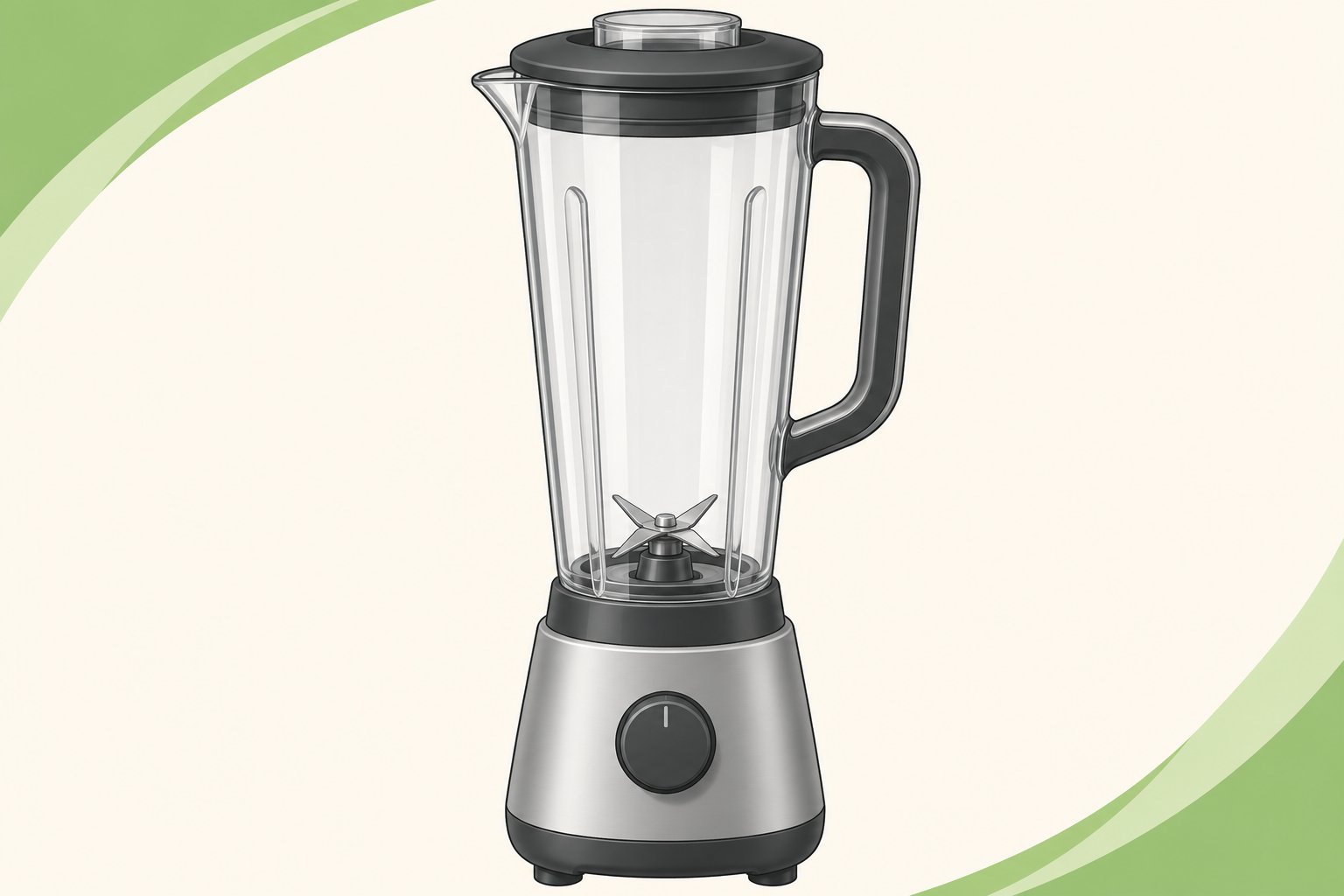
For a manufacturer specification example, the Vitamix E310 lists a 48-fluid-ounce container, ten variable speeds and a pulse function. Those are features to compare with your requirements, not a guarantee about every mixture. We would consider that format for someone who regularly wants adjustable blending and has room for a countertop base and jar.
A blender does not replace a slicing disc. If neatly sliced vegetables are your main reason to buy, choose equipment designed for that cut. For occasional soup blending, also consider whether an immersion blender would meet the need with less storage space.
Compare useful capacity, not just the headline number
A bowl’s named capacity and the amount you should process in a particular task are different questions. Read the model’s limits for liquids, dry ingredients and thick mixtures. Leave the headspace its instructions require. A larger container is not automatically better for a very small batch.
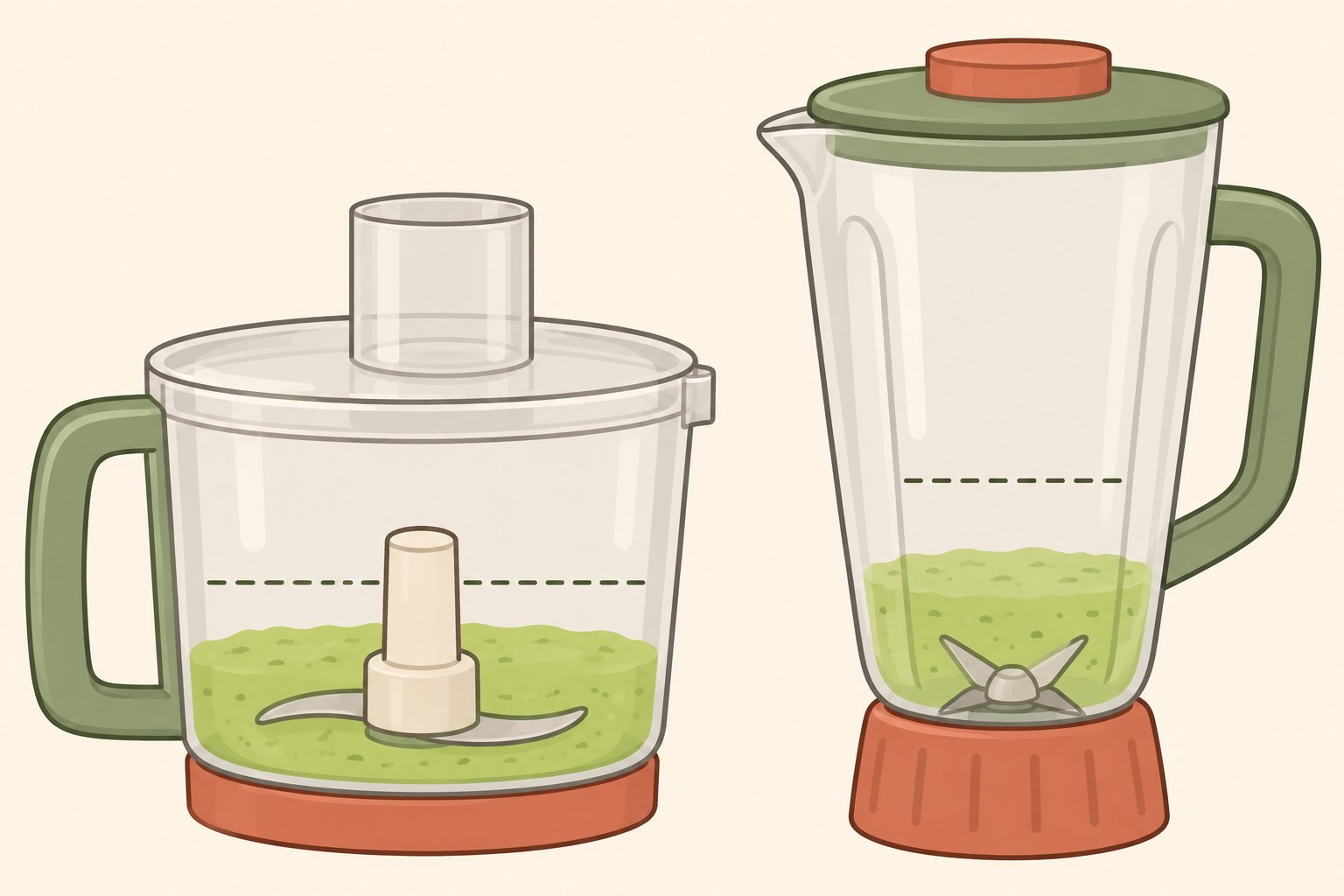
Ask yourself what you usually prepare: a small sauce for two, chopped vegetables for several meals, or crumbs from a few slices of bread. Compare that amount with the manufacturer’s guidance. Also consider whether you can lift the container comfortably when full and whether it fits your sink.
| Buying check | Processor | Blender |
|---|---|---|
| Included tools | ProcessorBlade, discs, adapters and storage | BlenderJar, lid and any approved accessories |
| Capacity | ProcessorTask-specific bowl limits | BlenderTask-specific jar limits |
| Cleaning | ProcessorRemovable tools and lid crevices | BlenderBlade assembly and jar instructions |
| Space | ProcessorBase plus bowl and disc storage | BlenderAssembled height and lid clearance |
Cleaning and storage can decide which one you use
Before buying, open the manual to the cleaning section. Check which parts can go in the dishwasher and which require hand washing. Do not assume that a removable blade on one model means another jar should come apart the same way.
The E310 owner’s manual is a useful example of why model-specific instructions matter. It covers handling, cleaning and restrictions for different containers. Follow the directions for the container actually fitted to your machine. Only blend hot liquids when the specific appliance, container and lid permit it.
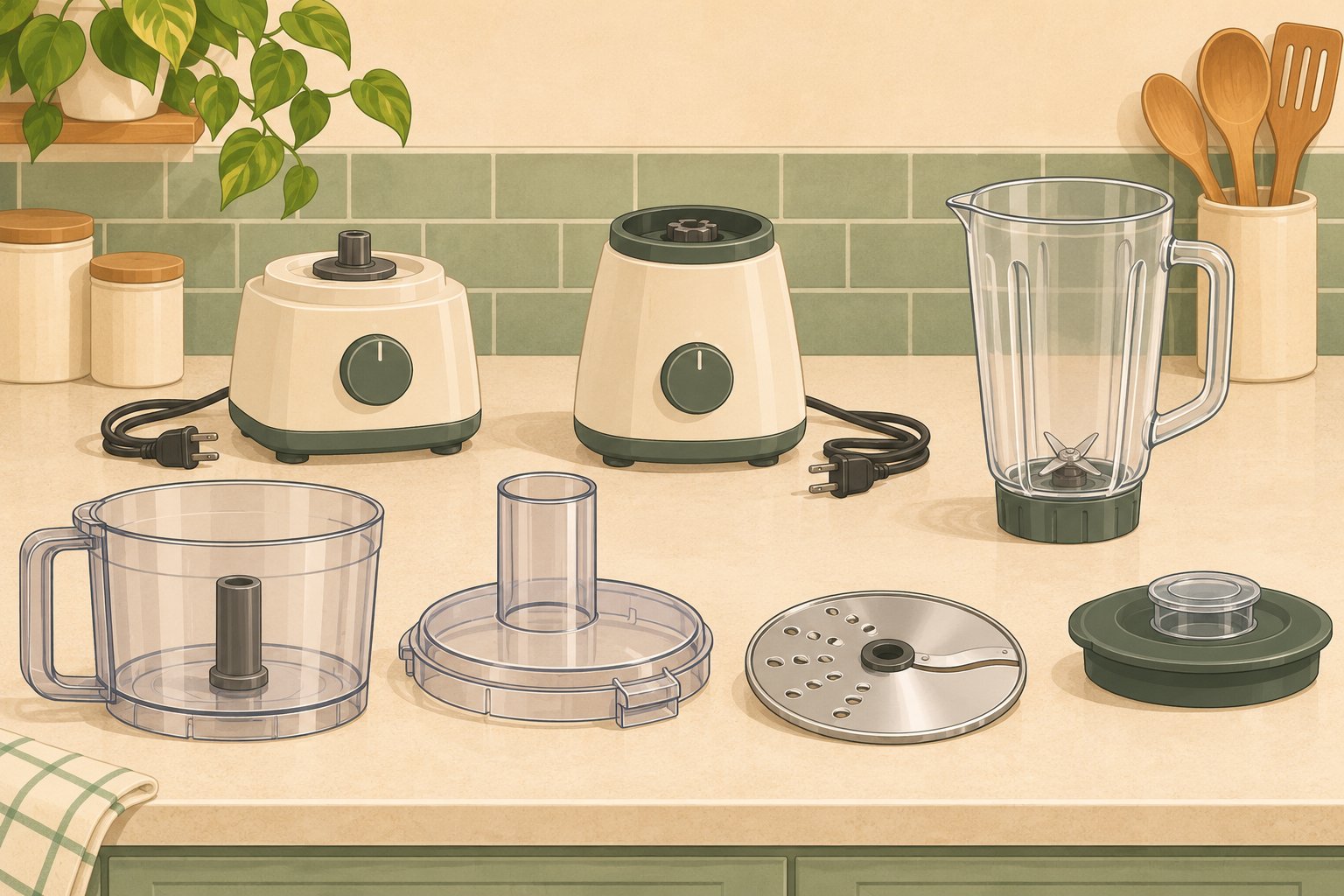
Keep the motor base unplugged for assembly and cleaning, and follow the manufacturer’s blade-handling directions. Plan where discs and blades will live so you can retrieve them without reaching through a loose pile. Having a safe, convenient home for the accessories makes a multi-tool machine easier to use.
Our practical buying order
Start with the appliance that handles the task you repeat most. For vegetable prep and crumbs, our preference is a processor with the right included tools. For smooth liquid mixtures, our preference is a blender with a manageable jar. Keep using a knife, grater or appliance you already own when the job is occasional and cleanup would take longer than the prep.
For baking jobs that need beaters rather than cutting blades, see our stand mixer or hand mixer guide. You can find the rest of our equipment guides in Kitchen and Baking.
Editorial method: category guidance and manufacturer specification examples checked November 2, 2026. Recommendations are editorial judgments; no hands-on tests, prices or performance measurements are claimed. Images are credited photographs or visibly labeled generic AI illustrations.
Plan Your Week with Our Free Meal Planner
Choose seven days of meals, adjust portions, and download your shopping list. No email signup needed.
Open the Free Planner →

