

For occasional low-carb muffins, whipped cream and light batters, we would start with a hand mixer. A stand mixer earns its space when you regularly mix larger batches, need sustained mixing or make dough that your chosen machine is designed to knead. The recipe’s mixing method matters more than the words “low carb” on its title.
If your current mixer handles your usual recipes comfortably, a new machine may offer convenience rather than solve a problem. Before spending more, write down the task that feels awkward: holding the mixer, working through a stiff mixture, reaching a tiny amount in a large bowl, or finding somewhere to store everything.
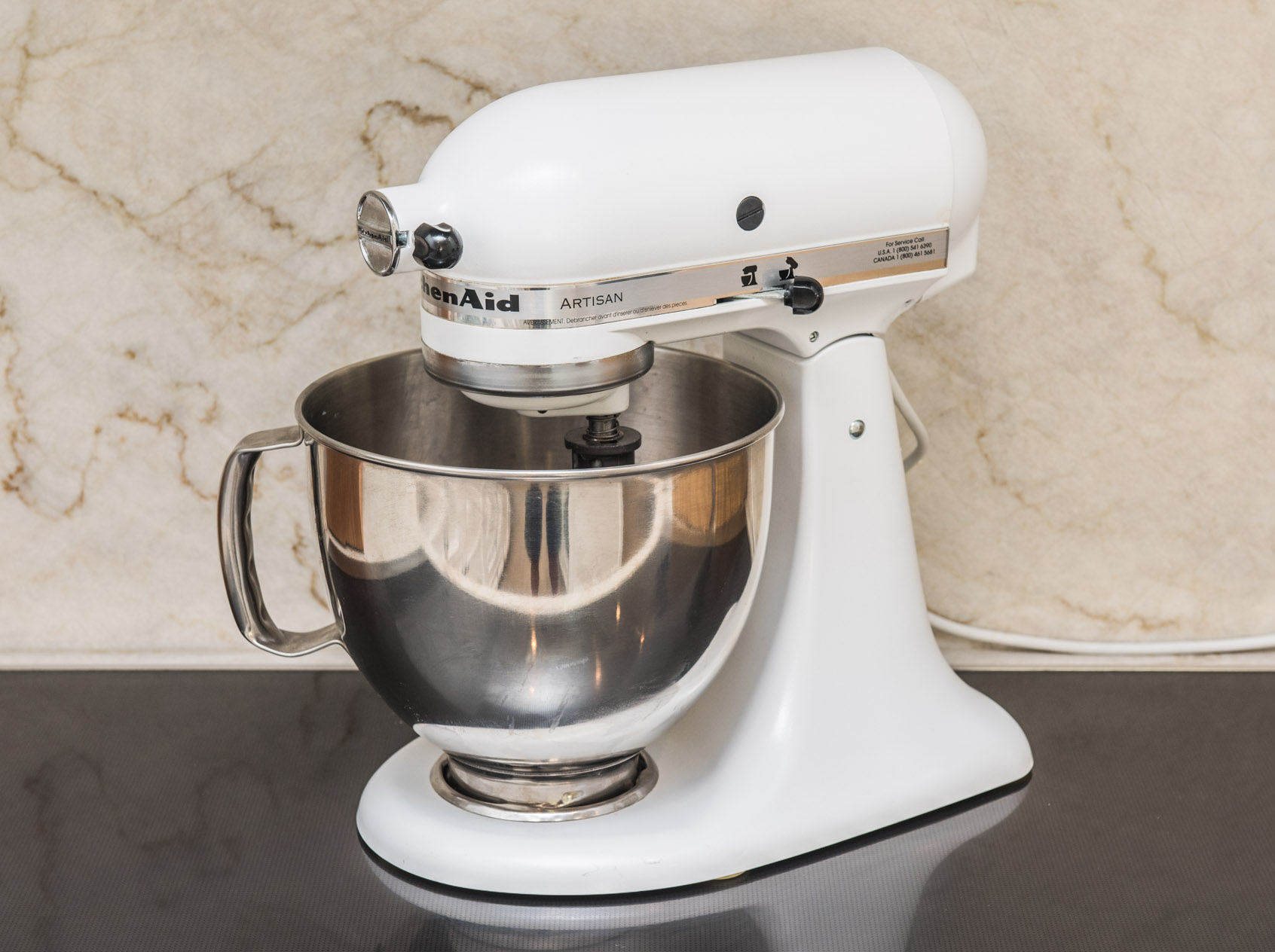
Hand mixer or stand mixer: the practical differences
A hand mixer puts the motor in your hand and lets you move the beaters through a separate bowl. A stand mixer holds the mixing head and a fitted bowl on a base. KitchenAid’s comparison guide describes the handheld format as compact and portable, with stand mixers better suited to extended mixing and heavier batches.
Our preference for a beginner with limited space is the handheld route, provided the intended recipes suit it. We would move toward a stand mixer when the limitation becomes a frequent part of baking, rather than buying one simply because it appears in recipe videos.
| Consideration | Hand mixer | Stand mixer |
|---|---|---|
| Light, occasional jobs | Easy to bring to the bowl | Convenient if already on the counter |
| Longer mixing sessions | You support and guide it | The base supports the head |
| Small batches | Choose an appropriately sized bowl | Check that the tool reaches the ingredients |
| Dense or kneaded dough | Only if the model and attachments allow it | Check dough capacity, tool and speed limits |
| Storage | Body and beaters can be stored separately | Allow space for the machine, bowl and tools |
Low-carb batter and kneaded dough are different jobs
Think about what the recipe actually asks you to do. Beating eggs for a small bake is different from mixing a thick cookie dough. A loaf made from a batter also asks something different from an elastic dough that needs kneading. Do not use the finished food’s name as the equipment specification.
Almond flour brings another useful distinction. King Arthur’s almond flour guide explains that it lacks gluten and cannot simply replace all the wheat flour in a familiar recipe. A dough hook does not make an almond-flour mixture behave like a wheat dough. Start with the recipe’s stated method.
Even “bread” does not automatically mean a hook: King Arthur’s gluten-free bread example calls for a flat beater when mixed by machine. That example explains tool choice; it is not a low-carb recipe recommendation. If your own recipe specifies folding with a spatula, keep that step.
When we would choose a hand mixer
Choose one when you mostly make small or occasional batches and want to use bowls you already own. It is also worth considering if a large fixed bowl is inconvenient for the small amounts you prepare. Try the grip in person when possible, and consider the weight while working rather than just while lifting it out of the box.
Look for a controllable low starting speed and an accessible stop switch. Check that the cord reaches your working position without crossing a cooking surface. KitchenAid’s buying guide notes that wattage alone does not describe a hand mixer’s usefulness; assess the motor design, controls and included accessories together.
Some handheld models include dough hooks, but their presence is not a promise that any bread recipe or batch is suitable. Read the exact model’s load and operating limits. If you routinely need a machine to work a substantial dough, investigate an appropriately specified stand mixer instead of asking the hand mixer to do an unsuitable job.
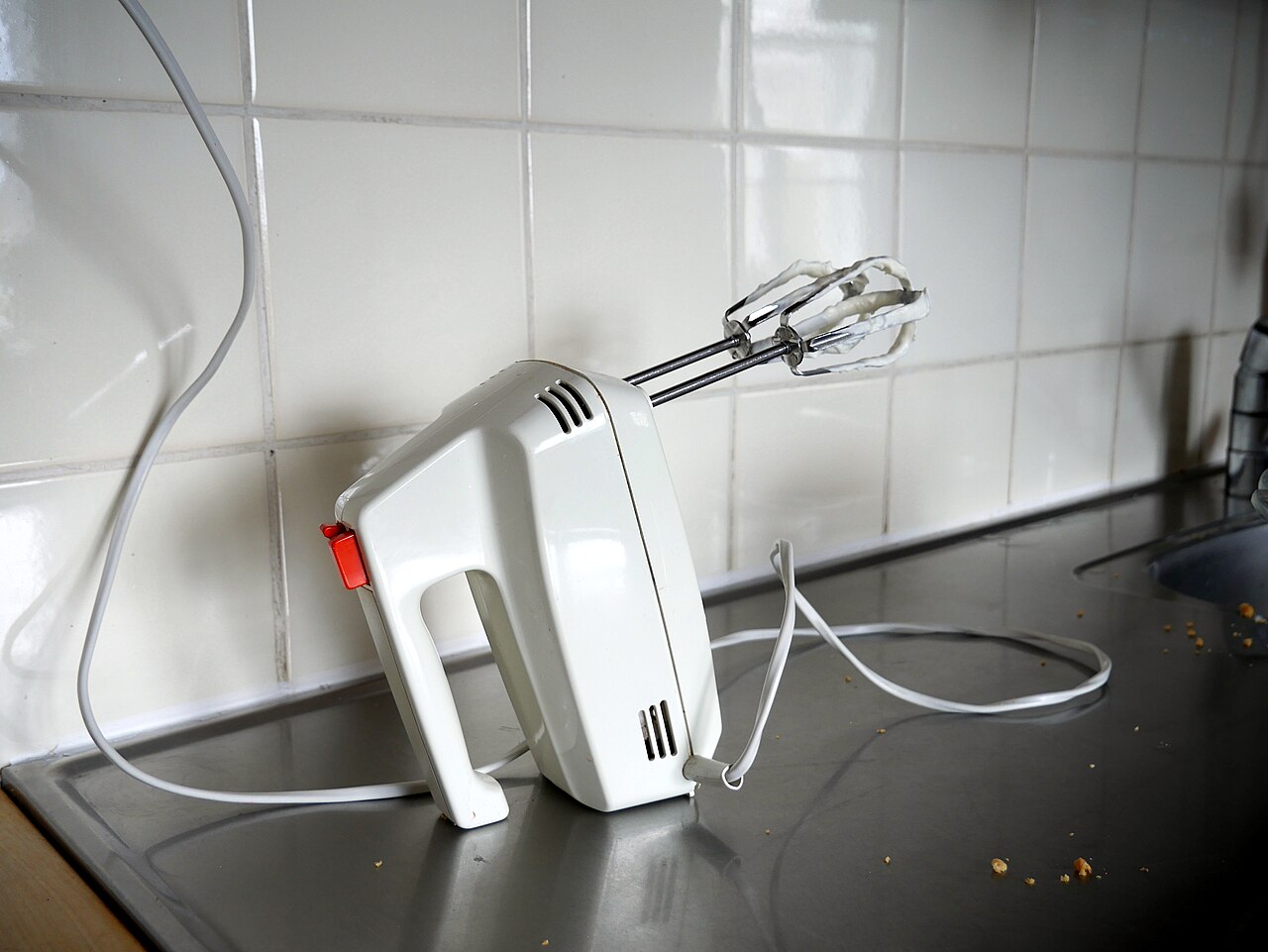
When a stand mixer is worth its counter space
A stand mixer becomes attractive when supporting a handheld machine is the part you want to avoid, or when your normal baking involves repeated, longer mixing sessions. Check where you will use it and whether it can stay there. A machine stored in a difficult cupboard may be less convenient than a simpler one you can reach.
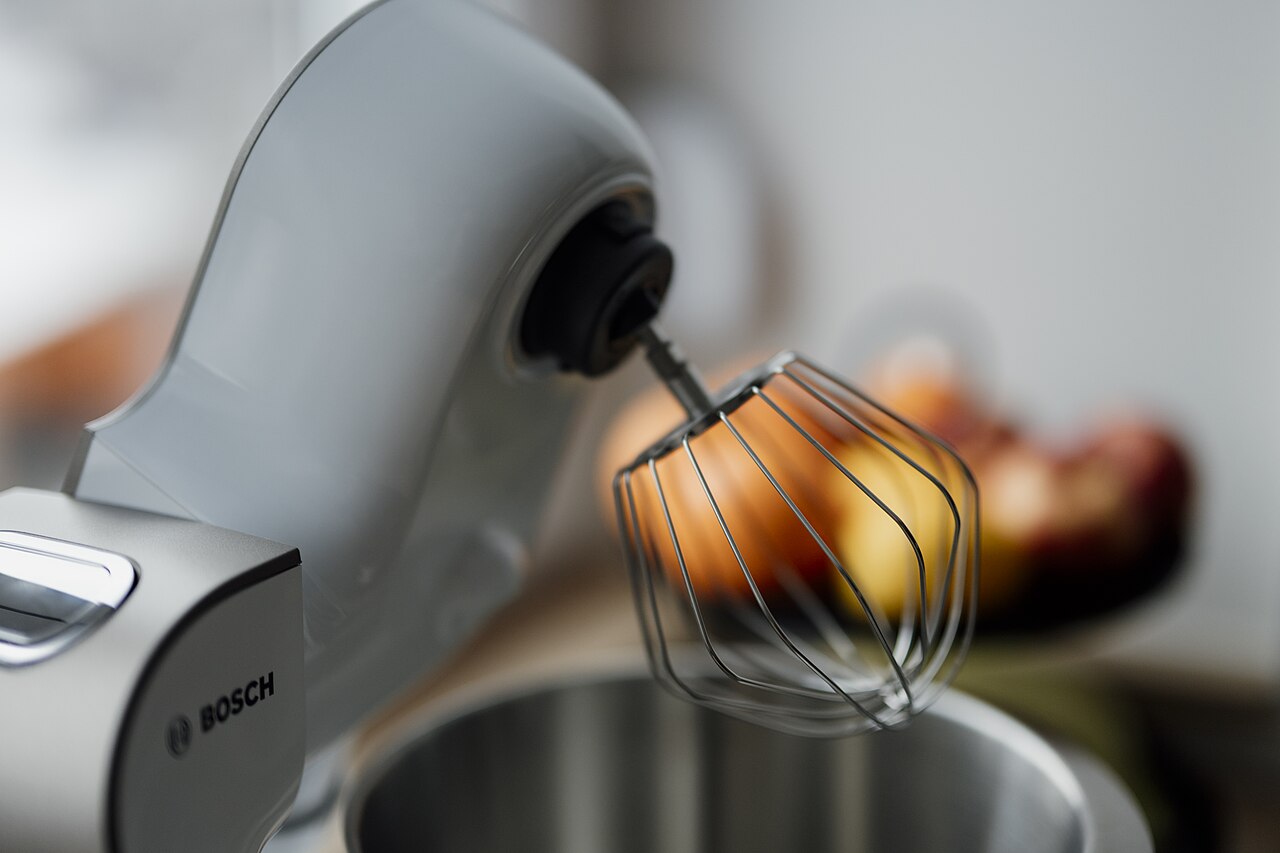
A concrete model to investigate is the KitchenAid Artisan KSM150PSWH pictured above. Its current U.S. page lists a five-quart bowl, ten speeds, a flat beater, dough hook and wire whip. Those features make it a useful example of the format; they do not establish that five quarts is the best size for your recipes.
We would check your smallest regular batch as carefully as your largest. Bowl capacity is a volume measurement, not a universal dough limit. Read the matching manual, ask about the smallest quantities it handles and confirm the space needed to raise a tilt head or access a bowl-lift model.
Choose the attachment before choosing a faster speed
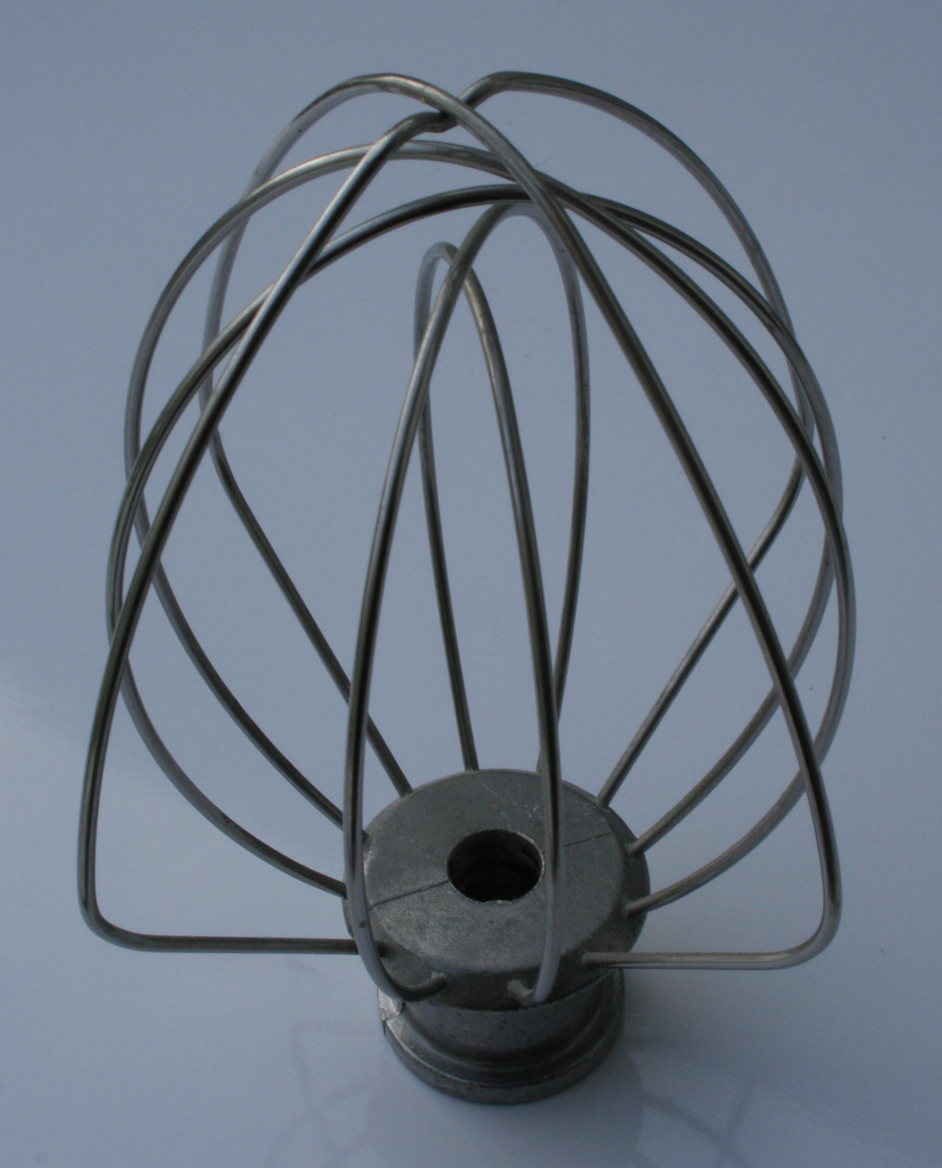
KitchenAid’s attachment guidance distinguishes the whisk for incorporating air, the flat beater for general mixing, and the dough hook for kneading. Match the attachment to the recipe and your exact machine. Similar-looking fittings from different models are not evidence of compatibility.
| Recipe instruction | Tool to investigate | What to confirm |
|---|---|---|
| Whip cream or egg whites | Wire whisk or approved handheld beaters | Small-batch reach and the recipe endpoint |
| Mix a batter or cream ingredients | Flat beater or suitable handheld beaters | Correct consistency and allowed load |
| Knead a dough | Approved dough hook | Model-specific speed and batch limits |
| Fold in an airy mixture | Spatula or a specified folding function | Preserve the recipe’s method |
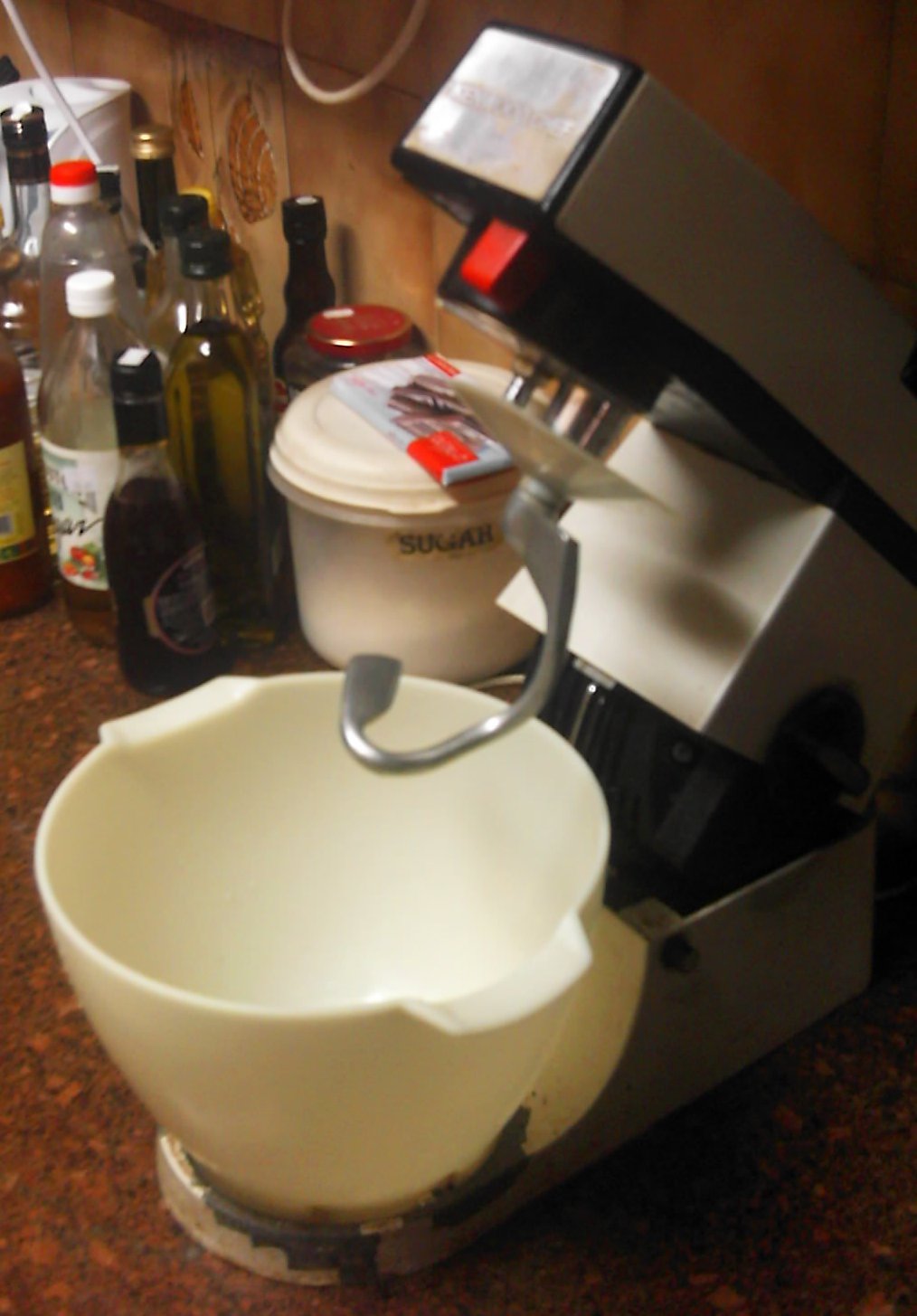
For KitchenAid yeast-dough kneading, the manufacturer specifies Speed 2. That is a model-family instruction, not a speed setting to copy onto another brand. Follow the directions supplied with your mixer and stop the machine before scraping or making an adjustment.
Check cleaning, bowl access and storage before buying
Ask which tools are dishwasher-safe instead of assuming the entire set is. A bowl, coated paddle and wire whisk can have different care instructions. Keep the product manual available, particularly when buying replacement accessories separately.
The hand-mixer manual instructs users to unplug before touching or removing beaters. Keep hands and utensils clear of moving tools. Stand-mounted mixing still needs supervision; it is not permission to leave the appliance operating alone.
Think about the rest of your baking setup, too. Our kitchen-scale guide can help with measuring ingredients, while the loaf-pan guide covers the next equipment decision. A bigger mixer cannot correct the wrong ingredient quantity or pan choice.
Do you need both?
Usually, we would buy the one that matches the work you do most often and add a second only when it solves a repeated problem. Small, occasional batters point toward a hand mixer. Regular, sustained mixing or suitable kneaded dough makes the stand mixer easier to justify.
Before ordering, choose two recipes you make often and compare their tools, batch sizes and mixing steps against the exact manual. That gives you a concrete reason to buy, keep or skip a machine.
Editorial method: manufacturer product information and instructions checked October 27, 2026. This is a task-based equipment guide, not a hands-on performance test or ranked product review. All five photographs are licensed or public-domain images with credits above. No affiliate links are included.
Plan Your Week with Our Free Meal Planner
Choose seven days of meals, adjust portions, and download your shopping list. No email signup needed.
Open the Free Planner →


