The total-fat line on low-carb bread can be surprisingly different from loaf to loaf. A higher number is not automatically a problem, and a lower number is not automatically a better choice. The useful question is what that fat represents, how much bread the serving includes, and how the number fits with saturated fat, calories, fiber, protein, sodium, and the rest of your meal.
What “total fat” actually means
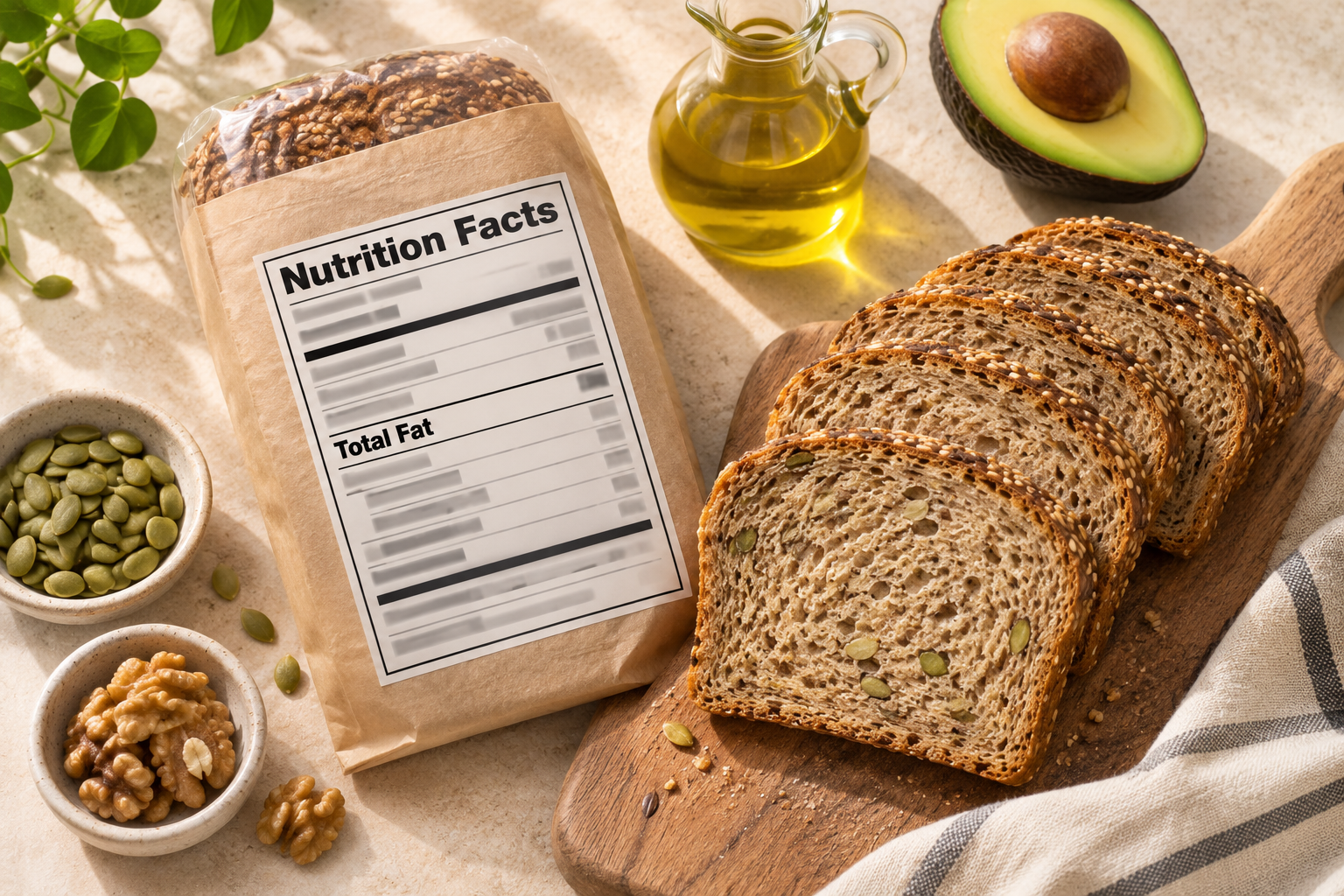
The Nutrition Facts panel reports total fat in grams per serving. It includes saturated fat, trans fat, and the mono- and polyunsaturated fats that may not be itemized. Manufacturers must list total fat, saturated fat, and trans fat. Monounsaturated and polyunsaturated fat may be listed voluntarily.
The FDA’s current Daily Value for total fat is 78 grams. That reference is based on a 2,000-calorie diet, so it is a comparison tool rather than an individual prescription. The percent Daily Value (%DV) tells you how much one serving contributes to that reference amount. As a general label-reading guide, 5% DV or less is considered low and 20% DV or more is considered high.
This does not mean every food should fall below 5% DV. It means the percentages give you a common scale. If your sandwich uses two servings of bread, double the grams and the %DV before judging how it fits.
Why low-carb breads can contain more fat
Traditional bread is usually built around flour, water, yeast, and small amounts of fat. Low-carb loaves often rely more heavily on seeds, nuts, eggs, added oils, or fiber-rich ingredients to create structure and softness while reducing digestible starch. Those ingredients can raise total fat, but they may also contribute flavor, texture, and satiety.
That is why the total-fat number alone cannot tell you whether one bread is “healthier.” A seed-heavy loaf may have more fat than a very lean loaf while also offering more fiber or protein. Another loaf might have a similar fat total but derive more of it from butter, coconut oil, palm oil, or shortening. The label and ingredient list answer different parts of the question.
Read the fat lines in the right order
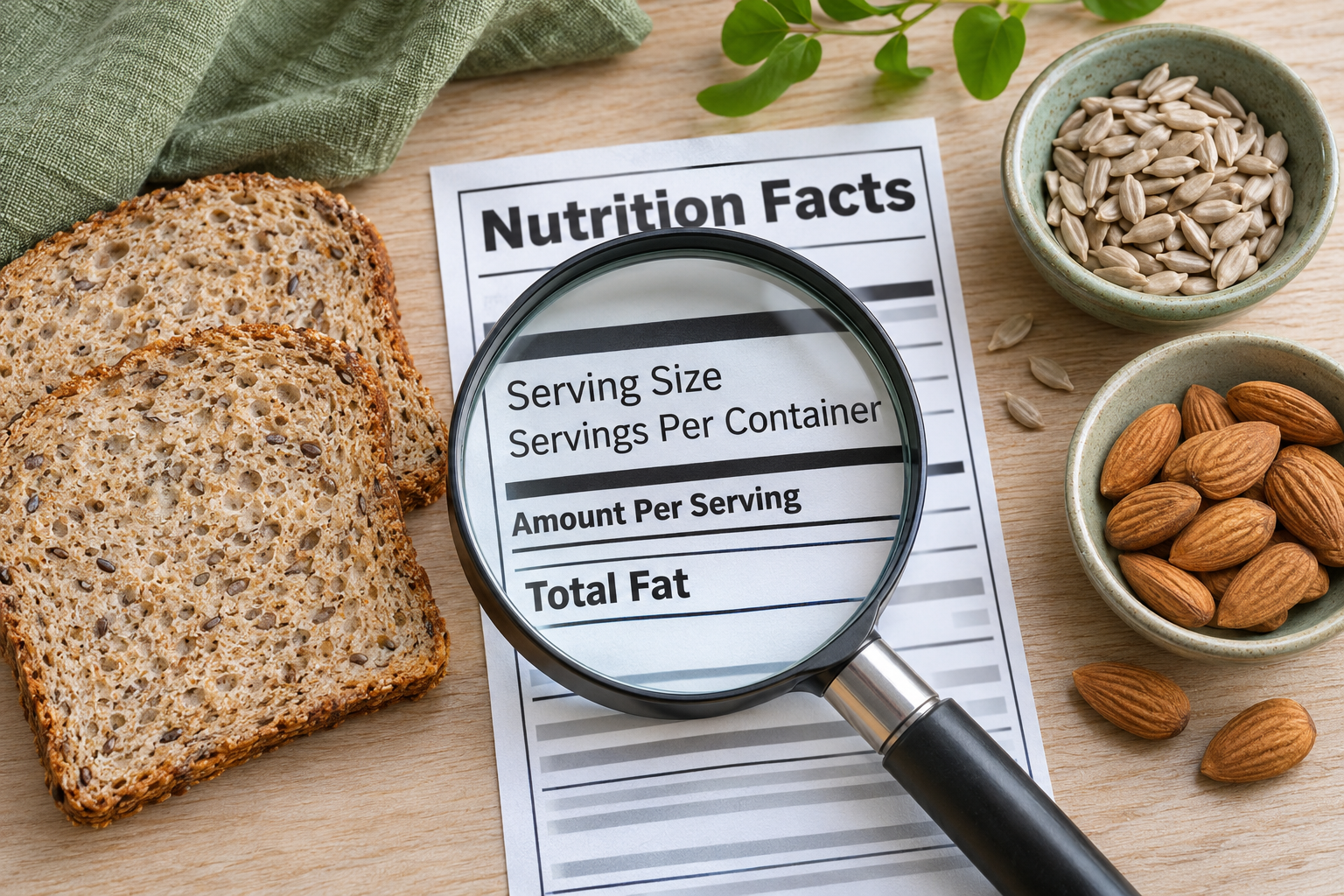
- Confirm the serving size. Check whether the panel describes one slice, two slices, or a weight in grams. If two breads use different serving sizes, calculate the numbers per slice or compare equal gram weights.
- Read total fat. Note both grams and %DV. This is the complete fat amount for that serving.
- Check saturated fat. Saturated fat is a subset of total fat. The FDA Daily Value is 20 grams, and the 2025–2030 Dietary Guidelines say saturated fat generally should not exceed 10% of daily calories.
- Notice trans fat. Trans fat is also part of total fat, but it has no established %DV. Most artificial trans fat uses were phased out of the U.S. food supply, yet the line remains useful.
- Scan the ingredient list. Seeds, nuts, olive oil, avocado oil, eggs, butter, coconut oil, palm oil, and shortening can all influence the number. Ingredients are listed by weight, but the list does not reveal exact grams from each source.
- Read the rest of the panel. Compare calories, total carbohydrate, fiber, protein, and sodium. Fat does not cancel carbohydrate, and a “keto” front-of-package claim does not replace the regulated panel.
A fair comparison needs equal portions
Here is a fictional example. These are teaching numbers, not data from real products:
| Example loaf | Labeled serving | Total fat | Saturated fat | What changes after normalization |
|---|---|---|---|---|
| Loaf A | 1 slice | 2 g | 0 g | Already expressed per slice. |
| Loaf B | 2 slices | 8 g | 2 g | 4 g total fat and 1 g saturated fat per slice. |
| Loaf C | 1 slice | 5 g | 1 g | Higher than A per slice, but the ingredient list may show nuts or seeds as major sources. |
Looking only at the printed 8 grams would make Loaf B appear far higher than Loaf C. Once both are expressed per slice, the difference narrows. Equal-weight comparison can be even more precise when slices vary greatly in size.
Total fat and saturated fat answer different questions
Total fat describes quantity. Saturated fat describes one type within that total. The updated Nutrition Facts label removed “calories from fat” because the type of fat matters more than that old number suggested. For packaged bread, the saturated-fat line is therefore an important companion to the total.
The current U.S. Dietary Guidelines advise keeping saturated fat at no more than 10% of daily calories. For a 2,000-calorie reference diet, the FDA label uses 20 grams as 100% DV. Your needs can differ, and people managing cardiovascular risk or another medical condition should use advice from their clinician or registered dietitian.
Do not add total fat and saturated fat together. If a serving lists 6 grams of total fat and 1 gram of saturated fat, that 1 gram is already contained in the 6 grams.
Use the ingredient list without turning it into a morality test
The ingredient list can explain why the number is higher, but it cannot prove that every gram came from a specific ingredient. A loaf with sunflower seeds, flaxseed, sesame, almonds, walnuts, eggs, or olive oil may naturally show more fat. A loaf with coconut oil, palm oil, butter, or shortening may show more saturated fat. Compare the actual saturated-fat line rather than guessing from a single ingredient.
Also consider allergies and how you plan to use the bread. A nut-and-seed loaf may not suit someone avoiding those allergens. A very rich bread might be satisfying with lean fillings, while a lower-fat bread could make more sense when the sandwich includes cheese, mayonnaise, avocado, or bacon. The whole meal is the practical unit.
What to choose for different goals
If you want fewer calories
Compare calories per slice along with total fat. Fat provides more calories per gram than carbohydrate or protein, but slice size and recipe still matter. A lighter slice is not automatically more filling, so choose a portion you can use consistently.
If you want more staying power
Look at fat, fiber, and protein together. A bread that combines these can feel more substantial, but labels cannot predict every person’s fullness response. Try the bread in the meal you actually eat.
If saturated fat is your priority
Use grams and %DV, normalize the serving, and compare the ingredient list. The FDA’s 5%-and-20% guide can quickly identify lower and higher contributions per serving.
If carbohydrate control is your priority
Total fat does not reduce total carbohydrate on the label. Read the carbohydrate, fiber, and serving size separately. Our guide to what carbohydrates are explains the categories, while our cholesterol label guide shows how another nutrient fits into the same full-panel method.
A 60-second bread-label routine
- Serving size: one slice, two slices, or grams?
- Total fat: grams and %DV.
- Saturated fat: grams and %DV; do not add it to total fat.
- Trans fat: note the grams; there is no %DV.
- Calories, carbohydrate, fiber, protein, and sodium: compare the complete serving.
- Ingredients and allergens: identify likely fat sources and any ingredients you avoid.
- Your portion: multiply every line by the number of servings you will eat.
Frequently asked questions
Is high-fat low-carb bread better?
Not necessarily. A higher-fat loaf may contain nuts, seeds, eggs, or oils, but the number alone does not establish overall quality. Compare saturated fat, serving size, calories, fiber, protein, sodium, ingredients, and how the bread fits your meal.
Does total fat include saturated fat?
Yes. Saturated fat and trans fat are subcategories within total fat. Do not add them to the total.
Why is there no percent Daily Value for trans fat?
The FDA says there is not enough information to establish a reference value for a %DV. The grams are still required on the label.
Can I compare the front of two bread bags?
Front claims are not enough. Turn the packages over, match the serving sizes, and compare the regulated Nutrition Facts panels and ingredient lists.
Should everyone aim for the same amount of fat?
No. Daily Values are general reference points. Individual calorie needs, health conditions, medications, and dietary patterns vary. For personalized medical nutrition guidance, consult a qualified health professional.
The bottom line
Total fat is useful when it is read as part of a sequence: serving size first, total and saturated fat next, then the rest of the label and ingredient list. Low-carb bread can have more fat for understandable recipe reasons, especially when it uses nuts, seeds, eggs, or oils. Equalize the portion, avoid adding subcategories twice, and decide based on the whole meal rather than one bold number.
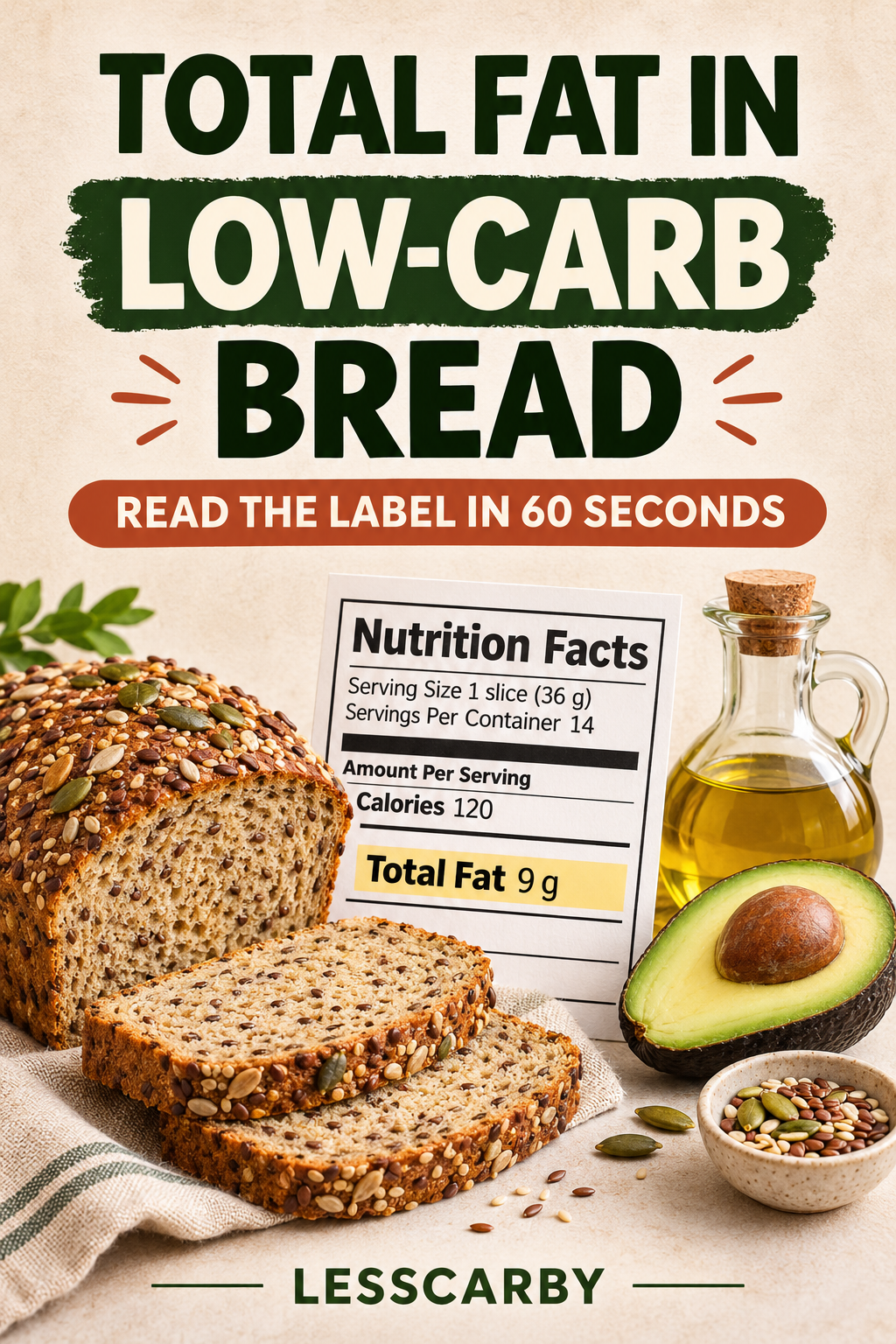
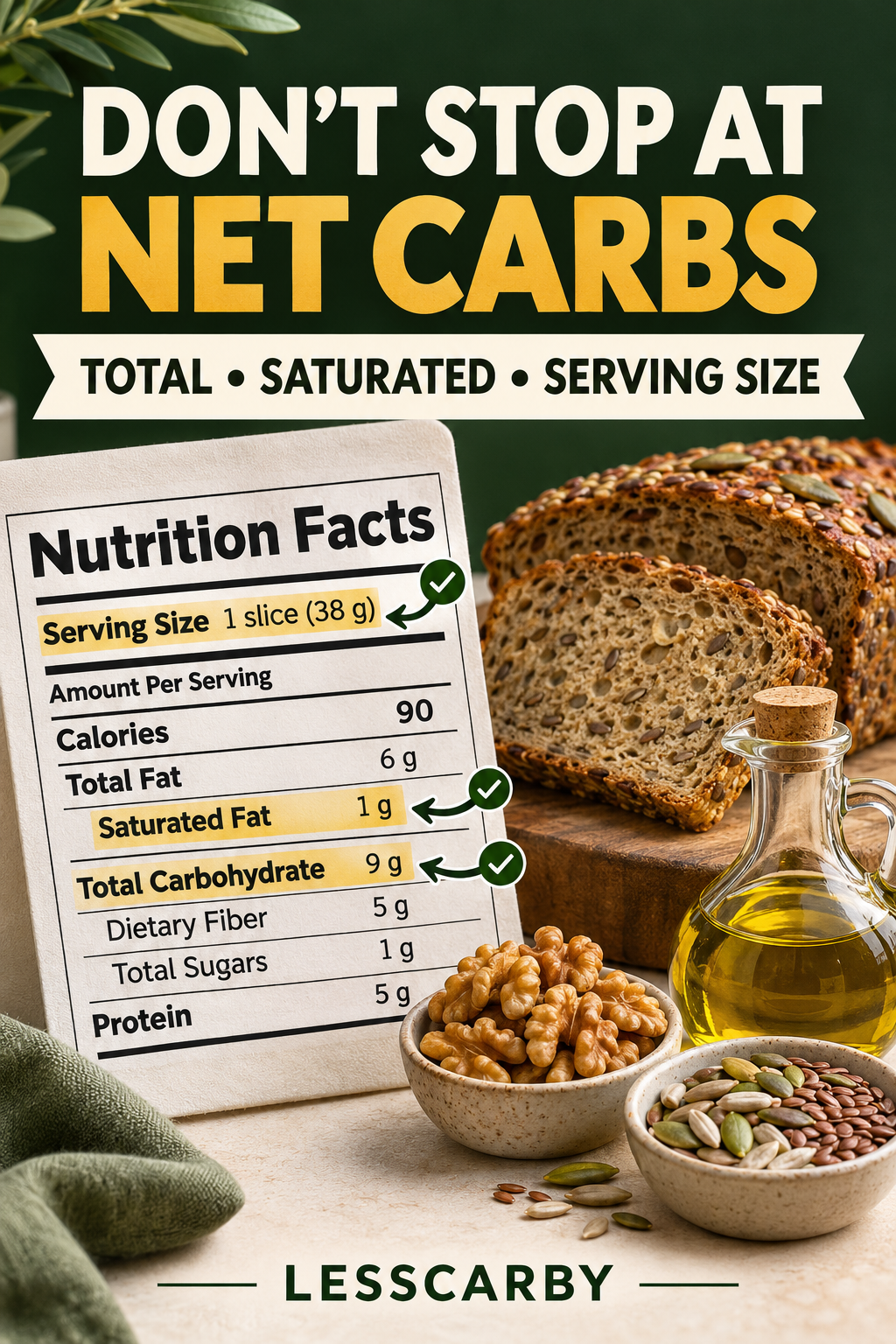
Save This Post on Pinterest
Choose either graphic to save this label-reading guide for later.
Plan Your Week with Our Free Meal Planner
Choose seven days of meals, adjust portions, and download your shopping list. No email signup needed.
Open the Free Planner →
