

Published October 20, 2026 · Updated October 21, 2026
Bread, rice, tortillas, fruit, and desserts all contain carbohydrates. But they don’t all provide the same nutrition or affect your body in exactly the same way.
Carbohydrates are nutrients that supply energy. Understanding their different forms can help you make better food choices, especially if you’re managing blood sugar or exploring a low-carb diet.
You don’t need to give up every food containing carbohydrates. Start by understanding what you’re eating, how much you’re eating, and how it fits your health needs.
I’m Max, founder of LessCarby and its Spanish-language counterpart, MenosCarbs. I was diagnosed with type 2 diabetes in 2016.
After trying several diets, I finally began following a low-carb diet in 2018, and I started noticing improvements in my health right away.
I went on to lose fifty pounds, and my health numbers returned to normal ranges. Since then, I’ve also been using and testing low-carb products. That’s my personal experience. Your results may be different.
What are carbohydrates?
Carbohydrates, often called carbs, are one of the main nutrients in food, alongside protein and fat. The main types are sugars, starches, and fiber.
They appear in more foods than you might expect. Along with bread and pasta, you’ll find carbohydrates in beans, vegetables, fruit, milk, and yogurt. A food containing carbs can still provide valuable nutrients. American Diabetes Association: Understanding carbs
Sugars
Some sugars occur naturally, such as those in fruit and plain milk. Others are added during preparation or manufacturing, including table sugar, honey, and syrups.
On a U.S. Nutrition Facts label, “total sugars” includes both naturally occurring and added sugars. “Added sugars” tells you how much was added. Those added sugars are already included in the total sugars figure; you don’t add the two numbers together. FDA: Added sugars
Starches
Starches are made of linked sugar molecules. Foods such as bread, rice, potatoes, pasta, and beans contain starch.
This explains something that often surprises people: food doesn’t have to taste sweet to contain carbohydrates that your body can break down into sugar.
Fiber
Fiber is a carbohydrate that your body doesn’t digest in the small intestine the same way it digests sugars and starches. Some fiber is broken down by bacteria farther along the digestive tract.
Fiber contributes to digestive health. Depending on the type, it may also help with blood sugar or cholesterol management. Vegetables, beans, nuts, seeds, and whole grains can supply fiber. FDA: Total carbohydrate and fiber
What happens when you eat carbs?
Imagine eating a slice of bread.
Digestion begins in your mouth, where an enzyme in saliva starts breaking down starch. Digestive enzymes continue the process in the small intestine, breaking digestible carbohydrates into simple sugars that can be absorbed into the bloodstream. NIDDK: How digestion works
Glucose is one of those sugars. It provides fuel for your body. As blood glucose rises after a meal, the pancreas releases insulin, a hormone that helps cells take up glucose for energy. A rise in blood sugar after eating is part of normal digestion. American Diabetes Association: Carbs and blood glucose
Absorbed nutrients can be used immediately or stored for later. Your liver helps process, store, and distribute nutrients as your body needs them. NIDDK: What happens to digested food
What is the connection between carbs and sugar?
Sugar is one type of carbohydrate. Starch is another, and digestion breaks it down into sugars.
That means avoiding candy alone doesn’t tell you how many carbohydrates you’re eating. A meal can contain little added sugar while still containing substantial starch.
The same applies to packaged foods. “No added sugar” describes added sugars; it doesn’t mean the product has no naturally occurring sugar or other carbohydrates. FDA: Understanding added sugars
When comparing breads or desserts, look beyond the wording on the front. Read the serving size and the total carbohydrate amount on the nutrition label.
How do carbs affect health?
Carbohydrates deserve attention because they influence blood glucose. This matters particularly when the body has difficulty using insulin effectively.
With insulin resistance, cells don’t respond to insulin as well as they should. The pancreas may eventually be unable to produce enough insulin to keep blood glucose within a healthy range. Type 2 diabetes involves problems with insulin action and insulin production. NIDDK: Insulin resistance and prediabetes
Having diabetes doesn’t mean someone simply ate too much sugar. Its development involves several factors, including family history and other health risks. NIDDK: Causes of diabetes
Food quality matters, too. Fruit, beans, and whole grains can contribute fiber and other nutrients. A healthy eating plan can include carbohydrate-containing foods, with portions chosen to fit the person’s needs. NIDDK: Healthy living with diabetes
Why might someone choose a low-carb diet?
A low-carb eating pattern reduces carbohydrate intake while making room for suitable protein foods, nonstarchy vegetables, and healthy fats.
For some people with type 2 diabetes, this approach can help improve blood sugar management. It can also support weight management. However, there is no single eating pattern that works best for everyone.
Low-carb eating doesn’t automatically mean a ketogenic diet. Keto restricts carbohydrates more sharply. The right approach depends on your health, preferences, and ability to maintain it. American Diabetes Association: Eating patterns for diabetes
What replaces the carbs matters. Building meals around vegetables, fish, eggs, nuts, or other suitable foods is different from relying mostly on processed meats and low-carb sweets.
If you use insulin or certain diabetes medicines, speak with your care team before substantially reducing carbohydrates. Eating fewer carbs while taking the same medication dose can cause low blood sugar. Don’t adjust medication on your own. American Diabetes Association: Preventing low blood glucose
How can you make practical changes?
Choose a change you can repeat rather than trying to replace your entire diet overnight.
- Start with drinks. Water or unsweetened tea can replace a sugary drink.
- Compare your usual bread or tortillas. Check the portion you actually eat and the carbohydrates in that amount.
- Give vegetables more room. Try a smaller serving of rice alongside additional nonstarchy vegetables and a protein food.
- Check desserts carefully. Compare serving size, total carbohydrates, added sugars, and calories.
- Keep enjoyment in the picture. A change is more useful when it fits your budget, routine, and taste.
People with diabetes may still be able to enjoy favorite foods in smaller portions or less often, depending on their meal plan. NIDDK: Planning food and portions
A simple label example
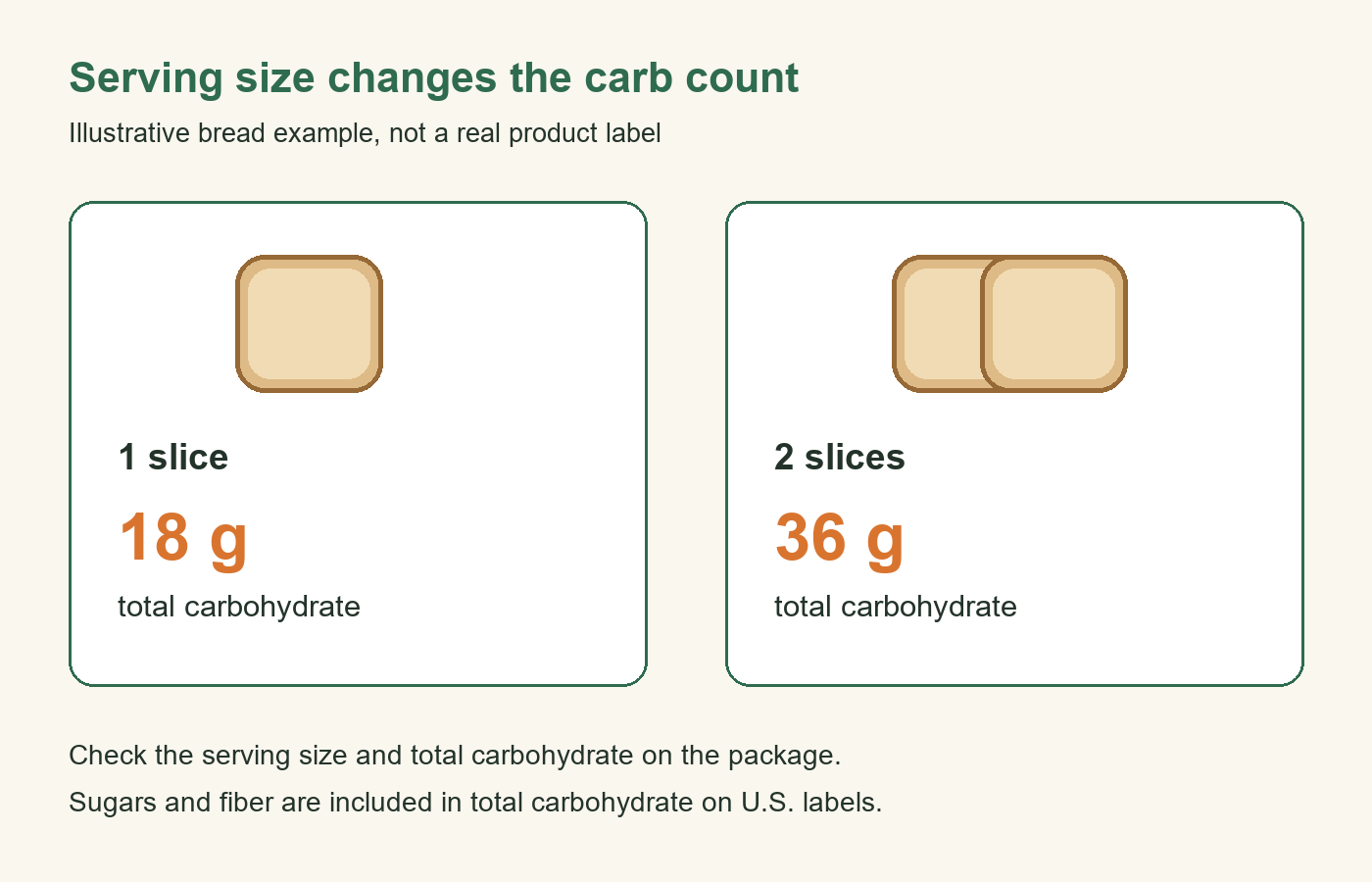
For example, if a bread label lists 18 grams of total carbohydrate per slice, two slices provide 36 grams of total carbohydrate.
That arithmetic matters even if the package highlights a small sugar number. On U.S. labels, sugars and fiber are included within total carbohydrate. FDA: Understanding total carbohydrate
Treat this as an illustration, not the nutrition information for a particular bread. Always check the current package.
How LessCarby can help
At LessCarby, we explore ways to enjoy bread, desserts, and everyday meals while reducing carbohydrates. We consider taste, convenience, ingredients, and portions because a product needs to work at your table as well as on its label.
For a product example, our Hero Bread article looks at options within one brand’s lineup.
For your next grocery trip, choose one item you regularly buy and compare it with an alternative. Start with the serving size, then read the total carbohydrates and the rest of the label. That gives you a useful starting point for deciding whether the change fits your goals.
This article provides general nutrition information and does not replace individualized medical advice.
Save This Post on Pinterest
Choose a pin below to save this carbohydrate guide for later.

Plan Your Week with Our Free Meal Planner
Choose seven days of meals, adjust portions, and download your shopping list. No email signup needed.
Open the Free Planner →
