To cook shirataki noodles without watery sauce, drain them thoroughly, follow the package’s preparation directions, and remove excess surface moisture in a skillet before adding sauce. Have your sauce ready separately. Boiling is not mandatory for every brand, and a thick sauce cannot compensate for a pan full of rinse water.
We recommend a label-first approach: identify the noodle, dry its surface, and combine it with a sauce that already has the consistency you want. This guide explains how to do that without treating every konjac product like ordinary spaghetti.
Start with the type of noodles you have
Wet-packed konjac, tofu shirataki, dried blends, and egg-white noodles need different handling. Check the ingredients as well as the front of the packet. Our Palmini versus shirataki comparison can help if you are still choosing a pasta alternative.
| Product | Manufacturer guidance |
|---|---|
| Miracle Noodle konjac | Rinse 90 seconds; dry-pan 2–3 minutes; sauce last. |
| Nasoya Pasta Zero | Drain and rinse. For hot noodles: parboil 2 minutes, use a dry skillet, or microwave 1–2 minutes. |
| 7Grains Dry Skinny Noodles | Boil about 10 minutes or until fully cooked, then drain. |
These examples come from Miracle Noodle’s preparation guide, Nasoya’s Fettuccine instructions, and 7Grains’ dried-noodle directions. The packet in your kitchen takes priority if its directions differ.
Nasoya includes chickpea flour and potato starch; the dried 7Grains product includes tapioca starch. Avoid assuming that every shirataki product has identical ingredients or carbohydrate content. Tofu versions also require attention to soy allergens.
How to cook wet-packed shirataki without watery sauce
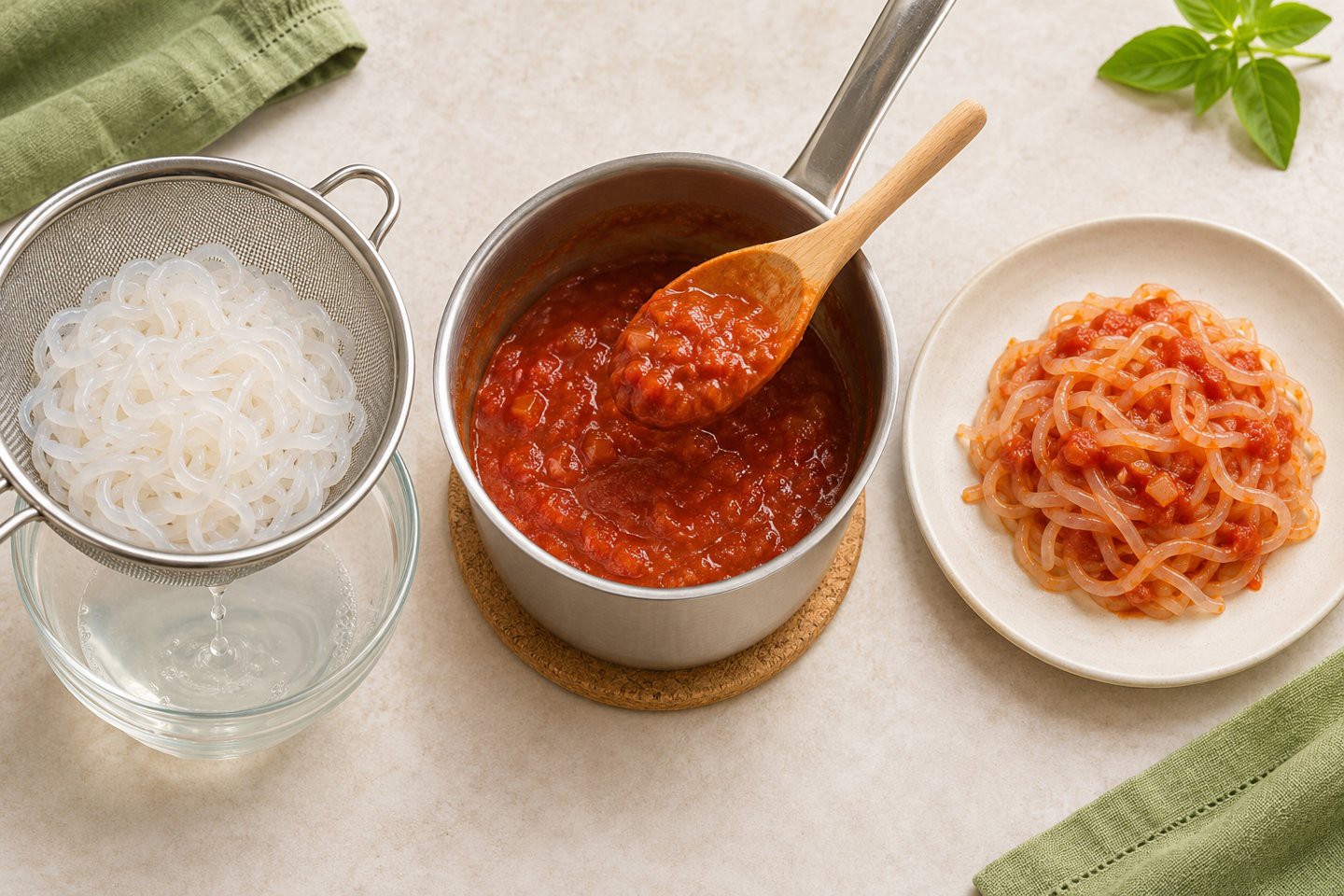
1. Finish the sauce and toppings first
Prepare a sauce that coats a spoon rather than running off like broth. Reduce a thin tomato sauce before adding noodles. For a cream or cheese sauce, follow that recipe’s heat instructions rather than boiling it hard to force it thicker.
Cook mushrooms, spinach, zucchini, and thawed frozen vegetables separately when they release substantial liquid. Let that moisture evaporate before combining everything. Otherwise, well-drained noodles can still end up sitting in a puddle.
2. Drain, rinse, and follow the label
Empty the packing liquid into the sink through a fine-mesh strainer. Rinse as directed, separating the strands so water reaches them, then shake the strainer gently. If your product calls for parboiling or microwaving, do that and drain again afterward.
There is no universal boiling requirement. House Foods’ tofu-shirataki guidance gives a 1-minute microwave or 2–3-minute parboil option followed by thorough drying. Choose the directions for your actual product, not the longest cooking time you find online.
3. Remove surface moisture in a skillet
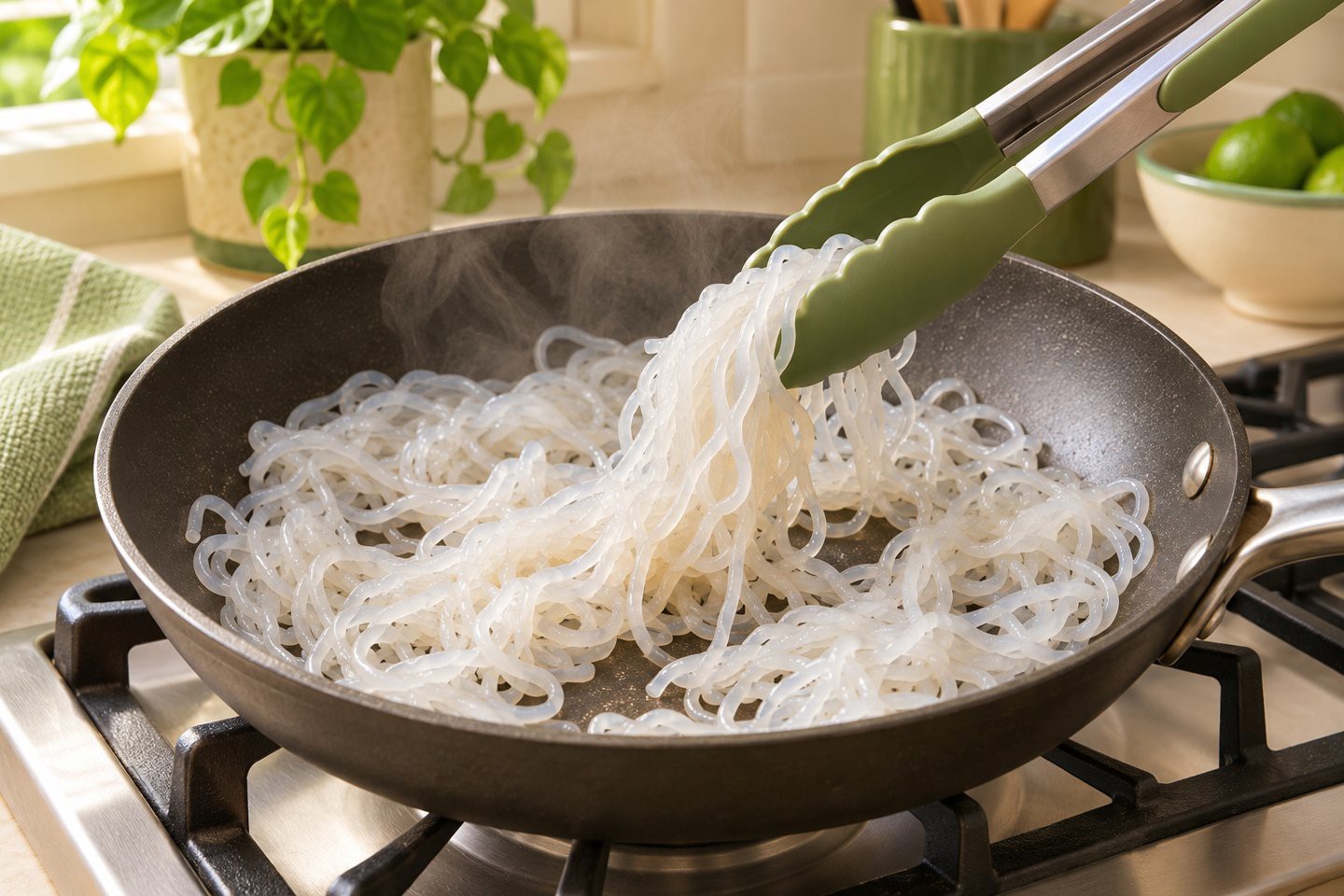
Place the drained noodles in a suitable nonstick skillet over moderate heat and move them regularly. Do not preheat an empty nonstick pan over high heat. Spread the noodles out; cook a large quantity in batches rather than piling it into a small pan.
Watch for the disappearance of standing water and a noticeable reduction in steam. The goal is a drier surface, not browned, crispy, or shrunken strands. Manufacturer timings vary: Better Than Foods, for example, lists a 5-minute dry-fry instruction for its organic range. Let the package and the moisture in your pan guide you.
4. Add sauce gradually
Once the excess water has evaporated, add the prepared sauce a little at a time and toss. Stop when the strands are coated to your liking. If the recipe includes garlic or other aromatics, cook them appropriately with its fat rather than leaving them in the pan throughout the drying step, where they could burn.
Do not automatically add a ladle of noodle water as you might with wheat pasta. Plain konjac is not a dependable source of the starchy cooking water that those recipes use. Serve promptly once everything is hot.
Fix the problem you can see
- Water appears before sauce: keep moving the noodles while moisture evaporates, or divide an overcrowded batch.
- Water appears after toppings: the vegetables or thawed ingredients may be releasing it. Cook their liquid off separately next time.
- The finished sauce is thin: lift out the noodles, gently reduce the sauce if suitable, then recombine. Be cautious with dairy sauces that may split.
- The sauce tastes too salty: stop reducing it. Evaporating more water concentrates the salt as well as the flavor.
- The noodles remain springy: some chew is normal. Extending the cooking time will not make them identical to wheat spaghetti.
Sauce choices, soup, and cold dishes
A thick tomato sauce, pesto, or a nut-based dressing can coat the strands well. Add any thinning liquid gradually. Check sauce ingredients for allergens and use the exact noodle and sauce labels if you track carbohydrates.
For soup, follow the noodle’s preparation directions and add it to the broth as the recipe directs; drying is not a universal requirement for a deliberately brothy dish. For a cold salad, drain carefully after preparation and cooling, and dress near serving so watery vegetables do not dilute everything in advance.
Store unused noodles and leftovers differently
Follow the packet’s refrigeration instructions, including before opening. A pantry-stable konjac pouch does not establish how a refrigerated tofu product should be stored. Miracle Noodle advises keeping opened extra noodles in water in the refrigerator and using them within a few days.
For a prepared meal, USDA recommends refrigerating within 2 hours, or 1 hour above 90°F/32°C, at 40°F/4°C or below. Use refrigerated leftovers within 3–4 days, or sooner if an ingredient’s instructions require it. Reheat leftovers to 165°F/74°C. Do not use rinsing to rescue food with questionable storage history.
For your next bowl: prepare the sauce first and check the pan for excess water before combining. Find more meal ideas in our Recipes collection.
Method note: This is a source-informed preparation guide, not a hands-on product test or a measured recipe. Manufacturer examples were checked for this article; always follow your current package.
Plan Your Week with Our Free Meal Planner
Choose seven days of meals, adjust portions, and download your shopping list. No email signup needed.
Open the Free Planner →
