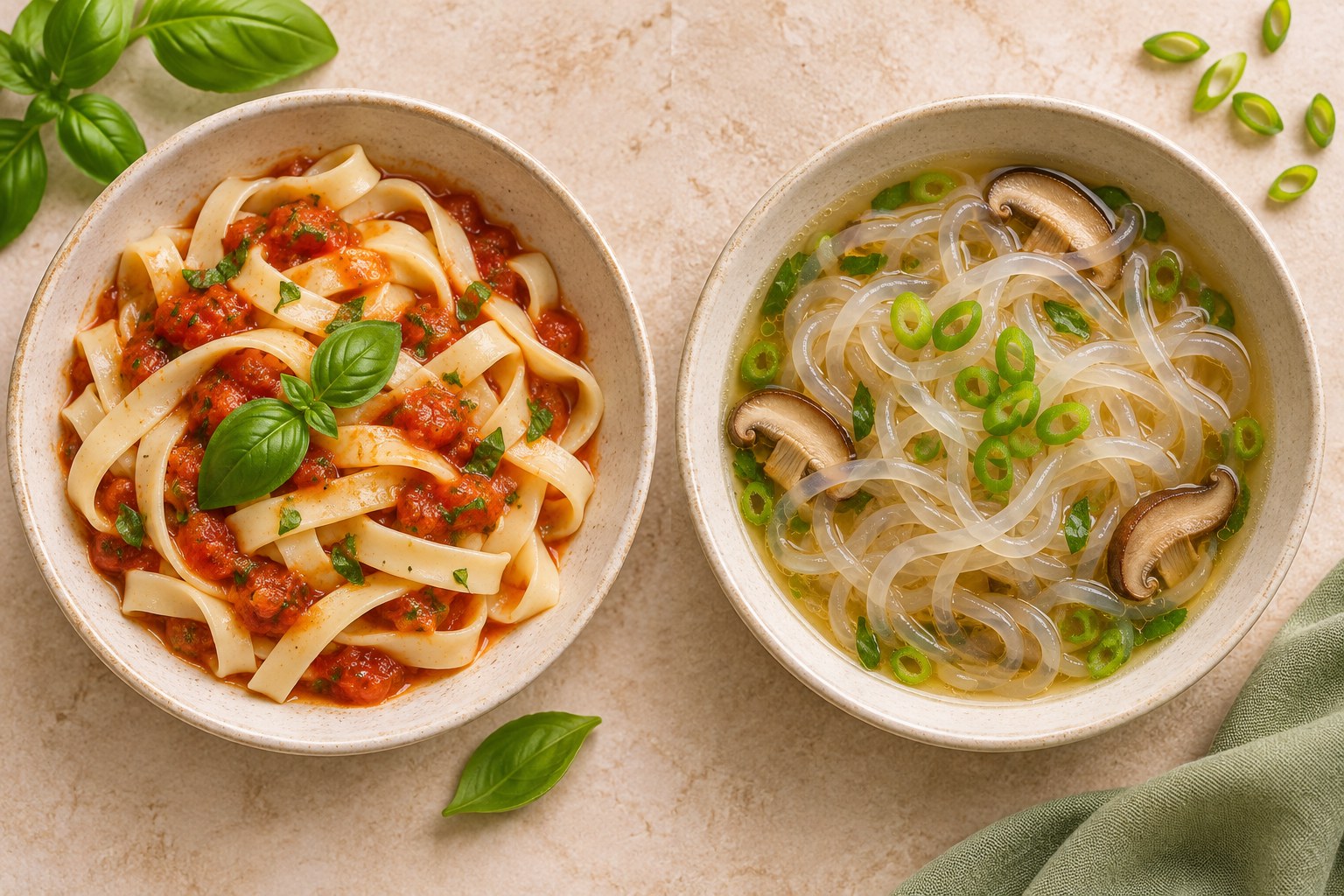
Choose Palmini Linguine if you want a vegetable-style base for tomato sauce or pesto. Choose original konjac shirataki, such as Miracle Noodle Angel Hair, if you prefer springy noodles in broth or a stir-fry and want the lower carbohydrate count. Neither is a convincing replacement for the soft, starchy bite of wheat pasta. The better buy is the one whose texture fits the dinner you actually want.
Our LessCarby verdict is try one pouch of either before buying a multipack. Palmini earns 3.5/5 as a convenient vegetable alternative with a noticeable firm bite. Miracle Noodle earns 3.5/5 as a very low-carb noodle with a more divisive, elastic texture. These are research-based editorial scores, not results from a LessCarby taste test or averages of customer ratings.
What we are comparing
This comparison covers U.S. Palmini Linguine and Miracle Noodle Konjac Angel Hair. Palmini is cut hearts of palm; the second is a konjac-based shirataki noodle. “Shirataki” is a noodle category, not a single brand or one standard nutrition label.
In particular, Miracle Noodle also sells egg-white products. Those are not the product evaluated here. Check the full product name before relying on our numbers. Shapes, ingredients and formulations can vary even within the same brand.
Choose by dinner, not just the front label
- Tomato sauce or pesto: start with Palmini if you enjoy vegetables with some bite.
- Broth or stir-fry: try original shirataki if slippery, springy noodles sound appealing.
- Lowest total carbs in an equal-weight comparison: Miracle Noodle has the advantage for these exact products.
- Classic wheat-pasta comfort: neither is our first recommendation if matching that texture is essential.
- First purchase: choose a single pouch when available, not a subscription based on nutrition alone.
Label comparison: the portions are different
The following figures come from the manufacturers’ displayed package labels, checked November 10, 2026. These are plain noodles, before sauce, cheese, vegetables or protein. Use your own package if its label differs.
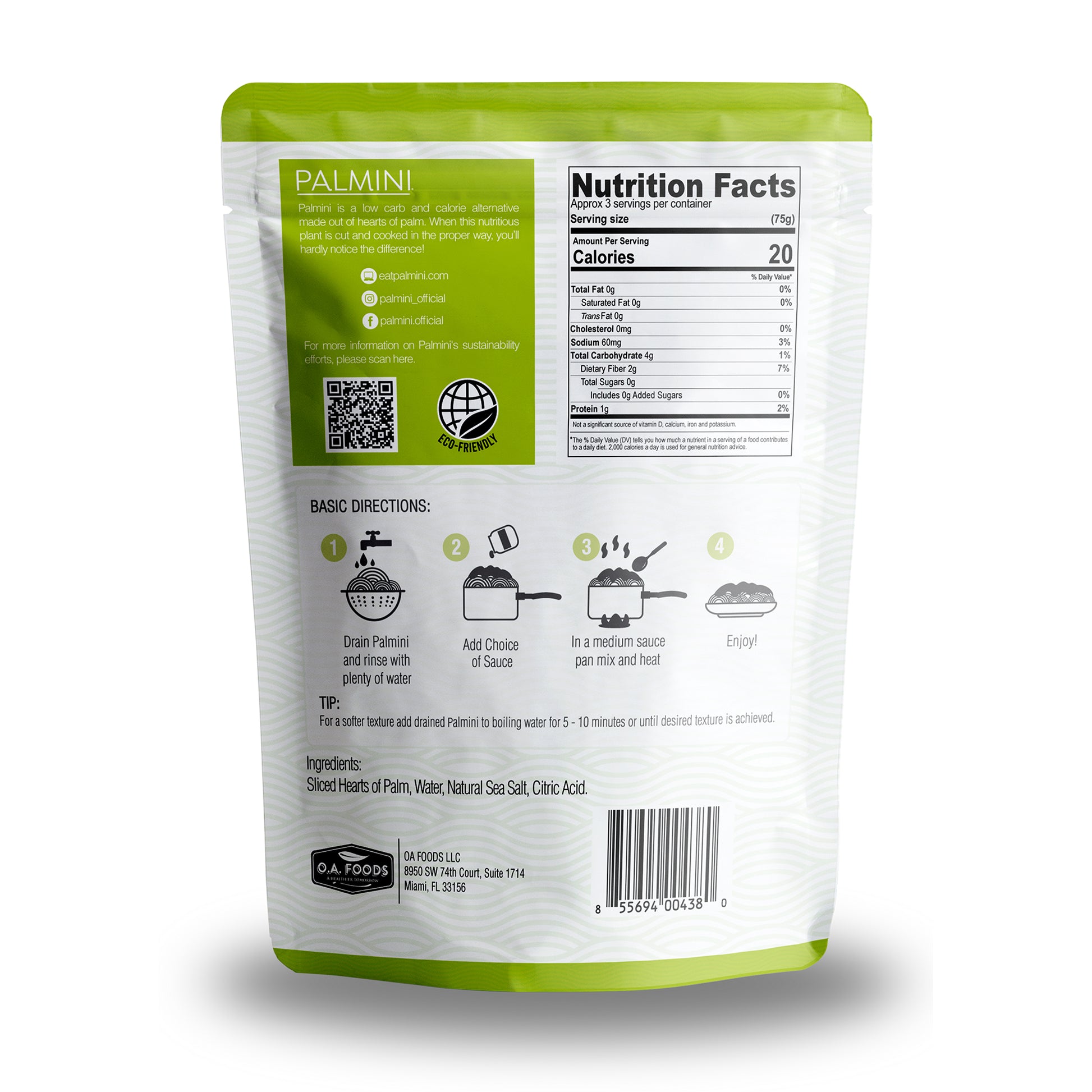
Palmini Linguine
- Serving: 75 g
- Calories: 20
- Total carbohydrate: 4 g
- Fiber: 2 g
- Protein: 1 g
- Sodium: 60 mg
Source: manufacturer’s back label.
Miracle Noodle Konjac Angel Hair
- Serving: 85 g (3 oz)
- Calories: 5
- Total carbohydrate: 3 g
- Fiber: 2 g
- Protein: 0 g
- Sodium: 0 mg
Source: manufacturer’s back label.
For a fairer weight comparison, the label arithmetic works out to approximately 5.3 g total carbs per 100 g for Palmini versus 3.5 g for Miracle Noodle. These are calculations from rounded label figures, not laboratory measurements. The difference is useful, but it should not make you choose a texture you dislike.
Subtracting the listed fiber gives 2 g net carbs per Palmini serving and 1 g per Miracle Noodle serving, the latter matching Miracle Noodle’s advertised claim. Total carbohydrate still matters. This simple subtraction is not a promise about your personal blood-glucose response, and it does not mean every “net-carb” calculation on other foods works the same way. Our nutrition-label guide explains the distinction.
A label serving is also not necessarily your dinner portion. If you use twice the stated weight, double its figures, then count the rest of the bowl. Neither plain product supplies much protein, so think of it as the base of a meal rather than the whole meal.
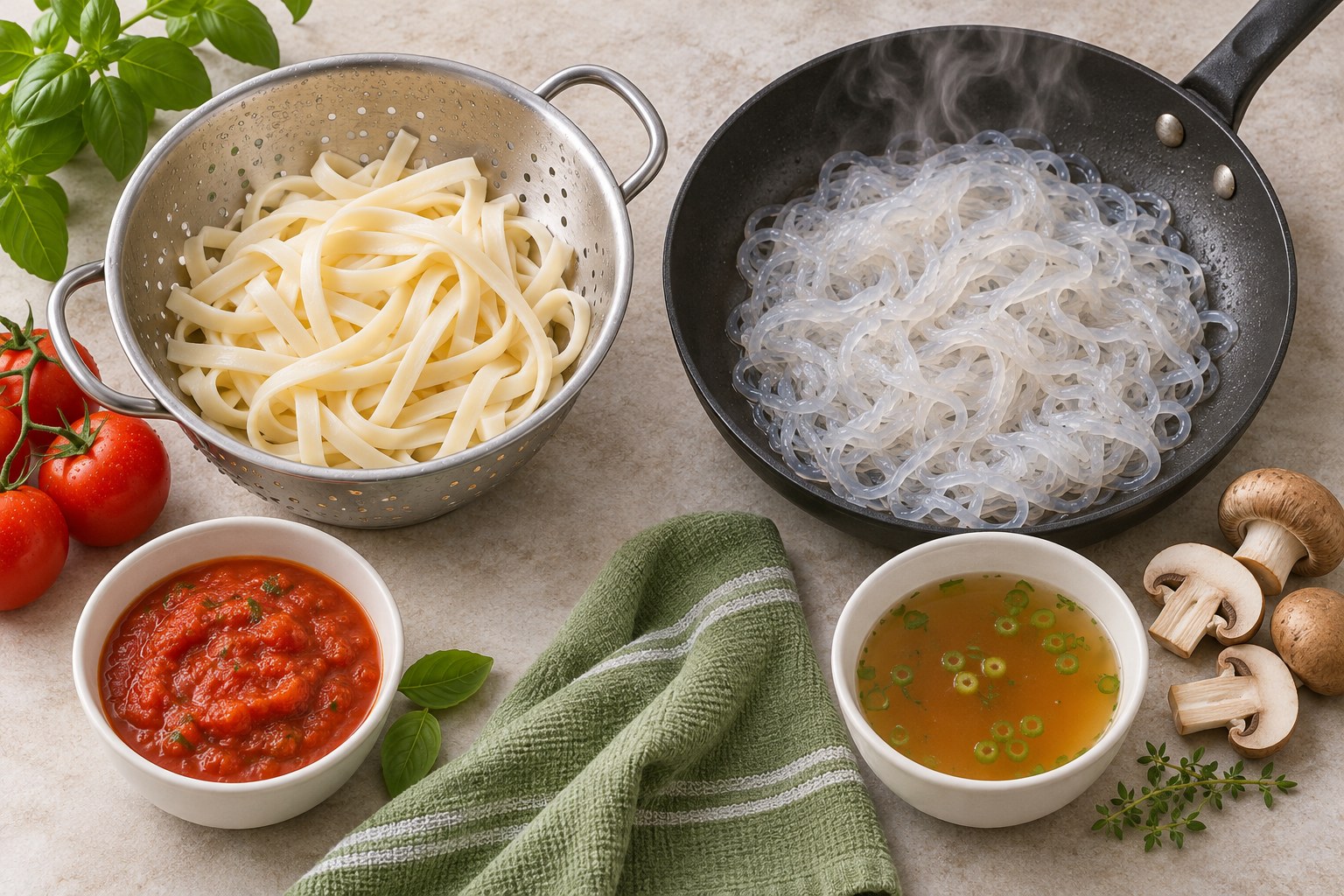
Taste and texture are the deciding factors
Palmini makes most sense when you accept it as a vegetable. In Parade’s 2026 Palmini review, Jeanette Donnarumma found the linguine remained crunchy rather than becoming soft pasta, even after soaking and rinsing. That is one reviewer’s experience, not a universal verdict, but it is a useful correction to expectations created by the word “linguine.”
Our recommendation is to try it with a sauce you already enjoy, without asking the noodle to reproduce spaghetti. If you dislike the idea of a firm vegetable strip in marinara, the low carb count alone is unlikely to make it a regular purchase.
Shirataki has a different challenge: its elastic, slippery bite. Bon Appétit’s shirataki guide describes that characteristic texture and its usefulness in broths and braises. That culinary context is more helpful than expecting Italian angel hair simply because a package uses that shape name.
On iHerb’s Angel Hair customer-review page, individual buyers praise easy preparation and sauce compatibility, while some mention price or an unfamiliar jelly-like texture. Those comments are anecdotal, span different purchase dates and do not establish a consensus or the formulation in every current pouch.
That is why both products receive a “try” rather than an unconditional “buy.” For the right dinner they can be useful pantry options. For someone seeking ordinary pasta with no compromise, both ask too much of the word “substitute.”
Preparation: a small difference that matters
Palmini’s package says to drain, rinse and heat with sauce. It also offers a 5–10 minute boil for a softer texture. The brand’s FAQ suggests an optional milk soak if you find it acidic. You do not need to add that step automatically; milk also changes the ingredients and allergens in your meal.
For the original Miracle Noodle product, the current website recommends rinsing and drying in a hot pan before adding sauce. Follow the pouch you buy, since package and website heating directions can differ. Keep this comparison’s aim simple: choose the noodle first; do not assume both can be tipped straight from packing liquid into a finished sauce with the same result.
For either option, get the sauce and other ingredients ready before finishing the noodles. Start with a manageable amount of sauce and add more if needed. A good dinner depends on the combination, not just whether the noodle meets a carb target.
Ingredients and allergy checks
Palmini’s displayed ingredients are hearts of palm, water, sea salt and citric acid. Miracle Noodle’s selected label lists water, organic konjac flour and citric acid. Neither list contains wheat, milk, eggs or soy; that is not a guarantee against all allergens or cross-contact. Read the actual package and contact the manufacturer when you need a specific allergy assurance.
Do not transfer these ingredient conclusions to tofu shirataki, egg-white noodles or flavored meals. Sauces can introduce dairy, nuts, soy, wheat or other allergens too. If high-fiber foods tend to disagree with you, the Miracle Noodle package advises following its recommended serving size; a low carb number is not a reason to ignore your tolerance.
Which offers better value?
There is no reliable universal price winner across stores, pack sizes and promotions. Compare the price for the amount you will actually eat, including shipping, rather than comparing a large pouch with a small one or a subscription discount with a one-time purchase.
Our practical value test is straightforward: would you buy it again for a specific dinner? Palmini can be worth keeping for vegetable-based pasta bowls. Original shirataki can earn its place for soups and stir-fries. A bargain multipack is poor value if you abandon it after the first unfamiliar bite.
Check current options directly from Palmini and Miracle Noodle. These are ordinary manufacturer links, not affiliate links. Local stock and checkout prices can change.
The LessCarby verdict
Palmini: try, 3.5/5. A practical first choice for readers who already like vegetables and want a tomato-sauce or pesto dinner. Its firm bite is the main compromise; we would skip it if soft pasta texture is nonnegotiable.
Original konjac shirataki: try, 3.5/5. The stronger choice here for the lowest total-carb count and a broth or stir-fry meal. Its springy texture and preparation step make a small first purchase wiser than stocking up.
Our scores weigh label clarity, meal fit, preparation, reported texture and purchase risk. They do not score a medical benefit or claim firsthand testing. Browse more LessCarby product comparisons for other ways to build a low-carb pantry.
Plan Your Week with Our Free Meal Planner
Choose seven days of meals, adjust portions, and download your shopping list. No email signup needed.
Open the Free Planner →