

Choose stainless steel for everyday low-carb mixing, add microwave-safe glass if you regularly melt butter or chocolate, and consider plastic for lightweight general prep. For whipped egg whites, reach for clean glass or stainless steel. The best mixing bowls for low-carb baking fit the recipe, your hands and your storage space.
Our practical starting point is a medium mixing bowl plus a smaller prep bowl. Add a larger bowl when your usual batches need it. Almond-flour muffins, cream-cheese batter and whipped toppings do not require a special “keto” material, and a bowl cannot change a recipe’s carbohydrate content.
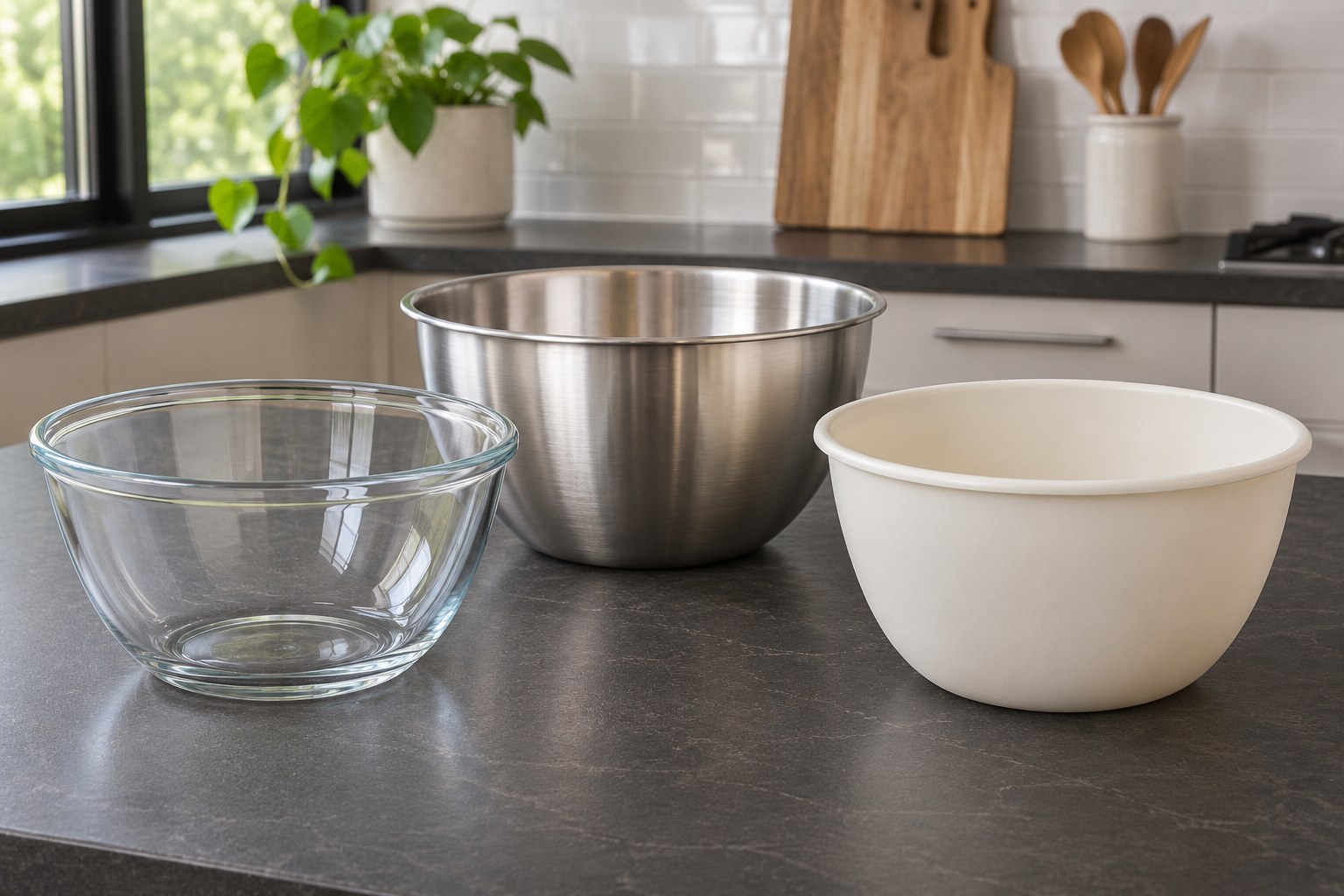
Which material suits your baking?
Start with the job you repeat most often. These are our editorial recommendations based on manufacturer specifications and baking guidance, rather than hands-on product testing.
Stainless steel: frequent mixing and chilled toppings
A useful first choice for stirring batter, folding ingredients and whipping cream. Steel is relatively light to lift and easy to chill. Look for a comfortable rim or handle and a stable base. Do not assume that a metal bowl can go in the microwave or oven; coatings, bases and handles can impose additional limits.
Glass: visibility and microwave preparation
Choose glass when seeing unmixed pockets through the bowl helps, or when you want to melt ingredients in the same microwave-safe vessel. Its extra heft can be less convenient when pouring thick batter. Glass can break, and microwave approval does not establish compatibility with a stovetop, air fryer or every oven.
Plastic: easy handling and everyday prep
A practical option for combining dry ingredients or stirring ordinary batter, particularly if lifting a full glass bowl is awkward. Handles, spouts and non-slip bases can matter more than appearance. Check the specific heat restrictions. For egg-white foam, we prefer glass or steel because plastic can retain greasy residue.
KitchenAid’s material guide supports steel for lightweight handling and chilling, and suitable glass for microwave preparation. Those advantages help narrow the choice, but the instructions for your actual bowl decide how you can use it.
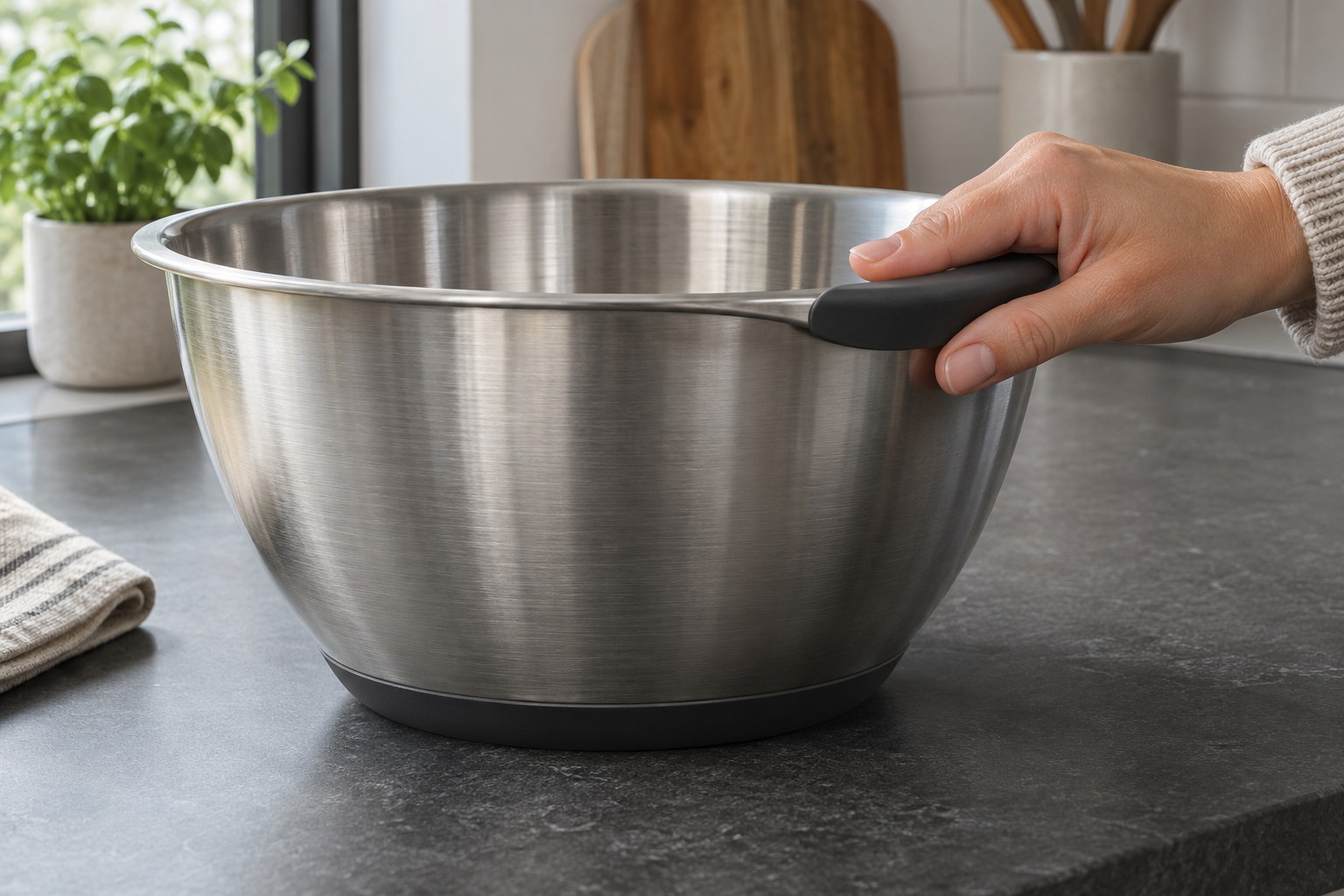
Choose capacity without buying an oversized set
As a shopping starting point, consider a 3- to 4-quart bowl for everyday mixing and a smaller bowl for eggs or measured ingredients. A 5-quart bowl gives larger batches more room. These are practical size suggestions, not guaranteed recipe yields: batter volume, whisk movement and bowl shape determine what fits comfortably.
US quarts and liters are different units. Three US quarts are about 2.84 liters; four are about 3.79 liters; five are about 4.73 liters. A stated capacity is not a recommended fill line for mixing. Leave room to fold and scrape without spilling flour over the rim.
Very small quantities can disappear across the bottom of a wide bowl. The American Egg Board’s egg-white guidance emphasizes both expansion room and good beater contact. That matters for small batches of egg-white bread as much as for meringue.
Four named examples worth comparing
These examples show useful differences in construction and compatibility. They are not a tested ranking. Check the current listing and care instructions before buying; no price or availability promise is implied.
OXO Good Grips stainless steel set, SKU 1107600
The three-piece White set contains 1.5-, 3- and 5-quart bowls. Stainless interiors pair with insulating plastic exteriors and non-slip bases. The bowls nest and are dishwasher-safe. This is a useful configuration for mixing several recipe components, but it is not an all-metal or plastic-free set. Do not infer oven safety from the steel interior.
Pyrex 4-quart Mixing Bowl, model 326
Pyrex SKU 6001043 is tempered glass, with dishwasher and microwave compatibility stated on its product page. Its 4-quart capacity is a useful reference for a main mixing bowl. Choose this style for visibility and microwave preparation, while considering the weight you will lift once ingredients are added. Follow Pyrex’s separate heating precautions.
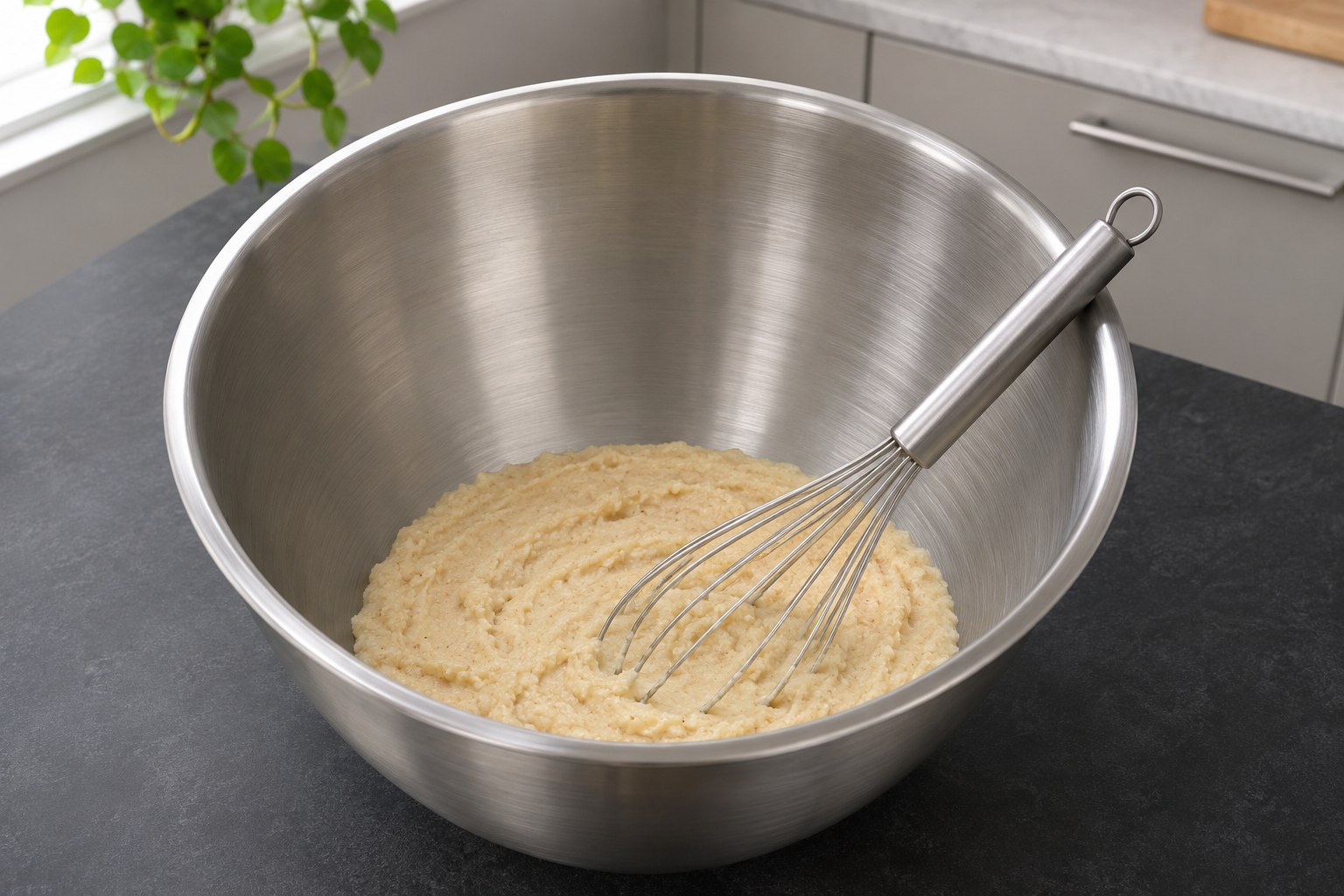
Joseph Joseph Nest 9 Plus, SKU 40031
The Multicolor set has 4.5-liter and 0.5-liter mixing bowls, a colander, a sieve and five measuring cups. The large bowl has a non-slip base and wide handles; the small one has markings and a spout. It is dishwasher-safe and explicitly not microwave-safe. Nine pieces means two mixing bowls, so check whether the accessories suit your kitchen.
KitchenAid KSM5GB glass mixer bowl
The 5-quart KSM5GB includes a lid, handle, spout and measurement markings. KitchenAid specifies dishwasher, microwave and freezer compatibility and fit for its 4.5- and 5-quart tilt-head stand mixers. Buy it for a compatible machine, not as a universal replacement. Matching capacity alone does not establish mixer fit.
Handling matters as much as material
A non-slip base helps steady a bowl, but you should still hold it while mixing. Try to picture lifting the filled bowl with one hand and scraping with the other. A handle or broad rim may be more useful than a matching set.
Reliable empty-bowl weights were not available in the manufacturer specifications inspected for these examples, so we have not supplied gram or ounce comparisons. If lifting weight is a concern, ask for the exact model’s net weight, not its shipping weight. Also check cabinet height, nesting space and room in your dishwasher.
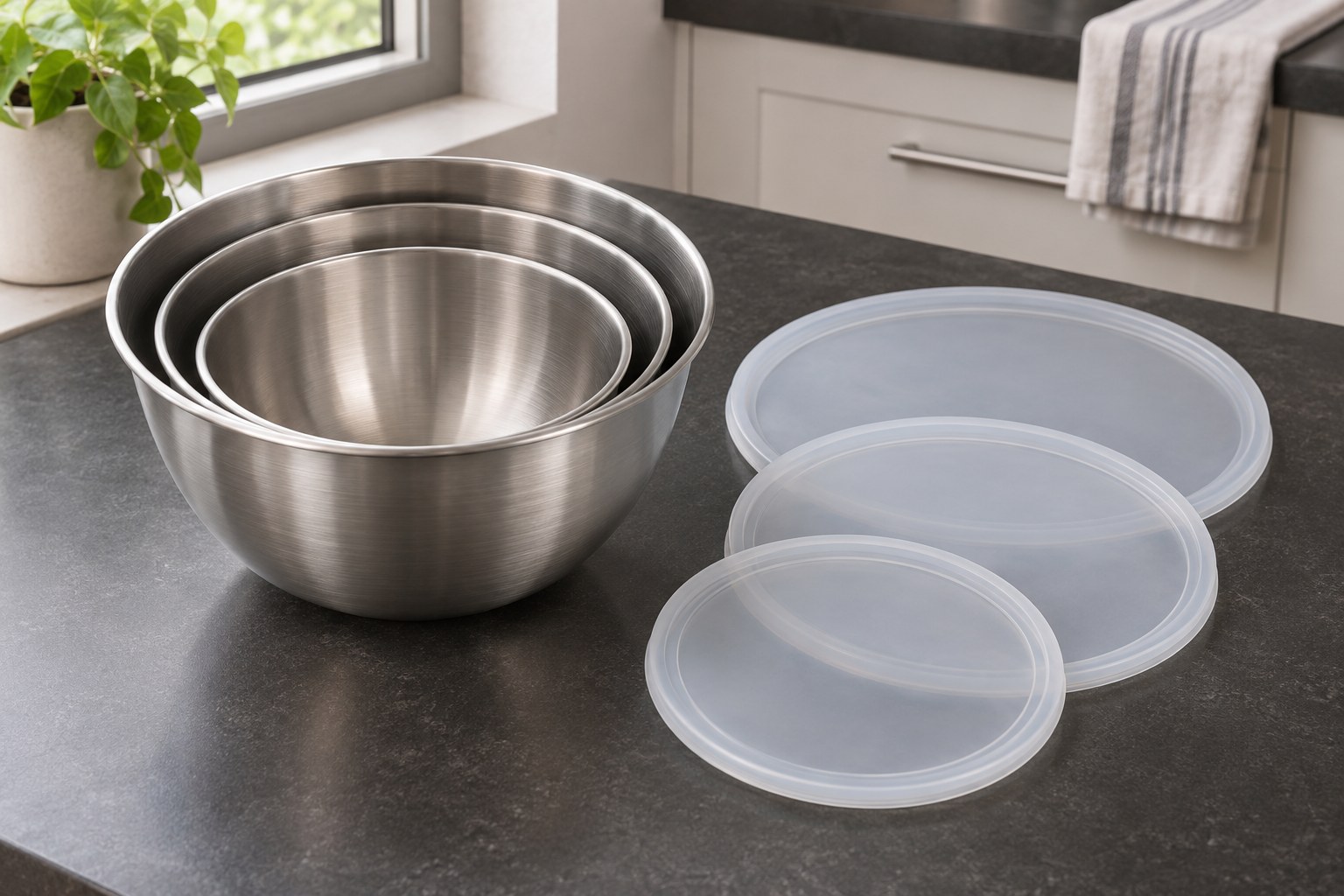
Egg whites, mixers and heating limits
For egg-white recipes, wash the bowl and beaters carefully and keep yolk and oily ingredients separate until the recipe calls for them. King Arthur Baking recommends glass or metal over plastic because greasy residue can interfere with foam. This is a mixing-performance issue, not a blanket claim that plastic bowls are unsafe.
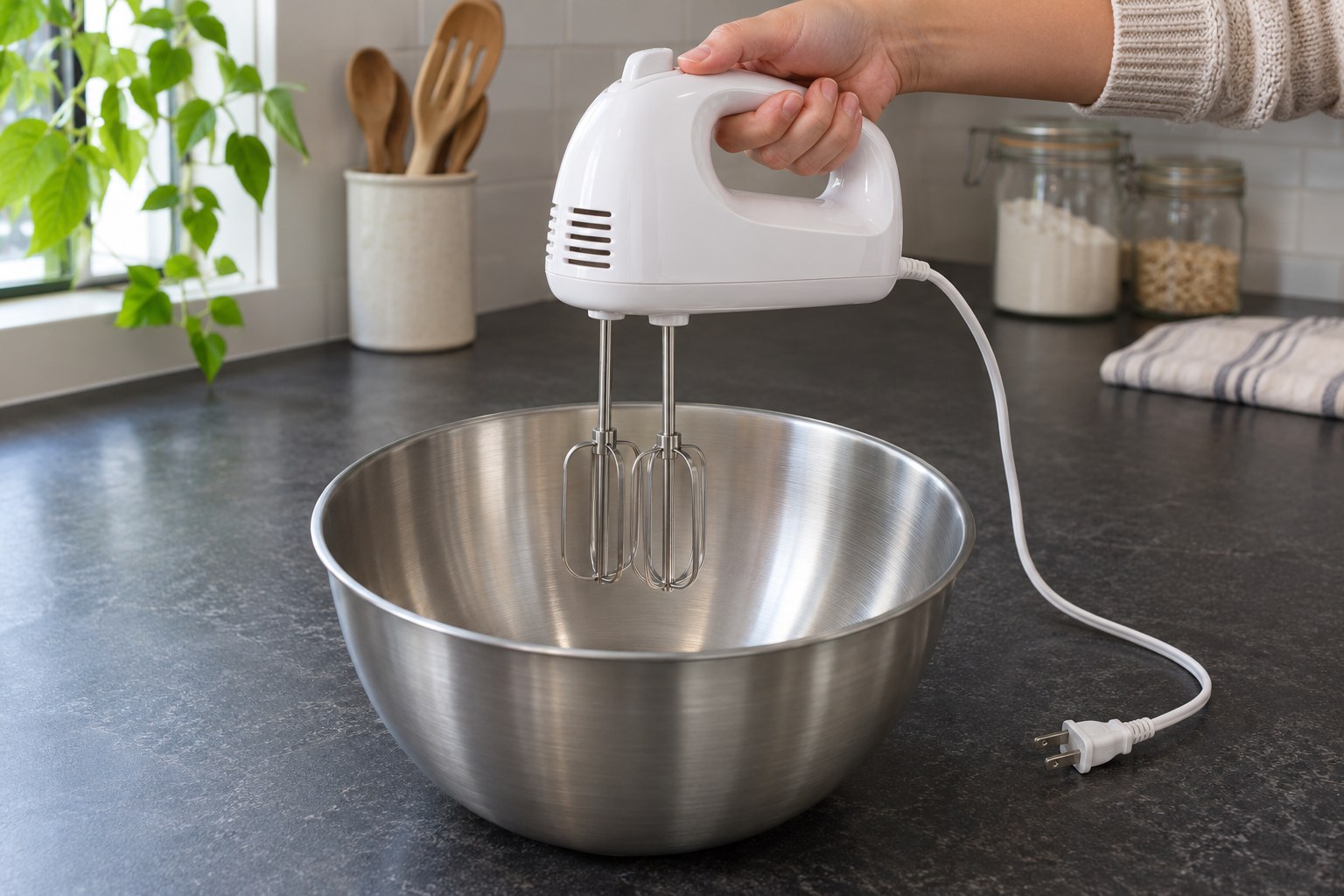
Use only bowls and accessories compatible with your stand mixer, and follow its clearance instructions. A hand mixer also needs suitable bowl depth and room for its beaters. Our stand-mixer versus hand-mixer guide can help you choose the appliance before buying extra bowls.
Pyrex’s current safety instructions prohibit direct heat, broilers and countertop cooking appliances, including air fryers and toaster ovens. Avoid sudden temperature changes, freezer-to-hot-oven transfers and hot glass on wet or cool surfaces. Do not use chipped, cracked or severely scratched glass. Plastic lids have separate restrictions, and butter or oil should not be overheated in the microwave.
Buy for your next batch
Check the bowl you already own against your next recipe. If it holds the ingredients with mixing room and meets the appliance instructions, keep using it. If you need an upgrade, prioritize the missing feature: a stable base, easier lifting, microwave compatibility or a smaller bowl for beating a few whites.
For most home bakers, one comfortable main bowl and one smaller prep bowl are a sensible start. Explore more practical equipment choices in our Kitchen & Baking hub.
Plan Your Week with Our Free Meal Planner
Choose seven days of meals, adjust portions, and download your shopping list. No email signup needed.
Open the Free Planner →
