

This is a researched, label-based product analysis. We have not conducted a hands-on taste or texture test of this loaf, and product formulas can change. Always verify the package you are buying.
Quick answer: Franz Keto White Bread is a high-fiber, wheat-based sliced bread marketed for shoppers who want very low net carbohydrates without giving up a familiar white-bread format. The current retailer label we found lists 40 calories, 12 grams of total carbohydrate, 12 grams of dietary fiber, 4 grams of protein, and 95 milligrams of sodium per 30-gram slice. On paper, that produces a very low net-carb calculation, but the best decision still depends on your digestion, allergies, blood-glucose response, and whether you enjoy the bread’s taste and texture.
Franz Keto White Bread at a glance
| Label item | Current listed amount per slice | What it means |
|---|---|---|
| Serving size | 1 slice (30 g) | Compare breads using the same serving basis. |
| Calories | 40 | Lower than many conventional white breads. |
| Total carbohydrate | 12 g | Use the total-carbohydrate line as your starting point. |
| Dietary fiber | 12 g | A large amount for one slice; increase gradually if needed. |
| Protein | 4 g | Useful, but not a complete meal by itself. |
| Sodium | 95 mg | Remember that sandwiches usually use two slices plus salty fillings. |
| Added sugar | 0 g | No added sugar is listed for the current product. |
Source: current Franz Keto White Bread listing at QFC/Kroger, checked September 16, 2026. Labels and formulas may change.
What the net-carb claim means
“Net carbs” is not a separate mandatory line on the Nutrition Facts panel. Shoppers commonly estimate it by subtracting dietary fiber from total carbohydrate. With the current listed values, 12 grams of total carbohydrate minus 12 grams of fiber produces a calculated result of zero grams. Retail listings may market the loaf using a low or zero net-carb message.
That calculation is useful for comparison, but it does not guarantee the same metabolic response for every person. The FDA requires total carbohydrate and dietary fiber to appear on the label, while voluntary marketing language can be presented elsewhere on the package. If you track glucose, your own response to a normal serving is more informative than assuming every high-fiber bread will affect you identically.
The biggest feature is also the main caution: fiber
Twelve grams of fiber in one slice is substantial. The FDA’s Daily Value for dietary fiber is 28 grams, and its general label guide considers 20% Daily Value or more “high.” One listed slice therefore supplies a large share of the daily reference amount.
That can be attractive if you are trying to increase fiber, but going from a lower-fiber diet to a very high-fiber sandwich can cause gas, bloating, or digestive discomfort for some people. Start with a modest serving, drink fluids, and pay attention to how you feel. A two-slice sandwich doubles the listed fiber to 24 grams before vegetables or other fiber-rich foods are added.
Ingredient-list questions to ask
High-fiber low-carb breads are formulated differently from standard white bread. Instead of judging the loaf only by the front-of-package carb claim, read the full ingredient list on the actual bag. Look for the primary fiber sources, wheat proteins, oils, dough conditioners, preservatives, and any allergens.
- Wheat and gluten: this is a wheat-based product and is not appropriate for someone who must avoid gluten.
- High-fiber ingredients: these help reduce calculated net carbs but may affect digestion differently from person to person.
- Oils and conditioners: these help packaged bread retain softness and structure; shoppers may weigh them differently based on personal preferences.
- Formula changes: retailer pages can lag behind packaging, so the bag in your hand is the final authority.
Franz also notes in its company FAQ that some products may contain dairy, egg, or honey and that vegan options are labeled. That makes the specific package’s allergen statement important rather than relying on assumptions about the brand.
How it compares with ordinary white bread
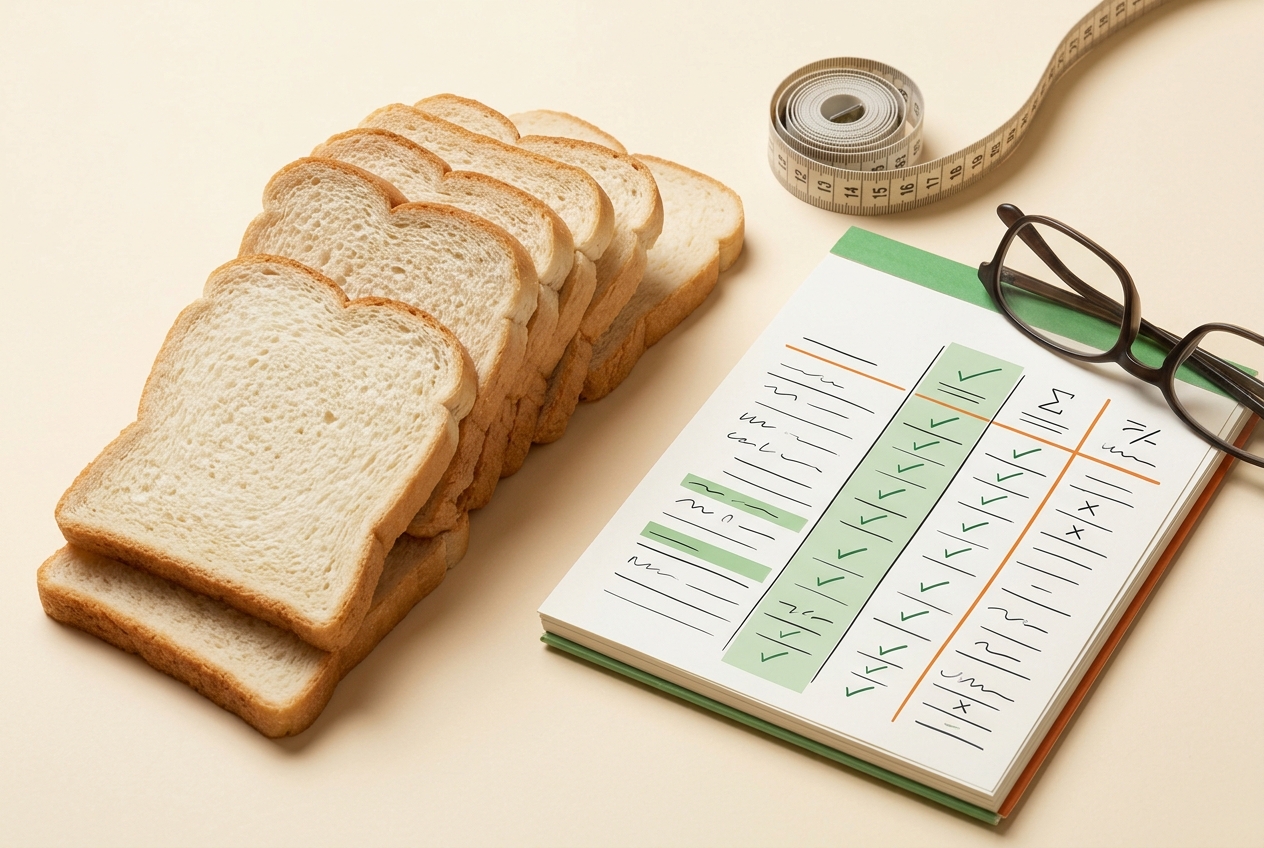
The clearest difference is carbohydrate structure. Conventional white bread usually gets most of its carbohydrate from refined flour and commonly contains much less fiber. Franz Keto White Bread is designed around added fiber and wheat protein so the label can show much lower calculated net carbohydrates.
That does not automatically make it better in every context. Conventional bread may have a simpler texture and a familiar ingredient profile, while a keto-style loaf may be more useful for someone prioritizing net carbs. Compare serving size, fiber, sodium, protein, allergens, and ingredients—not just calories or a large number printed on the front.
Practical ways to use it
Because this article is not based on firsthand testing, we cannot honestly rate softness, toastability, aftertaste, or durability. Still, the sliced white-bread format is intended for familiar uses:
- toast with eggs, avocado, or an unsweetened spread;
- a turkey, chicken, tuna, or vegetable sandwich;
- grilled cheese or a skillet melt;
- French toast made with an unsweetened egg mixture;
- breadcrumbs or croutons if the texture works after drying.
Build the meal around protein and non-starchy vegetables instead of treating a low net-carb number as permission to ignore the rest of the plate. For more ideas, see our low-carb croutons guide and low-carb garlic bread recipe.
Buying options and other Franz keto bread variations
Affiliate disclosure: As an Amazon Associate, LessCarby earns from qualifying purchases. If you buy through one of the links below, we may earn a commission at no additional cost to you.
- Franz Bakery White Keto Bread, two-loaf pack on Amazon: the closest match to the white bread reviewed here. Confirm the seller, package size, current label, price, and delivery terms before ordering.
- Franz Keto Multi-Seed Bread, two-pack on Amazon: a seeded variation for shoppers who prefer a heartier style. Its listing and nutrition profile are different from the white loaf reviewed above, so compare the current package rather than assuming the same numbers.
Amazon inventory and sellers can change. These links were verified against current Franz product listings on September 16, 2026; LessCarby does not control availability or pricing.
Who may find it useful?
This loaf may appeal to shoppers who want a familiar sandwich shape, count net carbohydrates, prefer no added sugar, or want more fiber. It may be less suitable for people who avoid wheat or gluten, are sensitive to concentrated added fiber, prefer minimally formulated bread, or need a product readily available outside the brand’s distribution area.
Availability can vary by region. Franz’s own FAQ explains that most of its conventional products have shorter shelf lives and are not broadly sold through its online gluten-free store. Check local supermarkets rather than assuming nationwide delivery.
Our label-based verdict
Franz Keto White Bread looks compelling on the current label for shoppers focused on very low calculated net carbs, moderate calories, no listed added sugar, and a white-bread format. Its unusually high fiber is the defining feature—and the reason to begin with a normal portion rather than several slices at once.
We are not assigning a taste score or declaring it the “best” keto bread without a controlled hands-on comparison. Before buying, verify the current package, confirm allergen compatibility, consider how a two-slice serving changes the totals, and monitor your own response if blood glucose is a concern.
Frequently asked questions
How many net carbs are in Franz Keto White Bread?
Using the current listed values, 12 grams of total carbohydrate minus 12 grams of dietary fiber calculates to zero grams of net carbohydrate per slice. Verify the bag because formulas can change.
Is Franz Keto White Bread gluten-free?
No. It is a wheat-based bread and is not suitable for people who need to avoid gluten.
Is it a good choice for diabetes?
No single bread is automatically appropriate for everyone with diabetes. The label is useful, but individual glucose response can vary. Consider your full meal and follow guidance from your healthcare professional.
Why does one slice contain so much fiber?
Keto-style breads often use concentrated fiber ingredients to provide structure while reducing calculated net carbohydrates. That can help meet fiber goals but may cause digestive discomfort when introduced too quickly.
Sources
- QFC/Kroger: Franz Keto White Bread current product listing
- Franz Bakery: Frequently Asked Questions
- FDA: How to Understand and Use the Nutrition Facts Label
- FDA: Interactive Nutrition Facts Label—Total Carbohydrate
Save This Post on Pinterest
Save either version for the next time you compare low-carb bread labels.
Plan Your Week with Our Free Meal Planner
Choose seven days of meals, adjust portions, and download your shopping list. No email signup needed.
Open the Free Planner →
