
For a low-carb cottage cheese chocolate mousse without protein powder, blend 226 g plain cottage cheese with 10 g unsweetened cocoa and liquid stevia, divide between two small cups and chill for an hour. Blend the cheese by itself first so you can check that the curds have disappeared before adding the cocoa.
This version makes a dense chocolate cream with a little dairy tang. Choose it when you want a small chocolate dessert using ordinary refrigerated ingredients. Expect a texture closer to pudding than the airy mousse made with whipped cream or egg whites. Using the labels below, each half-batch has an estimated 8 g total carbohydrate and about 120 calories.
Recipe at a glance
Yield: 2 servings; one-half of the finished batch per serving.
Equipment: a small food processor or suitable personal blender, spatula, scale and two 6-fluid-ounce (180 ml) cups. No pan or oven.
Active preparation: about 10 minutes. Chilling: 1 hour. Total planned time: about 1 hour 10 minutes.
Ingredients for two servings
- 226 g (1 U.S. cup) plain 4% cottage cheese, stirred before measuring. Nutrition below uses Daisy Classic 4% from the multi-serving tub.
- 10 g (2 level tablespoons) natural unsweetened cocoa powder.
- 2 squeezes Splenda Stevia Liquid Sweetener, equivalent to the sweetness of 4 teaspoons sugar according to its current directions. Start with 1 squeeze and adjust toward 2 after blending.
- Optional: 1–2 teaspoons cold water, only if needed to keep the mixture moving.
Use the gram weights when available. Cottage cheese cup measurements vary with curd size and how tightly you fill the cup. A squeeze is the manufacturer’s dosing instruction for this particular liquid sweetener, not a universal drop count. If using another liquid stevia, follow its label for the same sugar-equivalent sweetness rather than copying the number of squeezes.
How to blend it smooth
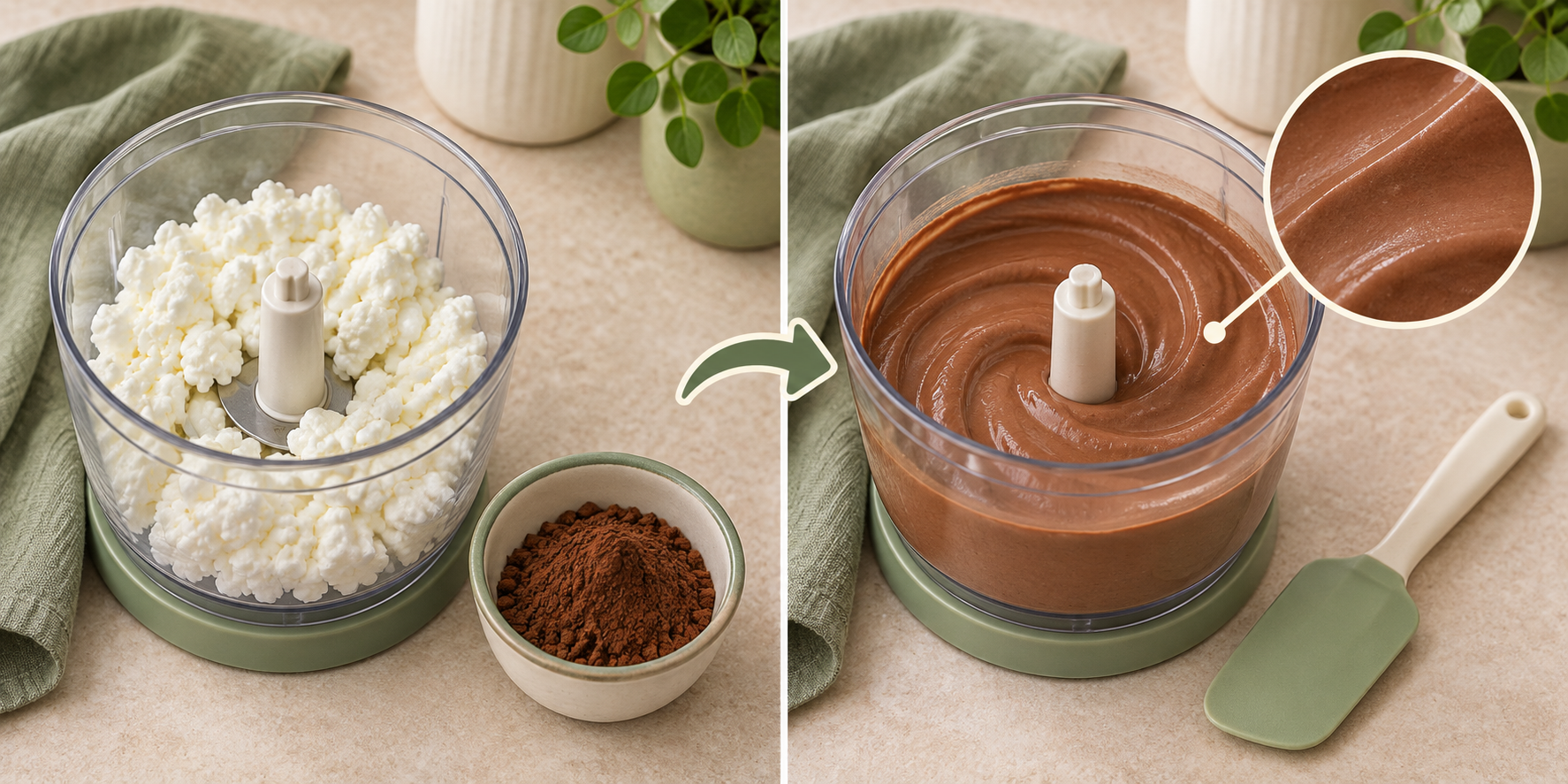
- Stir the cottage cheese in its tub, then weigh 226 g into the small processor bowl. For this recipe and its nutrition calculation, keep the dairy liquid rather than draining it. Do not use cottage cheese that smells spoiled or shows mold.
- Process the cheese alone for about 45–60 seconds. Stop the motor, scrape the sides and process again as needed. Rub a little between the back of a spoon and the bowl: visible white curds mean it needs more blending.
- Add the cocoa and 1 squeeze of liquid stevia. Start slowly to keep the cocoa contained, then blend until evenly chocolate-colored. Stop and scrape the bottom and sides. Plan on roughly 2–3 minutes total processing, working in intervals and following your appliance’s run-time limits.
- If the blade spins underneath a stationary mound, stop the motor and scrape before trying again. Add cold water 1 teaspoon at a time only if necessary, up to 2 teaspoons. Avoid pouring in milk simply to make blending easier; extra liquid can leave the dessert loose.
- Taste a small amount with a clean spoon. Add the remaining squeeze if you want it sweeter, then blend briefly. Cocoa is bitter, and the dairy’s tang will still be noticeable. Extra sweetener cannot turn a strongly tangy cheese into whipped cream.
- Weigh the finished mixture and divide it equally between the two cups. Cover and refrigerate for 1 hour before serving. This is a soft, spoonable dessert; chilling does not create a firm gelatin-style set.
Choose the cheese and cocoa for the result you want
Plain 4% cottage cheese is our starting choice for a fuller dairy texture. The Daisy Classic 4% tub label lists 5 g total carbohydrate, 13 g protein and 110 calories per 113 g. Its small single-serving container uses a different serving size, so do not treat an entire container as the same amount.
Choose cocoa whose ingredient list says cocoa, rather than sweetened drinking-chocolate mix. The current Hershey’s natural unsweetened cocoa page lists 3 g total carbohydrate and 10 calories per tablespoon (5 g). A heaped spoon changes both the flavor and the calculation.
Splenda’s liquid stevia is labeled zero carbohydrate and contains no erythritol. Powdered sweeteners and packets can have different ingredients and carbohydrate amounts. They are not interchangeable by volume with this liquid.
Fixing graininess, bitterness or a loose texture
If curds remain, scrape and process again before adding water. A large blender jar can struggle with this small quantity because the mixture sits below or away from its blades. Use an appliance designed for small batches; do not put a utensil into moving blades or exceed the manufacturer’s limits.
A gritty texture can also come from dry cocoa clumps. Break up lumps before adding it, and scrape the processor bowl. If the result tastes too bitter, adjust the liquid sweetener gradually. Adding more cocoa to hide the cheese can make the bitterness stronger.
For a loose mixture, chill it before making changes. Next time, start with a thicker plain cottage cheese and leave out the optional water. We do not recommend adding unmeasured protein powder or pudding mix as a rescue: each can change the flavor, texture and nutrition. If your preference is a richer cream-cheese dessert, try our no-bake cheesecake cups for two.
Estimated nutrition and carbohydrate calculation
For one-half of the plain batch: about 120 calories, 8 g total carbohydrate, 2 g fiber, approximately 13–14 g protein, 5.5 g fat and 370 mg sodium. These are estimates from rounded U.S. labels, not laboratory results. Optional water adds no carbohydrate; toppings and ingredient substitutions are excluded.
The whole batch uses two 113 g cottage-cheese servings and two 5 g cocoa servings. Total carbohydrate is therefore (2 × 5 g) + (2 × 3 g) = 16 g for the batch, or 8 g per serving. Fiber is 4 g per batch using the label information for the 8 oz cocoa can at Target (UPC 034000052004), which lists 2 g fiber per tablespoon. That listing gives 1 g protein per cocoa serving; Hershey’s current 8 oz product page lists less than 1 g, which is why we give a protein range. Check your package if its label differs.
If you use the term net carbs to mean total carbohydrate minus fiber, that gives approximately 6 g per serving. Total carbohydrate remains 8 g. No sugar-alcohol subtraction is used. Check your own packages, especially if you change the cheese or sweetener; low sugar and high protein do not automatically make a dessert low carb.
Storage, allergens and recipe notes
Cover promptly, keep at 40°F (4°C) or below, and plan to eat within 2 days for this small batch. This is a conservative make-ahead plan, not a measured shelf-life claim; preparation does not reset an already-open tub’s storage history. Use clean utensils. Follow the FDA’s refrigeration guidance and discard perishable food left out beyond 2 hours, or 1 hour above 90°F (32°C).
We would keep this dessert refrigerated rather than freeze it for later servings. Daisy cautions that freezing can damage cottage cheese’s creamy texture. Contains milk. It is not dairy-free, vegan or suitable for a milk allergy; lactose content and tolerance also vary. Check every package if you need to avoid gluten or other allergens.
This is a researched, untested LessCarby recipe. Blender performance, sweetness preference and the texture after a one-hour chill still need practical kitchen validation. The illustrations are AI-generated recipe concepts, not photographs of a LessCarby test. For more preparation ideas, browse our recipe collection. Portion the batch first so that the carbohydrate estimate stays useful when you serve it.
Plan Your Week with Our Free Meal Planner
Choose seven days of meals, adjust portions, and download your shopping list. No email signup needed.
Open the Free Planner →
