

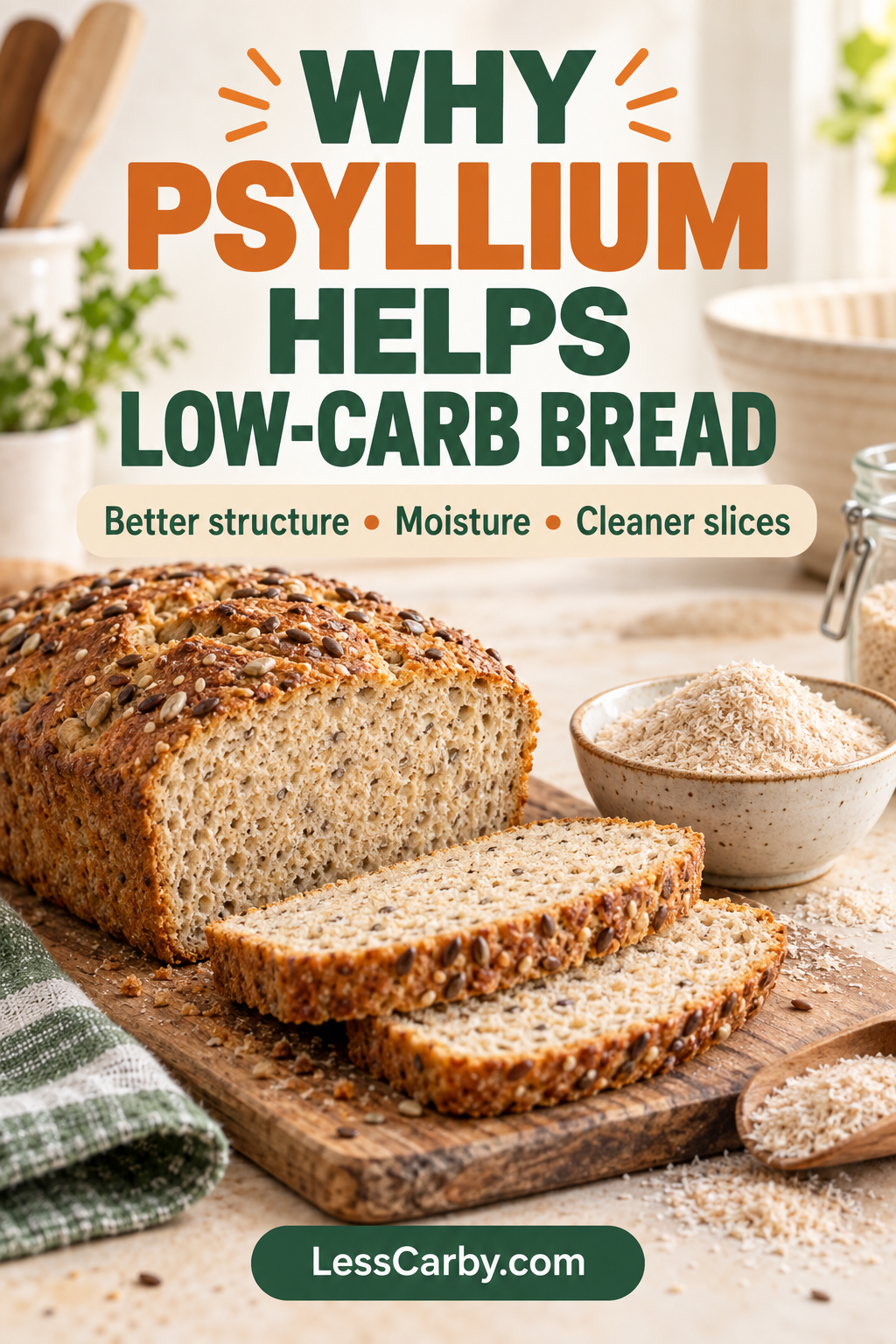
Psyllium husk helps low-carb bread hold together, retain moisture, and develop a more bread-like crumb. It works because its soluble fiber absorbs water and forms a gel. That makes it especially useful in doughs built without gluten-rich wheat flour, but it also means the recipe needs enough liquid and time to hydrate.
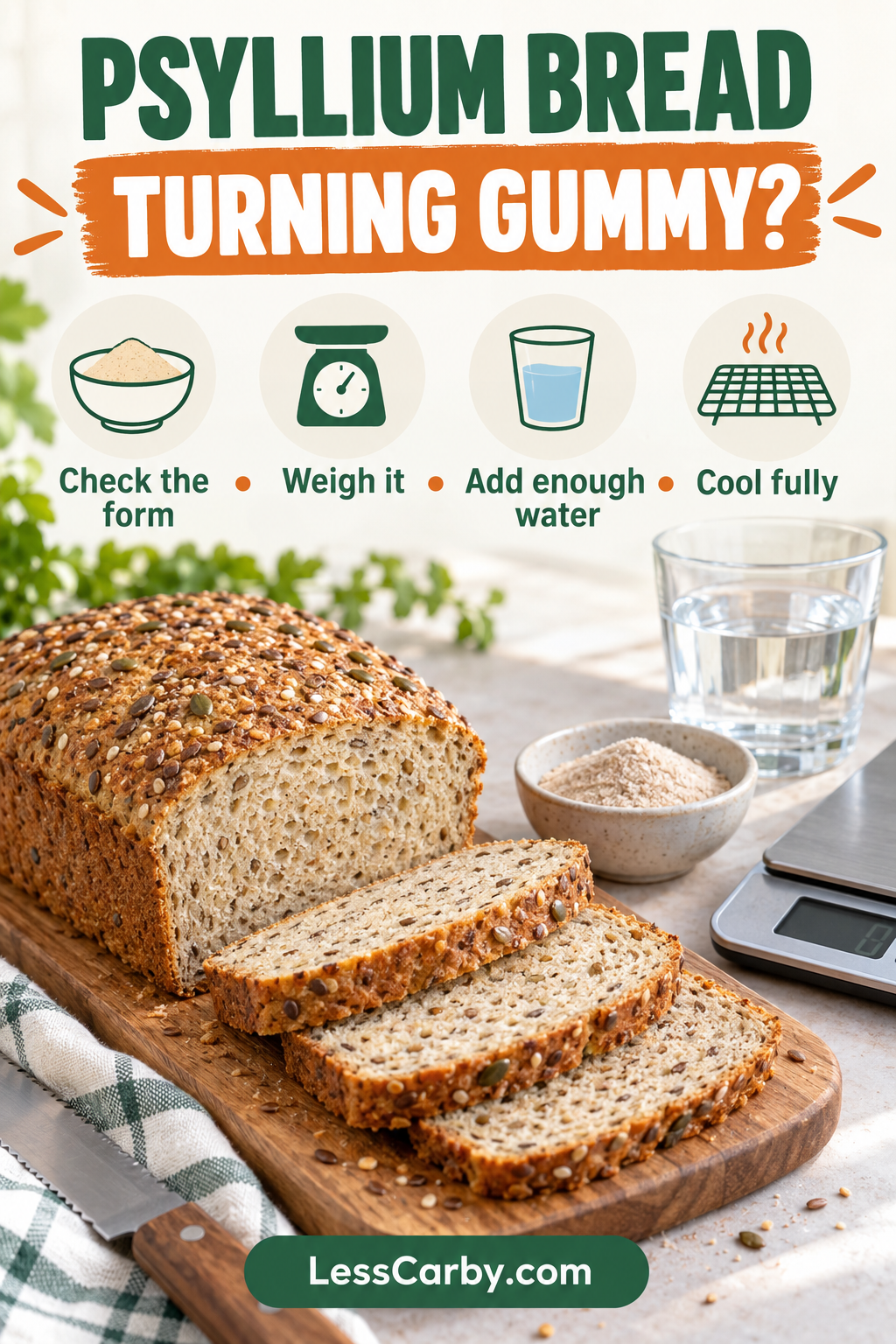
If your loaf turns gummy, rubbery, or oddly dense, psyllium is not necessarily the problem. The usual causes are too much husk, too little water, incomplete mixing, or slicing before the center has finished cooling.
What psyllium husk is
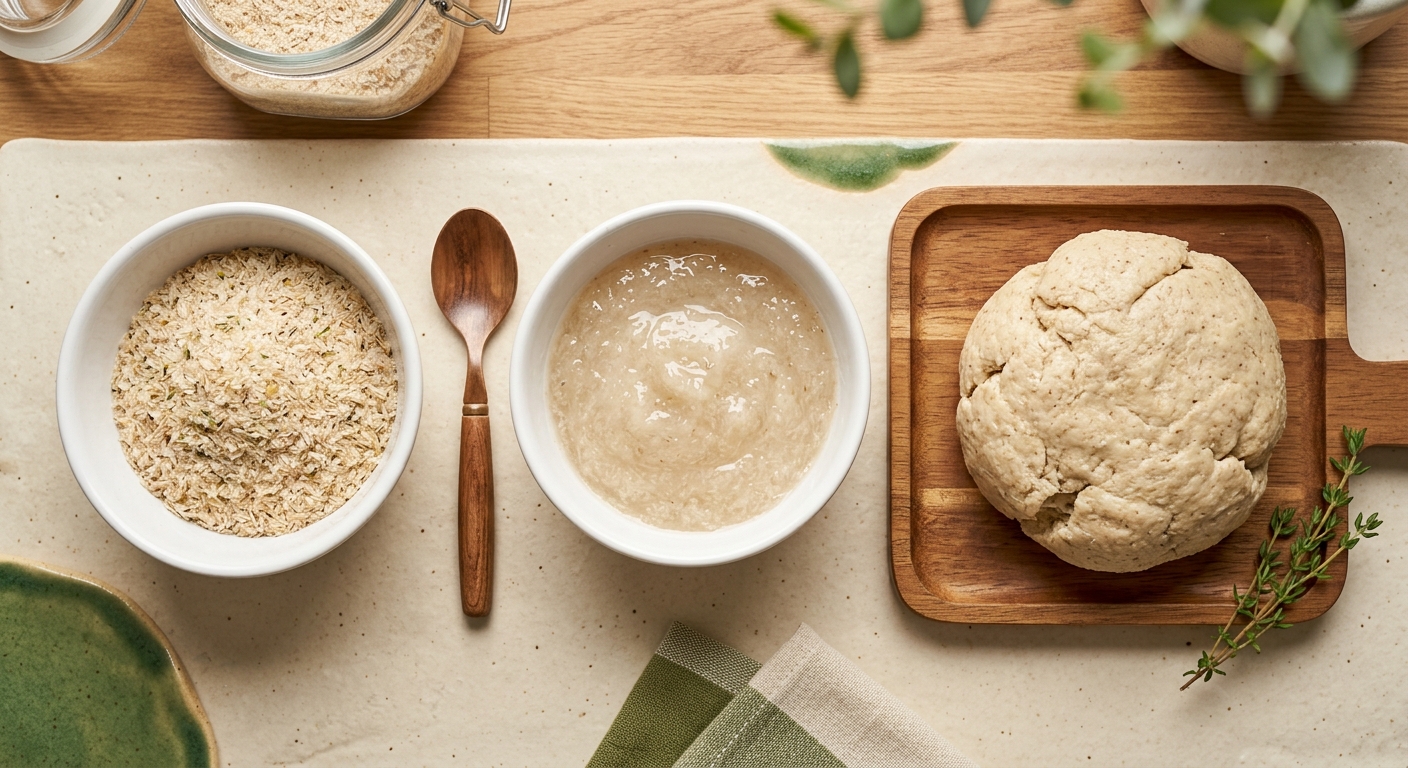
Psyllium husk is the outer seed coat of plants in the Plantago genus, most commonly Plantago ovata. It is rich in soluble, gel-forming fiber. When the husk meets water, it swells and creates a viscous network rather than dissolving like sugar or salt.
That behavior matters in low-carb baking. Almond flour, coconut flour, seed meals, and protein powders do not create the same elastic gluten structure as wheat flour. Psyllium cannot duplicate gluten perfectly, but its hydrated gel can connect ingredients, trap some of the gas made during baking, and reduce crumbling.
What psyllium does in low-carb bread
It binds a gluten-free dough
A hydrated psyllium gel acts like flexible scaffolding. It helps small particles of almond flour, seeds, and other dry ingredients move as one dough instead of separating into a fragile batter. The result is usually easier to shape and less likely to collapse when sliced.
It holds water
Psyllium absorbs far more water than its dry appearance suggests. That extra water can keep a loaf from feeling sandy or dry, but it has to be balanced carefully. A recipe designed for whole husks may not behave the same way with a finely ground powder because the powder hydrates faster and often thickens more aggressively.
It supports a sliceable crumb
Without enough structure, many low-carb loaves break at the edges or compress under sandwich fillings. Psyllium can help create a cohesive crumb that bends slightly instead of shattering. The texture will still differ from conventional wheat bread, especially in recipes with a high proportion of eggs or nut flour.
It can improve dough handling
Once hydrated, psyllium dough is often easier to portion into rolls, buns, or a loaf shape. Give it a short rest before making adjustments. A mixture that looks loose immediately after mixing may firm up noticeably after five to ten minutes.
Whole husk versus psyllium powder
| Form | How it behaves | Best approach |
|---|---|---|
| Whole husks | Hydrate more gradually and may leave visible flecks | Use when the recipe specifically calls for husks |
| Fine powder | Thickens quickly and can make a tighter dough | Use the recipe’s stated weight; do not swap cup-for-cup |
Weight is more reliable than volume for either form. Products also vary in grind and water absorption, so a successful swap may require a small liquid adjustment. Avoid assuming that one tablespoon of powder equals one tablespoon of whole husk.
How to use it successfully
- Follow a tested formula. Psyllium is a structural ingredient, not a garnish. Start with a recipe developed for the exact form you own.
- Measure by weight. A digital scale reduces the variation created by fluffy whole husks or densely packed powder.
- Mix the dry ingredients thoroughly. Even distribution prevents localized gel clumps.
- Add the full amount of liquid. Resist the urge to withhold water just because the dough initially looks wet.
- Allow time to hydrate. Resting lets the gel develop before you judge consistency.
- Bake until the center is set. A browned exterior can hide an underbaked middle.
- Cool completely before slicing. The crumb continues to stabilize as steam leaves the loaf.
Why psyllium bread can turn gummy
A gummy center usually points to a moisture or baking imbalance. Too much psyllium can create a dense gel. Too little water can leave the outside firm while the interior remains heavy. A loaf pan that is too small can also produce a deep center that takes longer to set.
Make one change at a time. If a tested loaf is consistently wet inside, first confirm oven temperature with a separate thermometer and extend the bake modestly. If the crumb is rubbery throughout, verify that you used the correct psyllium form and weight before reducing the ingredient.
Does psyllium change net carbs?
Psyllium contributes dietary fiber, but you should not calculate a loaf from an ingredient’s reputation. Use the nutrition label for the exact psyllium product and the labels for every other ingredient. For packaged bread, read the product’s serving size, total carbohydrate, dietary fiber, and any sugar alcohols instead of assuming every “keto” loaf has the same net-carb profile.
The FDA permits certain heart-health labeling for qualifying foods that provide soluble fiber from psyllium husk as part of a diet low in saturated fat and cholesterol. That rule has precise compositional and labeling requirements; it is not evidence that any homemade psyllium loaf automatically qualifies for a health claim.
Safety and hydration matter
Psyllium’s ability to absorb liquid is useful in bread, but concentrated psyllium supplements must be taken with adequate fluid. MedlinePlus advises mixing psyllium powder or granules with 8 ounces (240 milliliters) of liquid and notes potential medication interactions and precautions for people with swallowing or intestinal problems. Bread is not the same as taking a supplement, yet the guidance is a useful reminder not to treat highly absorbent fiber casually.
If you use psyllium for a medical reason, take medication, have difficulty swallowing, or have a digestive condition, ask a qualified clinician or pharmacist for individualized advice.
Common questions
Can I omit psyllium from a low-carb bread recipe?
Not usually without reformulating the recipe. Removing it changes both structure and water balance. Choose a psyllium-free recipe rather than simply leaving it out.
Can I replace psyllium with flax or chia?
Flax and chia also form gels, but they bring different flavors, fats, particle sizes, and water needs. They are not guaranteed one-for-one substitutes.
Why did my loaf turn purple or gray?
Some psyllium products can darken or develop a purplish cast during baking. The color is generally a product-and-recipe interaction, not proof that the loaf is unsafe, but discard bread with an abnormal odor, visible mold, or other signs of spoilage.
Is psyllium bread the same as high-protein bread?
No. Psyllium is primarily used for fiber and structure. Protein depends on the rest of the formula, such as eggs, dairy, seed flour, or added protein isolates.
The practical takeaway
Psyllium husk earns its place in low-carb bread by doing several jobs at once: binding the dough, managing moisture, supporting rise, and helping the cooled loaf slice cleanly. The tradeoff is sensitivity. Use the specified form, weigh it, provide enough liquid, and let the loaf bake and cool fully.
For more label-focused reading, see our guide to inulin and chicory root fiber and how to read low-carb bread labels.
Sources
Save this guide on Pinterest
Save either pin to keep these psyllium baking tips handy.
Plan Your Week with Our Free Meal Planner
Choose seven days of meals, adjust portions, and download your shopping list. No email signup needed.
Open the Free Planner →
