

Protein can make a meal feel more filling, especially in the hours after eating, but high-protein bread does not guarantee that you will snack less later. The difference between two loaves may be only a few grams per sandwich. Your filling, total meal size, fiber, texture, and personal appetite response often matter just as much.
Quick answer
- Controlled trials generally support a short-term fullness effect from higher protein intake.
- Long-term evidence on appetite and food intake is less consistent.
- Standard low-carb sandwich breads commonly provide 5–7g protein per slice.
- A protein-containing filling can change the meal more than a one- or two-gram difference between breads.
What Do Satiety and Satiation Mean?
Satiation is the feeling that leads you to stop eating during a meal. Satiety is the fullness that continues afterward and may delay the next eating occasion. People often use “fullness” for both, but separating them helps when reading research.
A study can show that participants report less hunger for two hours without proving that they eat fewer calories over the entire day. It can also show a change in appetite hormones without demonstrating meaningful weight loss. Those are related outcomes, not interchangeable ones.
What the Research Says About Protein and Fullness
A 2020 systematic review and meta-analysis of randomized controlled trials found that acute protein intake reduced reported hunger and increased fullness and satiety. It also found changes in several appetite-related hormones, including lower ghrelin and higher cholecystokinin and GLP-1. The authors described the long-term trial results as inconclusive.
That distinction is important for low-carb bread. A higher-protein lunch may feel more satisfying that afternoon, but the evidence does not justify promising that a particular loaf will prevent snacking, reduce daily calorie intake, or cause weight loss.
A second systematic review involving adults with overweight or obesity suggested that higher protein may improve fullness or satiety, but rated the evidence as low because study methods varied and risk of bias was high. The honest conclusion is “often helpful,” not “guaranteed.”
Why Protein May Affect Appetite
Protein digestion sends multiple signals between the digestive system and brain. Research commonly examines ghrelin, which is associated with hunger, and hormones such as cholecystokinin and GLP-1, which participate in appetite regulation. Protein also takes time to digest and contributes structure and substance to a meal.
The mechanism does not create a universal dose at which everyone suddenly feels full. Appetite varies with sleep, stress, activity, meal timing, energy needs, medications, and the foods eaten alongside the protein. Liquid and solid foods can also feel different even when their nutrient totals are similar.
How Much Protein Does Low-Carb Bread Add?
In our current five-label comparison of protein in low-carb bread, standard sandwich loaves provide 5 to 7 grams per slice. A two-slice sandwich therefore contributes roughly 10 to 14 grams from the bread alone. One larger protein-focused slice in that comparison lists 11 grams, but serving weight changes the apparent gap.
Use grams as a practical comparison. The FDA notes that protein generally does not display a percent Daily Value on adult food labels, so the gram amount is the more reliable number for comparing ordinary breads. The FDA’s general Daily Value for protein is 50 grams, but individual needs vary.
More protein is not automatically better bread. Also consider sodium, fiber, total carbohydrate, allergens, ingredients, slice size, and whether you enjoy the texture. A loaf you dislike is not useful simply because its protein number is higher.
The Filling Usually Makes the Bigger Difference
Consider two breads that provide 5 and 7 grams per slice. Switching between them changes a two-slice sandwich by 4 grams. Adding a substantial protein food can change the meal by much more, depending on the portion and ingredient.
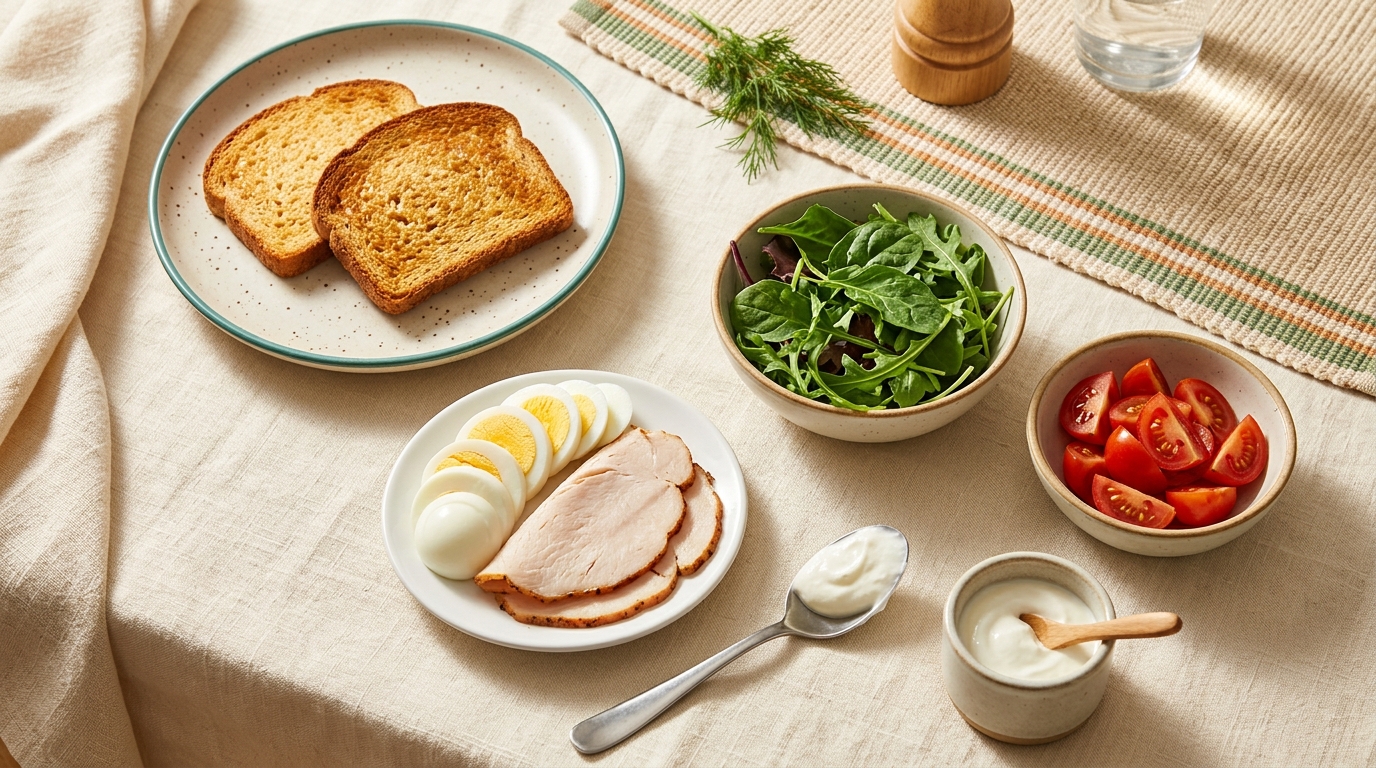
Useful pairings include:
- Eggs with tomato or leafy greens
- Chicken, turkey, tuna, or salmon
- Cottage cheese or plain Greek yogurt used as a spread
- Tofu, tempeh, or a bean-based filling
- Cheese with vegetables and mustard
- Peanut or seed butter when appropriate for your allergies and goals
The bread still contributes. It simply works as one part of the meal rather than carrying the entire satiety claim. The low-carb turkey club and low-carb BLT show how bread, protein, vegetables, and fat combine in realistic portions.
Protein Is Not the Only Part of Bread That Affects Fullness
Low-carb loaves often contain substantial fiber, resistant starch, seeds, or several of these. Fiber can add bulk and change digestion, but its appetite effects vary by type and dose. A systematic review of fiber and appetite found that most tested fibers did not consistently reduce appetite or food intake.
Bread-specific research is also difficult to interpret. In one randomized crossover study, lupin-enriched bread increased reported satiety and reduced energy intake at a later meal. However, the experimental bread differed in both protein and fiber, so the study does not prove that protein alone caused the effect or that every higher-protein loaf behaves the same way.
If your bread contains a large fiber load, comfort matters too. Our guide to how much fiber may be too much at once explains why a two-slice sandwich can feel very different from conventional toast.
A Better Way to Build a Filling Bread-Based Meal
Use this four-part check instead of judging the bread by one number:
- Start with the bread serving. Confirm whether the label describes one slice or two, then calculate the protein in the portion you will actually eat.
- Add a meaningful filling. Choose eggs, fish, poultry, dairy, soy, legumes, or another protein source that fits your eating pattern.
- Include produce. Lettuce, tomato, cucumber, peppers, or other vegetables add volume, texture, and variety.
- Check the entire label. Review sodium, fiber, net carbs, allergens, and serving size rather than treating protein as the only goal.
Then notice what happens in real life. Did the meal feel comfortably filling? Were you hungry again quickly? Did the bread’s fiber cause bloating? A simple note after several similar meals is more informative for your routine than assuming a front-of-package claim predicts your response.
Two Current Bread Examples
These examples show how a two-gram difference per slice becomes a four-gram difference in a sandwich. They are not a ranking, and neither loaf is guaranteed to control appetite.
Affiliate disclosure: As an Amazon Associate, we may earn from qualifying purchases at no extra cost to you.
Carbonaut Original
Carbonaut currently lists 7g protein and 1g net carb per slice. Two slices supply 14g protein from bread. The loaf contains wheat and sesame.
Hero Classic White
Hero currently lists 5g protein and 11g fiber per slice. Two slices supply 10g protein and a large fiber serving, which may not suit everyone.
Product formulas and availability change. Check the package in your kitchen, especially when you manage wheat, sesame, soy, egg, milk, or nut allergies. For more choices, use the Low-Carb Bread Finder.
When Higher Protein Needs Individual Guidance
The FDA Daily Value is a general labeling reference, not a personal prescription. Protein needs can differ with age, body size, pregnancy, activity, recovery from illness, and medical conditions. The USDA DRI Calculator uses National Academies reference values and notes that individual requirements may be higher or lower.
If a clinician has given you a protein target or restriction, follow that plan rather than trying to maximize the number on bread labels. People managing kidney disease or another condition that affects protein needs should ask their healthcare professional or registered dietitian before making a large dietary change.
Frequently Asked Questions
Does protein keep you full longer than carbohydrates?
Protein often improves short-term fullness in controlled comparisons, but the result depends on the amount, calories, food form, meal composition, and individual. Carbohydrate foods also differ widely, particularly in fiber and texture.
Is 10 grams of protein from two bread slices enough?
It is a meaningful contribution, not a universal meal target. Consider the rest of the sandwich and your total daily needs. Adding a protein-containing filling usually creates a more substantial meal.
Will high-protein bread stop cravings?
No loaf can promise that. Protein may reduce short-term hunger for some people, but cravings can also relate to habit, sleep, stress, restriction, food availability, and the overall meal.
Does plant protein count?
Yes. Protein from wheat, legumes, seeds, nuts, and other plant ingredients counts toward total intake. Eating varied protein sources helps provide the essential amino acids the body needs.
Save This Post on Pinterest
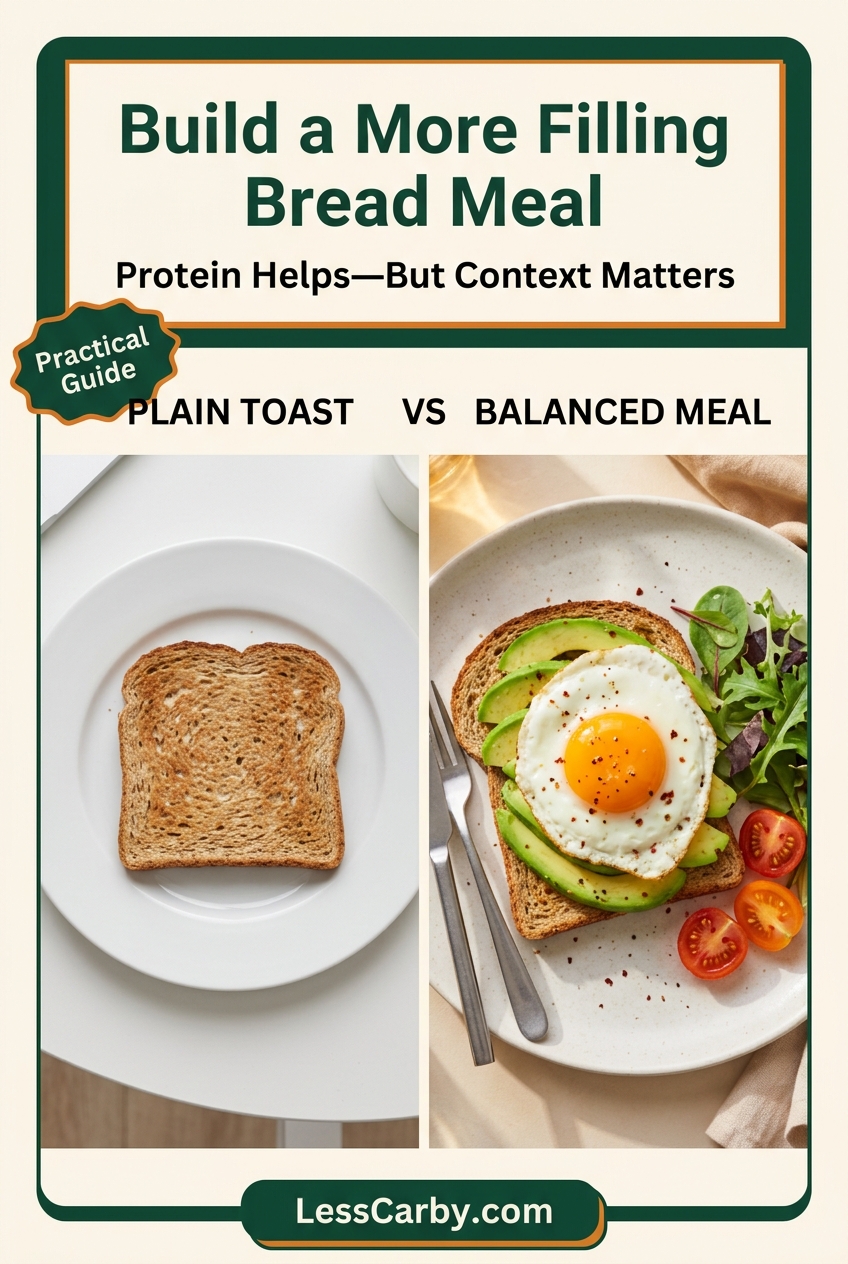
Save either version for a practical reminder that protein is only one part of a filling bread-based meal.
The Practical Takeaway
Use the protein number to compare breads, but build the meal around more than the loaf. Two slices providing 10 to 14 grams can be a useful base. Add a suitable filling and vegetables, check the full label, and judge the meal by comfortable fullness rather than a marketing claim.
This article provides general nutrition information, not individualized medical advice. Product formulas change; use the current package as your final source.
Plan Your Week with Our Free Meal Planner
Choose seven days of meals, adjust portions, and download your shopping list. No email signup needed.
Open the Free Planner →
