

This low-carb French toast bake is a make-ahead breakfast casserole made with cubed low-carb bread, cinnamon custard, and a lightly crisp top. Assemble it the night before, refrigerate it, and bake it in the morning. The bread has time to absorb the custard without turning into a thin, soggy layer.
The recipe serves eight and works especially well with bread that is one or two days old. Your exact net-carb count will depend mostly on the loaf and milk you choose, so the calculation method is included below.
Recipe at a glance
- Prep: 15 minutes, plus 8 to 12 hours chilling
- Bake: 35 to 45 minutes at 350°F
- Yield: 8 servings
- Estimated net carbs: about 2 to 4 grams per serving before toppings, depending on the bread and milk
Why day-old low-carb bread works best
Fresh low-carb bread is often very soft and high in added fiber. Drying it slightly gives the cubes enough structure to soak up the egg mixture while keeping distinct edges. You do not need truly stale bread. Leave the cubes uncovered for a few hours, or toast them on a sheet pan at 300°F for 8 to 10 minutes.
The best loaf is one you already enjoy toasted. Bread with a firm crumb tends to hold its shape better than an especially airy loaf. If you are still choosing, use our low-carb bread brand guide and check the serving size with the net-carb label-reading guide.
Affiliate disclosure: As an Amazon Associate, LessCarby earns from qualifying purchases. These links do not affect the price you pay.
Two bread options for this bake
Hero Classic White Bread: A practical choice when you want uniform sandwich-style cubes. Check the current label because ingredients and nutrition can change.
Carbonaut Seeded Bread: The seeds add texture and a slightly heartier flavor. It may create a less dessert-like result than plain white bread.
Low-carb French toast bake ingredients
- 12 slices low-carb bread, cut into 1-inch cubes
- 8 large eggs
- 1 1/2 cups unsweetened soy milk or another unsweetened milk
- 1/3 cup granulated allulose, or the package-equivalent amount of your preferred low-carb sweetener
- 2 teaspoons ground cinnamon
- 2 teaspoons vanilla extract
- 1/4 teaspoon fine salt
- 2 tablespoons unsalted butter, melted, plus more for the baking dish
- Optional for serving: fresh raspberries, chopped pecans, sugar-free syrup, or a spoonful of plain Greek yogurt
Allergen note: This recipe contains eggs and may contain wheat, gluten, soy, milk, sesame, or tree nuts depending on the bread, milk, and toppings. Read every package label. If you avoid almonds, choose soy or dairy milk rather than almond milk.
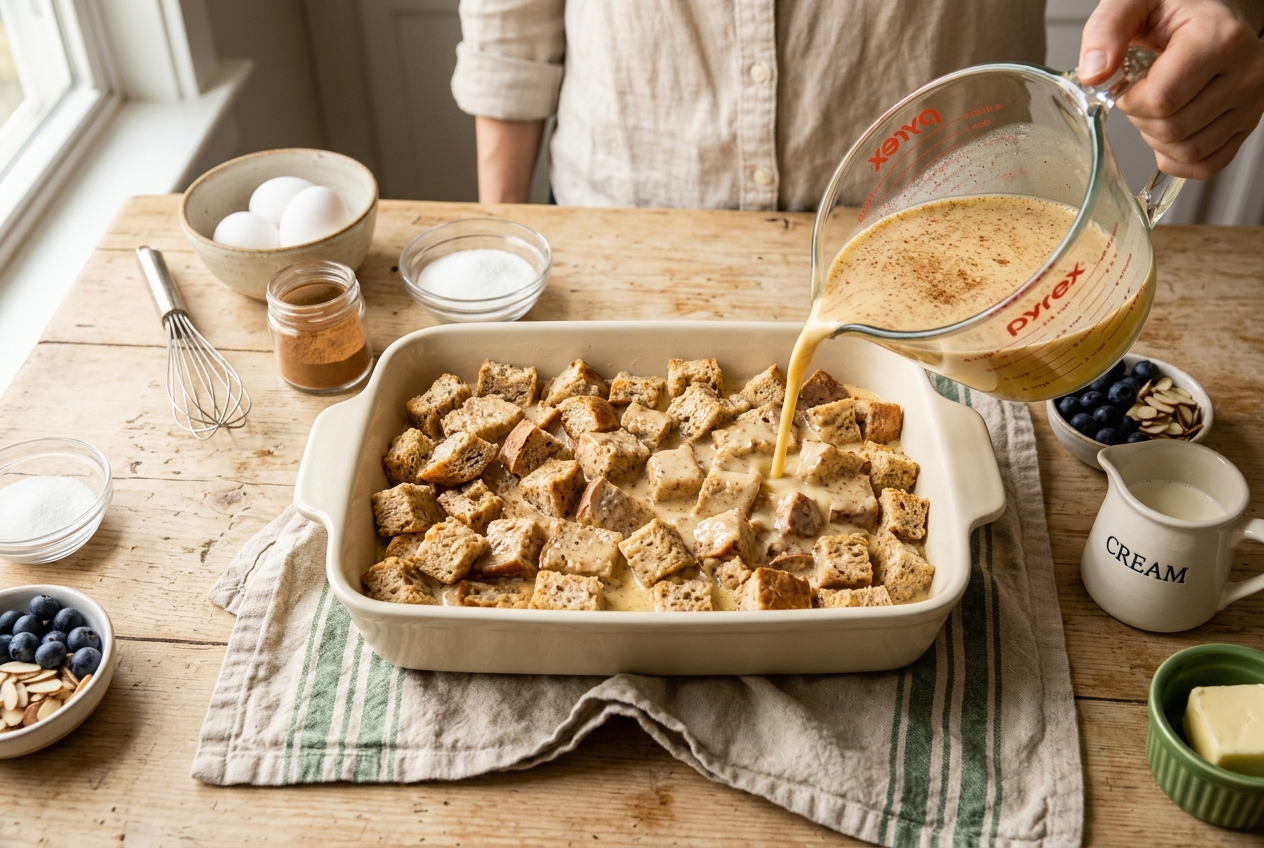
How to make it the night before
- Prepare the bread. Butter a 9-by-13-inch baking dish. Spread the bread cubes in the dish. If the bread is very fresh, dry the cubes in a 300°F oven for 8 to 10 minutes and let them cool first.
- Mix the custard. Whisk the eggs until the whites and yolks are fully combined. Whisk in the milk, sweetener, cinnamon, vanilla, salt, and melted butter.
- Soak evenly. Pour the custard slowly over the bread. Press the cubes down gently with a spatula so the top layer is moistened, but do not crush them.
- Refrigerate. Cover the dish and chill for 8 to 12 hours. Keep the casserole refrigerated during this soaking time.
- Bake. The next morning, heat the oven to 350°F. Uncover the dish and bake for 35 to 45 minutes. The edges should be golden, the center should look set rather than liquid, and the middle should reach 160°F on a food thermometer.
- Rest and serve. Let the casserole stand for 10 minutes before cutting it into eight portions. Add toppings at the table so everyone can control sweetness and carbs.
The federal food-safety chart recommends cooking egg dishes to 160°F. Temperature is more reliable than color for deciding whether the center is done.
How to keep the center custardy, not soggy
A good French toast bake has a tender middle with enough structure to slice. These adjustments solve the most common texture problems:
- Dry very soft bread first. A brief low oven removes surface moisture without deeply browning the cubes.
- Measure the milk. Extra liquid is the fastest route to a loose center. Start with 1 1/2 cups rather than pouring by eye.
- Use the full number of eggs. The eggs set the custard and hold the cubes together.
- Give it time to rest after baking. Ten minutes lets the center finish setting and makes cleaner portions.
- Check the middle. If the top browns early but the center is below 160°F, cover the dish loosely with foil and continue baking.
Easy variations without rebuilding the recipe
Berry-cinnamon
Scatter 1/2 cup of raspberries or chopped strawberries between the bread cubes before adding the custard. Fresh fruit adds carbs, so include it in your calculation if you closely track intake.
Pecan crunch
Add 1/3 cup chopped pecans during the last 15 minutes of baking. Adding them late keeps the nuts on top and reduces the chance of over-browning. Omit this version for anyone with a tree-nut allergy.
Savory breakfast bake
Skip the sweetener, cinnamon, and vanilla. Add black pepper, chopped chives, and 1 cup shredded cheese. If you add meat or poultry, follow the appropriate safe-temperature guidance rather than relying on the egg-dish temperature alone.
How to estimate net carbs per serving
Because low-carb loaves vary, a single nutrition number would be misleading. Use the labels from the ingredients in your kitchen:
Net-carb formula
Add the net carbs in 12 bread slices, 1 1/2 cups of milk, vanilla, sweetener, and any mix-ins. Divide the total by 8 servings.
For example, a bread labeled 1 gram of net carbs per slice contributes 12 grams to the entire pan. If the remaining ingredients add roughly 8 grams, the casserole contains about 20 grams total, or approximately 2.5 grams per serving. Treat that as a calculated estimate, not a laboratory value. For a refresher on what counts as low-carb bread, see our beginner’s low-carb bread guide.
Storage and reheating
Refrigerate leftovers within two hours. The FDA’s egg-safety guidance says cooked egg dishes should not remain out longer than two hours, or longer than one hour when the temperature is above 90°F.
Store covered portions in the refrigerator for up to three to four days. Reheat individual servings in the microwave, or cover the baking dish and warm it in a 325°F oven until hot. For freezing, wrap fully cooled portions individually and freeze them for up to two months. Thaw overnight in the refrigerator before reheating.
Frequently asked questions
Can I bake French toast casserole without chilling it overnight?
Yes. Let the assembled casserole stand for 30 minutes while the oven heats, pressing the cubes into the custard once or twice. The overnight version usually absorbs more evenly, but the same-day method works when the bread has been dried first.
Can I use frozen low-carb bread?
Yes. Thaw it completely, then cube and dry it briefly before assembling the casserole. Frozen bread can release extra moisture as it thaws, so do not add it to the custard while still icy.
Why did my French toast bake turn out rubbery?
Too much egg relative to bread, a small baking dish, or excessive baking can create a firm, rubbery texture. Use a 9-by-13-inch dish, keep the stated bread-to-custard ratio, and begin checking the center at 35 minutes.
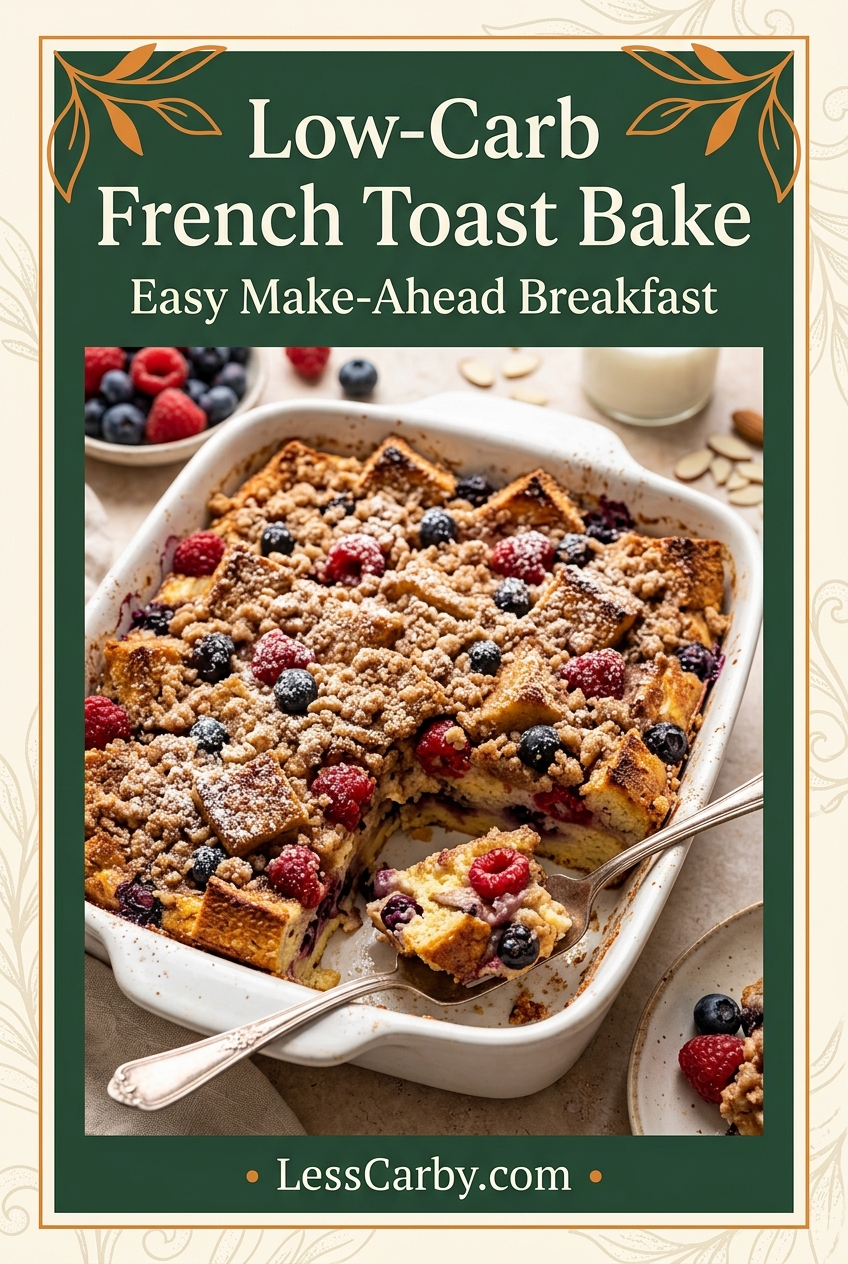
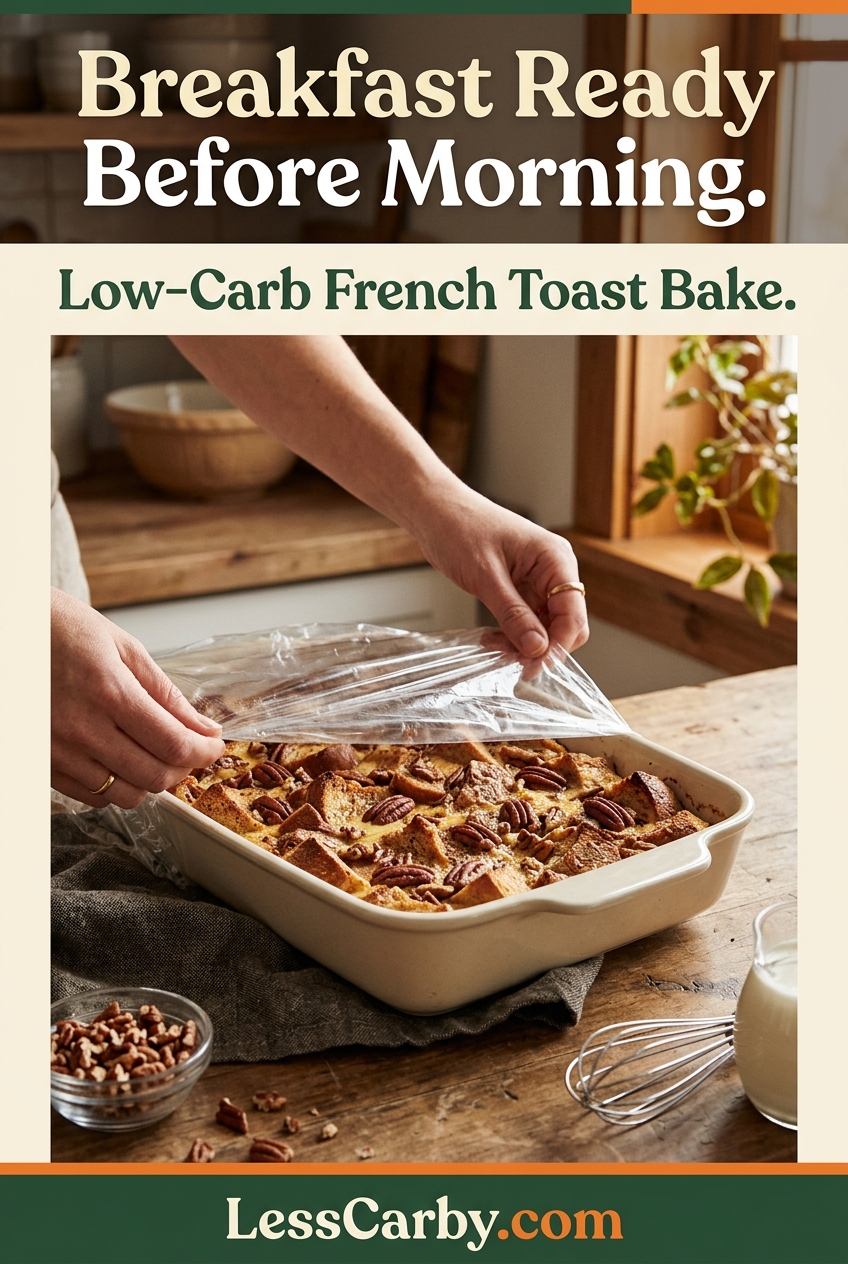
Save This Post on Pinterest
Save either version for an easier make-ahead breakfast.
A practical make-ahead breakfast
Prepare the dish after dinner, refrigerate it overnight, and bake it while coffee is brewing. Start with a loaf you already like toasted, calculate carbs from your own labels, and serve toppings separately. For more ideas built around low-carb bread, browse the LessCarby recipe collection or try low-carb avocado toast three ways on a morning when you need a faster option.
Plan Your Week with Our Free Meal Planner
Choose seven days of meals, adjust portions, and download your shopping list. No email signup needed.
Open the Free Planner →
