

There is no single fiber limit that applies to every meal or every person. The practical warning sign is a sudden increase that causes gas, bloating, cramping, urgent stools, or constipation. Low-carb bread deserves extra attention because two slices can sometimes supply most of the fiber listed as a full day’s Daily Value.
The short answer
- The FDA Daily Value for dietary fiber is 28 grams per day, based on a 2,000-calorie diet.
- That 28-gram figure is a daily reference, not a per-meal danger line.
- If high-fiber bread is new to you, begin with one slice and assess your comfort before eating more.
- Count fiber from the whole meal, including bread, vegetables, avocado, seeds, bars, and supplements.
Why One Low-Carb Sandwich Can Be a Big Fiber Jump
Many low-carb breads reduce net carbohydrates by using resistant starches and added fibers. The result can be a surprisingly high number on the Nutrition Facts panel. A sandwich made with ordinary bread may add only a few grams of fiber, while a low-carb loaf can add well into double digits.
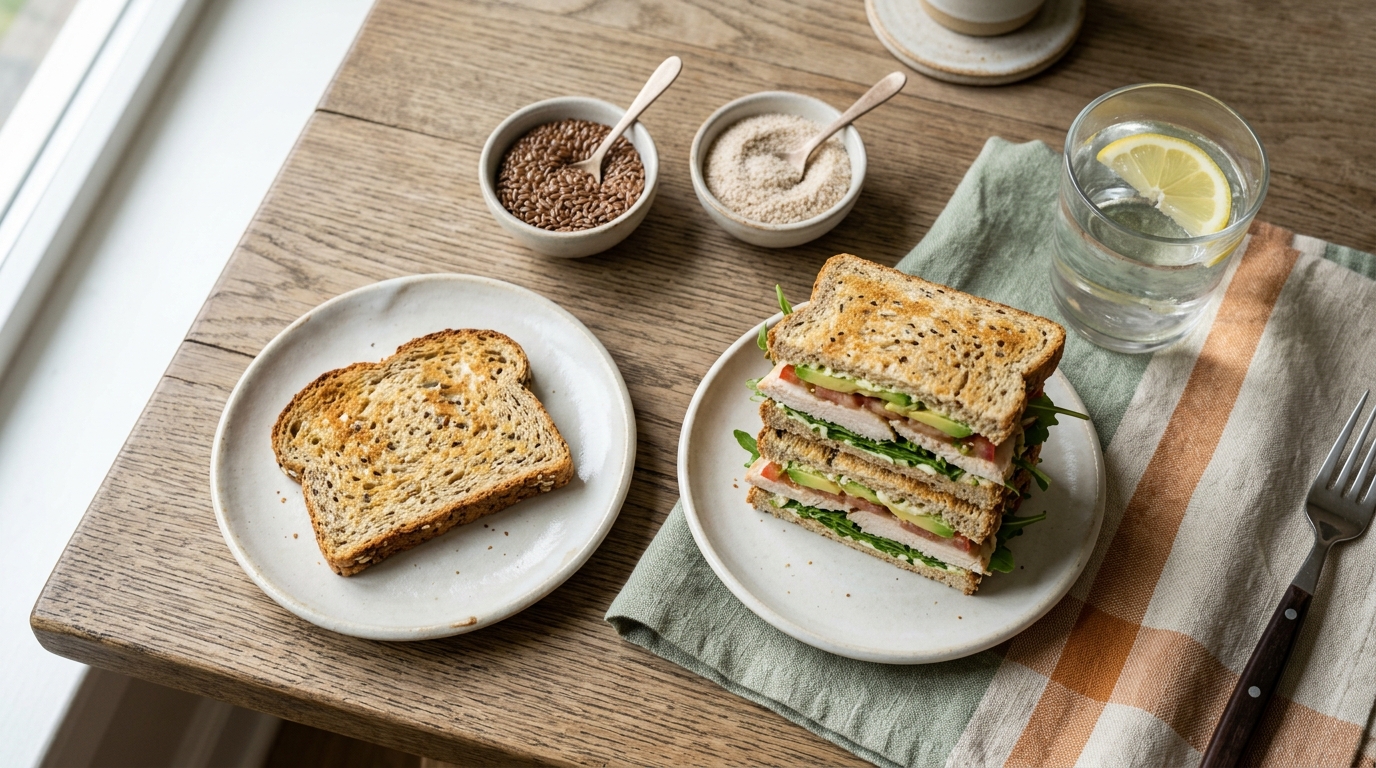
For a current real-world example, Hero lists 11 grams of fiber in one slice of its Classic White Bread. Two slices provide 22 grams, or about 79% of the FDA’s 28-gram Daily Value. Two sandwiches made with four slices would provide 44 grams from the bread alone, before counting lettuce, avocado, berries, vegetables, or any fiber supplement.
39% Daily Value
79% Daily Value
157% Daily Value
Those calculations use the manufacturer’s current 11-gram figure and are rounded to the nearest whole percent. Formulas and labels can change, so check the package you are eating. A high number is not automatically harmful; it tells you that portion size and personal tolerance matter.
The Daily Value Is Not a Per-Meal Upper Limit
The FDA lists 28 grams as the Daily Value for fiber. The agency explains that fiber is a nutrient people should generally get at least enough of, unlike nutrients such as saturated fat that have a “less than” daily target. The number helps compare products; it does not say that 28 grams at breakfast is comfortable for everyone.
A person who already eats a fiber-rich diet may tolerate a large serving better than someone moving quickly from a low-fiber diet. The source matters too. Whole foods contain mixtures of fiber, water, and other nutrients, while some low-carb breads concentrate resistant starch, cellulose, psyllium, wheat fiber, inulin, or several of these in a small serving.
If you want a closer look at those differences, read our guide to soluble and insoluble fiber in low-carb bread. Our article on why fiber is subtracted from carbohydrates explains the label math.
What Happens When Fiber Rises Too Quickly?
MedlinePlus notes that a large amount of fiber added over a short period can cause intestinal gas, bloating, and abdominal cramps. Diarrhea can also occur. Some fibers are fermented by gut bacteria, which can increase gas; others hold water or add bulk to stool.
That does not make added fiber “bad.” It means the digestive system may need time to adjust and that different fibers can feel different. In a controlled study of chicory inulin products, the added fibers tended to increase gastrointestinal symptoms mildly, most often flatulence followed by bloating. Low-carb bread may combine inulin with resistant starch or other fibers, so the total experience cannot be predicted from the fiber grams alone.
Fluids also matter. The National Institute of Diabetes and Digestive and Kidney Diseases recommends drinking enough liquids to help fiber work better. If a high-fiber sandwich replaces a meal that normally includes water-rich foods, remember to drink alongside it.
How to Find a Comfortable Serving
The most useful number is not a universal cutoff. It is the amount you can eat comfortably as part of your full day. Use this simple process when trying a loaf with much more fiber than your usual bread.
- Read fiber per serving and serving size. Confirm whether the panel describes one slice or two. Multiply by the number of slices you plan to eat.
- Add the rest of the meal. Avocado, vegetables, beans, berries, chia, fiber bars, and supplements all count. A 20-gram bread serving can become a much larger total quickly.
- Start smaller. Try one slice as toast or an open-face sandwich before moving to a two- or three-slice meal. This is especially sensible if your usual diet is low in fiber.
- Change one variable at a time. Do not introduce a new high-fiber bread, fiber supplement, and large bean salad on the same day if you want to know what your body tolerates.
- Track symptoms for the rest of the day. Note bloating, cramps, stool changes, and whether the portion felt filling or simply uncomfortable.
For people with irritable bowel syndrome, NIDDK specifically suggests increasing fiber by about 2 to 3 grams per day to help reduce gas and bloating. That is condition-specific guidance, not a rule everyone must follow, but it illustrates why a gradual increase can be easier than jumping by 20 grams in one meal.
A Label-Reading Example You Can Use
Suppose a bread label lists 10 grams of fiber per slice and the serving size is one slice. An open-face sandwich supplies 10 grams from bread. A standard two-slice sandwich supplies 20 grams. If you also add half an avocado, vegetables, and a high-fiber snack, your meal or afternoon total may rise considerably.
Compare that number with what you normally eat, not only with a low net-carb claim. Use our step-by-step Nutrition Facts label guide to check total carbohydrate, fiber, serving size, and sugar alcohols together. Low net carbs and digestive comfort answer two different questions.
Affiliate disclosure: As an Amazon Associate, we may earn from qualifying purchases at no extra cost to you.
Hero Classic White: the 22-gram sandwich example
Hero currently lists 11g fiber per slice. This is included as a label-reading example, not a recommendation to maximize fiber. Review the current package and begin with a smaller portion if the loaf is new to you.
When to Reduce the Portion or Get Advice
Mild gas after a sudden increase often improves when the portion is reduced and fiber is added more gradually. Pause and reassess if a particular bread repeatedly causes uncomfortable bloating, cramps, diarrhea, or constipation. The ingredient list may help identify whether the same added fiber appears in other foods that cause similar symptoms.
Ask a clinician or registered dietitian for individualized guidance if you have irritable bowel syndrome, inflammatory bowel disease, gastroparesis, a history of intestinal narrowing or obstruction, recent gastrointestinal surgery, or a medically prescribed diet. Also check with a pharmacist if you use fiber supplements or have questions about timing fiber around medication.
Severe or persistent abdominal pain, repeated vomiting, marked swelling, blood in stool, or an inability to pass stool or gas needs prompt medical attention. Those symptoms should not be treated as a routine adjustment to low-carb bread.
Frequently Asked Questions
Is 20 grams of fiber in one meal too much?
Not necessarily. Some people tolerate 20 grams comfortably, while others develop symptoms after a sudden increase. Consider your usual intake, the fiber source, fluids, the rest of the meal, and any digestive condition.
Can I eat two high-fiber sandwiches in one day?
You can calculate the total first. Four slices with 10 or 11 grams each provide 40 to 44 grams before other foods. If that is far above your usual intake, smaller portions on separate days may be more comfortable.
Does more fiber always mean a healthier low-carb bread?
No. Fiber is only one part of the label. Also consider protein, sodium, calories, allergens, ingredients, taste, and how you feel after eating it. Our guide to protein in low-carb bread shows how another headline number can vary among loaves.
Should I drink extra water with high-fiber bread?
Drink enough fluids throughout the day unless a clinician has told you to restrict fluids. Water helps fiber work properly, but there is no single extra-water formula that fits everyone.
The Practical Takeaway
Check the fiber per slice before building the sandwich. If two slices deliver 20 grams or more and that is much higher than your normal meal, start with one slice, include fluids, and see how you feel. The best portion is one that supports your goals without turning a low-carb lunch into an uncomfortable afternoon.
Save This Post on Pinterest

This article provides general nutrition information and is not a diagnosis or individualized treatment plan. Product formulas change; use the current package as your final source.
Plan Your Week with Our Free Meal Planner
Choose seven days of meals, adjust portions, and download your shopping list. No email signup needed.
Open the Free Planner →
