

Maltitol is a sugar alcohol that usually raises blood glucose less than table sugar, but it is not metabolically invisible. It can contribute digestible carbohydrate, and larger amounts may cause gas, bloating, or diarrhea. That makes maltitol worth noticing on a low-carb bread label—especially if you count net carbs closely or monitor your glucose response.
The short answer
- Maltitol generally produces a smaller glucose rise than an equal amount of sugar.
- Its effect is not necessarily zero, and responses vary with dose, food composition, and the individual.
- “Sugar-free” does not mean carbohydrate-free.
- Digestive symptoms become more likely as the amount of sugar alcohol increases.
What is maltitol?
Maltitol is a polyol, commonly called a sugar alcohol. Despite the name, it is neither table sugar nor the alcohol found in drinks. Food manufacturers use it because it provides sweetness and bulk while behaving more like sugar in texture than many high-intensity sweeteners.
Maltitol may appear as maltitol or maltitol syrup in an ingredient list. It is more common in sugar-free candy, chocolate, protein bars, baked goods, and fillings than in plain sandwich bread, but it can appear in specialty breads and sweet bread products. The ingredient list is the only reliable way to know.
The FDA’s sugar-alcohol guidance explains that polyols are absorbed slowly and incompletely. As a group, they provide fewer calories per gram and tend to produce a smaller change in blood glucose than other carbohydrates. Those general statements do not mean every sugar alcohol behaves identically.
Does maltitol raise blood sugar?
Yes, maltitol can raise blood sugar, although controlled studies generally find a smaller response than sucrose. A human study comparing maltitol with sucrose found lower glucose and insulin peaks after maltitol. Another study of maltitol-containing foods also reported reduced glycemic responses compared with sugar-containing versions.
That distinction matters. “Lower than sugar” is not the same as “zero.” The final response depends on the quantity eaten, whether maltitol is used alone or in a syrup mixture, what else is in the meal, and the person eating it. Bread also contains other carbohydrates, fibers, proteins, and fats that influence digestion.
For someone who uses a glucose meter or continuous glucose monitor, the most practical question is not whether maltitol has a universal glycemic index. It is whether a normal portion of the exact product fits the person’s targets. LessCarby’s guide to choosing bread when you have diabetes explains how to evaluate a loaf without relying on one front-of-package claim.
Why maltitol complicates net-carb math
Many shoppers calculate net carbs by subtracting fiber and some or all sugar alcohols from total carbohydrate. The formula is useful as a screening tool, but U.S. Nutrition Facts labels do not define “net carbs” as a regulated nutrient. Brands may use different subtraction methods in their marketing.
Maltitol complicates the shortcut because part of it is absorbed. Subtracting every gram automatically can make a product look less impactful than it may be for a particular reader. There is no single adjustment that predicts everyone’s glucose response accurately.
A safer label-reading approach
Start with total carbohydrate and serving size. Identify the exact sugar alcohol, note its grams when disclosed, and treat the advertised net-carb number as a claim to evaluate—not a guarantee of your response.
See How to Read a Nutrition Label for Net Carbs for the full process. The companion guide on what net carbs mean explains why the number is an estimate rather than a laboratory measurement of glucose impact.
Where to find maltitol on the label
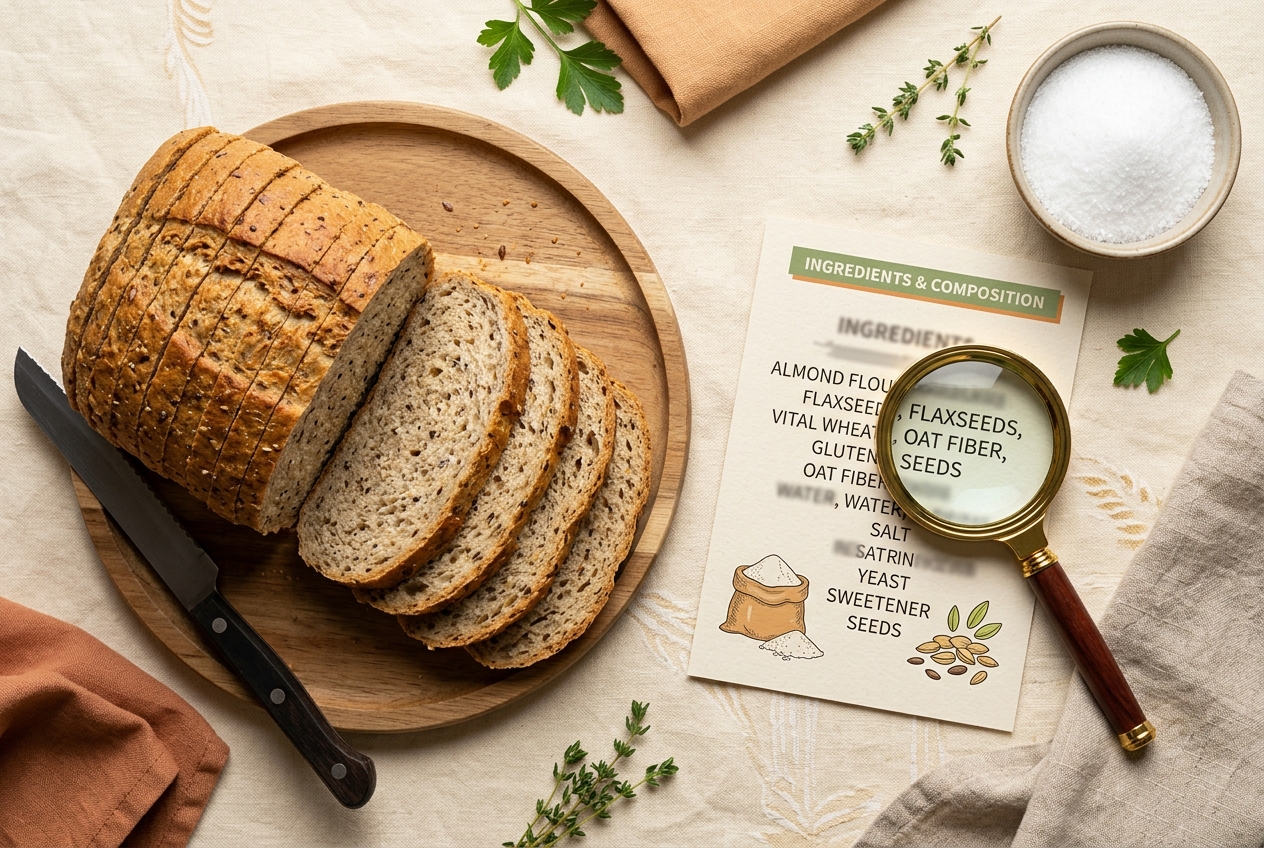
Check both the ingredient list and the Nutrition Facts panel. Maltitol may be listed by name in the ingredients, while the panel may show a line for “Sugar Alcohol.” Under FDA labeling rules, declaring sugar alcohol is mandatory in certain situations, including when a sugar-related claim is made and sugar alcohols are present. Otherwise, the declaration may be voluntary.
- Confirm the serving size. A low number may apply to one thin slice rather than the portion you normally eat.
- Read total carbohydrate first. This is the broadest carbohydrate measure on the label.
- Look for “Sugar Alcohol.” Note the grams, but do not assume the entire amount is maltitol if several polyols appear in the ingredients.
- Scan the ingredient list. Look for maltitol, maltitol syrup, and other sweeteners.
- Compare the brand’s net-carb claim with its method. If the package does not explain the subtraction, use caution.
A formula can also change. Recheck the package even if you have bought the bread before, and rely on the label in your kitchen rather than an old online image.
Maltitol versus erythritol and allulose
Maltitol, erythritol, and allulose are not interchangeable. Maltitol and erythritol are sugar alcohols, while allulose is a rare sugar. They differ in absorption, sweetness, baking behavior, labeling treatment, and typical glucose effect.
Erythritol is absorbed largely unchanged and contributes very little energy. Allulose is handled differently under current FDA labeling guidance and can be excluded from Total Sugars and Added Sugars, although it remains part of total carbohydrate. Maltitol is partially absorbed and is generally considered more likely to affect blood glucose than erythritol.
For a fuller comparison of the other two options, read Erythritol vs. Allulose in Low-Carb Bread. The better choice depends on the product and the reader’s goal; one ingredient rarely determines whether an entire loaf is suitable.
Digestive effects: dose matters
Sugar alcohols that are not fully absorbed reach the large intestine, where they can draw in water and be fermented by gut bacteria. The result may be gas, bloating, cramping, or loose stools. The FDA notes these effects for sugar alcohols generally, and human maltitol tolerance studies show that symptoms depend strongly on dose and individual sensitivity.
A slice of bread containing a small amount is different from several servings of a maltitol-sweetened dessert. Problems are more likely when a person eats multiple sugar-free products at once, increases polyols quickly, or already has a sensitive digestive system.
There is no universal symptom-free cutoff. Begin with the labeled serving, avoid combining several new high-polyol foods in one meal, and pay attention to both glucose and digestive response. Persistent or severe symptoms deserve professional medical advice rather than more label arithmetic.
Should you avoid maltitol?
Not necessarily. Maltitol is an approved food ingredient and can help reduce added sugar. The practical concern is that shoppers sometimes treat it as a free ingredient and subtract it without qualification.
A product containing maltitol may still fit your eating pattern when the portion is reasonable, the complete nutrition label works for your goals, and you tolerate it well. Consider another product when the label hides the amount, the advertised net carbs depend heavily on subtracting sugar alcohols, or the food repeatedly causes an unwanted glucose or digestive response.
A five-point decision checklist
- Amount: How many grams of total carbohydrate and sugar alcohol are in the portion you will actually eat?
- Type: Is the polyol maltitol, erythritol, or a blend?
- Context: What other digestible carbohydrates are in the bread and meal?
- Response: Does the product fit your glucose target if you monitor it?
- Tolerance: Can you eat a normal serving without digestive discomfort?
Frequently asked questions
Is maltitol the same as sugar?
No. Maltitol is a sugar alcohol. It generally supplies fewer calories and produces a smaller glucose response than sucrose, but it can still contribute energy and affect blood glucose.
Can I subtract all maltitol from total carbs?
Doing so may underestimate its impact. Start with the full label, identify the amount and type of sugar alcohol, and treat net carbs as an estimate. People using glucose medication should follow their clinician’s carbohydrate-counting advice.
Does maltitol always cause diarrhea?
No. Digestive tolerance varies and is dose-dependent. Some people tolerate modest amounts, while others experience gas, bloating, cramping, or loose stools.
Is maltitol commonly used in low-carb sandwich bread?
It appears more often in sweetened low-carb foods, coatings, and fillings, but formulas vary. Check every ingredient list rather than assuming a product category is maltitol-free.
Save This Post on Pinterest
Keep either version handy when you compare low-carb bread labels.
The bottom line
Maltitol deserves attention because it sits between sugar and near-zero-impact sweeteners: it usually produces a smaller glucose rise than sugar, yet it is not automatically “free” in carb counting. Read total carbohydrate, identify the exact polyol, keep the serving realistic, and use your own measured response when appropriate. That approach is more dependable than trusting a large net-carb number on the front of the package.
Nutrition note: This article provides general education and does not replace individualized advice from a registered dietitian, physician, or diabetes-care professional.
Sources: FDA: Sugar Alcohols; human maltitol–sucrose comparison; glycemic and insulin responses to maltitol-containing foods; human digestive-tolerance study.
Plan Your Week with Our Free Meal Planner
Choose seven days of meals, adjust portions, and download your shopping list. No email signup needed.
Open the Free Planner →
