

Yes, some sugar alcohols can affect blood sugar—but not all of them affect it to the same degree. Erythritol generally contributes very little usable carbohydrate, while maltitol can produce a more noticeable glucose response. Xylitol and sorbitol fall somewhere between those examples. The amount eaten, the rest of the meal, and your individual response also matter.
That is why a label that simply says “sugar alcohol” does not tell the whole story. If you are choosing low-carb bread for blood-sugar management, identify the specific sweetener, check the serving size, and consider how the whole slice fits into your meal.
Quick answer: Sugar alcohols usually raise blood glucose less sharply than table sugar, but “less” does not mean “none.” Maltitol deserves particular attention; erythritol typically has the smallest immediate glucose effect.
What sugar alcohols are
Sugar alcohols, also called polyols, are carbohydrates used to add sweetness, retain moisture, and sometimes improve texture. Despite the name, they do not contain the alcohol found in beer, wine, or spirits.
The FDA’s sugar-alcohol guide lists erythritol, maltitol, sorbitol, xylitol, mannitol, isomalt, lactitol, and hydrogenated starch hydrolysates among common examples. They are absorbed and metabolized differently, which is why their calorie and glucose effects vary.
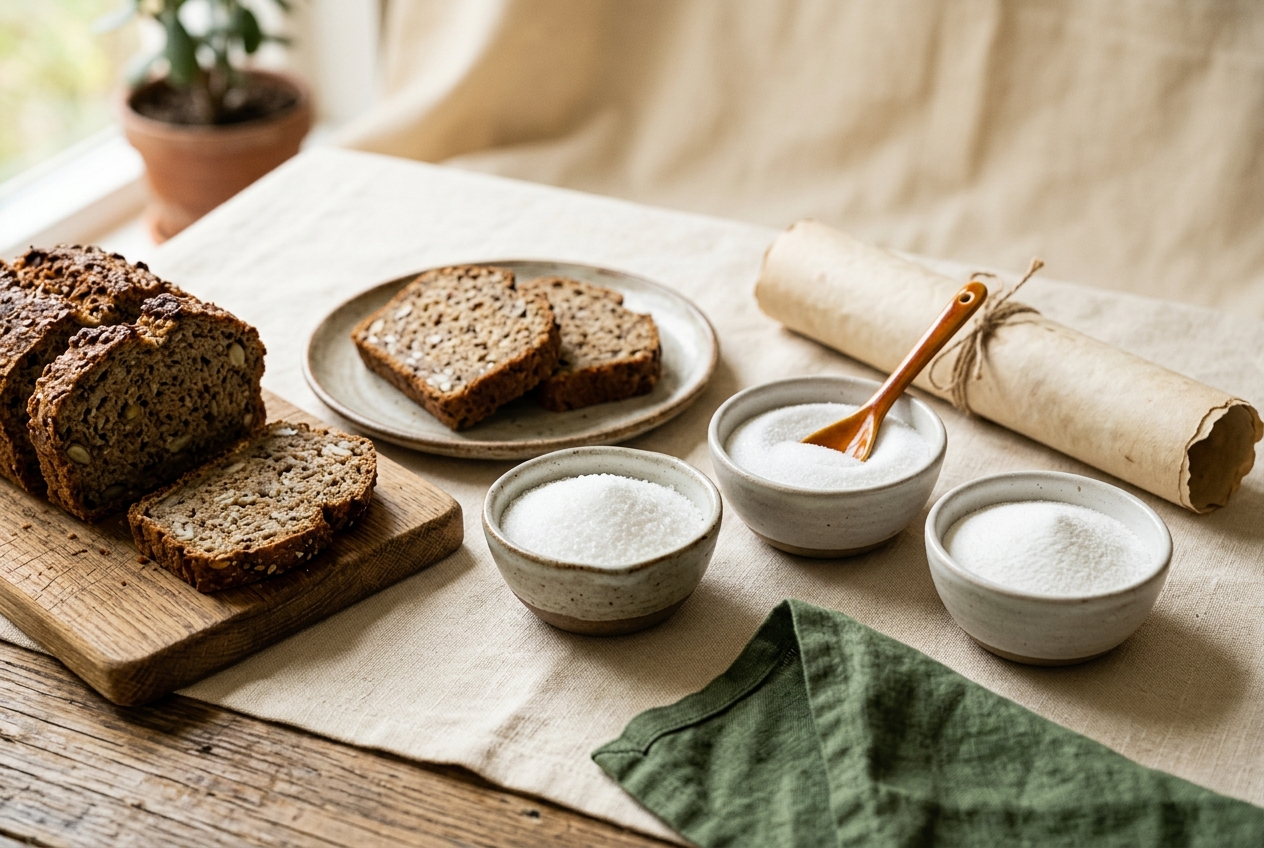
Why the blood-sugar response varies
Most sugar alcohols are only partly absorbed in the small intestine. The absorbed portion may be used for energy, while the unabsorbed portion continues to the large intestine. The balance differs by ingredient.
A review of polyol metabolism and glycemic response found lower glycemic and insulin responses for polyols overall than for sucrose or glucose, while also documenting meaningful differences among individual polyols. A more recent peer-reviewed review of sugar alcohols and diabetes likewise describes a varied evidence base rather than one effect shared by the whole category.
Erythritol
Most is absorbed and excreted largely unchanged. It usually has little immediate effect on glucose, although the finished bread can still contain digestible starches.
Maltitol
Part is absorbed and metabolized. Its glucose effect can be substantial enough that treating every gram as “free” may underestimate a food’s impact.
Xylitol and sorbitol
They are incompletely absorbed and generally produce a smaller response than sugar, but the effect is not necessarily zero.
For a closer look at the outlier, read why maltitol is the sugar alcohol to watch. For two commonly confused alternatives, see our guide to erythritol versus allulose. Allulose is a rare sugar, not a sugar alcohol.
How sugar alcohols appear on a bread label
On U.S. Nutrition Facts labels, sugar alcohol may appear beneath Total Carbohydrate. The ingredient list is where you can identify the specific sweetener. “No added sugar” or “sugar free” on the front does not mean the product is carbohydrate-free.
Use this sequence:
- Start with serving size. A low number applies only to the listed portion.
- Read Total Carbohydrate. This is the broad starting point, not the marketing claim.
- Note dietary fiber and sugar alcohol. Do not assume every gram behaves identically.
- Find the named sweetener in the ingredients. Maltitol, erythritol, sorbitol, and xylitol are not interchangeable.
- Check the other carbohydrate sources. Modified starches, flour, and added sugars can affect the complete slice.
Our step-by-step nutrition-label guide shows where to find each number. If you are new to the calculation, start with what net carbs mean.
Should you subtract all sugar alcohols from total carbs?
There is no universal federal definition of “net carbs,” and a simple subtraction can hide important differences. Some low-carb calculations subtract all fiber and all sugar alcohols. That shortcut may be a reasonable estimate for erythritol, but it can be misleading when a product relies heavily on maltitol.
A more useful approach is to treat the manufacturer’s net-carb claim as a starting point and then evaluate the ingredients, serving size, and your goal. Someone casually reducing carbohydrates may make a different choice than a person who uses insulin or closely tracks post-meal glucose.
Also remember that bread is a mixed food. A glucose response cannot be predicted from the sweetener alone. Starches, fiber, protein, fat, portion size, and foods eaten alongside the bread all contribute.
What about digestive effects?
The same incomplete absorption that limits the glucose effect of many sugar alcohols can cause gas, bloating, or diarrhea, especially in larger amounts. U.S. regulations require a laxative-effect warning when reasonably foreseeable daily consumption could reach 50 grams of sorbitol or 20 grams of mannitol. These amounts are labeling triggers, not a promise that smaller servings will be symptom-free.
Tolerance varies. If a new loaf contains several polyols or a polyol appears high in the ingredient list, begin with one serving rather than several. Digestive discomfort does not prove a large glucose response, and the absence of discomfort does not prove zero impact.
How to compare your own response
If you already monitor glucose under a clinician’s plan, consistency makes comparisons more useful. Test the same serving of bread at a similar time of day, keep toppings and meal composition comparable, and avoid drawing a conclusion from a single reading. Sleep, stress, recent activity, illness, and medication timing can all influence glucose.
A home meter or continuous glucose monitor can show your personal response, but it cannot isolate which ingredient caused it. Use the result as one piece of information alongside the label and your healthcare team’s guidance—not as a diagnosis or a reason to change medication.
A practical decision guide for low-carb bread
- If erythritol is the main sweetener: focus next on the bread’s starches, fiber, and serving size.
- If maltitol appears prominently: be cautious about subtracting every listed gram and consider a different loaf if glucose control is a priority.
- If the label uses a blend: look at the full ingredient order; the combined response cannot be inferred from the word “blend.”
- If you monitor blood glucose: compare equal portions under similar meal conditions rather than judging one isolated reading.
- If you take insulin or glucose-lowering medicine: ask your clinician how to count carbohydrate for your treatment plan.
For a broader product-selection framework, our bread guide for people managing diabetes explains how to compare total carbohydrate, fiber, protein, portion size, and ingredients together.
Frequently asked questions
Do sugar alcohols count as carbohydrates?
Yes. They are included within Total Carbohydrate on the Nutrition Facts label, even though many supply fewer calories and generally produce a smaller glucose response than sugar.
Which sugar alcohol raises blood sugar the most?
Maltitol is the common sugar alcohol most likely to create a noticeable response in low-carb foods. Exact effects depend on dose and the complete food, so it is more accurate to say “more than many other polyols” than to assign one universal result.
Does erythritol raise blood sugar?
Erythritol generally has little immediate effect on blood glucose because most absorbed erythritol is excreted unchanged. A bread sweetened with erythritol can still raise glucose because of its other carbohydrate ingredients.
Can sugar alcohols cause stomach problems?
Yes. Incompletely absorbed sugar alcohols may cause gas, bloating, or diarrhea. Effects tend to be dose-dependent and vary by person and by polyol.
Are sugar alcohols safe for people with diabetes?
They can be part of a diabetes eating plan, but they are not all metabolically identical. People who use insulin or medications that affect glucose should follow their clinician’s carbohydrate-counting guidance rather than relying only on a front-label net-carb claim.
Save This Post on Pinterest
Keep either version handy for the next time you compare low-carb bread labels.
The bottom line
Sugar alcohols usually affect blood sugar less than ordinary sugar, but the ingredient name matters. Erythritol typically has minimal immediate impact, while maltitol can contribute a meaningful response. Read the ingredient list, use the serving size, and judge the whole bread—not a single “net carb” number.
This article is for general education and is not individualized medical advice.
Plan Your Week with Our Free Meal Planner
Choose seven days of meals, adjust portions, and download your shopping list. No email signup needed.
Open the Free Planner →
