

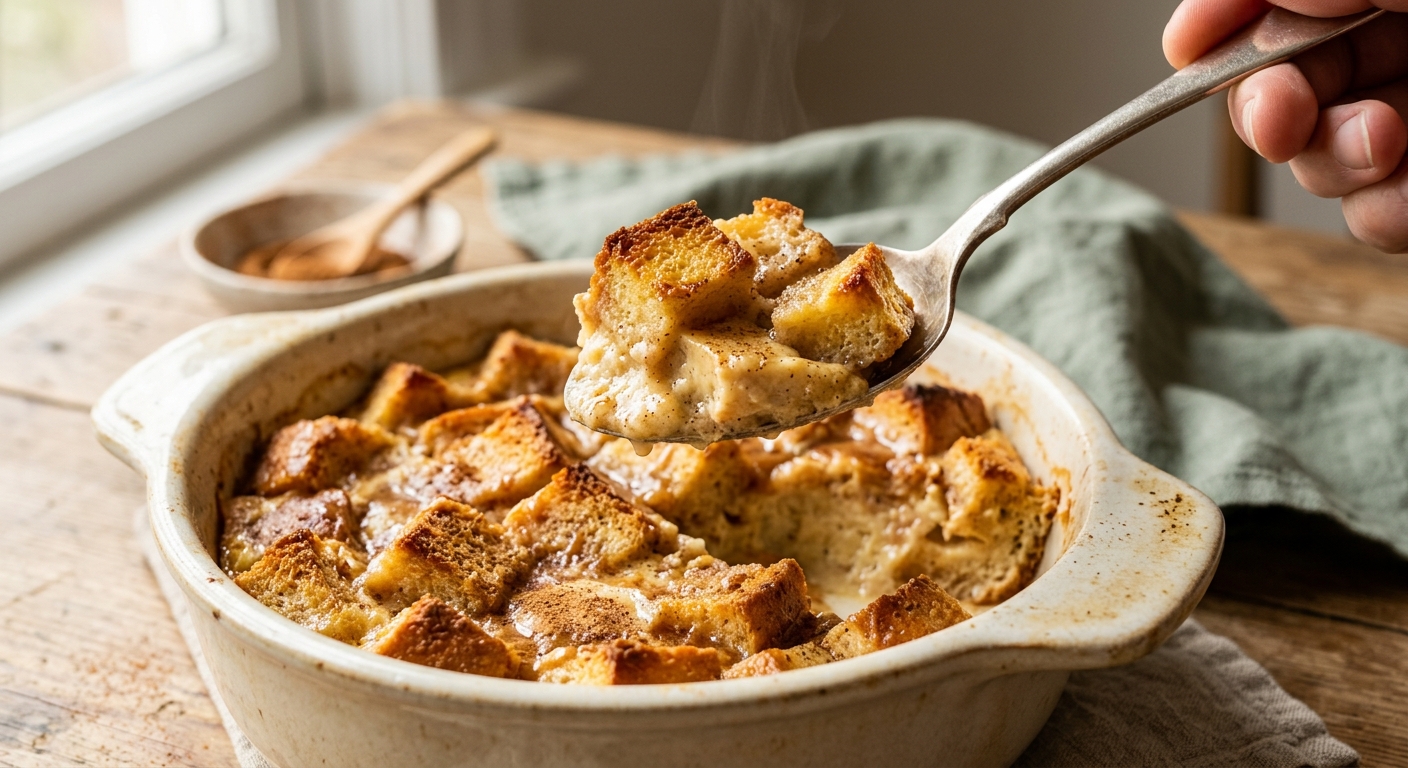
Keto bread pudding turns day-old low-carb bread into a warm cinnamon custard dessert. The key is choosing a loaf that absorbs liquid without dissolving, drying the cubes first, and calculating carbohydrates from the exact bread and milk you use. This version makes eight portions and uses allulose for sweetness without relying on almond flour or almond milk.
At a glance: 15 minutes prep, 25 minutes soaking, and about 35 minutes baking. The pudding is ready when the center reaches 160°F and no liquid custard remains.
Why low-carb bread works here
Traditional bread pudding depends on stale bread soaking up a sweet egg-and-milk custard. Low-carb loaves can do the same job, but their fiber and starch blends behave differently. Some stay springy, while very airy slices can soften quickly.
Use a soft sandwich-style loaf with a fairly neutral or slightly sweet flavor. Nature’s Own Life Keto, Lewis Better Way Keto, and Sola Sweet & Buttery are reasonable starting points. A denser wheat-free loaf such as Base Culture can also work, but cut it smaller and allow extra soaking time. Product formulas change, so check the current package before buying or calculating carbs.
For more options, compare our store-bought low-carb sandwich bread guide or use the LessCarby bread finder.
Keto bread pudding ingredients
Makes: 8 servings
Pan: 8-inch square baking dish
Preparation: 15 minutes, plus 25 minutes soaking
Baking: 30–38 minutes
- 8 slices low-carb sandwich bread, preferably one to two days old
- 2 tablespoons unsalted butter, melted, plus more for the dish
- 4 large eggs
- 1 cup heavy cream
- 1 cup unsweetened coconut milk beverage or unsweetened soy milk
- 1/3 cup granulated allulose, or the equivalent sweetness of your preferred low-carb sweetener
- 2 teaspoons vanilla extract
- 1 1/2 teaspoons ground cinnamon
- 1/4 teaspoon ground nutmeg
- 1/4 teaspoon fine salt
- Optional: 1/3 cup chopped pecans or walnuts
Allergen note: Most low-carb breads contain wheat, gluten, soy, dairy, eggs, seeds, or nuts. This recipe contains eggs and dairy as written. The optional nuts should be omitted for a nut-free version, and every packaged ingredient should be checked for your household’s needs.
How to make it
- Dry the bread. Heat the oven to 300°F. Cut the bread into roughly 1-inch cubes, spread them on a sheet pan, and bake for 8–12 minutes, turning once, until the surfaces feel dry but are not deeply browned.
- Prepare the dish. Raise the oven to 350°F. Butter an 8-inch square baking dish and add the dried cubes.
- Mix the custard. Whisk the eggs, cream, coconut or soy beverage, allulose, vanilla, cinnamon, nutmeg, and salt until smooth.
- Soak. Pour the custard evenly over the bread. Press the cubes down gently, wait 15 minutes, fold the mixture once, and soak another 10 minutes. Add the optional nuts after folding.
- Bake. Bake uncovered for 30–38 minutes. The edges should look set and lightly browned; the center may move slightly but should not look wet.
- Check and rest. Confirm that the center reaches 160°F with a food thermometer. Rest for 10 minutes before dividing into eight portions.
The FoodSafety.gov temperature chart lists 160°F for egg dishes. The FDA’s egg-safety guidance likewise recommends cooking egg-containing dishes thoroughly and refrigerating leftovers promptly.
How to keep the texture custardy, not soggy
Dry the cubes before soaking
Fresh bread can absorb custard unevenly. A short low-temperature bake removes surface moisture and gives the cubes more structure. If your bread is already firm and stale, begin checking after five minutes.
Judge by absorption, not only the clock
Low-carb fibers absorb liquid at different rates. After 25 minutes, the cubes should feel saturated but remain recognizable. If a very dense bread still has dry centers, wait another 10 minutes. If an airy loaf begins breaking apart, bake it promptly.
Do not chase a dry center
Bread pudding continues setting as it rests. Overbaking can make high-fiber bread rubbery around the edges. Use temperature and the absence of visible liquid custard as the final checks.
How to calculate net carbs per serving
Nutrition varies too much among low-carb breads and milk alternatives for one universal number. Calculate the finished recipe from the labels you actually use:
Estimated net carbs for the whole recipe
Bread net carbs + cream net carbs + milk-alternative net carbs + sweetener net carbs + optional add-ins. Divide the total by 8.
Count the bread for all eight slices, not merely one labeled serving. Sugar-alcohol and fiber calculations can also differ, so review our guide to reading nutrition labels for net carbs and use the net-carb calculator for the arithmetic.
Bread options that bring different textures
As an Amazon Associate, LessCarby earns from qualifying purchases. Availability and formulas can change; verify the current label before buying.
Sola Sweet & Buttery
Its slightly sweet profile suits cinnamon custard. Dry the slices first and begin checking the pudding at 30 minutes.
Nature’s Own Life Keto
A soft sandwich-style option. Handle gently after soaking so the cubes keep some definition.
Lewis Better Way Keto
A practical neutral base for vanilla and cinnamon. Confirm the variety and current package before calculating carbs.
Base Culture Original
A denser wheat-free option that may need smaller cubes and a longer soak. Check its complete allergen label.
Easy variations
- Orange-cinnamon: Add 1 teaspoon finely grated orange zest.
- Chocolate: Fold in 1/4 cup sugar-free chocolate chips and include their label values in the carb calculation.
- Pumpkin spice: Replace the cinnamon and nutmeg with 2 teaspoons pumpkin-pie spice.
- Individual portions: Divide among eight greased ramekins and start checking early, around 22 minutes.
Storage and reheating
Cool the pudding briefly, cover, and refrigerate within two hours. The FDA recommends using refrigerated leftover egg dishes within three to four days. Reheat a portion until hot throughout; FDA guidance lists 165°F for reheated egg dishes.
For freezing, cool completely and wrap individual portions. Texture may become slightly softer after thawing, so reheat uncovered in a toaster oven or conventional oven when possible.
Frequently asked questions
Can I make keto bread pudding the night before?
Yes. Assemble and refrigerate it promptly, covered, then bake the next day. A long soak may soften airy breads, so use a sturdy loaf and avoid overmixing.
Do I have to use stale bread?
No. Dry fresh cubes in a 300°F oven before adding the custard. This gives you more predictable absorption.
Can I use almond milk?
It can work, but it is unnecessary. Unsweetened coconut milk beverage or soy milk provides a straightforward alternative for households avoiding almonds.
Why is my bread pudding watery?
The bread may not have absorbed the custard, the dish may be underbaked, or the pan may be deeper than specified. Let the cubes soak fully and verify 160°F in the center.
Is this recipe automatically keto?
No recipe label guarantees that it fits every carbohydrate target. The bread, milk alternative, sweetener, and portion determine the final numbers. Calculate from your packages and your serving size.
Save This Post on Pinterest
Save either version for the next time leftover low-carb bread needs a warm dessert plan.
The practical takeaway
For reliable low-carb bread pudding, dry the bread, give the custard time to absorb, and use a thermometer rather than appearance alone. Choose a loaf for texture and dietary needs, then calculate the finished portion from its current label. The result is a flexible way to turn leftover low-carb bread into a warm dessert without pretending every loaf behaves—or calculates—the same.
Plan Your Week with Our Free Meal Planner
Choose seven days of meals, adjust portions, and download your shopping list. No email signup needed.
Open the Free Planner →
