

To make low-carb French toast sticks, cut sturdy sliced bread into strips, coat them briefly in cinnamon-and-vanilla egg mixture, and cook them in a lightly greased skillet. A quick dip, moderate heat and space between pieces help the outside brown without leaving a wet middle.
The bread matters as much as the coating. A flexible sandwich loaf can handle turning; a delicate almond-flour loaf may break before it reaches the plate. Start with a small batch and adjust the coating time to the bread you actually have.
Recipe development note: This method has not been kitchen-tested by LessCarby. Cooking times are starting estimates; follow the doneness checks below. Images are AI-generated illustrations.
Choose bread that can hold its shape
Use four slices of a low-carb sandwich bread you enjoy eating. Check the nutrition label for the serving size: some packages list one slice, while others list two. Compare the carbohydrate amount for the portion you will use, including any toppings.
Look for even slices with a cohesive crumb. Very thin bread cooks quickly and can become brittle. A dense, moist loaf may need more time for its center to warm through. Bread with large holes can let the egg mixture run through instead of coating it evenly.
If the bread is frozen, thaw only the slices you need before cutting. Separate them on a plate and let surface moisture evaporate. Avoid coating slices that still have ice crystals, which can dilute the mixture and make browning uneven. Our guide to freezing low-carb bread explains how to store the rest of the loaf.
Low-carb French toast sticks recipe
Yield: 12 sticks, or 2 servings of 6. Preparation: about 10 minutes. Cooking: roughly 8–12 minutes, depending on thickness and the number of batches.
Ingredients
- 4 slices sturdy low-carb sandwich bread
- 2 large eggs
- 2 tablespoons (30 ml) milk or unsweetened milk alternative
- ½ teaspoon ground cinnamon
- ½ teaspoon vanilla extract
- A small pinch of salt
- 2 teaspoons butter or neutral cooking oil, divided between batches
Optional: a little sweetener, used according to its package directions. The recipe does not require it. Concentrated sweeteners vary, so do not replace one product with another by volume without checking the label.
Method
- Cut each bread slice into three similar strips. Keep the crusts if they help the pieces hold together.
- Whisk the eggs, milk, cinnamon, vanilla and salt in a shallow dish until no separate streaks of egg white remain.
- Warm a nonstick skillet over medium to medium-low heat. Add part of the butter or oil and spread it across the surface.
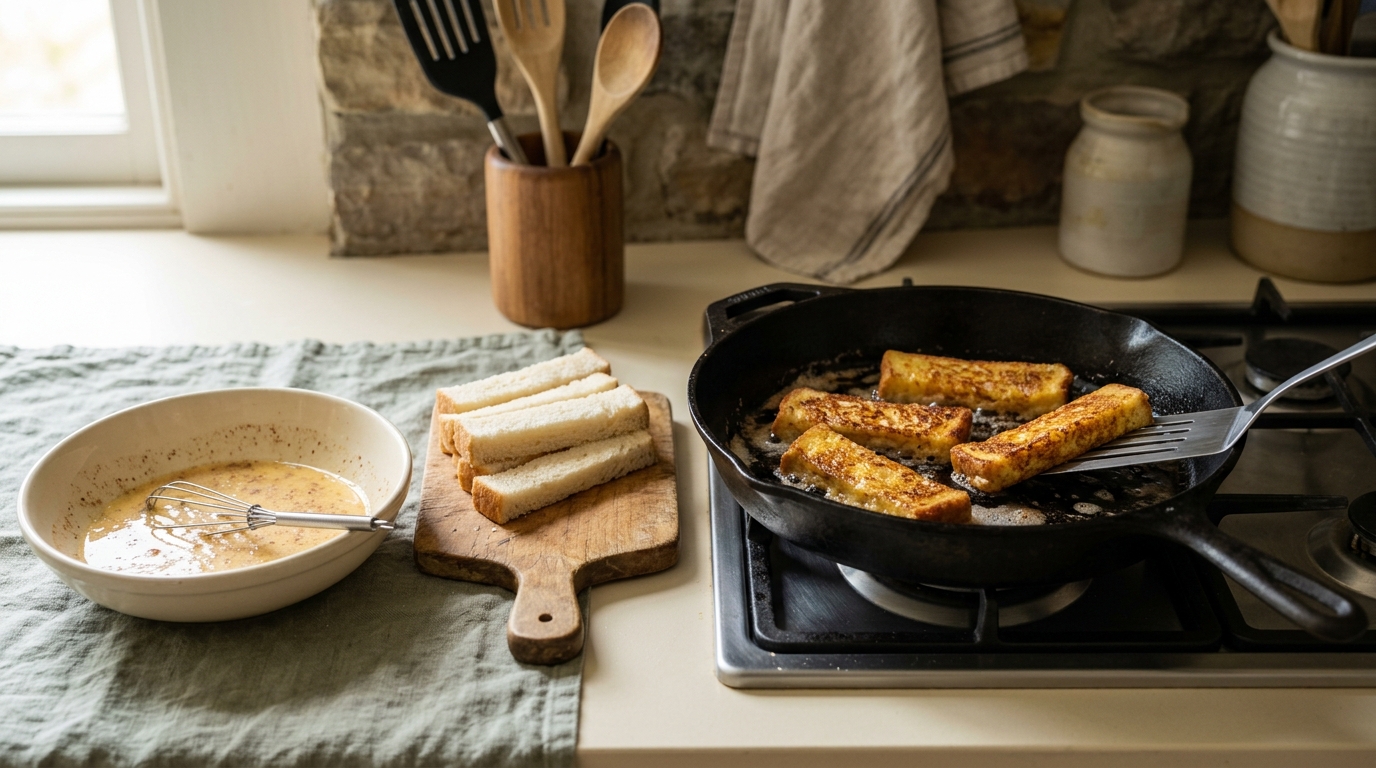
- Dip one bread strip briefly on each side. Lift it out and let excess coating drip back into the dish. Coat only enough pieces for the first batch; do not leave the remaining bread soaking.
- Arrange the sticks with space between them. Cook until the underside is golden, then turn gently with a thin spatula. Begin checking after about 2 minutes per broad side; the actual time depends on the bread and heat. Turn onto the narrow sides if needed.
- Check the center of a thick stick with a thin-tip thermometer inserted from the side. The egg-containing center should reach 160°F (71°C). Lower the heat if the outside browns before the middle is cooked.
- Transfer the cooked sticks to a plate without piling them into a steamy stack. Repeat with the remaining bread and fat. Serve promptly.
How much coating should the bread absorb?
The aim is a thin coating that reaches the surface of the crumb while leaving enough structure to lift the stick. A slice that feels saturated or starts sagging needs less contact with the mixture on the next attempt. There is no single soaking time that works for every low-carb formula.
Try one strip first. If it breaks when lifted, switch to a wider strip or brush the mixture lightly onto each side. If a fragile loaf still crumbles, cook whole slices and cut them afterward. You will have fewer browned edges, but more of the bread will stay intact.
Leftover raw egg mixture is not a dipping sauce. Discard the remainder after cooking and clean utensils and surfaces that contacted it. Use a separate dish for yogurt or another ready-to-eat topping.
Troubleshooting the first batch
The middle feels wet
Use less coating on the next batch and give each piece more room. Overcrowding traps steam. If the center has not reached the cooking temperature, continue over lower heat even if the outside looks done. Avoid judging doneness only by the color of the crust.
The edges darken too quickly
Reduce the heat and wipe out any burnt butter before starting another batch. Different breads and sweeteners brown at different rates. A lower setting gives you more control than repeatedly flipping a piece over high heat.
The coating sticks to the pan
Check that the skillet has warmed and the cooking surface is lightly coated. Give the first side time to set before sliding a thin spatula underneath. If a piece resists, forcing it loose immediately can tear soft bread.
Serving ideas and carbohydrate counting
Plain Greek yogurt makes a convenient dip; a measured portion of berries adds a different texture. Cinnamon alone also works if you prefer to keep toppings simple. Count the milk, yogurt, fruit and any syrup in the portion you actually serve.
No single carbohydrate figure fits this recipe because low-carb bread formulas vary widely. Calculate the contribution from four slices using your current package, add the other ingredients, and divide by two for the stated serving. If some egg mixture remains in the dish, counting the full mixture gives a conservative estimate rather than a precise laboratory result.
Keep total carbohydrate and fiber visible in your calculation instead of relying only on a front-of-package “net carb” claim. A sugar-free syrup can still contain carbohydrate or sugar alcohols. Check its serving size and ingredients before pouring.
This recipe contains eggs. Dairy milk or butter adds milk allergens, and the bread may contain wheat, gluten, soy, nuts or sesame. An unsweetened milk alternative changes only that ingredient; it does not make the whole recipe allergen-free.
Store and reheat cooked sticks
Refrigerate cooked sticks promptly in a covered container and use them within 3–4 days. The FDA’s egg-safety guidance sets a two-hour limit at room temperature, reduced to one hour above 90°F (32°C). Reheat leftovers to 165°F (74°C).
For freezing, cool the cooked sticks briefly without exceeding that limit, freeze them separated on a tray, then transfer to a freezer bag. Label the bag with the date and portions. About one month is a practical quality target for this untested variation, not a food-safety expiration date.
Reheat in a skillet over gentle heat or on an oven tray, turning as needed and checking the center temperature. A microwave is convenient but can soften the exterior. Avoid putting egg-coated sticks in a slot toaster, where loose coating or fat can drip onto heating elements.
Can I prepare the raw sticks the night before?
It is more predictable to cook them first and refrigerate the finished batch. An overnight soak may make some low-carb loaves fall apart. If you want to shorten morning preparation, measure the dry ingredients and keep the bread separate from the refrigerated eggs and milk until cooking.
Can I make a larger batch?
Double the ingredients if needed, but keep the skillet batches small. A larger amount in the pan changes how quickly moisture evaporates. Record the bread brand, slice thickness and approximate cooking time when a batch turns out well; those notes are more useful than assuming another loaf will behave the same way.
For more bread-based breakfasts and lunches, browse LessCarby recipes or use the meal planner to fit the portions into your week.
Save This Post on Pinterest
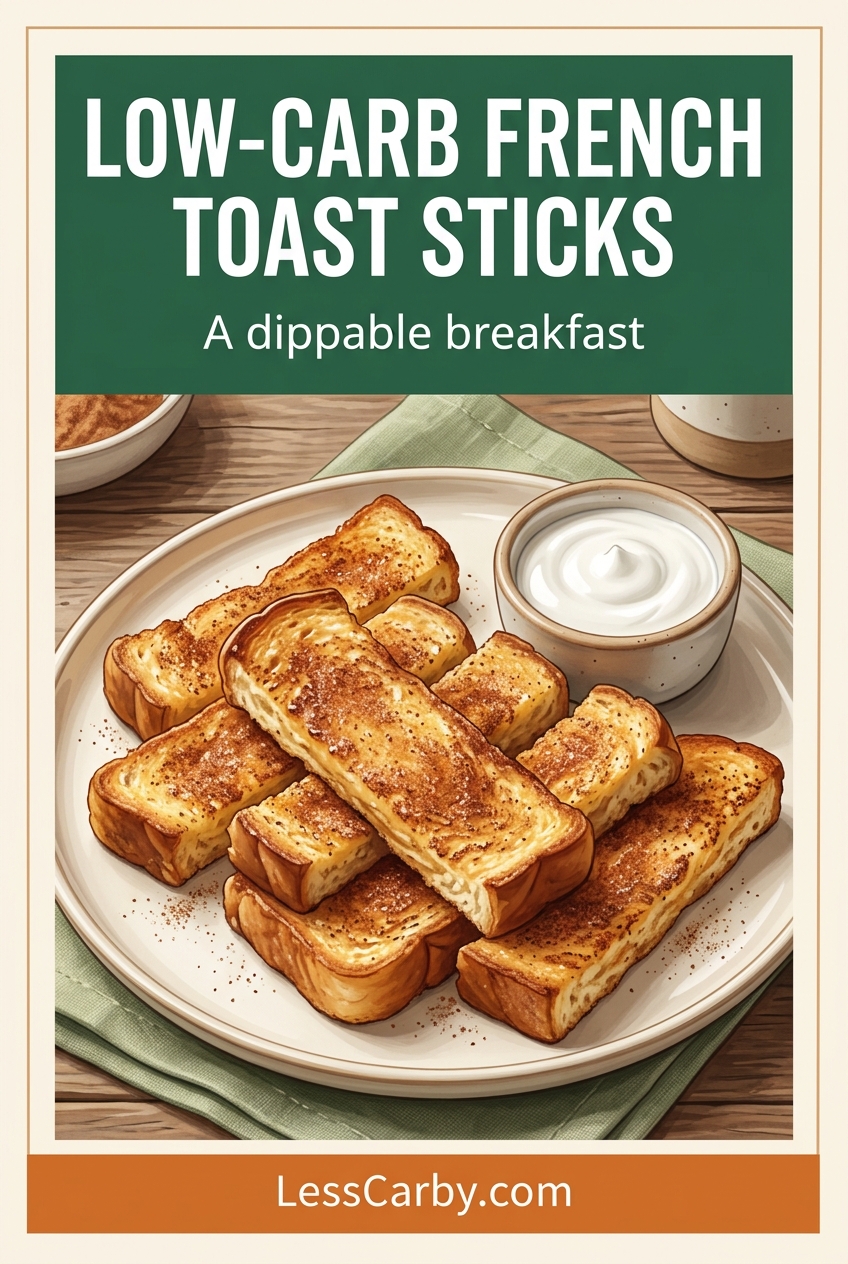
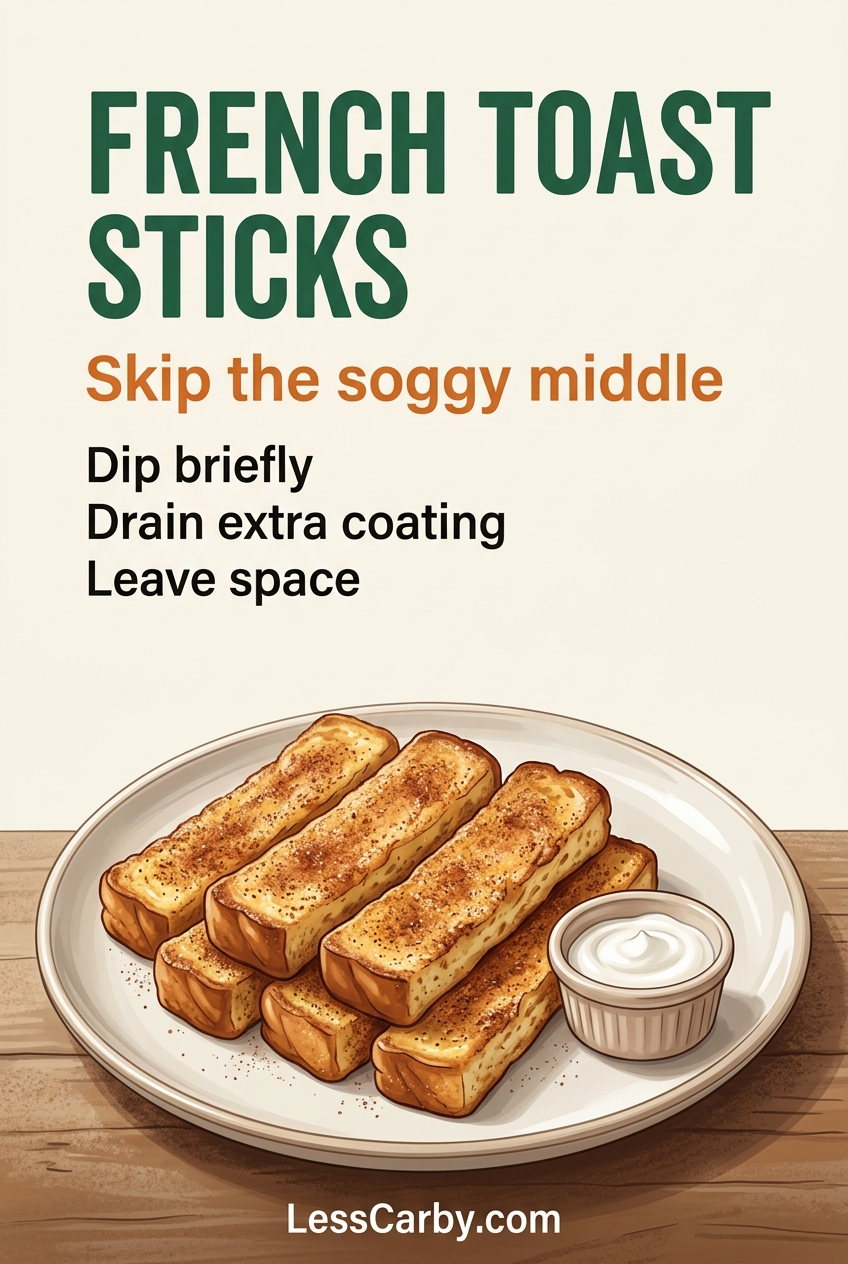
Save the recipe and quick-dip reminders for another morning.
Plan Your Week with Our Free Meal Planner
Choose seven days of meals, adjust portions, and download your shopping list. No email signup needed.
Open the Free Planner →
