

The best way to freeze low-carb bread is to separate the slices, remove as much air as practical, and freeze them in a sturdy freezer bag at 0°F (-18°C) or below. Toast individual slices directly from frozen, or thaw only what you need at room temperature. This approach limits freezer burn, keeps slices from sticking together, and prevents the entire loaf from going through repeated freeze-thaw cycles.
Low-carb breads often contain more fiber, wheat protein, seeds, or specialty starches than conventional sandwich bread. Those formulas can react differently after freezing: some slices stay soft, while others become dry, rubbery, or fragile. The method below works as a reliable starting point, but the package directions remain the final word for a specific brand.
Quick answer: Freeze sliced bread as soon as you know you will not finish it. Place parchment between slices if they cling, press excess air from a freezer bag, label it, and use within about three months for best quality. Frozen food held continuously at 0°F can remain safe indefinitely, but texture and flavor decline over time.
Why Low-Carb Bread Benefits From Freezing
Freezing is useful when a specialty loaf is expensive, sold in a larger package than you can finish, or available only through occasional shopping trips. It lets you remove one or two slices without sacrificing the rest of the loaf.
It also usually makes more sense than refrigerating bread for long-term quality. Cool refrigerator temperatures can accelerate starch retrogradation—the process associated with staling—while freezing slows most quality changes. Some low-carb formulas contain less conventional starch, but they can still lose moisture and become firm when exposed to air.
Freezing does not improve a loaf you already dislike, and it cannot reverse mold or spoilage. Freeze bread while it still tastes fresh rather than waiting until the final day on the package.
What You Need
- A freezer-safe zipper bag or airtight container
- Parchment or waxed paper for slices that stick
- A marker or freezer label
- Optional reusable silicone bag for short-term storage
A thin produce bag or the original bread sleeve alone may not protect the loaf for several weeks. You can place the original sealed bag inside a heavier freezer bag, but avoid trapping crumbs or moisture around the zipper.
How to Freeze Low-Carb Bread, Step by Step
- Check freshness. Do not freeze bread with visible mold, an unusual odor, or wet, sticky areas. If one slice is moldy, discard the loaf; bread is porous and growth can extend beyond what you see.
- Cool homemade bread completely. Warm bread releases steam. Wrapping it too soon traps condensation that can damage texture and encourage spoilage before the loaf freezes.
- Slice the loaf first. Individual slices are easier to portion and can go straight into a toaster. If the bread arrived pre-sliced, gently separate the pieces before freezing.
- Add separators when needed. Place small squares of parchment between very moist slices or between two-slice sandwich portions. Drier commercial slices may separate without them.
- Wrap for your timeline. For a week or two, a well-sealed freezer bag is often enough. For longer storage, wrap portions first or use a second airtight layer to reduce air exposure.
- Remove excess air. Press the bag gently around the bread without crushing it. A vacuum sealer can compress soft loaves, so use a gentle setting or stop the cycle early.
- Label and freeze flat. Write the bread name and date on the package. Lay it flat until firm, then store it upright if that saves space.
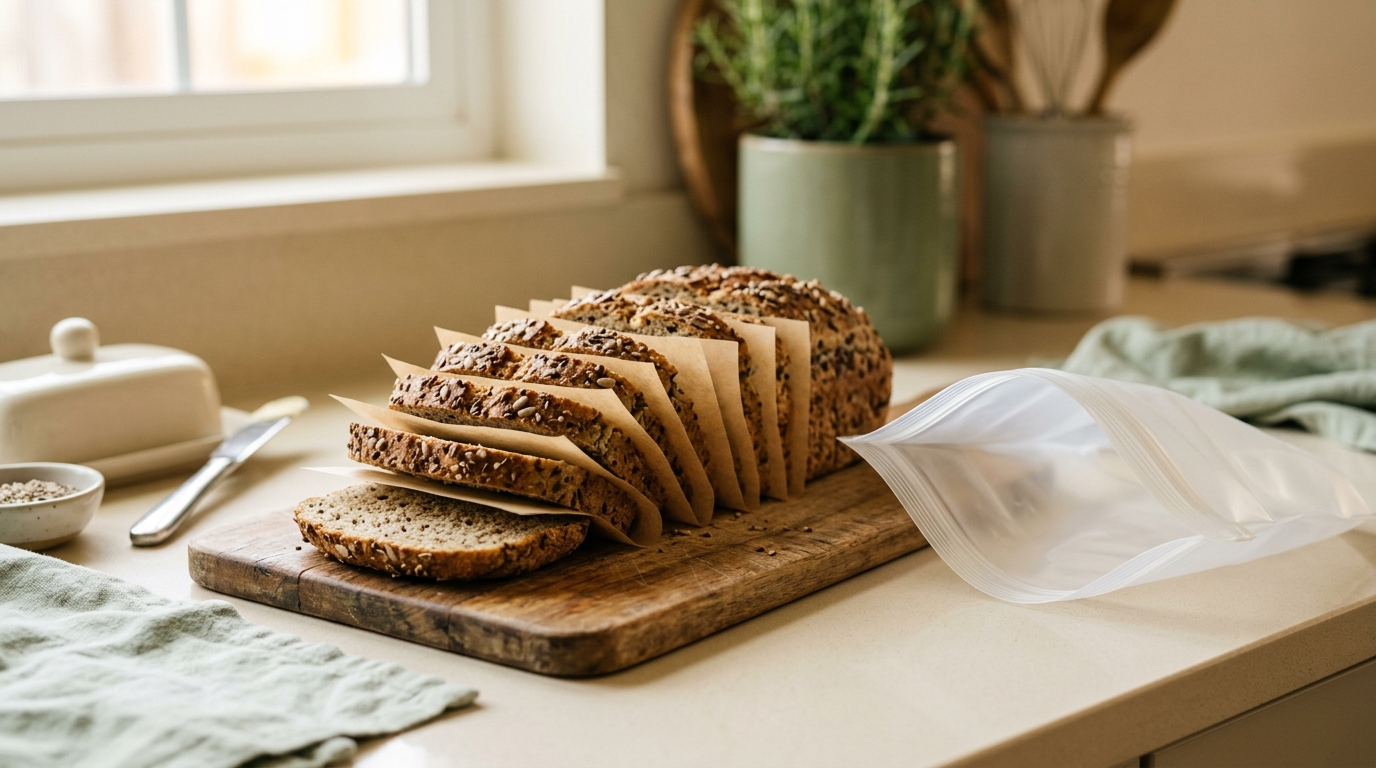
Should You Freeze the Whole Loaf or Individual Slices?
| Method | Best for | Main tradeoff |
|---|---|---|
| Individual slices | Toast, sandwiches, small households | More edges are exposed to air |
| Two-slice portions | Packed lunches and meal prep | Less flexible than single slices |
| Whole or half loaf | Family meals and homemade bread | Requires a longer, more even thaw |
For most store-bought low-carb sandwich bread, single slices or two-slice portions are the most practical. Freeze a homemade loaf whole only when you plan to serve most of it at once.
How to Thaw Frozen Low-Carb Bread
For toast
Put a frozen slice directly into the toaster and add a little time compared with fresh bread. Start with a moderate setting; high-fiber bread can darken at the edges before the center is hot. A toaster oven gives you more visual control.
For a cold sandwich
Place slices on a clean plate at room temperature for roughly 10 to 30 minutes, depending on thickness and room temperature. Keep the slices separated so condensation can escape. Assemble the sandwich once the surface feels dry rather than damp.
For a whole loaf
Keep the loaf wrapped while it thaws at room temperature so moisture redistributes instead of evaporating immediately. Once thawed, unwrap it. A brief warm-up in a low oven can refresh a homemade crust, but soft commercial sandwich bread usually needs no oven treatment.
For the microwave
Use short, low-power intervals only when time is tight. Microwaving can make wheat-protein-heavy bread temporarily soft and then surprisingly tough as it cools. Heat one slice at a time and use it promptly.
Common Freezing Mistakes
- Freezing warm bread: trapped steam becomes ice crystals and creates soggy patches after thawing.
- Leaving too much air in the bag: exposed surfaces dry out and absorb freezer odors.
- Freezing one solid stack: you may have to thaw the entire loaf to release two slices.
- Using damaged packaging: small tears allow moisture loss.
- Returning thawed slices repeatedly: temperature swings create condensation and speed quality loss.
- Ignoring the label: manufacturer storage directions can differ by formula and packaging.
What Freezing Can Change in Low-Carb Bread
A loaf built around vital wheat gluten may feel chewier after a rough microwave thaw, while a seed-heavy or high-fiber bread may seem more crumbly if it loses moisture. Thin slices can develop dry edges faster than thick slices. These are quality differences, not proof that the bread has become higher or lower in carbohydrates.
Freezing does not erase carbohydrates or calories. Use the current package and the labeled serving size when calculating net carbs. If you are comparing loaves, the Low-Carb Bread Finder can narrow options before you decide how much freezer space to dedicate.
How Long Does Frozen Low-Carb Bread Last?
For best texture, aim to use frozen bread within about three months. University food-storage guidance commonly places commercial baked breads in a roughly three-to-five-month quality range, while baking guidance often recommends three months as a simple home target.
FoodSafety.gov explains that freezer time limits are about quality: food kept continuously at 0°F (-18°C) or below can remain safe indefinitely. That does not mean it will remain pleasant indefinitely. Freezer burn, odor absorption, and moisture loss can make an older loaf disappointing.
A Simple Freezer Rotation System
- Write the product name and freeze date on every bag.
- Place newer bread behind older packages.
- Freeze in the portions you normally eat.
- Keep strongly scented foods well sealed.
- Check your freezer before opening a replacement loaf.
If you use several brands, add a short texture note to the label—“best toasted,” “good for sandwiches,” or “crumbles when thawed.” This records your actual experience without assuming every low-carb loaf behaves the same way.
Frequently Asked Questions
Can you toast low-carb bread directly from frozen?
Yes. This is often the easiest method for individual slices. Begin at a moderate setting and adjust because thin, high-fiber, or seeded slices can brown quickly.
Does freezing change net carbs?
Not in a way that justifies changing the label calculation. Freezing can change texture, but use the packaged nutrition facts for your portion.
Can you refreeze thawed bread?
Bread thawed safely can often be refrozen, but another cycle usually reduces quality. Portioning before freezing avoids the need.
Should low-carb bread be refrigerated instead?
Follow the package when refrigeration is required. Otherwise, freezing is generally better for longer storage, while room-temperature storage may be preferable for bread you will finish promptly.
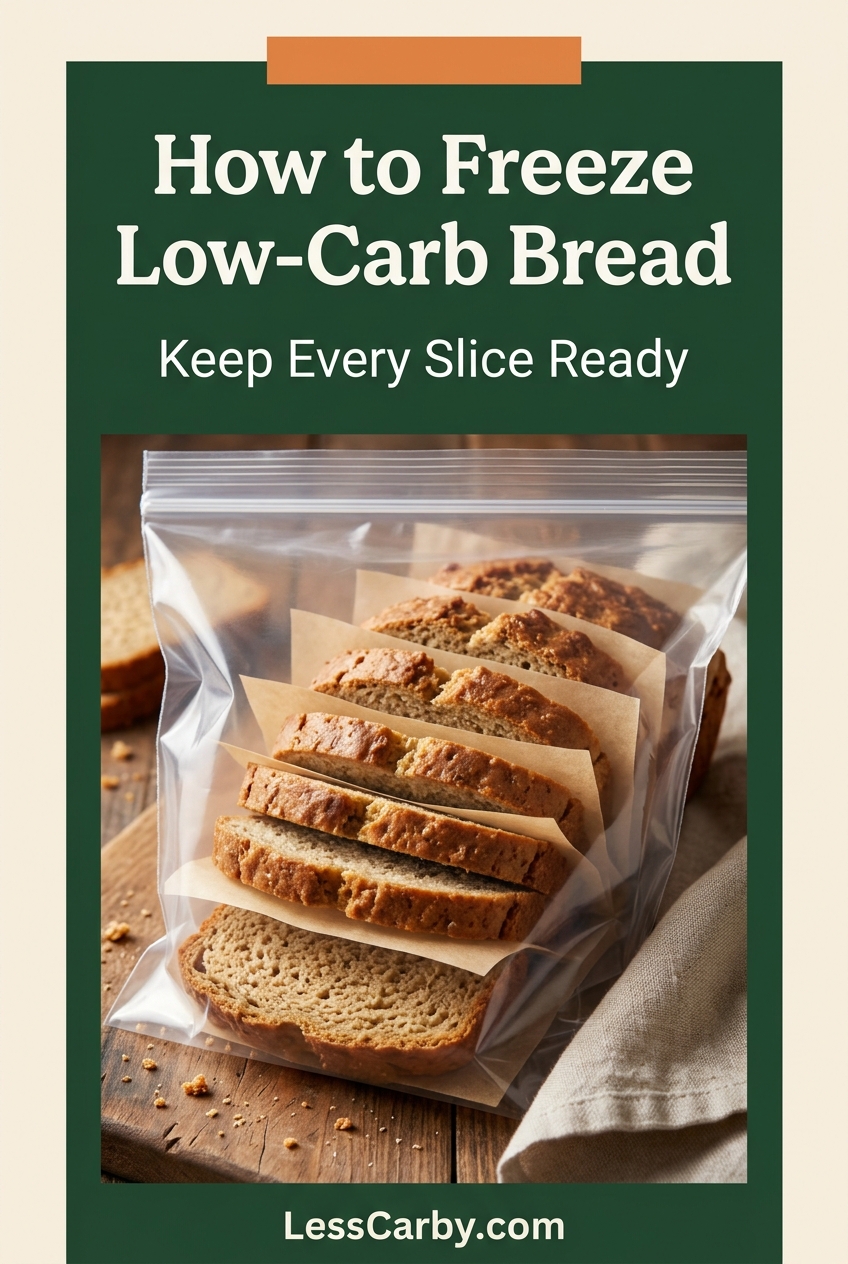
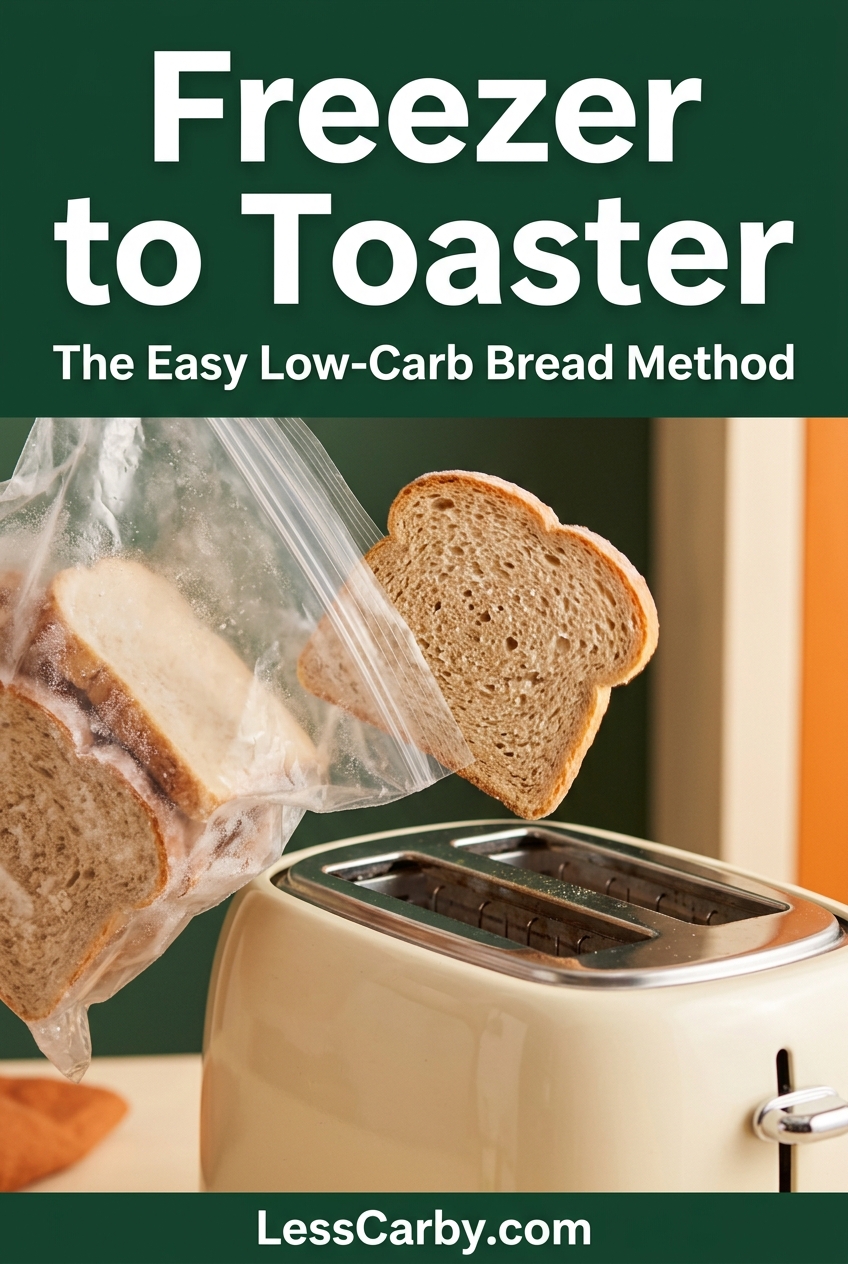
Save This Post on Pinterest
Save either version for the next time you open a new loaf.
The Bottom Line
Freeze low-carb bread in slices, protect it from air, label the package, and thaw only what you need. Toasting from frozen is convenient and avoids repeated temperature changes. Use three months as a practical quality target, while treating each brand’s package directions and your own texture notes as the final guide.
Sources
- FoodSafety.gov: Cold Food Storage Charts
- University of Nebraska–Lincoln Extension: Home Food Storage
- King Arthur Baking: How to Freeze and Defrost Bread
Plan Your Week with Our Free Meal Planner
Choose seven days of meals, adjust portions, and download your shopping list. No email signup needed.
Open the Free Planner →
