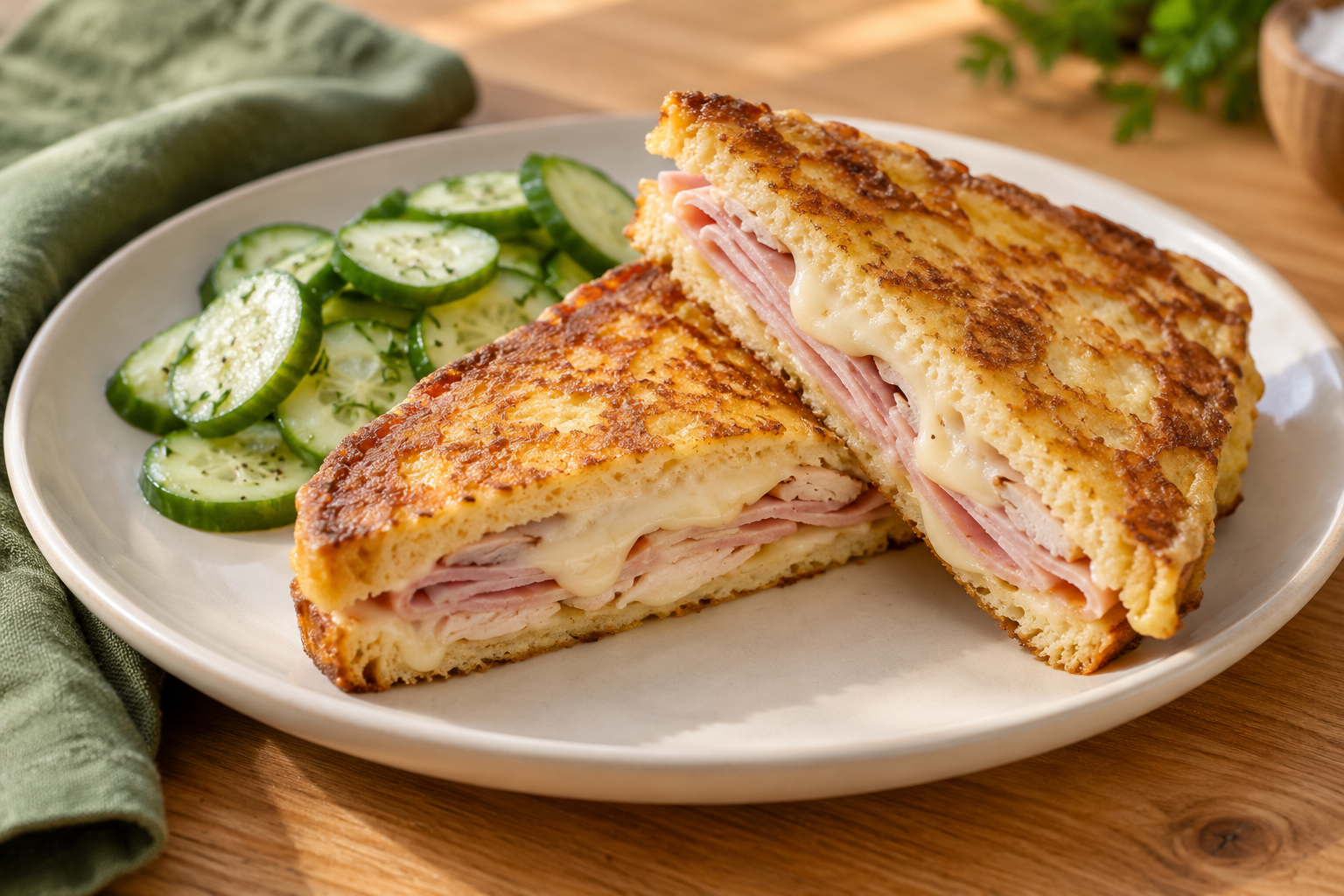
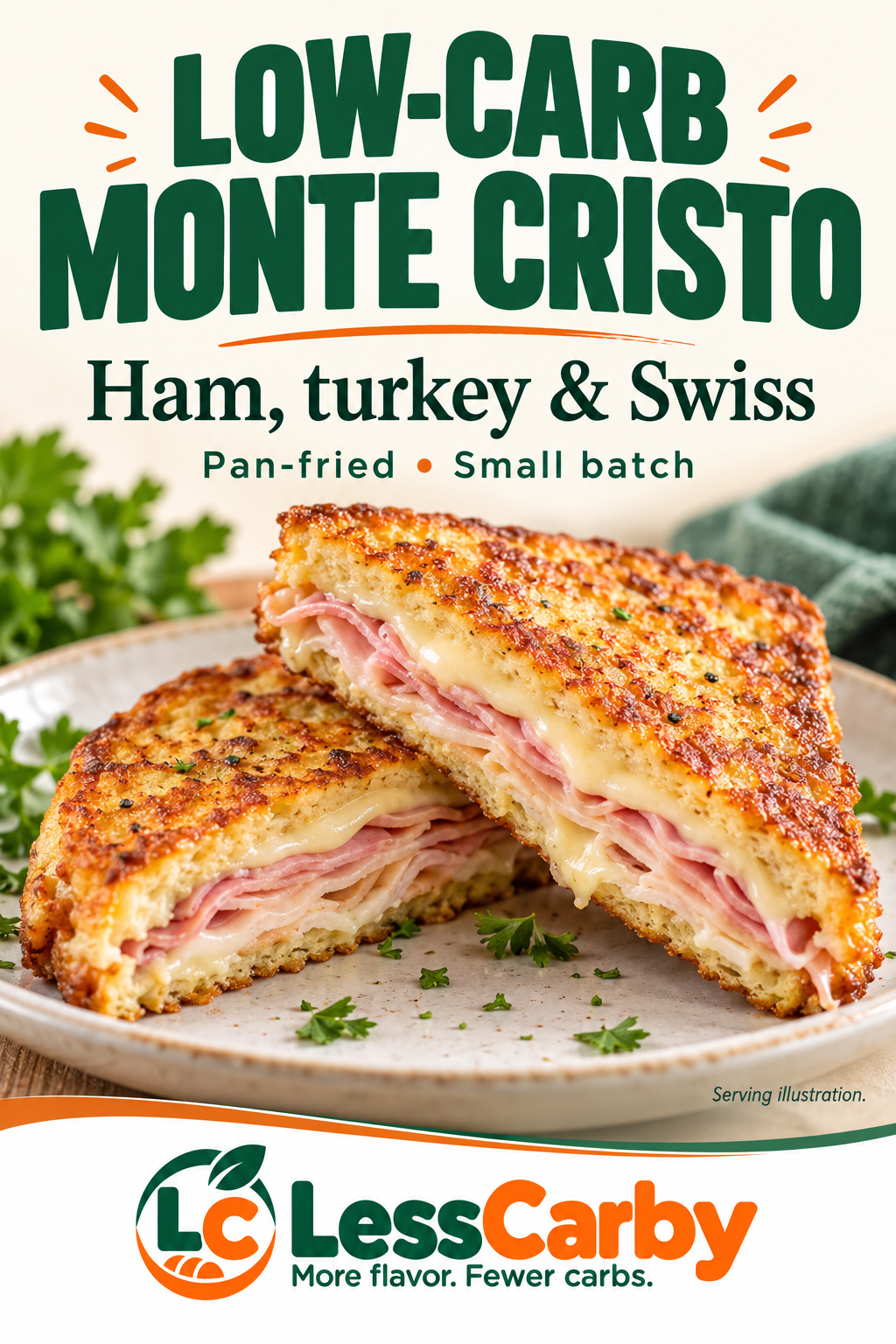
Make a low-carb Monte Cristo with four slices of bread, a thin ham-and-turkey filling, Swiss cheese and a quick egg dip. Cook the two sandwiches gently in a skillet so the coating browns while the center heats through. Skip powdered sugar and serve any jam separately; the bread and toppings you choose determine the carbohydrate total.
This savory, small-batch version is a useful brunch or hot-lunch option when you want something richer than a plain grilled cheese. It uses a light coating rather than a flour batter or deep frying. The method below is an original recipe proposal, not a claim of a completed LessCarby kitchen test. Start with one batch and adjust the heat to your pan and bread.
What makes this a Monte Cristo?
The familiar combination is an egg-coated ham-and-cheese sandwich, sometimes with turkey and a sweet accompaniment. There are several ways to assemble it. For example, Publix’s skillet version cooks egg-dipped bread before closing the sandwich. Our version keeps a modest filling inside two slices and coats the assembled sandwich briefly.
The low-carb change is mostly the bread, plus leaving out a flour batter and sugary finish. That does not turn the sandwich into a zero-carb meal or guarantee a particular blood-sugar response. Choose a loaf you enjoy, then calculate the portion from its current label.
Choose bread that can hold a quick dip
Use four intact sandwich slices of similar size, about half an inch thick. A plain or mild seeded loaf lets the ham, mustard and cheese come through. Very thin slices are harder to turn once wet; large holes give the cheese a path into the pan.
If the bread feels fragile, dry-toast it lightly and let it cool before assembly. You want a firmer surface, not a hard crouton. Thaw frozen slices before dipping so you are not trying to brown the outside while warming a frozen center. Bread made with almond flour, wheat, soy or sesame may have different allergen limits, even when the front label says low-carb.
Recipe: two savory Monte Cristo sandwiches
Yield: 2 sandwiches; 1 sandwich per serving. Estimated time: 10 minutes preparation, about 8–12 minutes cooking, depending on the loaf, pan and starting temperature. Use temperature and texture checks, not the clock alone.
Ingredients
- 4 slices low-carb sandwich bread
- 2 ounces (56 g) thinly sliced fully cooked ham
- 2 ounces (56 g) thinly sliced fully cooked turkey breast
- 2 ounces (56 g) thinly sliced Swiss cheese
- 2 teaspoons Dijon mustard, divided
- 2 large eggs
- 2 tablespoons (30 mL) milk
- A small pinch of black pepper
- 2 teaspoons butter for the pan, divided if cooking in batches
No extra salt is necessary to start: ham, cheese, mustard and bread already contribute sodium. Optional jam is not included in the ingredient quantities or the nutrition calculation below. If you want it, measure a small serving and read its label, including any sweeteners.
Method
- Set up before heating. Put a wide spatula, a clean serving plate and a food thermometer nearby. Use a shallow bowl big enough to hold a sandwich. Keep the deli meat refrigerated until assembly.
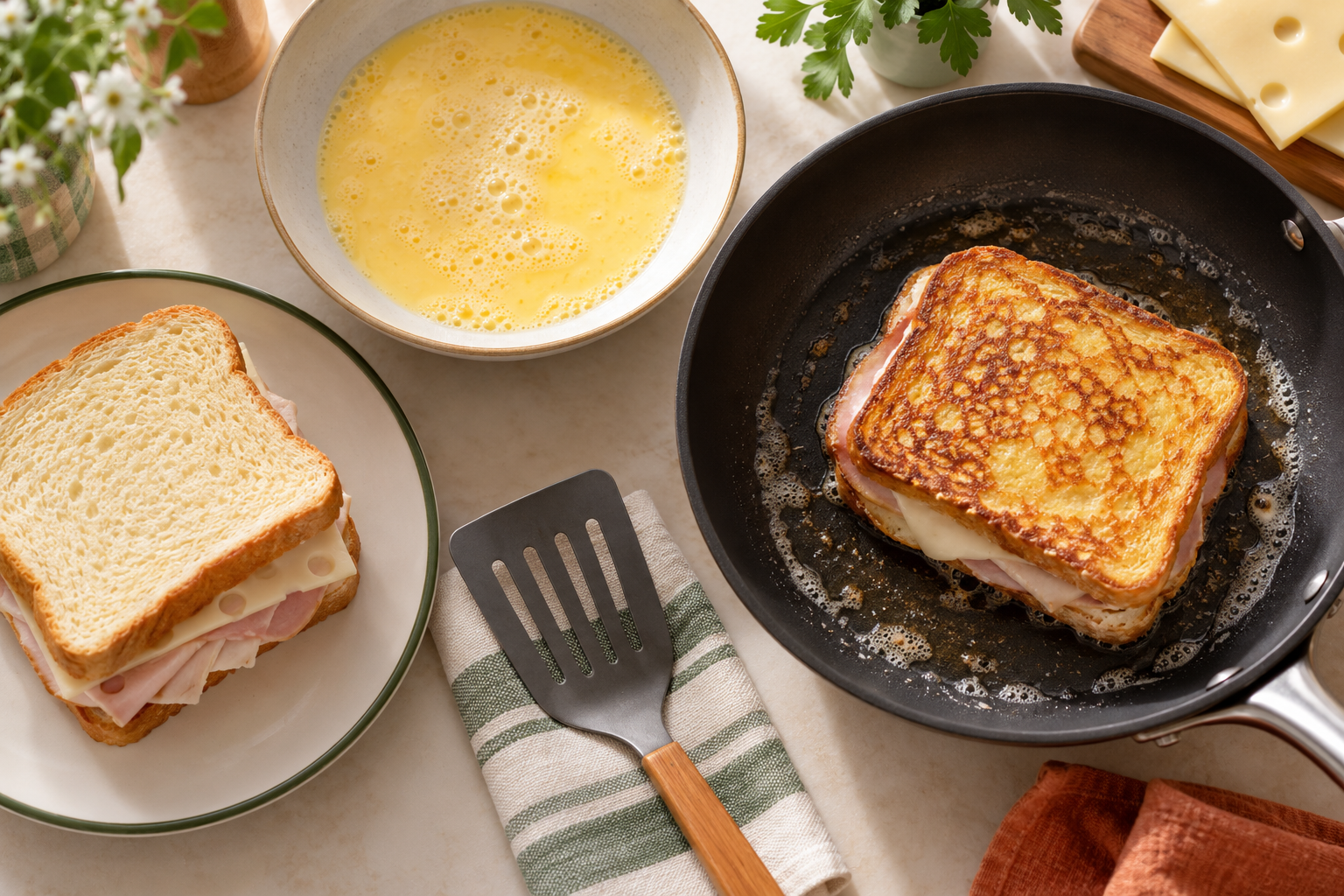
- Build two thin sandwiches. Spread 1 teaspoon mustard inside each. Divide the cheese, ham and turkey equally between them, with cheese next to the bread to help hold the layers as it melts. Spread the filling to an even thickness without overhanging the crust.
- Mix the coating. Beat the eggs, milk and pepper until the whites are fully mixed in. Heat a large nonstick skillet over medium-low heat and melt the butter. It should foam gently rather than smoke.
- Dip and lift. Coat both outside faces of one sandwich briefly, lifting it out as soon as the surface is covered. Let excess egg drip back into the bowl. Do not leave the bread soaking while you prepare the other sandwich.
- Cook without crowding. Lower the sandwich into the pan and repeat with the second if there is room. Start checking the underside after about 3 minutes. Turn with a wide spatula once the coating has set and the base is golden. Cook the second side gently; a lid can help the center warm, but remove it toward the end if steam is softening the crust.
- Check the center. For this egg-coated sandwich containing meat and poultry, use a conservative target of 165°F (74°C) at the center of the filling. Insert a thin thermometer probe from the side and follow its instructions. Brown bread and melted cheese alone do not establish a safe temperature. Lower the heat and continue cooking if the outside is ready before the center.
- Serve promptly. Move to the clean plate, let it settle briefly, then cut each sandwich in half. Discard the remaining raw-egg dip; do not pour it over the finished food.
The federal temperature chart distinguishes egg dishes from meat-and-poultry dishes and leftovers. The 165°F target here is deliberately cautious for the filled sandwich, not a claim that every plain egg preparation has the same minimum.
Fix the texture without rebuilding lunch
| What happens | What to change |
|---|---|
| Outside dark, center cool | Lower the heat; keep the filling thin. Continue to the temperature target. |
| Bread tears during turning | Let the egg coating set, use a wider spatula, and shorten the next dip. |
| Soft, damp exterior | Use less soaking time and finish uncovered. Avoid stacking hot sandwiches. |
| Cheese runs into the pan | Keep it inside the bread edges; remove escaped cheese before it burns. |
Do not squeeze the sandwich flat to hurry it. That can push out melted cheese and does not replace a center-temperature check. If a delicate loaf keeps breaking, make a simpler sandwich with it and choose a sturdier slice for the next egg-dipped batch.
Carbohydrates: calculate your actual sandwich
There is no single trustworthy carb count for an unspecified “low-carb bread.” For one serving, add the values for two bread slices, 1 ounce each of ham, turkey and Swiss cheese, 1 teaspoon mustard, and half the egg-and-milk mixture. Counting the full coating mixture gives a conservative ingredient estimate because some is discarded. Include butter when calculating calories and fat.
For total carbohydrate, add all those ingredient-label amounts. For a simple net-carb estimate, subtract their listed fiber from that total; show any separate sweetener deduction explicitly. A bread-only example: if your label says 10 g total carbohydrate and 8 g fiber per slice, two slices contribute 20 g total and 16 g fiber, or 4 g by subtraction, before the filling and coating. These are illustrative numbers, not this recipe’s measured nutrition.
Our nutrition-label guide explains the calculation. Check sodium as well as carbs, and follow your own care plan if you count total carbohydrate. Reducing cheese or meat changes the nutrition and the way the sandwich holds together; recalculate rather than carrying over a previous total.
Swaps, sides and allergens
Use all ham or all turkey if that is what you have, keeping the combined meat quantity the same and using fully cooked products. A different melting cheese can work, but thicker pieces need longer to heat. Plant-based cheese, egg substitutes and gluten-free loaves may cook differently; they are not tested one-for-one substitutions here.
This recipe contains egg and milk. Bread can also contain wheat, soy, nuts or sesame, and mustard matters for people who avoid it. Check every package rather than assuming a low-carb claim addresses allergies. Cucumber, a leafy salad or a bowl of soup can round out the plate without hiding the sandwich under another topping.
Make ahead and store safely
For the best chance of a crisp surface, keep components separate and dip just before cooking. If preparing ahead, refrigerate the assembled, undipped sandwich in a covered container and respect the shortest storage limit of its ingredients.
Follow FoodSafety.gov’s cooling guidance: refrigerate perishable food within 2 hours, or 1 hour above 90°F (32°C), in a refrigerator at 40°F (4°C) or below. Store cooked sandwiches in a shallow covered container and use within 3–4 days, or sooner if an ingredient’s instructions require it. The cold-storage chart gives the relevant cooked-meat limits. Reheat leftovers to 165°F (74°C). A skillet can restore some surface texture; microwaving is convenient but may leave the bread softer.
Want a hot sandwich without the egg dip next time? Try our low-carb tuna melt, or browse the recipe hub. For this batch, keep the filling modest and let the bread, rather than a pile of toppings, set the pace.
Save This Post on Pinterest
Keep the recipe and texture tips for your next hot sandwich. These original graphics show serving illustrations.

Plan Your Week with Our Free Meal Planner
Choose seven days of meals, adjust portions, and download your shopping list. No email signup needed.
Open the Free Planner →
