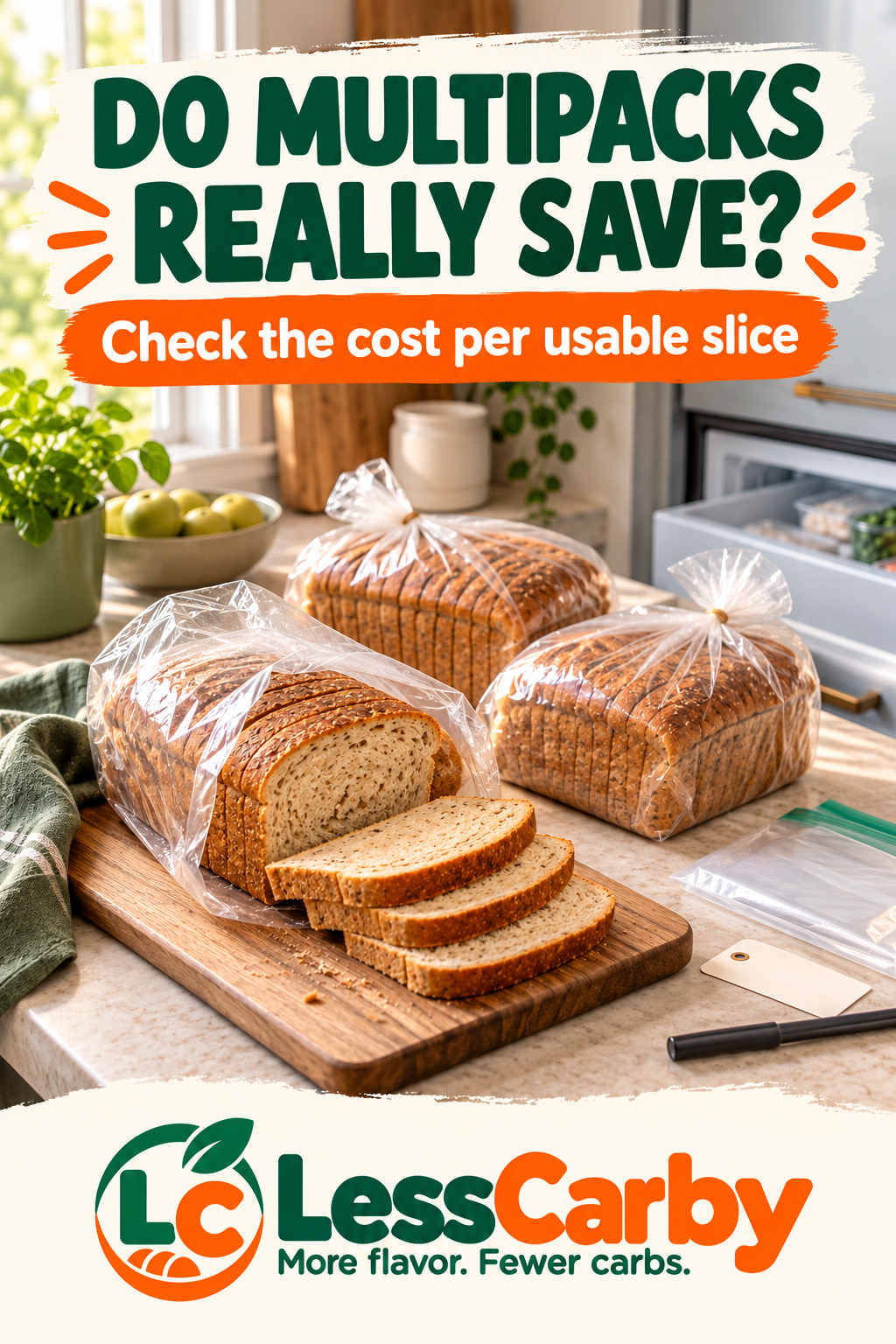
Multipacks can lower the price of low-carb bread, but only when the extra loaves get eaten. The useful question is not “Is the pack cheaper?” It is “What will each usable slice cost after storage, waste, and delivery are counted?”
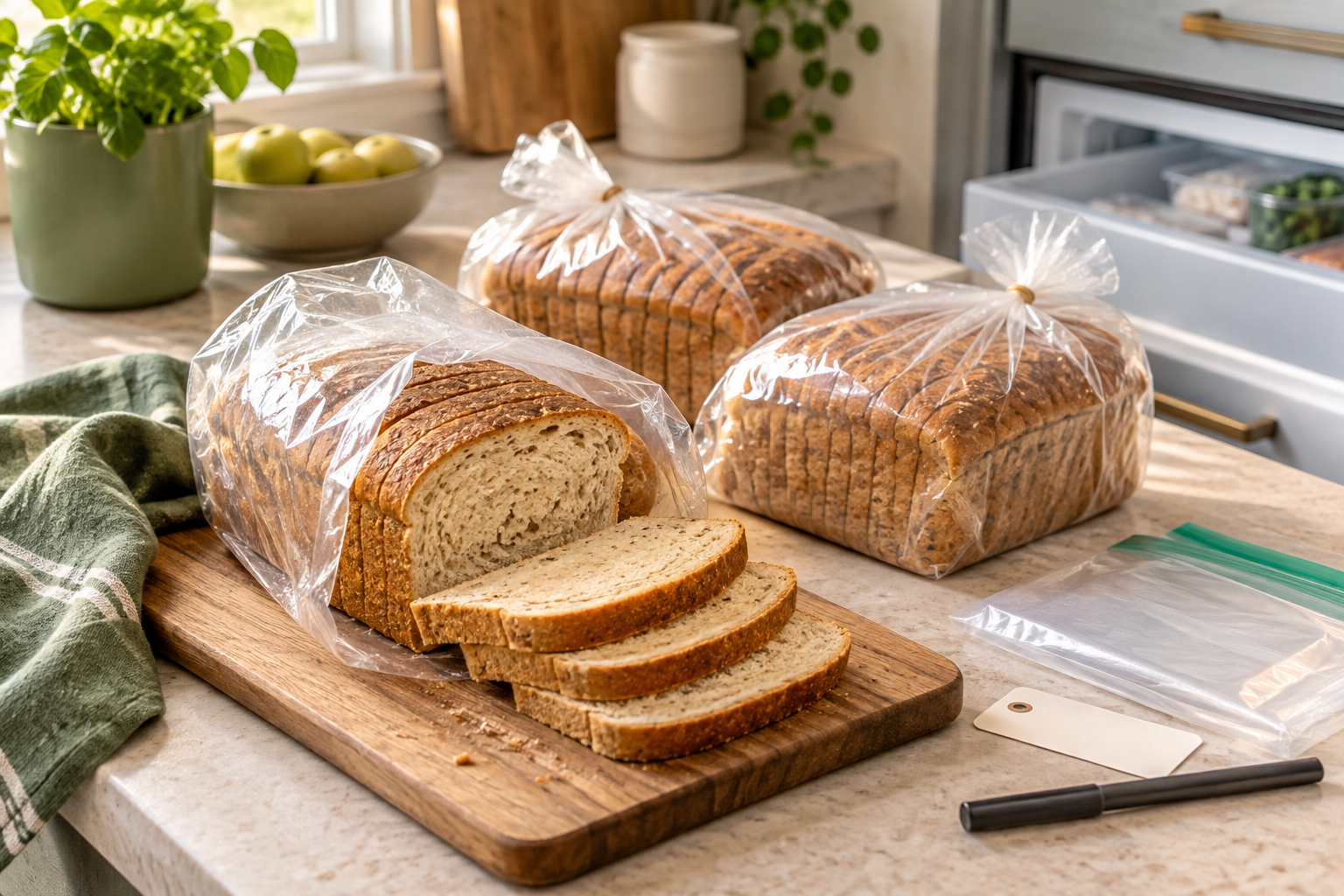
This guide gives you a quick way to compare packs without relying on a sale badge or a front-of-package claim. It also shows how to plan freezer space before the bread arrives. Prices, loaf sizes, slice counts, and storage directions vary, so use the current package and seller listing for the product you are considering.
Start with the unit that matches how you eat
A per-loaf price is quick, but it can hide different loaf weights and slice counts. Choose one comparison unit and use it for every option:
- Cost per slice works well for sandwiches and toast.
- Cost per ounce is useful when loaves have very different slice sizes.
- Cost per serving works only when the serving sizes are genuinely comparable.
In the United States, shelf labels sometimes show a unit price, but online listings are not always presented the same way. NIST’s consumer unit-pricing guidance explains why a common unit makes packages easier to compare. Do the calculation yourself if the displayed units differ.
| Number to collect | Where to find it | Why it matters |
|---|---|---|
| Delivered price | Cart total or shelf tag | Includes shipping or fees you must actually pay |
| Loaves per pack | Listing and package | Prevents a pack-size mix-up |
| Slices per loaf | Nutrition panel or current label | Supports cost-per-slice math |
| Expected usable loaves | Your household plan | Turns the sticker price into a realistic value |
Use two simple calculations
Advertised cost per slice = delivered pack price ÷ total slices in the pack.
Usable cost per slice = delivered pack price ÷ slices you realistically expect to use.
Here is a hypothetical example, not a current product price. A three-loaf pack costs $24 and each loaf contains 18 slices. That is 54 slices, or about $0.44 per slice. If one loaf goes stale or is never used, only 36 slices were useful. The effective cost becomes about $0.67 per usable slice. A $9 single loaf with 18 slices would cost $0.50 per slice. In that situation, the smaller purchase wins even though its sticker price per loaf is higher.
Keep the numbers honest. Do not subtract a coupon unless it applies to your cart. Include required shipping, membership fees you bought only for this order, and taxes when they materially differ. If you already pay for a membership for other reasons, you do not need to assign its full cost to one bread order.
Check four things before buying in bulk
1. You know you like the bread
Bulk buying is a poor way to try an unfamiliar loaf. Texture, slice size, sweetness, and how it toasts can vary widely. Buy one loaf first when possible. A lower unit price does not help if the bread is not right for your sandwiches or breakfasts.
2. The label still fits your needs
Confirm the current serving size, ingredients, allergens, and nutrition panel on the exact variety. A multipack does not change those facts, but a similar-looking variety may. Our guide to reading low-carb bread labels can help you compare the same portion across products.
3. You have a realistic use rate
Estimate how many slices your household uses in a normal week. Divide the pack’s total slices by that number. This gives a rough number of weeks the purchase needs to cover. Be conservative if bread use changes from week to week.
4. You have storage space ready
Follow the manufacturer’s storage directions first. If freezing is allowed, make space before ordering. USDA notes that food kept continuously frozen at 0°F remains safe almost indefinitely, while recommended freezer times mainly address quality. That does not mean every bread will keep its best texture forever, so the product directions and your own quality check still matter.
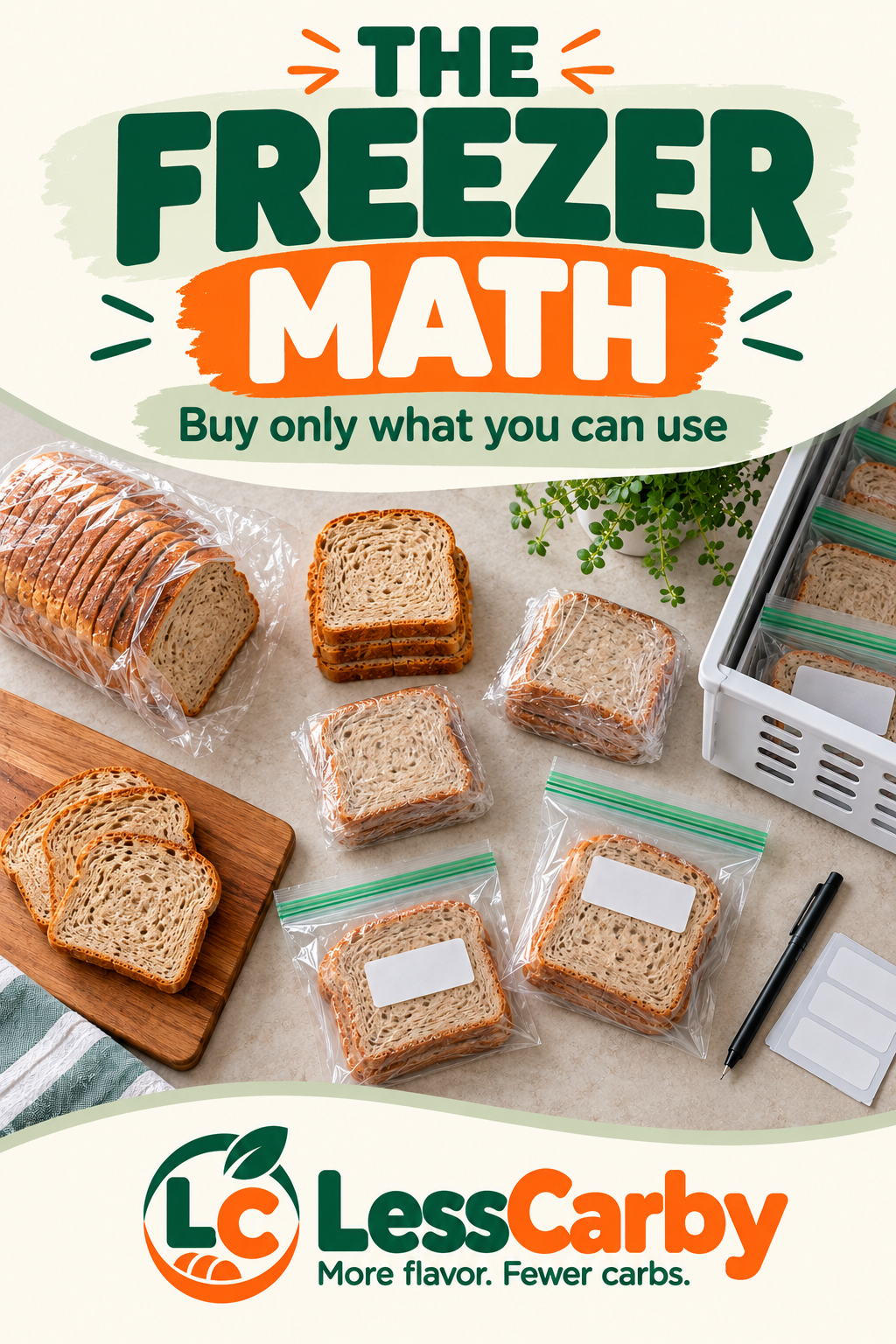
A practical freezer plan
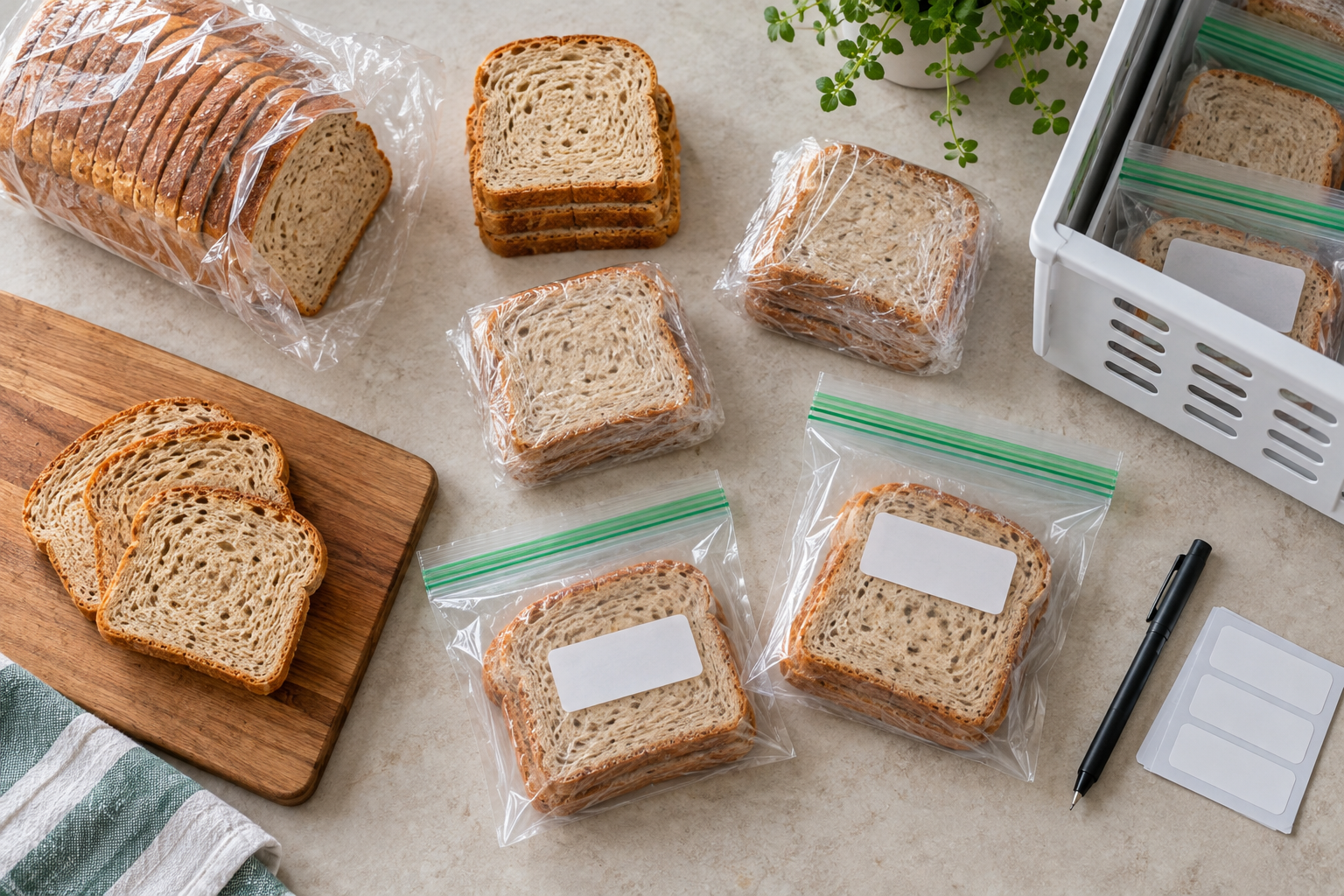
- Keep one loaf accessible. Store it exactly as the manufacturer directs.
- Freeze the extras promptly. Do not wait until the bread is already drying out.
- Protect against air. Keep unopened packaging intact when it is suitable for freezing, or add an airtight freezer bag or wrap.
- Portion for your routine. Small packs make it easier to thaw only what you need.
- Label the package. Add the product name and freezing date. This is inventory control, not a new safety date.
- Rotate older bread forward. Put newly frozen loaves behind the existing supply.
For step-by-step packing and thawing ideas, see how to freeze low-carb bread. If you are unsure what a printed date means, our guide to bread freshness dates explains why “best if used by” language is generally about quality rather than an automatic safety cutoff.
When a multipack is likely to be a good buy
- You have already tried the exact bread and would buy it again.
- The delivered cost per comparable slice or ounce is meaningfully lower.
- Your household will use the pack on a predictable schedule.
- You can store every loaf according to its directions.
- The purchase does not force you to buy more than your budget or space can handle.
When to buy one loaf instead
- You are testing a new brand or variety.
- The pack is only slightly cheaper after delivery costs.
- Your bread use is irregular.
- Your freezer is full or the product should not be frozen.
- The single-loaf seller offers a fresher or more convenient option.
A two-minute buying checklist
- Confirm the exact variety and current label.
- Write down delivered price, loaf count, and slices or ounces.
- Calculate cost per slice or ounce for both options.
- Estimate how much of the pack you will actually use.
- Check storage directions and freezer space.
- Choose the option with the lower realistic cost, not simply the bigger package.
Frequently asked questions
Is the largest low-carb bread pack always the cheapest?
No. Compare the same unit and include delivery costs. Then adjust for bread you may not use. A large pack can have a low advertised unit price and a high usable cost.
Should I freeze every extra loaf?
Follow the package or manufacturer’s directions. When freezing is allowed, doing it promptly usually gives you a better chance of preserving quality than waiting until the bread is near the end of its best-quality period.
Can I use “best by” as a safety deadline?
Not automatically. Date wording and product handling matter. FoodSafety.gov points consumers to the FoodKeeper resource for storage and quality guidance. Check the product, storage conditions, and official advice rather than relying on one date alone.
What if two loaves have different slice sizes?
Use cost per ounce as a second comparison. You can also compare the cost of the number of slices you actually use for one sandwich, while keeping the serving sizes on the labels clear.
The bottom line
A low-carb bread multipack earns its place in your cart when the savings survive real life. Compare a common unit, count shipping, plan the freezer, and price only the slices you expect to eat. That small calculation is more useful than the word “value” on a listing.
Sources
- National Institute of Standards and Technology: Uniform Unit Pricing
- USDA Food Safety and Inspection Service: Freezing and Food Safety
- FoodSafety.gov: Keep Food Safe
This article provides general food-shopping and storage information. Follow the product label and official food-safety guidance for the bread you buy.
Save This Post on Pinterest
Keep this guide handy for your next grocery order or freezer clean-out.
Plan Your Week with Our Free Meal Planner
Choose seven days of meals, adjust portions, and download your shopping list. No email signup needed.
Open the Free Planner →
