
Aldi L’Oven Fresh Keto Bread Review: Is It Worth Buying?

Aldi L’Oven Fresh Keto Bread Review: Is It Worth Buying?

For anyone embarking on a low-carb, ketogenic, or diabetic-friendly lifestyle, the hardest adjustment is almost always giving up bread. Bread is the foundational pillar of the standard American diet. It’s the vehicle for our morning eggs, the structural support for our lunchtime deli meats, and the comforting, crispy companion to our evening soups. When you transition to a diet that restricts carbohydrates to under 50 grams—or even 20 grams—a day, traditional wheat bread is immediately pulled from the menu. For years, low-carb dieters were forced to rely on dense, crumbly almond flour creations, eggy “cloud breads,” or lettuce wraps that left much to be desired.

Then, the commercial food industry caught on, and a flood of keto-friendly breads hit the market. However, early iterations were often staggeringly expensive, typically costing upwards of $8 to $12 a loaf online, and frequently tasted like cardboard. Enter Aldi, the budget-friendly supermarket chain famous for disrupting high grocery prices. Aldi launched its L’Oven Fresh Keto Friendly Bread, promising the holy grail of low-carb living: zero net carbs, a taste and texture indistinguishable from real bread, and a price tag that won’t break the bank.

But does it actually live up to the massive hype? Can a budget supermarket loaf really deliver zero net carbs without compromising your health goals or tasting like a kitchen sponge? In this comprehensive Aldi L’Oven Fresh Keto Bread review, we are going to dive deep into everything you need to know. We’ll analyze the taste, the texture, the complex ingredients list, the blood sugar impact, and the overall value to determine if this product deserves a permanent spot in your pantry.

Aldi L'Oven Fresh Keto Bread Review: Is It Worth Buying?
Aldi’s L’Oven Fresh Keto Bread has become a heavily debated and highly sought-after staple for many low-carb shoppers.

⭐ Quick Summary: Aldi L’Oven Fresh Keto Bread

  • Overall Rating: 4.5 out of 5 Stars
  • Net Carbs: 0g per slice
  • Calories: 40 per slice
  • Protein: 5g per slice
  • Typical Price: ~$4.29 to $4.99 (varies by location)
  • Where to Buy: Exclusively at Aldi supermarkets

Verdict: The Best Budget Pick for low-carb dieters seeking a realistic bread replacement that toasts beautifully and holds up to heavy sandwich fillings.

The Constant Struggle: Why Finding Good Keto Bread is So Difficult

To truly appreciate what Aldi has accomplished with the L’Oven Fresh line, we have to look back at the dark ages of low-carb dieting. Just a few years ago, if you wanted bread on a ketogenic diet, you essentially had two options. You could bake it yourself, or you could pay a premium for a specialty product shipped on dry ice.

Baking keto bread at home usually involves a base of almond flour, coconut flour, psyllium husk, and an extraordinary amount of eggs. The result is often a loaf that is dense, heavy, moist in the wrong ways, and overwhelmingly tastes like an omelet. It rarely rises properly, and it almost never mimics the light, airy, springy texture of a traditional wheat loaf. Furthermore, baking specialty breads is time-consuming and the ingredients themselves are highly expensive. A single bag of good quality almond flour can cost upwards of $15.

When commercial brands began producing keto breads, they relied heavily on alternative flours, resulting in tiny, dense slices that crumbled the moment you tried to spread cold butter on them. You would pay $9 for a loaf of bread where the slices were half the size of normal bread, and you still couldn’t comfortably eat it without toasting it to a crisp just to mask the texture. The psychological toll of diet fatigue is real, and the lack of a simple, comforting sandwich is a major reason why many people struggle to stick to a ketogenic or low-carb lifestyle long-term.

This is the environment into which Aldi dropped its L’Oven Fresh Keto Bread. By utilizing modified wheat starches and vital wheat gluten instead of relying entirely on almond or coconut flours, they managed to replicate the actual structural matrix of traditional bread. They brought the price point down to parity with premium regular breads, making low-carb living accessible to the average grocery shopper.

Enter Aldi L’Oven Fresh Keto Friendly Bread: The Game Changer

When the L’Oven Fresh Keto Bread first arrived on Aldi shelves, it caused absolute chaos in low-carb community groups. It was originally introduced as an “Aldi Find”—a temporary, limited-time item. Shoppers were buying 10 to 15 loaves at a time and clearing out entire shelves, leading to widespread shortages and frantic social media posts tracking which local stores still had stock.

Recognizing the massive, sustained demand, Aldi wisely transitioned the bread into their core, year-round product lineup. Depending on your region, you can usually find it sitting comfortably in the bread aisle, right next to the standard wheat and white loaves.

Aldi typically offers this bread in two primary varieties: Wheat and White. Occasionally, you may spot a seeded or multi-grain variant, but the Wheat and White are the permanent fixtures. Visually, the loaf looks exactly like a standard, store-bought loaf of bread. The crust is a normal golden brown, the crumb is soft and yielding, and the slices are standard size—not the miniature, palm-sized squares common in older keto bread brands. It comes in a standard plastic bread bag, complete with a twist tie, offering an immediate sense of comforting normalcy before you even open it.

Detailed Nutritional Breakdown: Analyzing the Macros

The most alluring claim on the packaging of the L’Oven Fresh Keto Bread is the bold “0g Net Carbs” printed on the front. For anyone tracking their macronutrients rigorously, zero net carbs seems almost like magic. Let’s break down the actual nutrition facts panel to understand exactly what is in a single slice.

Nutritional Metric Amount per 1 Slice (28g)
Calories 40
Total Fat 1g
Sodium 140mg
Total Carbohydrates 9g
Dietary Fiber 9g
Net Carbs 0g
Protein 5g

To calculate net carbohydrates, you take the Total Carbohydrates and subtract the Dietary Fiber (and any sugar alcohols, if present). In this case, 9 grams of total carbs minus 9 grams of dietary fiber equals exactly 0 grams of net carbs. The logic here is that fiber is generally not digested or absorbed by the body in a way that raises blood sugar or triggers an insulin response, so it can be safely subtracted from your daily carb limit.

Beyond the carbohydrate count, there are two other incredibly notable metrics here: the calories and the protein. At just 40 calories per slice, this bread is surprisingly low in energy density. A standard slice of regular white or wheat bread typically ranges from 70 to 120 calories. For individuals who are using the ketogenic diet for weight loss and are therefore maintaining a caloric deficit, having an 80-calorie base for a two-slice sandwich is a massive advantage.

Secondly, the protein content is quite high for bread. Five grams of protein per slice means a standard two-slice sandwich provides 10 grams of protein before you even add any meat, cheese, or eggs. This protein primarily comes from the vital wheat gluten, which helps keep you feeling full and satiated long after your meal is over.

Deep Dive into the Ingredients: What Exactly Are You Eating?

When something seems too good to be true—like zero-carb bread that tastes like the real thing—it’s essential to look closely at the ingredient list. The keto community is often divided into two camps: “strict/clean keto” and “dirty/lazy keto.” Clean keto focuses heavily on whole, unprocessed foods and avoids modern additives, while dirty keto focuses strictly on the macronutrient math, allowing highly processed foods as long as the net carbs remain low.

Aldi’s L’Oven Fresh Keto Bread definitely falls into the “dirty” or “lazy” keto category due to its ingredient profile. Here are the primary functional ingredients making this bread possible:

  • Modified Wheat Starch: This is the magic ingredient responsible for the low net carb count. Modified wheat starch is a form of resistant starch. Through chemical or enzymatic processing, the starch molecules are altered so that human digestive enzymes cannot easily break them down. Instead of being absorbed as glucose in the small intestine, the starch passes through to the large intestine where it acts like dietary fiber. This provides the bulk and baking properties of flour without the digestible carbohydrates.
  • Water: Essential for hydration and dough formation.
  • Vital Wheat Gluten: This is the extracted protein from wheat, with almost all the starch washed away. Gluten is what gives traditional bread its elasticity, chewiness, and ability to trap gas bubbles to rise. By adding pure gluten back into the modified starch, the bread achieves its remarkably realistic texture. Note: This means the bread is absolutely NOT gluten-free and is strictly off-limits for anyone with Celiac disease or gluten sensitivity.
  • Oat Fiber: An insoluble fiber derived from the hull of the oat. It contains zero net carbs and adds massive amounts of fiber to the bread, helping to dry out the dough and create a bread-like crumb structure.
  • Soybean Oil / Vegetable Oil: Oils are used to keep the bread soft and extend its shelf life. This is a point of contention for “clean keto” followers who avoid seed oils due to concerns about omega-6 fatty acids and inflammation.
  • Yeast, Salt, and Preservatives: Standard baking ingredients to provide flavor, rise, and shelf stability. Commercial preservatives are used to prevent mold, though as we’ll discuss later, keto breads still tend to mold quickly due to their moisture content.

For the purist who avoids all grains, wheat, and seed oils, this bread will be a hard pass. But for the pragmatic dieter whose main goal is blood sugar control, weight loss, or simply surviving the diet without craving a real sandwich, these ingredients are a very acceptable trade-off.

The Taste and Texture Test: Does It Feel Like Real Bread?

Nutrition labels and ingredient lists only matter if the product is actually palatable. The true test of any keto bread is the sensory experience. We evaluated Aldi’s bread across several different eating scenarios to see how it performs.

The Raw “Straight from the Bag” Test

Many early keto breads were completely inedible unless toasted. When you pull a slice of the L’Oven Fresh bread from the bag, it feels shockingly normal. It passes the “squish test”—if you press it gently, it bounces back rather than crumbling into dust or maintaining a rigid dent. It is incredibly soft. The crust is thin and tender, much like standard commercial white bread. The flavor when eaten raw is very mild. It lacks the deep, yeasty sweetness of a high-end bakery loaf, but it also completely lacks the strange, eggy, or cardboard-like aftertastes common in alternative flours. It acts as a perfect, neutral canvas.

The Toasting Performance

Because of the high protein and fiber content, keto breads toast a bit differently than regular bread. Aldi’s bread toasts beautifully, but it does so relatively quickly, so you need to keep an eye on your toaster settings. Once toasted, it achieves a satisfying crunch on the outside while retaining a bit of chew on the inside. Most importantly, it is structurally sound enough to support cold, hard butter spread across its surface without tearing a hole in the middle of the slice—a massive victory for low-carb breakfasts.

The Sandwich Structural Integrity

Building a heavy sandwich is where inferior breads fail. We tested this bread with mayonnaise, mustard, three slices of turkey, bacon, lettuce, and a heavy slice of tomato. A common issue with almond flour bread is that moisture from condiments or tomatoes turns the bread into a soggy, disintegrating mess within minutes. Thanks to the vital wheat gluten in Aldi’s bread, it holds up exceptionally well. The gluten network provides strength, meaning you can eat a fully loaded BLT or deli sandwich with your hands without the entire structure collapsing halfway through.

The Grilled Cheese Test

Making a grilled cheese requires bread that can absorb butter or mayo on the exterior and crisp up in a hot pan while allowing heat to transfer through to melt the cheese. The L’Oven Fresh bread performs admirably here. It crisps up to a golden brown and doesn’t become overly greasy. Because it is so low in sugar, it doesn’t caramelize as darkly as regular white bread, but the textural crunch is absolutely satisfying.

Blood Sugar Impact: Does Aldi Keto Bread Spike Glucose?

For diabetics, insulin-resistant individuals, and strict keto dieters who measure their ketones, the phrase “zero net carbs” is often met with skepticism. Not all fibers and modified starches behave exactly the same way in every human body.

The reliance on modified wheat starch is the wild card. While the starch has been altered to resist digestion, human gut microbiomes vary wildly. For the vast majority of people, this bread functions exactly as advertised. Anecdotal evidence from hundreds of users with Continuous Glucose Monitors (CGMs) shows that eating two slices of this bread results in a completely flat line, or a very negligible bump in blood glucose—far less than even a small apple would cause.

However, a small percentage of individuals report that modified wheat starches do cause a moderate glucose spike and can subsequently knock them out of ketosis. This is sometimes attributed to individual digestive enzymes being surprisingly efficient at breaking down the modified bonds, or a “cephalic phase insulin response” where the taste and texture of bread trick the body into releasing insulin in anticipation of sugar that never arrives.

💡 Tip: Your Mileage May Vary (YMMV): If you are a diabetic relying on precise insulin dosing, or a strict keto dieter experiencing a mysterious weight loss stall, it is highly recommended to test your own blood sugar 30, 60, and 120 minutes after eating this bread to see how your specific body responds.

The Fiber Factor: Digestion and Gut Health Considerations

There is an elephant in the room when discussing this bread, and it revolves around the bathroom. With 9 grams of dietary fiber per slice, a simple two-slice sandwich delivers 18 grams of fiber. The American Heart Association recommends about 25 to 30 grams of dietary fiber a day for adults, a number most Americans fail to reach.

If you eat two sandwiches a day using this bread, you are consuming 36 grams of fiber just from the bread alone. If your digestive system is not accustomed to high fiber intake, suddenly introducing this much modified starch and oat fiber can cause severe gastrointestinal distress. Symptoms can include severe bloating, gas, stomach cramps, and changes in bowel movements.

Because the fiber in this bread is incredibly dry and acts like a sponge, it requires water to move efficiently through your digestive tract. If you eat this bread, you absolutely must increase your water intake. For those just starting out, it is highly recommended to limit consumption to one slice a day, slowly working your way up to a full sandwich as your gut microbiome adapts to the new fiber load. On the positive side, for keto dieters who often struggle with constipation due to a lack of grains and fruits, this bread can act as an incredibly effective digestive aid.

Who Is This Bread Best For? The Ideal Candidates

Given the complex nature of its ingredients and its distinct macro profile, Aldi’s keto bread isn’t the perfect fit for absolutely everyone. Here is a breakdown of who will benefit the most from keeping a loaf in their kitchen.

🎯

Pragmatic Keto Dieters

Those who prioritize net carbs, convenience, and staying in ketosis without obsessing over “clean” ingredient labels or seed oils. It is a fantastic tool for diet adherence.

📉

Most Diabetics

Individuals managing Type 2 diabetes who want a normal sandwich without the massive glucose spike associated with traditional wheat or white bread.

🛒

Budget-Conscious Shoppers

At under $5 a loaf, this is one of the most affordable commercial keto breads on the market, making long-term low-carb living financially sustainable.

🍞

Low-Carb Beginners

For people just starting their diet, having a direct replacement for toast and sandwiches makes the transition period significantly less daunting and restrictive.

Who should avoid it? Anyone with Celiac disease or gluten intolerance, strict paleo/clean keto followers who avoid wheat derivatives and vegetable oils, and individuals with severe digestive sensitivities to concentrated fiber.

How Does It Compare to Other Popular Keto Breads?

Aldi is no longer the only player in the budget keto bread game. Let’s see how it stacks up against some of its biggest competitors found in traditional grocery stores.

Aldi L’Oven Fresh vs. Arnold / Oroweat Keto Bread

Arnold (also branded as Oroweat or Brownberry depending on your region) offers a very similar keto bread product. Structurally, the ingredient lists are nearly identical, relying heavily on modified wheat starch and vital wheat gluten. Arnold’s slices tend to be slightly larger and perhaps a tiny bit softer, feeling almost indistinguishable from premium sandwich bread. However, Arnold’s bread generally retails for $6.50 to $8.00 depending on the supermarket. Aldi provides a nearly identical experience for about 30% to 40% less cost.

Aldi L’Oven Fresh vs. Sola Bread

Sola was one of the early pioneers of commercial keto bread. Sola bread has a slightly sweeter flavor profile (often utilizing erythritol or monk fruit) and comes in smaller, squarer slices. It also relies on a mix of resistant starches and gluten. Many people prefer the taste of Sola, particularly for breakfast applications like toast and jam. However, Sola usually contains 1 to 2 grams of net carbs per slice, compared to Aldi’s zero, and Sola is generally more expensive per ounce. For a closer look at how Aldi stacks up against two other popular brands, see our Aldi vs. Hero vs. Carbonaut comparison.

Aldi L’Oven Fresh vs. Base Culture Keto Bread

Base Culture represents the “clean keto” alternative. It is made primarily from almond butter, eggs, flaxseed, and arrowroot flour. It is completely grain-free, gluten-free, and Paleo-friendly. Because of this, it is very dense, quite heavy, and must be kept frozen. It is also highly caloric (often over 100 calories a slice) and expensive, frequently costing over $10 a loaf. Aldi wins massively on price, calories, and traditional texture, but Base Culture wins for ingredient purity and allergy friendliness.

Creative Ways to Use Aldi Keto Bread Beyond Sandwiches

While a classic turkey and swiss is fantastic, the neutral flavor and excellent structural integrity of the L’Oven Fresh bread make it a versatile ingredient for cooking and baking.

  • Keto French Toast: Because it holds up to moisture, you can soak these slices in a mixture of heavy cream, eggs, cinnamon, and a little keto-friendly sweetener. Fry them up in butter and top with sugar-free maple syrup for a decadent weekend breakfast.
  • Homemade Keto Croutons: Don’t throw away the end pieces (the heels)! Cube them up, toss them in olive oil, garlic powder, salt, and parmesan cheese. Bake them at 350°F (175°C) until completely crispy. They add incredible crunch to Caesar salads without the carb penalty.
  • Keto Breadcrumbs: Toast several slices until they are completely dry and hard. Run them through a food processor until fine. You can use this as a binder for keto meatballs or meatloaf, or mix it with parmesan to bread chicken tenders for frying.
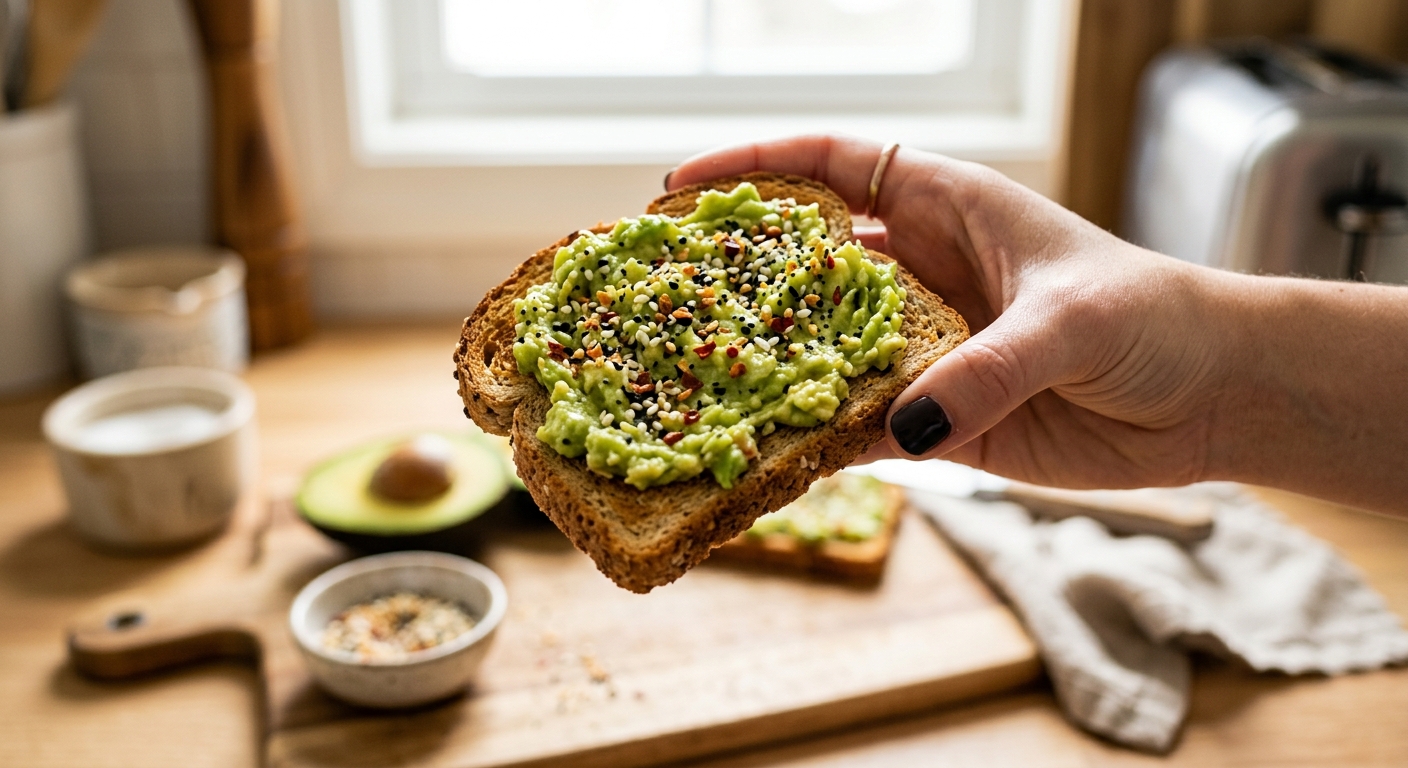
  • Avocado Toast: The modern classic. Toast a slice, smash half an avocado on top, drizzle with olive oil, sprinkle with Everything Bagel seasoning, and top with a fried egg. It’s an incredibly satiating, nutrient-dense meal for under 5 net carbs total.

Proper Storage Tips: How to Make Your Loaf Last Longer

One of the most common complaints regarding Aldi’s keto bread—and indeed, almost all modified-starch keto breads—is that they mold exceptionally quickly. Because of the high fiber content, the bread retains a lot of moisture. Moisture trapped inside a plastic bag at room temperature is a breeding ground for mold. If left on the counter, it is not uncommon for this bread to develop green spots within 4 to 5 days of purchase.

💡 Tip: Always Freeze Your Keto Bread. To avoid wasting money, the absolute best storage method is the freezer.

When you bring the loaf home, gently tap the bottom of the bag on the counter a few times to help unstick the slices from each other. Then, place the entire loaf directly into the freezer. Because the bread is so light, individual slices can be pried apart easily even when frozen. You can pop a frozen slice directly into the toaster—it only takes an extra 30 seconds to toast compared to room-temperature bread. If you want to make a cold sandwich, pull two slices out and let them sit on a plate for 10 minutes; they thaw incredibly fast at room temperature.

Storing the bread in the refrigerator is also an option and will extend the life by a week or two, but refrigeration tends to dry out the crumb faster than freezing does, leading to slightly staler-tasting bread.

Pros and Cons: The Honest Truth

To summarize the nuances of this product, here is a straightforward look at the benefits and drawbacks of making Aldi L’Oven Fresh Keto Bread a regular part of your grocery haul.

The Pros

  • Unbeatable Macros: At 0g net carbs and 40 calories per slice, it perfectly fits into almost any macro-tracking protocol.
  • Realistic Texture: It genuinely feels, smells, and chews like regular store-bought sandwich bread.
  • Highly Affordable: Averaging around $4.50, it is vastly cheaper than premium brand competitors.
  • High Protein: 5g of protein per slice aids in muscle maintenance and satiety.
  • Versatile: Toasts beautifully and holds up well to heavy, wet sandwich ingredients.

The Cons

  • Not Gluten-Free: Relies heavily on vital wheat gluten, making it dangerous for Celiacs.
  • “Dirty” Ingredients: Contains modified starches and seed oils, which strict keto dieters try to avoid.
  • Digestive Issues: The massive fiber payload (9g per slice) can cause severe bloating and gas for some individuals.
  • Spoils Quickly: High moisture content means it molds very fast if left at room temperature.
  • Availability: Aldi stores occasionally suffer from stock issues, meaning you can’t always guarantee it will be on the shelf when you need it.

Frequently Asked Questions About Aldi Keto Bread

Is Aldi keto bread actually keto-friendly?

Yes, by the standard definition of macronutrient tracking. With zero net carbohydrates per slice, it will not consume your daily carb allotment. However, because it contains wheat derivatives, “clean” keto dieters may prefer to avoid it. For the average person doing keto for weight loss, it is perfectly acceptable.

Why does Aldi keto bread make me bloated?

The bloating is almost certainly caused by the high fiber content. A single slice contains 9 grams of fiber, mostly from modified wheat starch and oat fiber. Eating multiple slices introduces a heavy load of indigestible material to your gut, which bacteria ferment, causing gas and bloating. Drinking more water and reducing your serving size can help mitigate this.

Can I eat this on a strict diabetic diet?

Many diabetics consume this bread regularly with excellent results and stable blood sugars. However, individual insulin responses to modified starches vary. It is strongly advised to test your blood glucose with a meter after your first time eating it to ensure your body isn’t reacting to the starch. For more brand options and label-reading tips, see our full guide to bread for diabetics.

Are the Wheat and White varieties nutritionally different?

Nutritionally, they are virtually identical. Both boast 0g net carbs, 40 calories, and 9g of fiber. The difference lies slightly in flavor and coloring, with the wheat variety having a slightly earthier taste, but the texture and macro profile remain the same.

Final Verdict: Is Aldi’s Low-Carb Bread Worth Your Money?

After extensive testing, analysis of the ingredients, and considering the price point, the conclusion is clear: Yes, Aldi L’Oven Fresh Keto Bread is absolutely worth buying.

It represents a major victory for accessibility in the low-carb and ketogenic space. Dieting is inherently difficult, and the psychological comfort of being able to enjoy a simple grilled cheese, a BLT, or a piece of morning toast alongside your eggs cannot be overstated. By successfully mimicking the texture and structural integrity of traditional bread without the massive carbohydrate penalty, Aldi has created a product that dramatically increases the likelihood of diet adherence.

While it is not a perfect health food—it is highly processed and relies on gluten and modified starches—it serves as a phenomenal bridge tool. It allows you to participate in normal food culture while maintaining your macronutrient goals. As long as your digestive system tolerates the high fiber load and you aren’t strict about avoiding wheat proteins, Aldi’s keto bread deserves a permanent, dedicated spot in your freezer.

Ready to Upgrade Your Low-Carb Menu?

Now that you’ve got your bread sorted, it’s time to build the perfect sandwich. Explore our collection of delicious, macro-friendly recipes designed to keep you in ketosis without sacrificing flavor.

Browse Keto Recipes

Scroll to Top