For low-carb pumpkin cheesecake bars in a small pan, use an almond-flour crust, plain pumpkin purée and full-fat block cream cheese. This recipe makes 12 modest bars in an 8-inch square pan. Bake the filling gently, check its center with a thermometer, then give it at least 6 hours in the refrigerator before cutting.
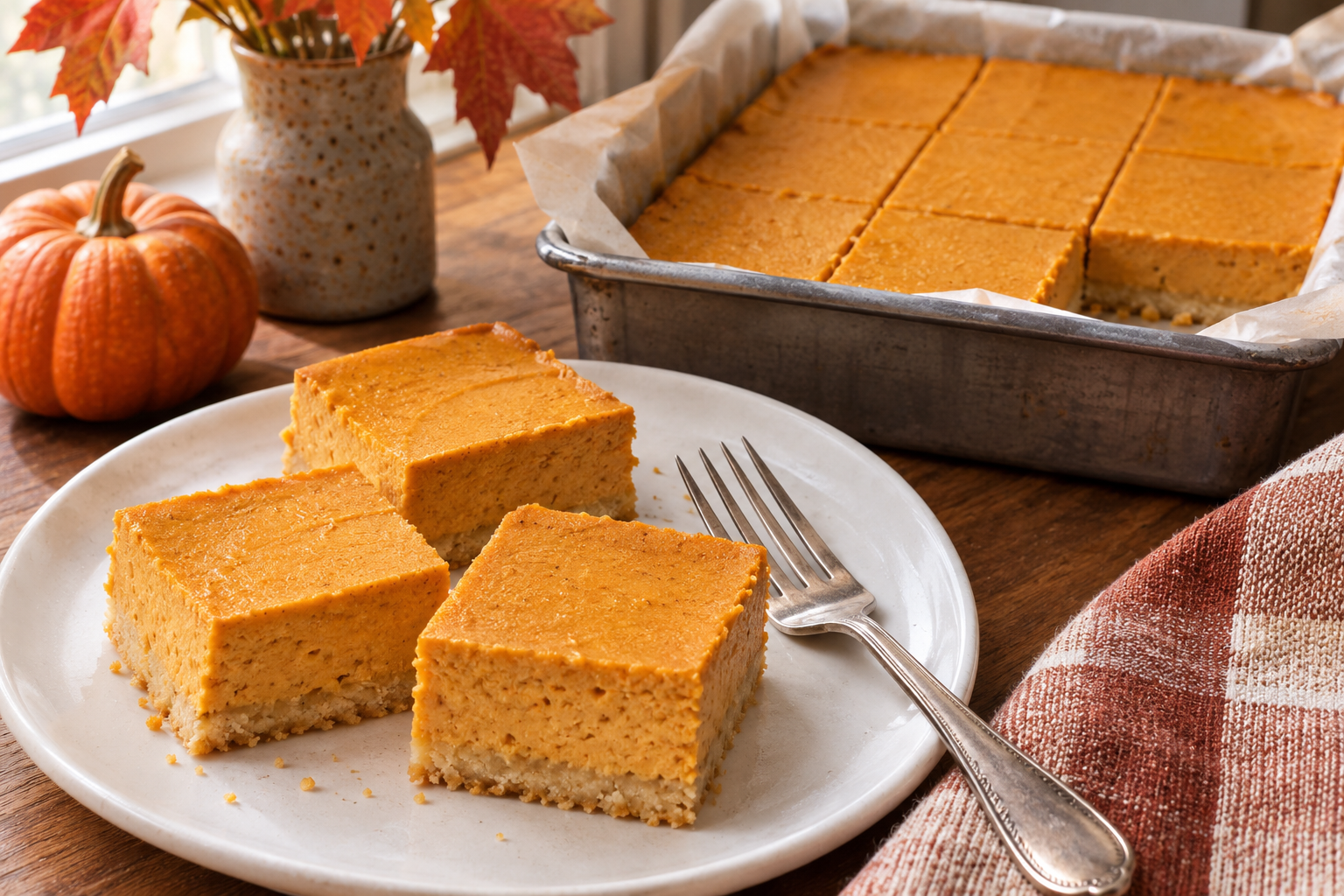
Our choice here is a single pumpkin filling rather than separate cheesecake and pumpkin layers. It keeps the mixing simple and puts pumpkin in every bite. Pure allulose replaces the usual sugar, but it still counts toward total carbohydrate. The estimated numbers per bar are about 15 g total carbs, including 10 g allulose, and about 3 g net carbs using the calculation below.
Recipe at a glance
Yield: 12 bars, one bar per serving.
Pan: one 8 × 8-inch (20 × 20 cm) metal pan, at least 2 inches deep.
Preparation: about 20 minutes, plus about 30 minutes to soften the cheese.
Baking: 10–12 minutes for the crust, then approximately 35–45 minutes for the filling.
Cooling: about 45 minutes on a rack, then at least 6 hours refrigerated. Plan on roughly 8–9 hours overall, or make it the day before.
Ingredients for one small pan
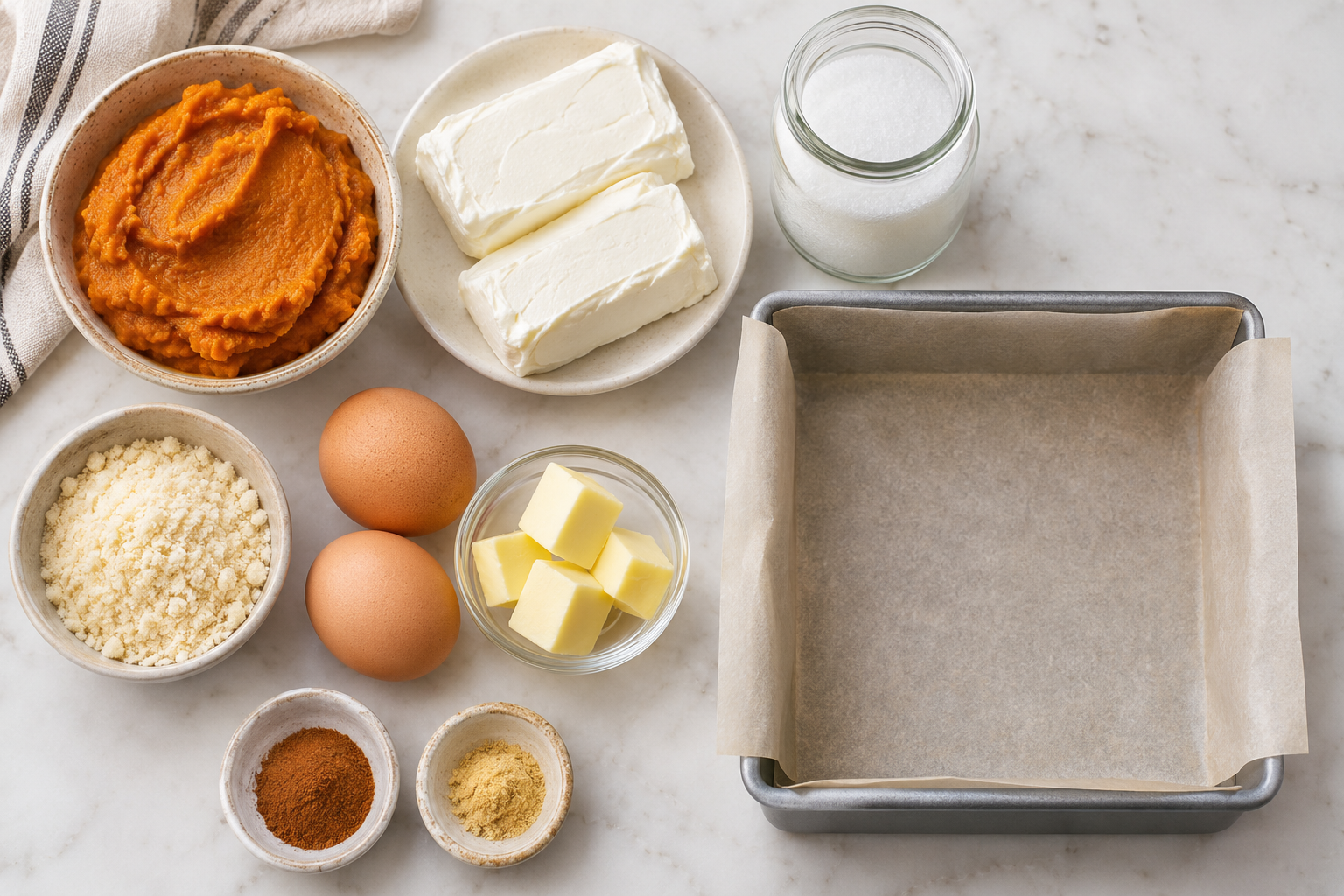
A kitchen scale is especially useful for the almond flour, pumpkin and sweetener. The cup measurements below are U.S. cups. Use plain pumpkin purée, not sweetened pumpkin pie filling.
Almond crust
- 112 g finely ground blanched almond flour, about 1 cup
- 42 g unsalted butter, melted, about 3 tablespoons
- 20 g pure granulated allulose, weighed
- ⅛ teaspoon fine salt
Pumpkin cheesecake filling
- 454 g full-fat plain block cream cheese, two 8-ounce packages, softened
- 183 g plain canned pumpkin purée, about ¾ cup
- 100 g pure granulated allulose, weighed
- 2 large eggs
- 1 teaspoon pure vanilla extract
- 1½ teaspoons ground cinnamon
- ¼ teaspoon ground ginger
- A small pinch of fine salt
You will also need parchment paper, mixing bowls, a hand mixer, a spatula and an instant-read food thermometer. The recipe does not include whipped cream or another topping; add those separately to your nutrition calculation.
How to make low-carb pumpkin cheesecake bars
- Prepare the pan and oven. Heat a conventional oven to 325°F (163°C), with a rack in the middle. Line the metal pan with parchment, leaving an overhang on two sides. Let the cream cheese soften only until it mixes easily; do not leave dairy and eggs out for hours.
- Make a thin, even crust. Stir together the almond flour, 20 g allulose and salt. Mix in the melted butter until the crumbs hold together when pressed. Spread over the bottom of the pan and press firmly with a flat-bottomed measuring cup. Bake for 10–12 minutes, looking for lightly colored edges rather than a dark crust. Let it rest on a rack while you prepare the filling. Keep the oven at 325°F.
- Smooth the cream cheese first. Beat the softened cream cheese with the 100 g allulose on low speed until smooth, stopping to scrape the bowl. Blend in the pumpkin, vanilla, cinnamon, ginger and salt. Add the eggs one at a time, mixing on low only until incorporated. Do not taste batter containing raw eggs or raw flour.
- Fill and bake. Spread the filling over the warm, not hot, crust. Bake for approximately 35–45 minutes. Start checking at 30 minutes because ovens and pans vary. The edges should be set; the middle should move slightly as one piece rather than slosh. Check the center with a food thermometer and continue baking until it reaches at least 160°F (71°C), the USDA minimum for dishes containing eggs. Appearance alone is not the safety check. If the top colors too quickly, tent it loosely with foil.
- Cool, then refrigerate. Put the pan on a rack for about 45 minutes so it stops steaming heavily, then refrigerate. Do not wait hours for it to reach room temperature. Keep total time out of refrigeration after baking under 2 hours, or under 1 hour if the room is above 90°F (32°C). Once cold, cover the pan. Chill for at least 6 hours, preferably overnight.
- Cut cold. Lift the chilled slab out using the parchment. Cut into a 3-by-4 grid for 12 bars. Wipe the knife between cuts. Keep the bars refrigerated until serving.
The internal-temperature and cooling limits follow the federal minimum-temperature chart and the FDA’s egg-safety advice. Baking times are starting estimates, not a substitute for checking the center.
Ingredient choices that matter
Use block cream cheese. Whipped tubs and reduced-fat spreads can have different moisture and stabilizers. This formula and its nutrition estimate use full-fat blocks. Mix the cheese smooth before adding eggs; beating harder after the eggs go in adds air rather than fixing cold lumps.
Measure the pumpkin. A full 15-ounce can is too much for this formula. The 183 g portion gives the filling pumpkin flavor without turning it into a much wetter custard. Refrigerate the unused purée promptly in a covered container and follow the package’s storage directions.
Keep the sweetener specific. This recipe uses 120 g pure allulose in total. A monk-fruit blend, erythritol blend, liquid sweetener or cup-for-cup sugar substitute is not automatically an equivalent replacement. Sweetness, weight and browning can change. Follow the ingredient list on your package, and recalculate nutrition if you change it. Individual tolerance also varies, so start with one modest portion if allulose is new to you.
Do not swap coconut flour one-for-one. It absorbs liquid differently from almond flour. We have not validated a coconut-flour or nut-free crust for these quantities. The recipe contains milk, eggs and almonds. It uses no wheat flour, but anyone avoiding gluten should check every ingredient and preparation surface.
Estimated nutrition and the allulose calculation
For one of 12 bars, without toppings, the calculated estimate is approximately 235 calories, 15 g total carbohydrate, 1.9 g fiber, 10 g allulose, 3.0 g net carbohydrate, 6.5 g protein and 21 g fat. These are recipe estimates based on rounded package data, not laboratory results.
Our arithmetic is total carbohydrate minus fiber minus allulose. We include allulose in the total first; the FDA says it remains part of total carbohydrate and permits 0.4 calories per gram in calorie calculations. Allulose is not a sugar alcohol. This calculation does not mean you should subtract every sweetener or sugar alcohol in another recipe, and “net carbs” does not predict your personal blood-glucose response.
The ingredient basis is the current manufacturer data for Bob’s Red Mill almond flour, Philadelphia Original blocks, Libby’s plain pumpkin, Land O’Lakes unsalted butter and Eggland’s Best large eggs, with reference values for vanilla and spices. These names explain the calculation, not a requirement to buy those brands. Your labels and portion sizes may differ.
Storage, serving and troubleshooting
Keep the bars covered at 40°F (4°C) or colder and use within 3–4 days. This is a conservative refrigerated limit consistent with FoodSafety.gov’s guidance for baked egg dishes. For a longer make-ahead window, freeze individual chilled portions well wrapped for up to one month for quality, then thaw in the refrigerator. Freezing may change the texture; that variation has not been tested for this recipe.
- Soft slices: Check that the center reached the required temperature and the slab chilled fully. If safely baked but too soft to lift neatly, serve cold portions with a spoon rather than extending room-temperature cooling.
- Cracks: High mixing speed and extra baking can contribute. They are a presentation issue, not a reason to hide an undercooked center with toppings.
- Dark edges: Use the specified metal pan and watch early. A different pan size changes filling depth and baking time; do not use the same timing automatically.
- Too much dessert: Cut all 12 portions before storing. For only two servings without baking, try our no-bake cheesecake cups for two. The cottage cheese chocolate mousse is another small-batch option.
Recipe development note: This is a research-developed recipe, not a documented LessCarby kitchen test. We checked ingredient labels, food-safety guidance and published cheesecake methods, including King Arthur’s pumpkin cheesecake guidance. The exact sweetness, texture and baking range still need practical validation. Make a trial batch before relying on it for a holiday meal.
Plan Your Week with Our Free Meal Planner
Choose seven days of meals, adjust portions, and download your shopping list. No email signup needed.
Open the Free Planner →
