
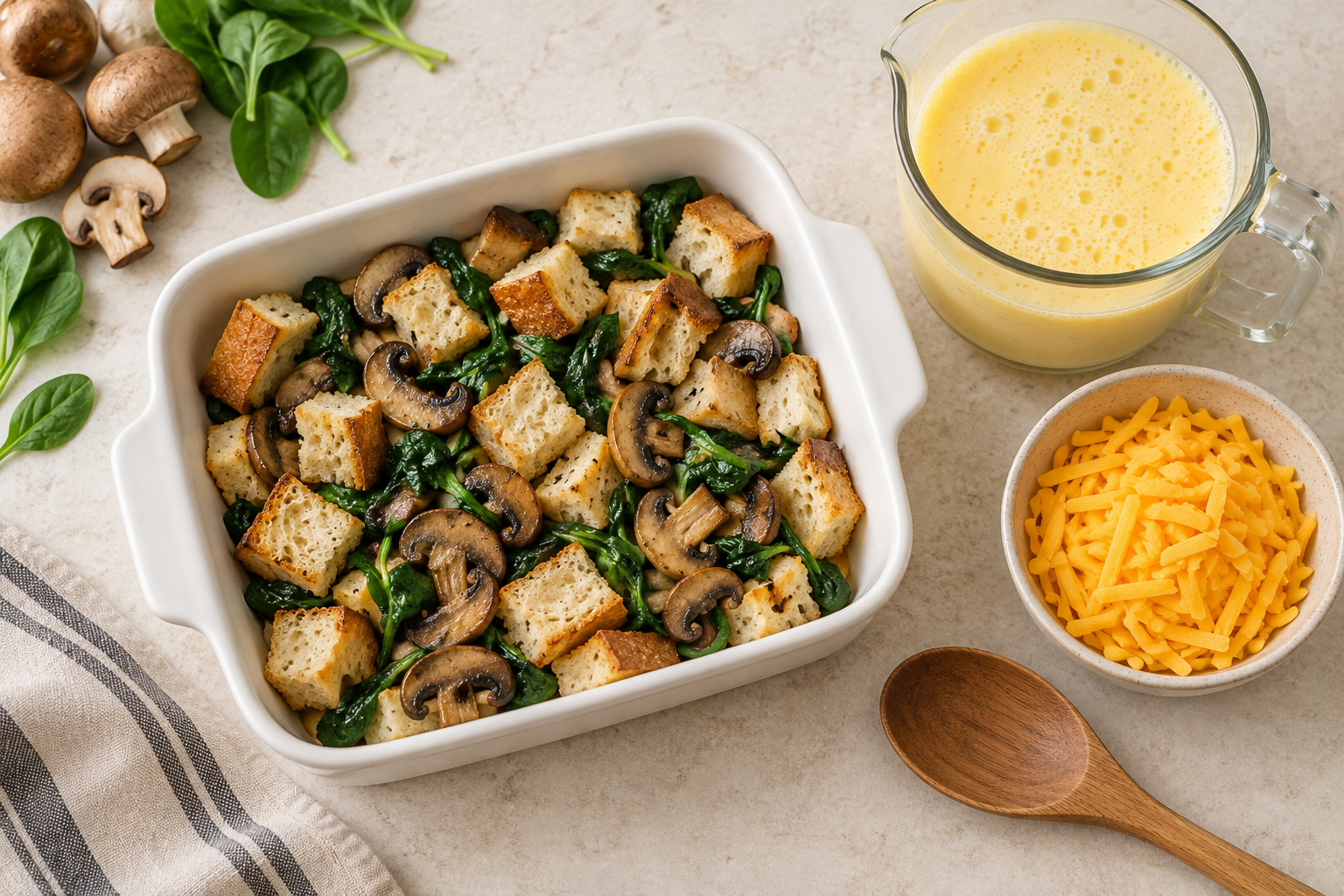
Savory low-carb bread pudding turns a few slices of bread into a warm mushroom, spinach, and cheddar bake. The bread soaks up an egg-and-milk mixture while the pieces on top get a little color. We recommend it for a quiet weekend breakfast or a light supper with a green salad.
The most useful trick is to cook the vegetables before they go into the dish. Mushrooms and spinach release water; leaving that water in the filling can give you a wet center even when the top looks finished. This small-batch version uses a one-quart baking dish and makes two main-dish servings or four smaller portions.
At a glance: About 20 minutes of preparation, 10 minutes of soaking, and 25–35 minutes in the oven, plus a short rest. Use 4 ounces (115 g) of low-carb sandwich bread, 2 eggs, and ½ cup milk. Bake at 350°F (175°C) and check the center with a food thermometer.
Choose bread that can hold its shape
A mild sandwich loaf is a good starting point. Look for slices you enjoy with eggs or cheese, rather than a strongly sweetened bread. Seeded bread can work, though its flavor will be more noticeable in the finished pudding. A firm loaf gives more distinct cubes; a very soft loaf will blend into the custard.
Weigh the bread if you can. Four ounces might be four thin slices or fewer thick ones, so a slice count alone can change the balance of bread and liquid. Cut it into roughly one-inch pieces. Keep the crusts unless they are unusually tough; they add structure and save you throwing part of the loaf away.
For a loaf comparison, see our low-carb bread guide. Use the nutrition label on the package you actually buy when calculating this recipe. “Low-carb” on the front of the bag does not supply the carbohydrate count for your portion.
Ingredients for a small savory bread pudding
- 4 ounces (115 g) low-carb sandwich bread, cut into one-inch cubes
- 2 large eggs
- ½ cup (120 ml) whole milk
- 1 teaspoon Dijon mustard
- ½ cup (2 ounces/56 g) shredded cheddar, divided
- 4 ounces (115 g) mushrooms, sliced
- 2 packed cups (about 60 g) fresh spinach, roughly chopped
- 2 teaspoons olive oil, plus a little for greasing
- ¼ teaspoon dried thyme
- ⅛ teaspoon fine salt, or less if your bread and cheese are salty
- Black pepper to taste
You will need a one-quart oven-safe baking dish, a skillet, a mixing bowl, and a food thermometer. An ordinary casserole dish is enough; there is no need to buy a special pan. Avoid a deep, narrow bowl, which can leave the center behind while the exposed bread browns.
How to make it
- Dry the bread lightly. Heat the oven to 350°F (175°C). Spread the bread cubes on a tray and warm them for 8–10 minutes, just until the surfaces feel dry. They do not need to become hard croutons. Grease the baking dish.
- Cook the vegetables. Heat the oil in a skillet over medium heat. Add the mushrooms and cook for about 5–7 minutes, stirring, until their released liquid has evaporated. Add spinach and cook for another 1–2 minutes until wilted. If liquid remains, keep cooking briefly. Remove from the heat and let the mixture cool until warm.
- Mix the custard. Whisk the eggs, milk, mustard, thyme, salt, and pepper until combined. Stir in half the cheddar. You should not see separate streaks of egg white.
- Assemble and soak. Combine the bread and vegetables in the dish. Pour the egg mixture over them, gently pressing the cubes so they touch the liquid. Let stand for 10 minutes. Turn over any visibly dry pieces once; do not crush everything into a paste. Scatter the remaining cheese on top.
- Bake and check. Bake for about 25–35 minutes. Begin checking at 25 minutes; dish shape and bread absorbency affect timing. The center must reach 160°F (71°C). Insert the thermometer into the middle of the pudding without touching the dish. If the top browns early, cover loosely with foil and continue cooking.
- Rest, then serve. Let the dish stand for 5–10 minutes before dividing. Expect a spoonable bake with recognizable bread pieces, rather than the clean slices of a firm loaf.
The temperature check follows FDA guidance for egg dishes. A browned top alone does not show that the center is cooked.
Adjust the texture without guessing at extra liquid
Low-carb loaves vary in their added fiber, protein, and starch, so they will not all absorb custard at the same speed. After the short soak, the bread should be damp and there may be a little liquid between the cubes. That is different from bread floating in a deep pool.
If the upper cubes still look dry, press or turn them into the mixture before adding anything else. For an unusually dense loaf that has absorbed everything and still has dry centers, add milk one tablespoon at a time, up to two tablespoons. Keep that addition in your nutrition calculation. For your first attempt with a new bread, keep the rest of the recipe unchanged so you can tell what needs adjusting next time.
A watery result usually calls for better vegetable draining or more cooking, not more cheese. A rubbery result can come from baking much longer than needed. Check the temperature near the end instead of extending the baking time solely to make every corner deeply brown.
Substitutions and serving ideas
Use Swiss or Monterey Jack in place of cheddar at the same weight. Broccoli can replace the spinach if it is cooked, drained, and chopped small; keep the quantity modest so there is still room for bread and custard. Thawed frozen spinach also works if squeezed well, but measure the cooked filling rather than adding a frozen block directly.
For a dairy-free version, use an unsweetened milk alternative and a suitable cheese alternative, checking their labels. The flavor and setting may differ. This recipe contains eggs and milk as written. The bread and mustard may introduce wheat, soy, sesame, or other allergens. A low-carb loaf is not necessarily gluten-free.
Serve a main-dish portion with dressed greens, cucumber, or sliced tomatoes. For an individual breakfast option, our low-carb bread egg cups use a muffin tin. If you want a sweet breakfast bake instead, try the separate French toast bake guide.
Carbohydrates depend on your loaf
We do not give a universal carb number for this bake because the bread can change it substantially. Add the total carbohydrates and fiber from the amounts of bread, milk, cheese, vegetables, mustard, and seasonings you use. Divide the totals by two for main servings or four for smaller portions. For a simple net-carb estimate, subtract the total fiber from total carbohydrates; do not subtract fiber again from a bread label’s already calculated net-carb number.
As a bread-only example, if the amount you use contains 40 g total carbohydrate and 28 g fiber, its contribution to the whole dish is 12 g after that subtraction. That is 6 g per main serving from the bread alone, before counting the other ingredients. These are illustrative numbers, not the nutrition values of the finished recipe.
Make ahead, store, and reheat
You can cook the vegetables and dry the bread ahead, then refrigerate the vegetables and keep the bread separately until assembly. This avoids an overnight soak with an unfamiliar loaf. If preparing the complete mixture in advance, keep it refrigerated and follow your baking dish manufacturer’s guidance about moving a cold dish into a hot oven.
Refrigerate cooked portions within two hours, or within one hour if the room is above 90°F (32°C). Use shallow containers, keep the refrigerator at 40°F (4°C) or below, and eat leftovers within three to four days. Reheat the center to 165°F (74°C), as advised by the FDA source above. A loosely covered dish helps limit drying; uncover briefly at the end if you want the top firmer.
Recipe development note: This is an editorial recipe, not a claim of documented kitchen testing. Timing is a starting range; use the stated doneness temperature. The original images are AI-generated illustrations. On your first batch, note the loaf and any liquid adjustment so the next one suits your preferred texture.
Save This Post on Pinterest
Keep these recipe graphics handy for your next small-batch breakfast.


Plan Your Week with Our Free Meal Planner
Choose seven days of meals, adjust portions, and download your shopping list. No email signup needed.
Open the Free Planner →
