

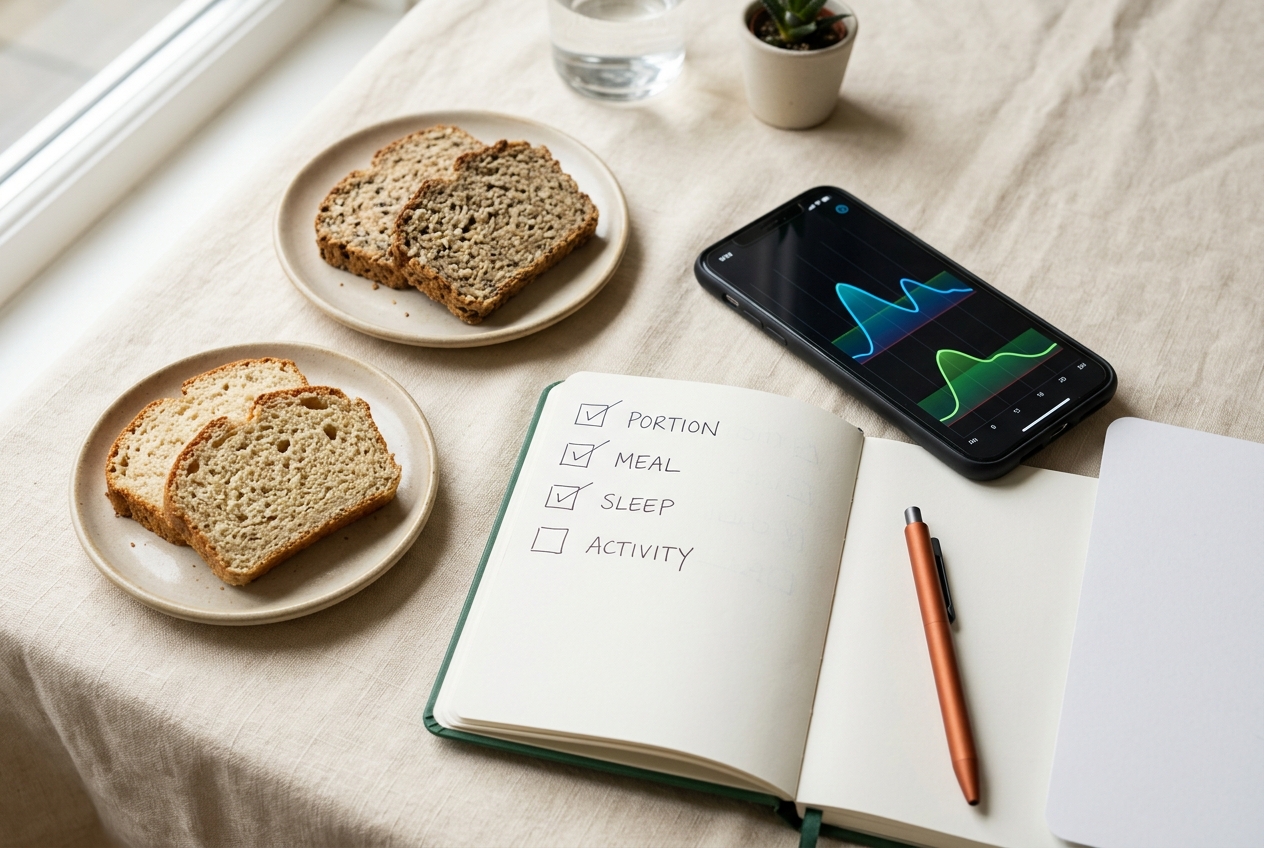
Continuous glucose monitors are showing one clear thing about bread: the nutrition label cannot predict every person’s glucose response. Bread type, portion, meal context, starting glucose, sleep, activity, medication, and individual physiology can all change the curve. A CGM can reveal patterns, but one reading is not a universal verdict on a loaf.
Disclosure: As an Amazon Associate, LessCarby earns from qualifying purchases.
Bottom line: CGM data are most useful when you compare the same portion under similar conditions more than once. Look for repeatable patterns—not a single dramatic spike—and discuss medication or treatment changes with your healthcare professional.
What a CGM actually measures
A continuous glucose monitor uses a small sensor under the skin to estimate glucose in interstitial fluid, the fluid between cells. Most systems send updated readings to a phone or receiver every few minutes. That creates a trend line showing whether glucose is rising, falling, or staying relatively steady.
Because a CGM measures interstitial rather than blood glucose, readings can lag behind rapidly changing blood glucose. The National Institute of Diabetes and Digestive and Kidney Diseases explains that CGMs estimate glucose and help users see trends and alerts. Device instructions should be followed when readings do not match symptoms.
This distinction matters after bread. A curve is useful, but it is not a laboratory glycemic-index test and it does not prove that one ingredient caused the response.
What research is showing about bread and glucose
People can respond differently to the same food
A widely cited 2015 study used continuous glucose monitoring in 800 participants and found substantial person-to-person variation in post-meal glucose responses, even when people ate the same standardized foods. The researchers developed personalized predictions using clinical and lifestyle data, but the study did not establish a universal “best bread” for everyone.
More recent research supports the idea that CGMs can categorize meal responses, while also showing an important limitation: repeated responses to the same meal are not perfectly reproducible. A 2024 analysis of duplicate meals in adults without diabetes found considerable within-person variability and concluded that personalized advice needs repeated, aggregated measurements.
Bread structure can matter beyond the carbohydrate number
Research on conventional breads shows that processing and physical structure influence post-meal glucose. In adults with type 2 diabetes, bread made with more intact or coarsely ground whole grains produced a lower postprandial response than finely milled whole-grain bread in a randomized crossover study.
That does not mean every dense or seeded low-carb loaf will behave the same way. Low-carb breads use different combinations of resistant starches, modified wheat starch, vital wheat gluten, fibers, protein isolates, seeds, and sweeteners. Two labels can report similar net carbs while the finished products differ in portion weight, texture, digestibility, and ingredients.
Our guide to the glycemic impact of low-carb bread explains why the label is a starting point rather than a prediction.
The meal around the bread changes the curve
A slice eaten alone is not the same test as a sandwich containing eggs, cheese, meat, avocado, or vegetables. Portion size, protein, fat, fiber, meal order, and activity after eating may change the timing or size of a glucose rise. That makes social-media screenshots comparing unrelated meals especially hard to interpret.
CGM results should answer a narrow question: “How did I respond to this portion, in this meal, under these conditions?” They cannot by themselves prove that a food is healthy, unhealthy, or appropriate for every person.
What CGMs are not yet showing us
There is not a strong, independent body of published head-to-head CGM research comparing every popular low-carb bread brand under identical conditions. Brand formulas also change. A graph from one customer, influencer, or company can be interesting, but it is not enough to rank loaves for the entire population.
Be cautious when a post:
- shows only one trial or one person;
- does not state the bread portion or meal ingredients;
- compares different starting glucose levels or times of day;
- calls any rise a “spike” without defining the term;
- uses a CGM trace to diagnose diabetes; or
- claims a specific ingredient caused the result without a controlled comparison.
A practical way to compare breads with a CGM
If you already use a CGM under appropriate medical guidance, a simple repeated comparison can make your observations more useful. It is not a clinical experiment, and it should never override your treatment plan.
- Choose one question. Compare two breads, or compare your usual bread with a new one. Do not change several ingredients at once.
- Standardize the portion. Use the same number of slices and confirm the serving weight on each label. Record total carbohydrate, fiber, sugar alcohols, protein, and serving size.
- Keep the meal consistent. Use the same fillings, beverage, and condiments. Testing bread alone may isolate the bread better, but only if that fits your care plan.
- Use similar conditions. Compare at roughly the same time of day, with similar premeal activity and a reasonably similar starting glucose.
- Record the context. Note sleep, illness, stress, recent exercise, medication timing, and anything else that could affect the result.
- Repeat the meal. Test each option on more than one day. A repeatable pattern is more informative than a single curve.
- Compare trends, not just peaks. Look at starting glucose, time to rise, the size and duration of the excursion, and the return toward baseline.
Keep the label beside the graph
Use our net-carb label-reading guide to document the exact loaf. The CGM trend and the ingredient label answer different questions; you need both for a useful comparison.
How to interpret the result without overreacting
No single cutoff defines a problematic bread response for everyone. Targets differ according to diabetes type, pregnancy, age, medications, risk of hypoglycemia, and the plan established with a clinician. People without diabetes also should not apply diabetes treatment targets to themselves without medical advice.
Instead of labeling a bread “good” or “bad,” ask:
- Was the response repeatable?
- Was the portion realistic for how I eat?
- Did the meal keep glucose elevated longer than my usual alternative?
- Were symptoms or device warnings inconsistent with the displayed value?
- Does this pattern matter within the goals set with my healthcare team?
The FDA has warned that glucose readings can be inaccurate when a sensor malfunctions, and it advises following device instructions. Smartwatches or rings claiming to measure glucose without piercing the skin are not the same as authorized CGM systems; the FDA warned in 2024 that it had not authorized such devices to measure glucose on their own.
Where the nutrition label still matters
CGM data do not replace basic label reading. Start with serving size and total carbohydrate, then review fiber, sugar alcohols, protein, and the ingredient list. “Zero net carbs” is a marketing calculation, not a promise of a flat CGM trace.
Our guides to what net carbs mean, sugar alcohols and blood sugar, and the bread buyer’s guide for people with diabetes can help you screen a product before testing it in a meal.
Frequently asked questions
Can a CGM tell me which low-carb bread is best?
It can help you compare your own repeatable responses to specific portions and meals. It cannot establish the best bread for everyone or measure taste, nutrition quality, cost, or digestive tolerance.
Does a flat CGM line mean a bread is healthy?
No. A glucose curve is one piece of information. Ingredients, fiber type, protein, sodium, allergens, digestive tolerance, overall diet, and portion still matter.
Why did the same bread give me two different readings?
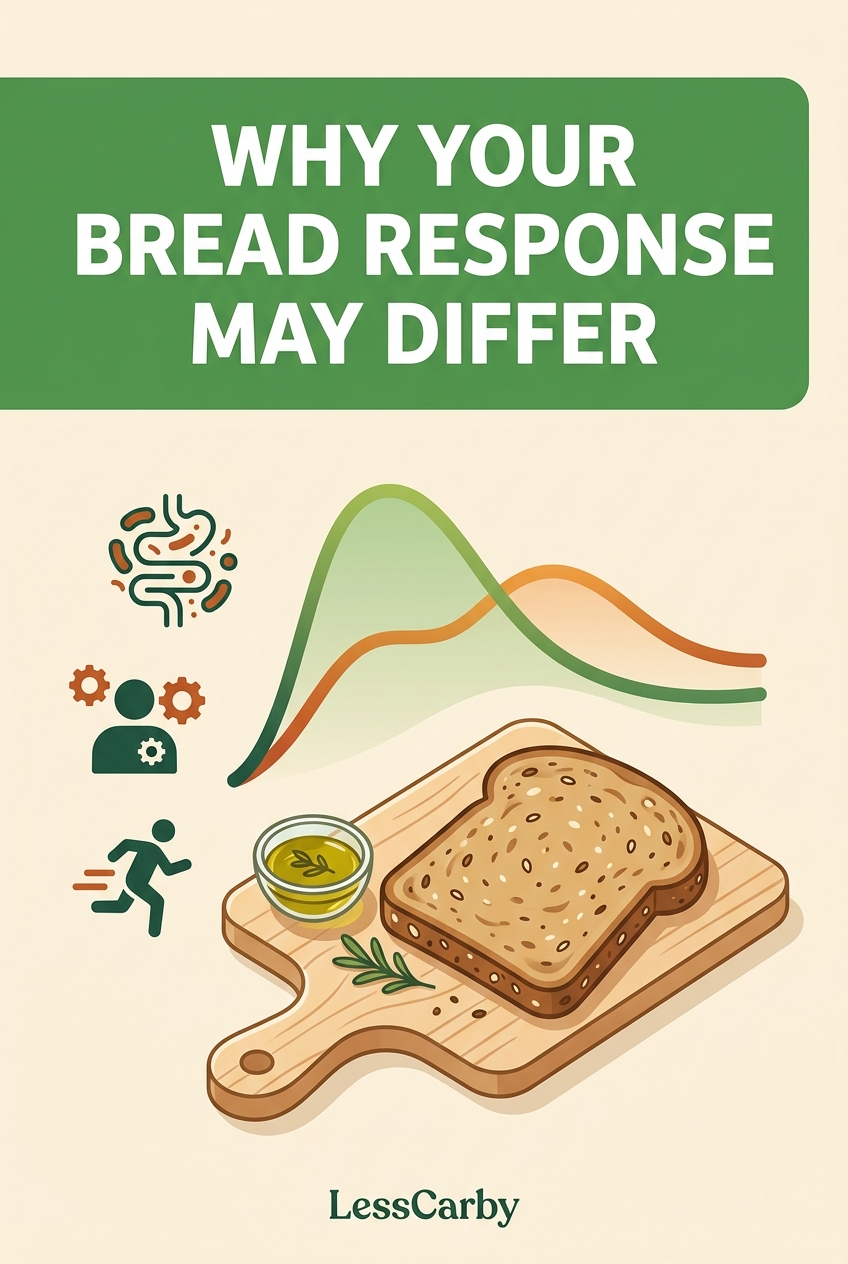
Starting glucose, meal timing, sleep, stress, activity, illness, medication timing, sensor variation, and the rest of the meal can change the response. Repeat comparisons before drawing conclusions.
Should I buy a CGM only to test bread?
That is a personal and medical decision. For adults age 18 or older who do not use insulin and do not have problematic hypoglycemia, the FDA-cleared Dexcom Stelo Glucose Biosensor System is available on Amazon without a prescription. It can help reveal personal glucose patterns, but it is not intended to diagnose diabetes, detect dangerous low blood sugar, or replace medical guidance. People using insulin or managing diabetes should discuss device choice, coverage, targets, and interpretation with a qualified healthcare professional.
Can a CGM diagnose diabetes?
No. Do not use a consumer CGM experiment or a noninvasive wearable to diagnose diabetes. Diagnosis requires appropriate clinical testing interpreted by a healthcare professional.
Save This Post on Pinterest
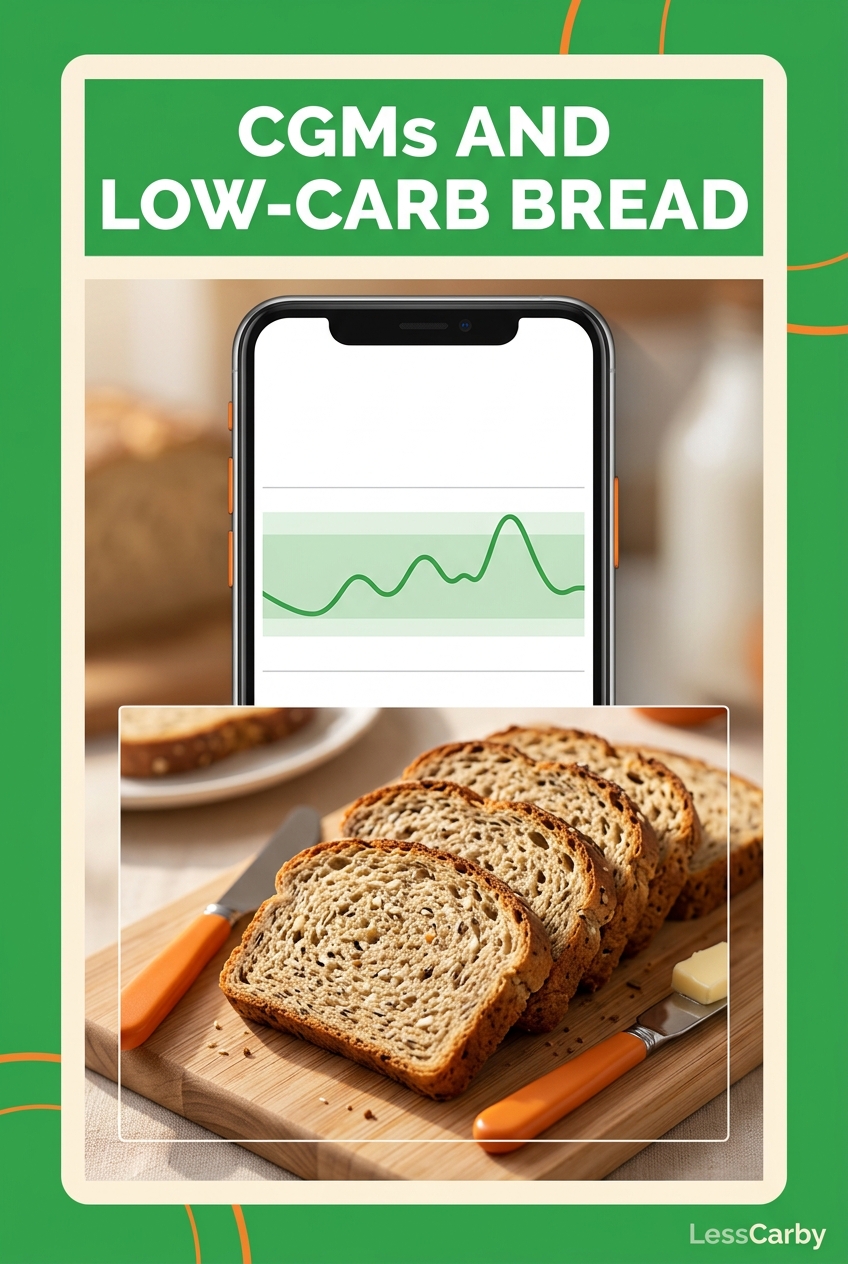
Save either version for a careful reminder of what CGM bread comparisons can—and cannot—show.
The useful takeaway
CGMs make the invisible visible: two people—or the same person on two days—may not produce identical curves after the same bread. The responsible lesson is not that labels are useless or that every rise is dangerous. It is that repeated, well-documented personal patterns can add context to the label. Use consistent portions, compare like with like, and treat the graph as evidence to discuss—not a verdict delivered by one meal.
Sources
- NIDDK: Continuous Glucose Monitoring
- Zeevi et al.: Personalized Nutrition by Prediction of Glycemic Responses
- Merino et al.: Validity of CGM for Categorizing Food Responses
- Hengist et al.: Variability of CGM Responses to Duplicate Meals
- Reynolds et al.: Wholegrain Particle Size and Postprandial Glycemia
- FDA: Warning About Unauthorized Noninvasive Glucose Wearables
Plan Your Week with Our Free Meal Planner
Choose seven days of meals, adjust portions, and download your shopping list. No email signup needed.
Open the Free Planner →
