A “best if used by” date on low-carb bread is usually about quality, not a promise that the loaf is safe until midnight on that day. Read it alongside the storage instructions, when you opened the bag, and the bread’s condition. If you see mold, discard the loaf rather than trimming a slice or trying to toast it away.
Our practical recommendation is to keep the original package information and freeze sound portions you will not use soon. That gives you a useful plan without inventing a universal number of days for every keto or low-carb loaf. This guide covers ordinary packaged bread sold in the United States; filled sandwiches and other prepared foods need their own handling rules.
What the date on a bread bag tells you
The FDA and USDA recommend “Best if Used By” as a quality-based label. Quality may decline after that date, but the date alone does not determine whether you should eat the food. Other wording still appears, so read the phrase rather than looking only at the printed numbers.
- Best if used by or best before: generally describes the maker’s expected quality window.
- Sell by: helps a store manage stock; it does not tell you how many days your opened loaf has left.
- Use by: needs context. Follow explicit safety and storage directions rather than automatically treating every use-by statement as interchangeable with best-by.
- Lot or production code: identifies a batch and may not be a consumer freshness date.
The USDA’s dating guide explains the different phrases. If you cannot interpret a code, contact the maker with a photo of the bag and the exact variety. Guessing whether “10/11” means October or November is especially unhelpful on an imported product.
Why low-carb does not supply a shelf-life rule
“Low-carb” tells you about how a bread is marketed and its carbohydrate profile. It does not provide storage instructions. A loaf made with wheat protein and added fiber can have different handling directions from a moist loaf made with eggs or seeds. Even two varieties from one company may differ.
Read the actual package you brought home. Check whether it was sold frozen, whether refrigeration is required, and whether the directions change after opening or thawing. A product photo online may be old, describe another market, or leave out the back panel. For the ingredients side of this decision, see our guide to preservatives in low-carb bread.
There is no useful shortcut such as “all keto bread lasts two weeks.” The right plan depends on the exact loaf and its directions, plus how it has been handled. A date printed far in the future should not persuade you to ignore a damaged package or visible spoilage.
Keep track of three different dates
The printed date, opening date, and freezing date answer different questions. Keep them separate. When you transfer bread to a storage bag, photograph the original label or put its directions beside the new container. Keep the lot information too, so you can identify the product if a recall or manufacturer question comes up.
Write “opened” and the actual date on a small note when you first break the seal. If the manufacturer gives an after-opening window, that note helps you apply it. Do not restart the window each time you close the bag, and do not assume an unopened-package date applies unchanged to a thawed loaf.
For frozen portions, write the bread’s name and the freezing date. An additional note such as “two slices per portion” makes breakfast easier. The purpose is to help you use older portions first, not to create a homemade safety guarantee.
A quick check before making toast
- Identify the loaf and read any required storage or thawing instructions.
- Check the package for damage and look at the bread, including slices that touch one another.
- If there is visible mold or another clear sign of spoilage, discard it. Do not taste suspicious bread to decide.
- If the bread appears sound, use the package directions and known handling history to decide whether to eat, freeze, or ask the maker for guidance.
A loaf can be dry without being moldy, but appearance alone cannot certify food safety. If you do not know how a bread requiring refrigeration was stored, a normal-looking slice does not settle that question. Keep uncertainty about handling separate from a simple complaint that toast is less soft than you like.
Mold means discard, even before the date
The USDA advises discarding moldy bread and baked goods. Bread is porous, so the visible spot is not a reliable boundary for trimming. Do not serve the remaining slices from a moldy loaf or use them for crumbs.
Toasting, frying, or freezing is not an appropriate rescue plan for moldy bread. A small orange or green patch is not made acceptable by hiding it under cheese. Throw the bread away and clean the storage area before putting a replacement loaf there. This applies to low-carb bread just as it does to other bread.
Choose a storage plan when you open the loaf
Start with the maker’s directions. Then consider how much your household actually uses. Someone who makes a sandwich every day has a different plan from someone who eats a single piece of toast twice a week. Keeping only the near-term portions accessible can make it easier to avoid forgotten slices.
Close the package after taking bread out and use clean, dry hands or utensils. Keep the bread away from obvious heat and moisture while following any required cold storage. Do not rely on a decorative bread box to replace a refrigeration instruction.
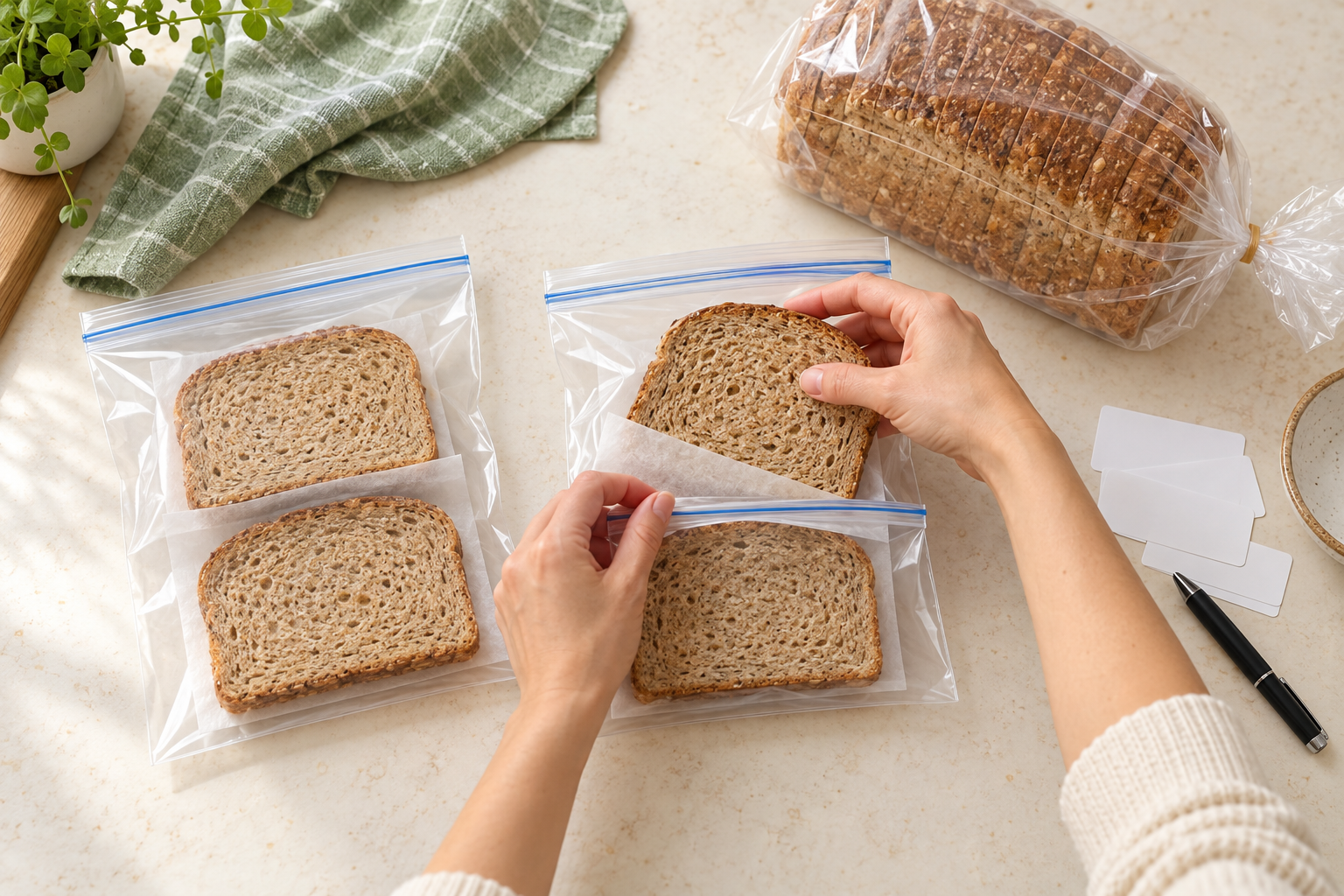
When freezing is suitable for the product, portion it while it is still sound. The USDA explains that freezing inactivates microbes; it does not make spoiled food fresh again. Our bread-freezing guide covers wrapping and handling individual slices.
What to ask when the package is unclear
Send the manufacturer the product name, country of purchase, printed code, and a photo of all storage wording. Ask a specific question: “Does this direction apply before or after opening?” or “How should this loaf be handled after thawing?” Include whether you bought it from a freezer case or a room-temperature shelf.
A useful answer concerns that exact product. Advice for another variety, an older formula, or an anonymous online comment may not apply. Save the maker’s reply with your label photo so you do not have to research the same question every time you buy the loaf.
Can you eat bread after its best-by date?
The date alone cannot give a yes or no. Consider the exact wording, the manufacturer’s directions, known storage history, and any signs of spoilage. Never use “best-by is only about quality” as permission to eat moldy bread or ignore a required refrigeration rule.
Make the next loaf easier to manage
Before opening your next bag, decide how many slices you expect to use soon. Keep its directions, note the opening date, and portion suitable bread for freezing if your household eats it slowly. Choose a smaller loaf when that better fits your routine. A simple repeatable habit is more useful than memorizing a shelf-life number that does not match your bread.
Sources checked October 9, 2026. This is a researched U.S. package-date and storage guide, not a laboratory safety assessment of a particular loaf. No affiliate purchase is needed; ordinary bags and a label are sufficient.
Save This Post on Pinterest
Plan Your Week with Our Free Meal Planner
Choose seven days of meals, adjust portions, and download your shopping list. No email signup needed.
Open the Free Planner →
