
Preservatives in low-carb bread help slow spoilage so a packaged loaf stays usable longer. Calcium propionate and potassium sorbate are names you may recognize, but a bread label can also describe a preservative by its job, such as inhibiting mold. That ingredient does not tell you the bread’s carbohydrate content, how long your opened loaf will last, or whether it suits an allergy.
Our advice: read the ingredient and its stated purpose, then compare the whole loaf. Check the serving size, nutrition panel, allergens, and storage instructions before choosing. A preservative-free claim can matter to your preferences, but it does not replace those checks.
What preservatives do in packaged bread
Preservatives can slow microbial spoilage or protect food from changes such as oxidation. The FDA’s ingredient guide lists these different functions and includes calcium propionate and potassium sorbate among preservative examples. Not every ingredient on that list is used in every loaf.
A helpful way to read the bag is to separate the bread’s nutrition from its storage needs. The nutrition panel describes a measured serving. The ingredient list describes what went into the product. Storage directions tell you how the manufacturer expects you to handle it. Those pieces answer different questions.
For a household that eats bread slowly, keeping a loaf usable is an everyday concern. For someone who uses a loaf quickly, a shorter storage window may be easy to manage. Choose with your actual breakfast and lunch habits in mind instead of treating a longer ingredient list as an automatic reason to reject the bread.
Names and phrases worth recognizing
Calcium propionate
Calcium propionate is an ingredient used for its antimicrobial function. The U.S. regulation for calcium propionate specifically addresses its use in baked goods and cheeses under good manufacturing practice. Seeing the name gives you a clue about its purpose; it does not reveal the amount in your slice.
Do not confuse that name with a nutritional recommendation to get more calcium. If calcium intake matters to you, use the Nutrition Facts panel. An ingredient’s name and its role in making bread are separate from the nutrient amounts reported for a serving.
Potassium sorbate and a stated preservative function
Potassium sorbate is another preservative example in the FDA’s guide. A product may include wording explaining why a preservative is present. Read the words around the name, including the information in parentheses, rather than searching only for a single familiar term.
When an unfamiliar blend appears, copy the full description before asking the manufacturer. Include the exact bread variety and a photo of the current package. A question about one loaf is easier to answer accurately than a broad question about every product a company sells.
Vinegar and other familiar ingredients
A familiar ingredient can have more than one role in a recipe. Also, everyday descriptions and legal labeling terms are not identical. The FDA’s preservative-labeling guidance excludes vinegar, common salt, and sugars from its definition of a chemical preservative. That distinction is useful when interpreting a claim on a bag.
A short list of recognizable words still needs a nutrition and allergen check. If a package leaves the purpose of an ingredient unclear, ask about that ingredient rather than assuming that familiar names make the bread suitable for every diet.
How to read a preservative statement
The FDA guidance says a chemical preservative declaration can identify the ingredient and explain its specific function, including slowing mold growth or spoilage. You may therefore find a purpose statement instead of the exact phrase “chemical preservative.” Read the complete ingredient panel.
In the store, try this small checklist:
- Identify the exact loaf. Match the variety, package, and market. An old online photo may describe a different formula.
- Read the ingredient with its context. Include words in parentheses and any statement of purpose.
- Check the serving you eat. Use the same amount of bread when comparing nutrition panels.
- Read allergens and storage directions. These remain relevant even when the bread is marketed as keto or low-carb.
You do not need to research every unfamiliar word before making lunch. Pick the question that affects your decision: an ingredient you must avoid, a storage instruction you cannot follow, or a serving size that differs from your usual sandwich. Resolve that question first.
Preservatives are different from dough conditioners
Ingredient names often appear close together, which can make them seem interchangeable. A preservative statement concerns keeping the food from deteriorating. Dough conditioners concern how dough behaves or how the finished bread turns out. Some ingredients have multiple roles, so the label’s context matters.
For a closer look at the baking side, see our guide to dough conditioners. Keep your shopping decision focused: a texture-related ingredient does not by itself explain mold control, and a preservative does not promise a soft sandwich slice.
Does a preservative change the net-carb calculation?
You cannot calculate carbohydrates from the presence or absence of a preservative. Use the nutrition panel, serving size, and the manufacturer’s stated calculation when net carbs are advertised. If two loaves list different serving sizes, compare the same number of slices or weight before deciding.
Our nutrition-label guide walks through that comparison. A bread can fit your carbohydrate goal and still contain an ingredient you prefer to avoid. Another can have a short ingredient list and fail to fit your preferred portion. Treat both questions as part of your choice.
What to do when bread develops mold
Discard moldy bread. The USDA’s mold guidance includes bread and baked goods among foods to throw away when mold appears. Cutting off the visible spot is not an appropriate way to rescue a porous loaf.
Preservatives do not make a package immune to spoilage. Follow the bag’s directions and check the bread before using it. Do not keep eating a damaged loaf because its date has not passed, or assume that toasting a suspicious slice makes it suitable to eat.
Plan storage around the amount you use
Start with the manufacturer’s instructions, especially for bread sold frozen or requiring refrigeration after opening. Keep those instructions with the loaf if you transfer it to another bag. Write the opening date on a note if that helps your household keep track.
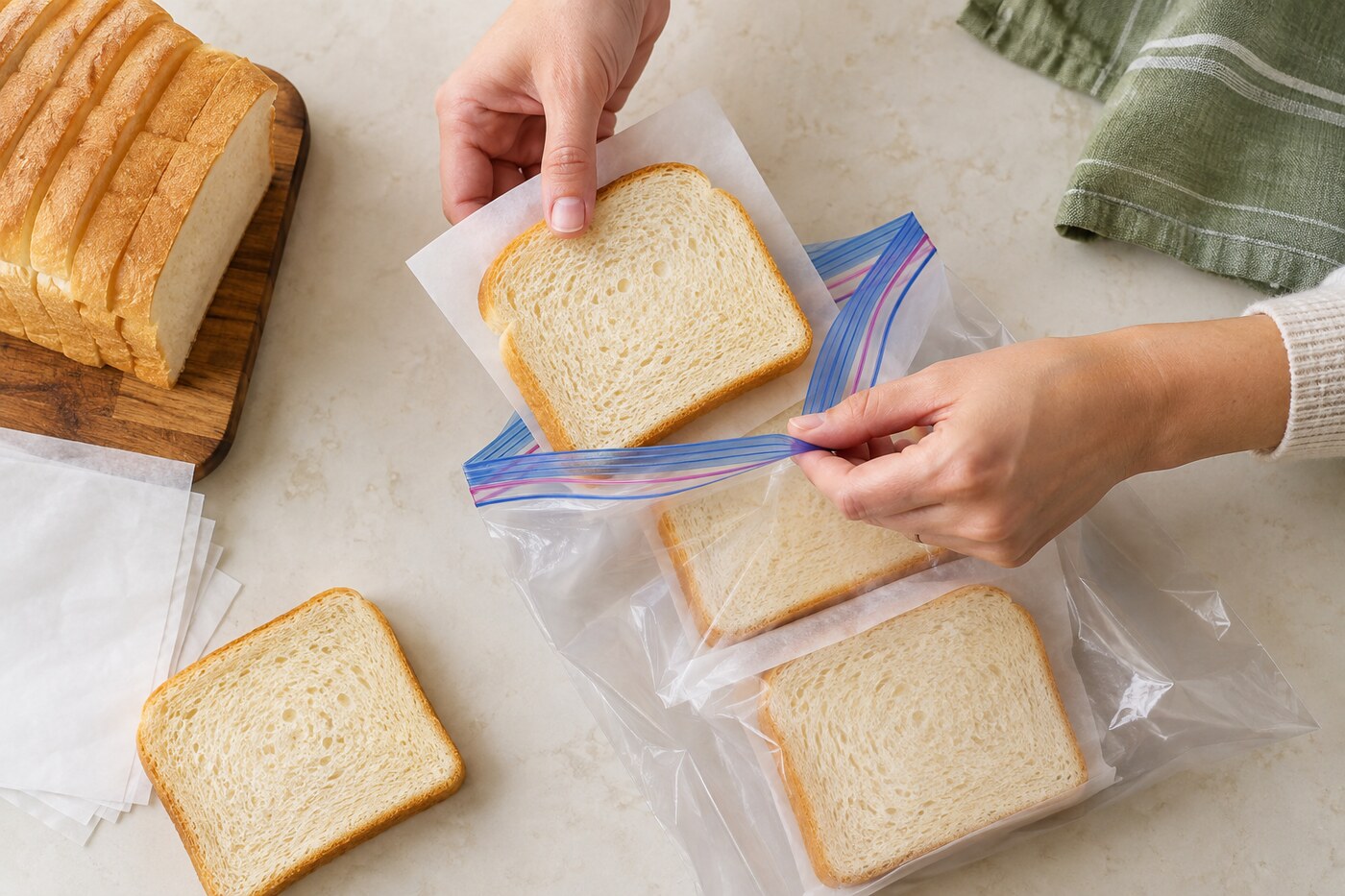
If you routinely leave half a loaf unused, consider portioning sound bread for freezing before it spoils. The USDA explains that freezing inactivates microbes rather than making spoiled food fresh again. Freeze bread while it is still suitable to eat, not as a rescue step after mold appears.
Divide the loaf into the portions you normally need. A sandwich eater may want two slices together; someone making toast may prefer singles. Label the bag so you can identify the loaf and use older portions first. Our bread-freezing guide covers practical ways to preserve texture.
Choosing a loaf you will actually use
We would not reject a bread only because it lists a preservative. Compare how it fits your meals, nutrition needs, ingredient preferences, and storage habits. If you specifically want a loaf without a certain additive, read the current package and confirm uncertain details with the maker.
For your next purchase, save a photo of the label and note how much bread your household eats in a week. That gives you a practical basis for choosing a loaf size and storage plan. You can prefer a simpler formula while still making a careful, informed comparison.
Sources checked October 6, 2026. This is a researched ingredient guide, not a product test or an assessment of a specific brand’s formula. No affiliate purchase is needed to use the guidance. Editorial images are illustrative.
Save This Post on Pinterest
Plan Your Week with Our Free Meal Planner
Choose seven days of meals, adjust portions, and download your shopping list. No email signup needed.
Open the Free Planner →
