

Last updated:
Low-carb bread often combines wheat proteins, added fibers, starches, or nut and seed ingredients to make a slice that holds together with less calculated net carbohydrate. The mix varies by product. An ingredient name alone cannot tell you the finished bread’s carb count, gluten status, or effect on your glucose.
Read the ingredient list together with the Nutrition Facts panel. The list explains what the bread contains; the panel gives amounts for the labeled serving.
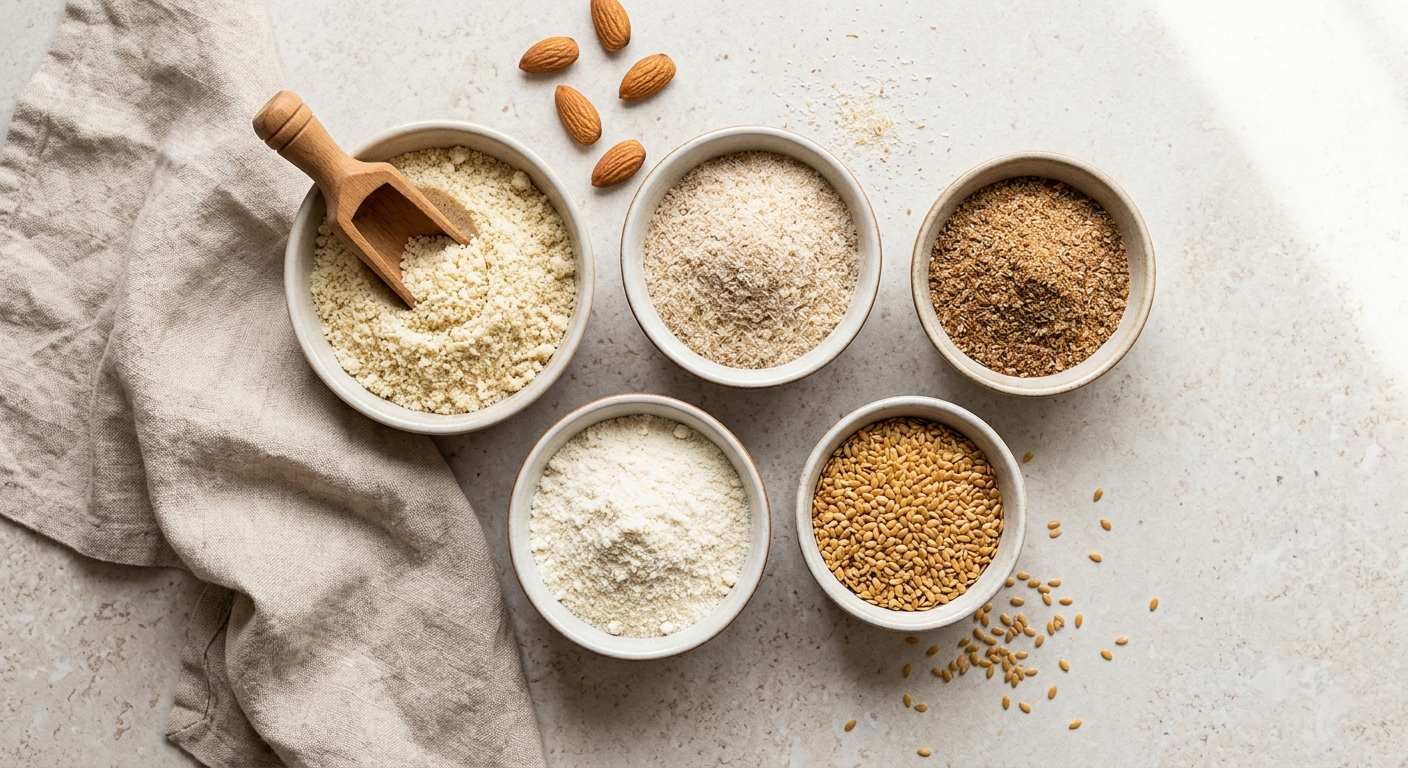
Common ingredients and why they are used
| Ingredient | Common role | What to check |
|---|---|---|
| Wheat protein / vital wheat gluten | Structure and elasticity | Contains wheat; vital wheat gluten is not gluten-free. |
| Modified starch | Texture and baking properties | Not automatically resistant starch or dietary fiber. |
| Almond or coconut flour | Part of the flour base | Nutrition and allergens depend on the exact recipe. |
| Psyllium husk | Binding and water retention | Amount and individual digestive tolerance. |
| Oat fiber | Added fiber and bulk | Different from oat flour; use the finished label. |
| Allulose | Sweetness and browning | A sugar, not a sugar alcohol; included in total carbs. |
| Sugar alcohols | Sweetness, depending on the formula | Type and listed amount; deductions are not absorption measurements. |
Modified starch is not automatically resistant starch
“Modified” describes a change to a starch’s properties. It does not establish that every modified starch resists digestion or qualifies as dietary fiber. Resistant starch is a more specific description, as explained by the National Cancer Institute.
The FDA’s dietary-fiber guidance distinguishes qualifying fibers from other carbohydrates. Do not subtract an ingredient twice or assign it zero carbs simply because its name includes “modified.” Use the label’s declared values.
Wheat protein and gluten
Vital wheat gluten helps dough stretch and hold its structure. That can be useful in a lower-carb loaf, but it is still gluten. Wheat-based low-carb bread is not a gluten-free option. Check the complete label for your allergy or gluten-avoidance needs.
Nut flours are another approach, and they bring their own allergens. For example, Base Culture Original Keto lists egg and almond. Gluten-free does not mean free of every allergen.
Allulose and sugar alcohols are different
Allulose is a sugar, not a sugar alcohol. FDA guidance allows it to be excluded from total and added sugars under enforcement discretion, while it remains included in total carbohydrate.
Erythritol, xylitol, and maltitol are examples of sugar alcohols. Do not treat every sugar alcohol as interchangeable or assume that a full deduction describes what your body absorbs. Our calculator shows the effect of optional deductions and leaves allulose separate.
Stevia and monk fruit are high-intensity sweeteners. A product using them can still contain carbohydrate from other ingredients. Check the whole label rather than just the sweetener name.

What to do with this information at the store
- Match the exact loaf and variety to the nutrition panel you are reading.
- Check slices and grams per serving before comparing two products.
- Read total carbohydrate and fiber separately.
- Check allergen statements and ingredients you need to avoid.
- Consider the amount you will eat and how the bread works with your usual meals.
Our label-reading guide walks through an example. The comparison tool can show equal-weight values for several named varieties.
Common questions
Does an unfamiliar ingredient make bread unhealthy?
A long or unfamiliar name is not enough to judge a product. Look at its role, the finished label, your portion, and any allergies or dietary requirements.
Does oat fiber mean oat flour?
No. They are different ingredients. Do not use the nutrition numbers for one as a substitute for the other.
Can I predict glucose response from the ingredients?
No. The ADA explains the limitations of net-carb calculations. If you manage diabetes, follow your care team’s counting and monitoring guidance.
Why can added fiber cause discomfort?
Changing fiber intake quickly can cause digestive symptoms. The type and amount matter, and tolerance differs. A smaller change may be easier to assess; persistent symptoms deserve medical advice.
As an Amazon Associate, I earn from qualifying purchases.
Browse low-carb bread options on Amazon →
This is a search for alternatives, not a guarantee that a named loaf is available. Check the seller, exact variety, package size, and label.
Plan Your Week with Our Free Meal Planner
Choose seven days of meals, adjust portions, and download your shopping list. No email signup needed.
Open the Free Planner →
