Our take: try one loaf of Sami’s Low Carb 7 Grain Fiber if you want a seeded bread for toast and everyday sandwiches, but check the current package before making it your regular order. Customer reports give us a reason to consider it for eating quality. Variable slice sizes, shipping costs and limited independent evidence keep it from being an automatic bulk buy. Skip this loaf if you need to avoid almonds, wheat, soy or sesame.
A worthwhile first-loaf candidate for its intended reader, with enough buying and evidence tradeoffs that we would start small. This is our judgment, not a retailer score.
Which Sami’s bread are we reviewing?
This review covers the U.S. Low Carb 7 Grain Fiber loaf, listed at 15 ounces. It is not the brand’s sourdough, cinnamon-raisin, bagel or gluten-free bread. Those names appear close together in search results, so match the product before comparing it.
The strongest reason to try it is straightforward: you want something that works as bread, not just a vehicle for a low number on the package. A good first purchase should earn its place at breakfast or lunch. If it does not suit the way you eat, an attractive carb claim will not make the remaining slices more useful.
What customers like, and what gives us pause
The manufacturer’s customer comments repeatedly praise flavor and toast. One also notes smaller, inconsistent slices. These are seller-hosted experiences from a small group, not a representative survey.
An older 2013 independent review at The Low Carb Diet also liked the softness and toasting. That supports the idea that eating quality has long attracted fans, but a review that old cannot verify today’s formula. A 2020 first-person Reddit post about this exact loaf likewise described a familiar bread taste. We use those observations as reasons to try it, not promises that every buyer will agree.
Our practical concern is consistency. A loaf can taste good and still be inconvenient if two slices do not make the sandwich size you expected. Before ordering several, look at the actual slice dimensions and how much bread you normally use for a meal. For a first order, an open-face lunch is a forgiving way to decide whether the size works for you.
How we would put the first loaf to work
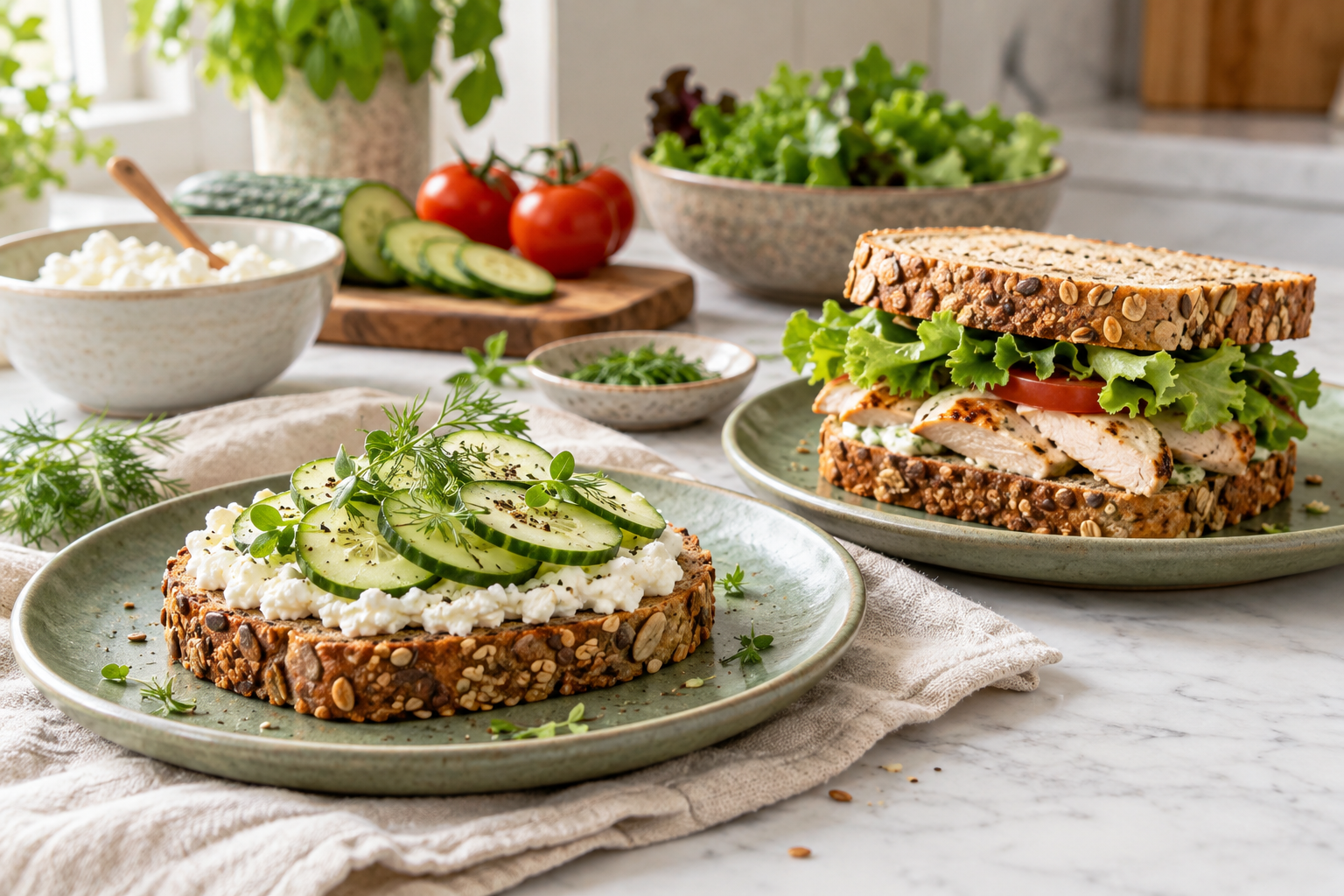
Start with a simple piece of toast. Use your normal toaster setting as a starting point and watch it; do not assume a special low-carb bread needs the same time as your previous loaf. Keep the topping familiar so you can decide whether you like the bread itself. Egg, cottage cheese, or a little butter can each make sense according to your preferences.
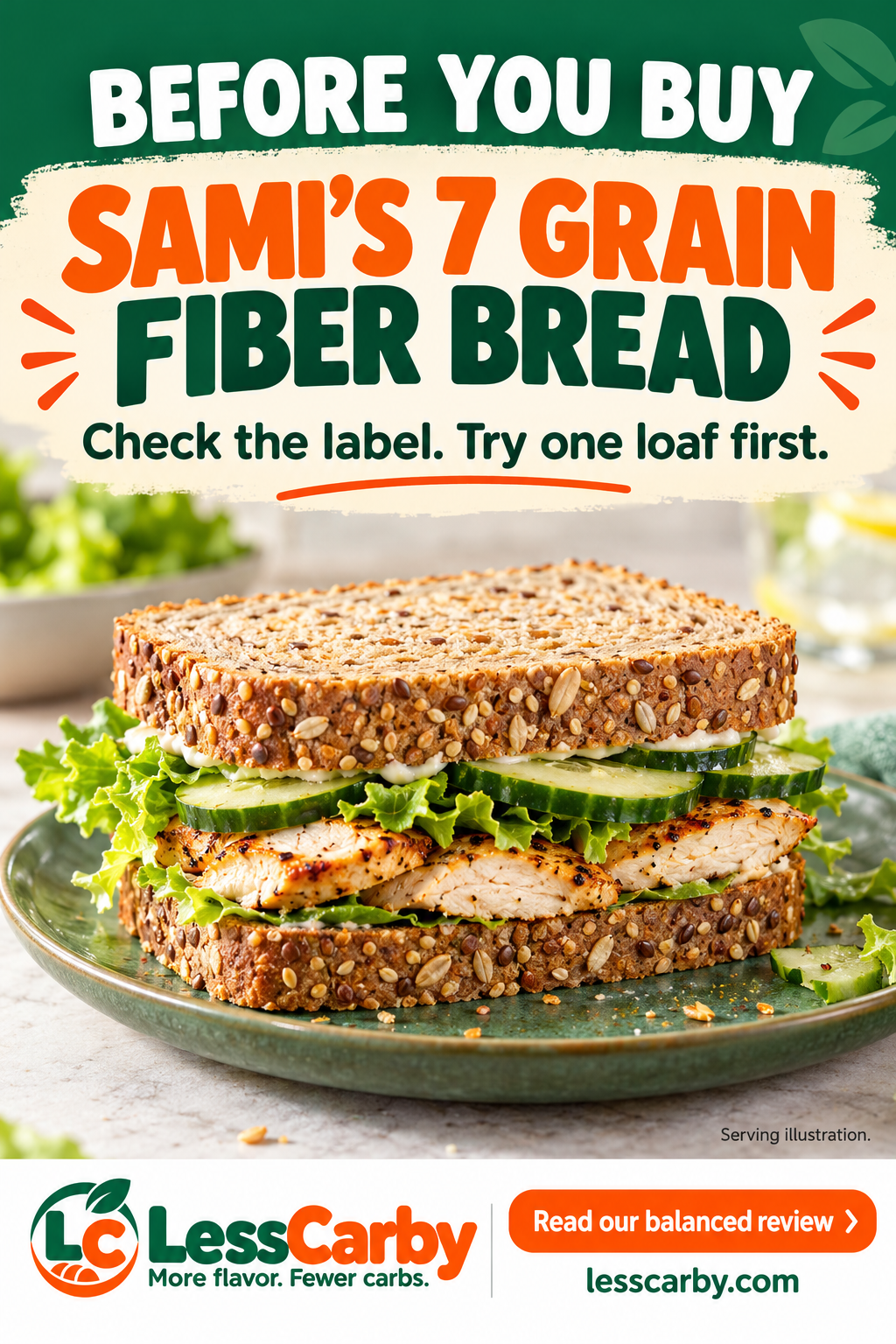
Next, try a sandwich you already enjoy. Chicken with lettuce, tuna salad with cucumber, or cheese and tomato are ordinary options that let you judge whether the slice holds the filling and feels right to bite. Begin with a moderate amount of filling rather than loading a new bread heavily on day one.
These are serving suggestions, not a tested Sami’s recipe. The useful comparison is your usual meal: would you happily make it again? If you like toast but find the cold sandwich less appealing, there is nothing wrong with keeping this as a breakfast loaf rather than expecting it to do every job.
The current label, without mixing in old app entries
We inspected the manufacturer’s nutrition-panel image on October 19, 2026. It identifies one slice as 28 grams. The table below uses that posted label; the second column is arithmetic for two such servings, not a separate laboratory measurement.
| Label item | 1 slice, 28 g | 2 servings, 56 g |
|---|---|---|
| Calories | 90 | 180 |
| Total carbohydrate | 10 g | 20 g |
| Dietary fiber | 8 g | 16 g |
| Protein | 3 g | 6 g |
| Sodium | 200 mg | 400 mg |
Subtracting the printed fiber from total carbohydrate gives 2 grams per labeled serving. That is net-carb arithmetic, not a glucose prediction. Keep total carbohydrate in view, especially if you follow a clinician-directed counting method. Our nutrition-label guide explains the difference.
The FDA’s serving-size guidance is useful here: match the listed serving to the amount you actually eat. If slices differ visibly in size, a kitchen scale can help you understand your portion. There is no need to turn a food choice into an elaborate experiment, but do not treat every two pieces as exactly the same weight.
What about old disputes over the carb numbers?
A third-party comparison circulated in 2013 attributes different fiber and net-carb results to an Exova analysis. We have not verified its original laboratory report, sampling or relevance to the current loaf. It should not be presented as a new test of today’s product.
It is still a reason to keep the evidence categories separate. Our table reports what the current manufacturer image says; it does not independently confirm the composition. If precise carbohydrate information is central to your medical plan, ask the bakery for current supporting information and discuss your counting approach with your care team. We would not buy this on an assumption of a guaranteed blood-sugar response.
Ingredients and dietary fit
The posted ingredients include almond flour, soy flour, wheat ingredients and sesame. This is not a gluten-free or nut-free alternative. Check the package for your full allergen requirements; do not borrow assurances from another Sami’s product.
For everyone else, ingredients are a preference decision alongside texture and portion. You do not have to like every low-carb formulation. If a simpler-looking list matters to you, compare it with the complete nutrition panel rather than assuming the ingredient names alone establish which loaf is best.
Is the price worth it?
The direct product page showed $7.50 before shipping on October 19, 2026. Check the current checkout total rather than treating that as a delivered price. For the exact loaf, start with the manufacturer’s product page and confirm the current pack details before ordering.
The bakery’s delivery policy describes location-dependent shipping windows, generally early in the week, and particular freshness considerations for longer routes. Read the terms for your destination before paying. A delivery estimate on a product page is not a promise that an order will arrive on a particular day.
Our buying rule would be one loaf first, if the delivered cost is reasonable for you. Bulk ordering only becomes good value after you know you enjoy it and have a practical storage plan. Follow the bag’s directions; our bread-freezing guide can help organize portions when freezing is appropriate.
Who should try it, and who should pass?
Try it if you enjoy seeded bread, want a toast-and-sandwich option, and can check the current package before committing to a repeat order. Pass if its allergens exclude it, you need a specifically gluten-free loaf, or the delivered price makes a first trial hard to justify.
If your priority is a different bread style, compare another fully specified product rather than a brand name alone. Our ROYO Artisan review is one starting point; it is a separate choice with its own ingredients and tradeoffs.
Save This Post on Pinterest
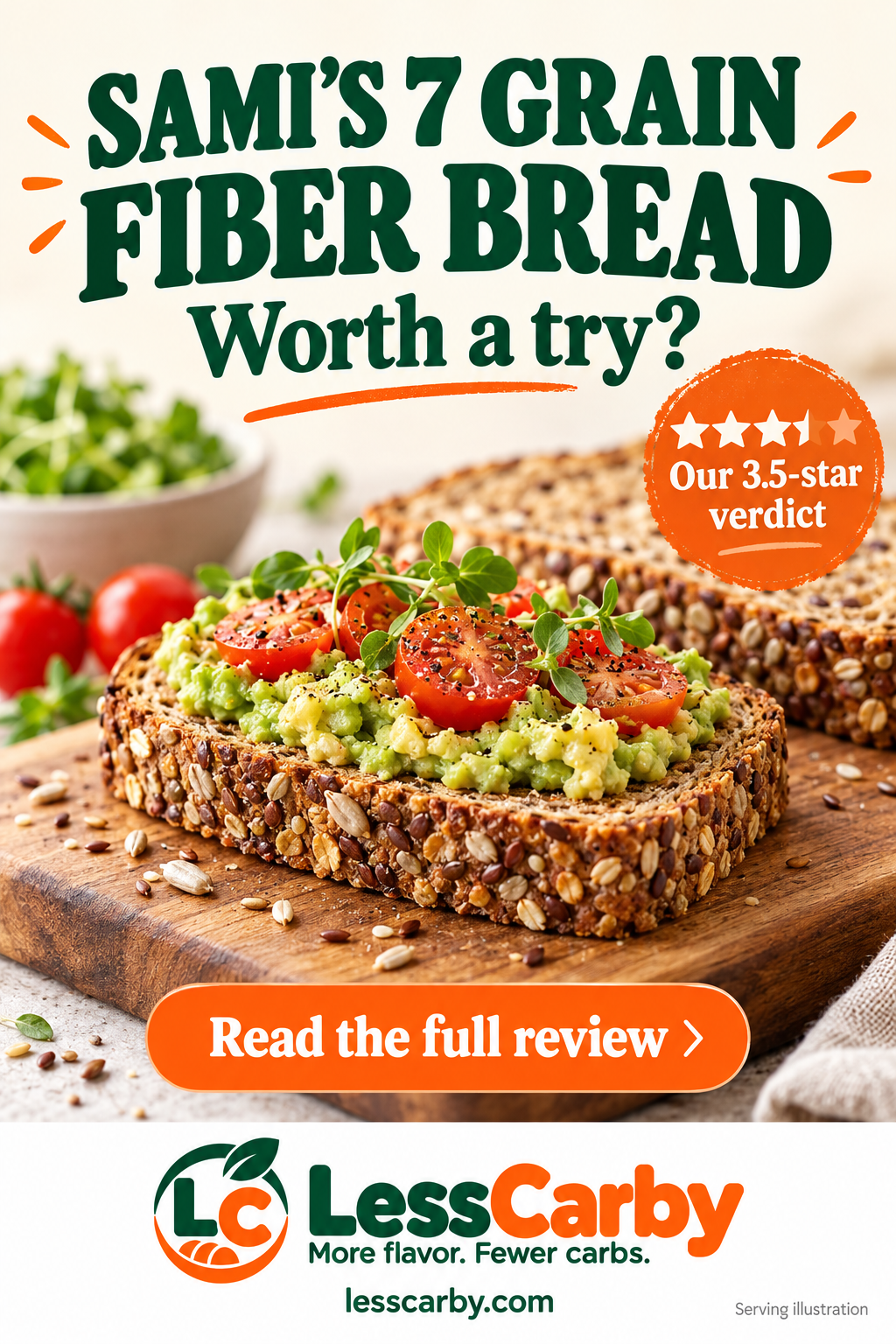
Keep these first-loaf buying reminders for your next bread order. The graphics show illustrative serving ideas.
Why 3.5 stars?
The positive eating reports and ordinary meal uses make Sami’s worth considering. Slice variability, small and partly older outside-review evidence, and the need to check delivered value stop us short of a strong-buy rating. For the right reader it is a sensible trial, not a loaf we would tell everyone to stockpile.
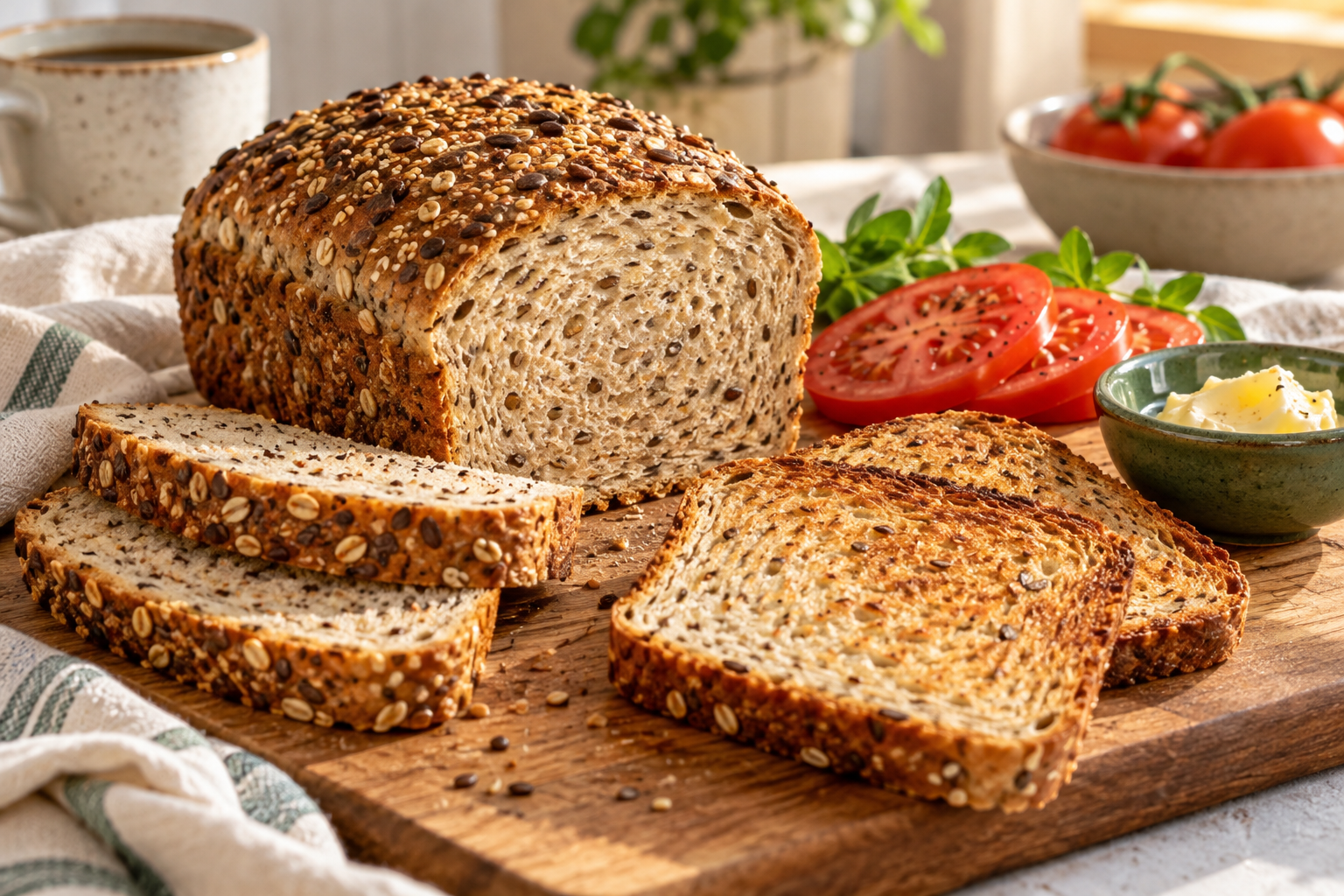
Method: this is a researched editorial opinion based on current manufacturer information and attributed customer experiences, not a new LessCarby tasting or laboratory test. We use a five-star rating system. See our editorial review policy. Facts checked October 19, 2026. Original illustrations show serving ideas, not the exact product.
Plan Your Week with Our Free Meal Planner
Choose seven days of meals, adjust portions, and download your shopping list. No email signup needed.
Open the Free Planner →

