Glycerin in low-carb bread can help retain moisture and support a soft texture. It is also called glycerol. Seeing it on an ingredient list does not tell you the loaf’s carbohydrate content, how much glycerin a slice contains, or what your blood sugar will do. Read it as an ingredient with a job, then check the serving and nutrition numbers separately.
What is glycerin?
Glycerin, glycerine and glycerol are names you may encounter for the same substance. The FDA’s food-ingredient inventory lists these names and several functions, including moisture retention, texture and sweetness. An ingredient can have more than one purpose; the list does not establish which purpose a particular baker intended.
For a reader standing in the bread aisle, the practical point is simple: recognize the name, but do not try to reconstruct the recipe from that word. A bag that says “vegetable glycerin” still needs the same portion and nutrition check as any other bread.
Why would a bread maker use it?
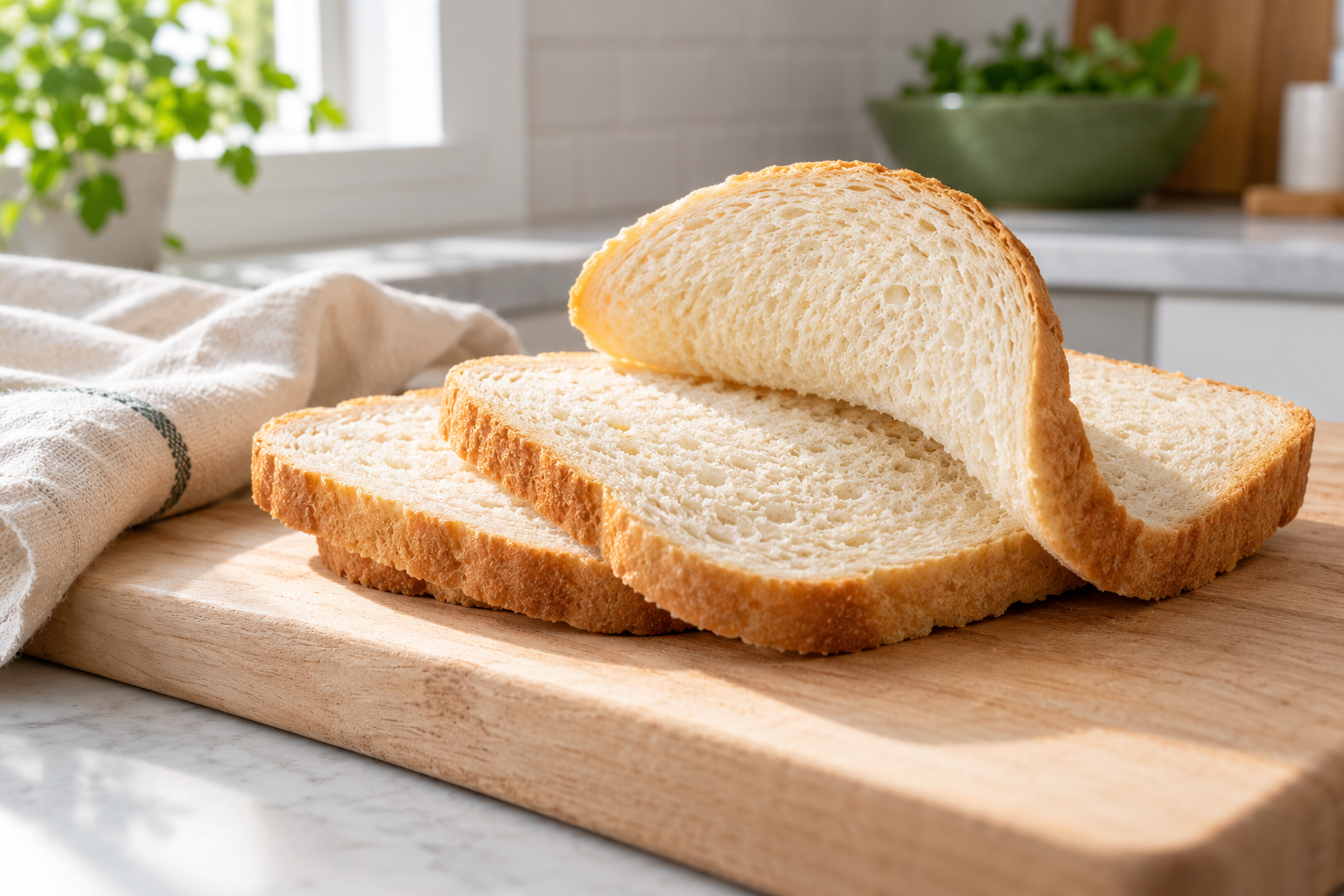
One relevant function is as a humectant, which means an ingredient that helps food hold moisture. That is the role described in 21 CFR 170.3(o)(16). In bread, retaining moisture can be useful when the goal is a softer eating texture.
That does not mean glycerin explains everything about a slice. The complete recipe and processing matter. Nor can a soft slice prove that glycerin is present: check the ingredient list rather than diagnosing ingredients by touch. Our low-carb bread ingredient glossary helps put unfamiliar names in context.
Think about your intended meal, too. A flexible slice may suit a cold sandwich, while you may prefer something firmer for toast. Judge the finished bread for that use instead of assuming that one moisture-related ingredient guarantees the texture you like. This guide explains labels; it is not a report of a LessCarby baking or tasting test.
Does glycerin mean sugar-free, carb-free or calorie-free?
No. Those are separate questions about the finished food. The FDA inventory includes a nutritive-sweetener role for glycerin, so it is not sensible to treat the word as a blanket promise of zero energy. We are not assigning a gram amount or calorie value to an unknown loaf.
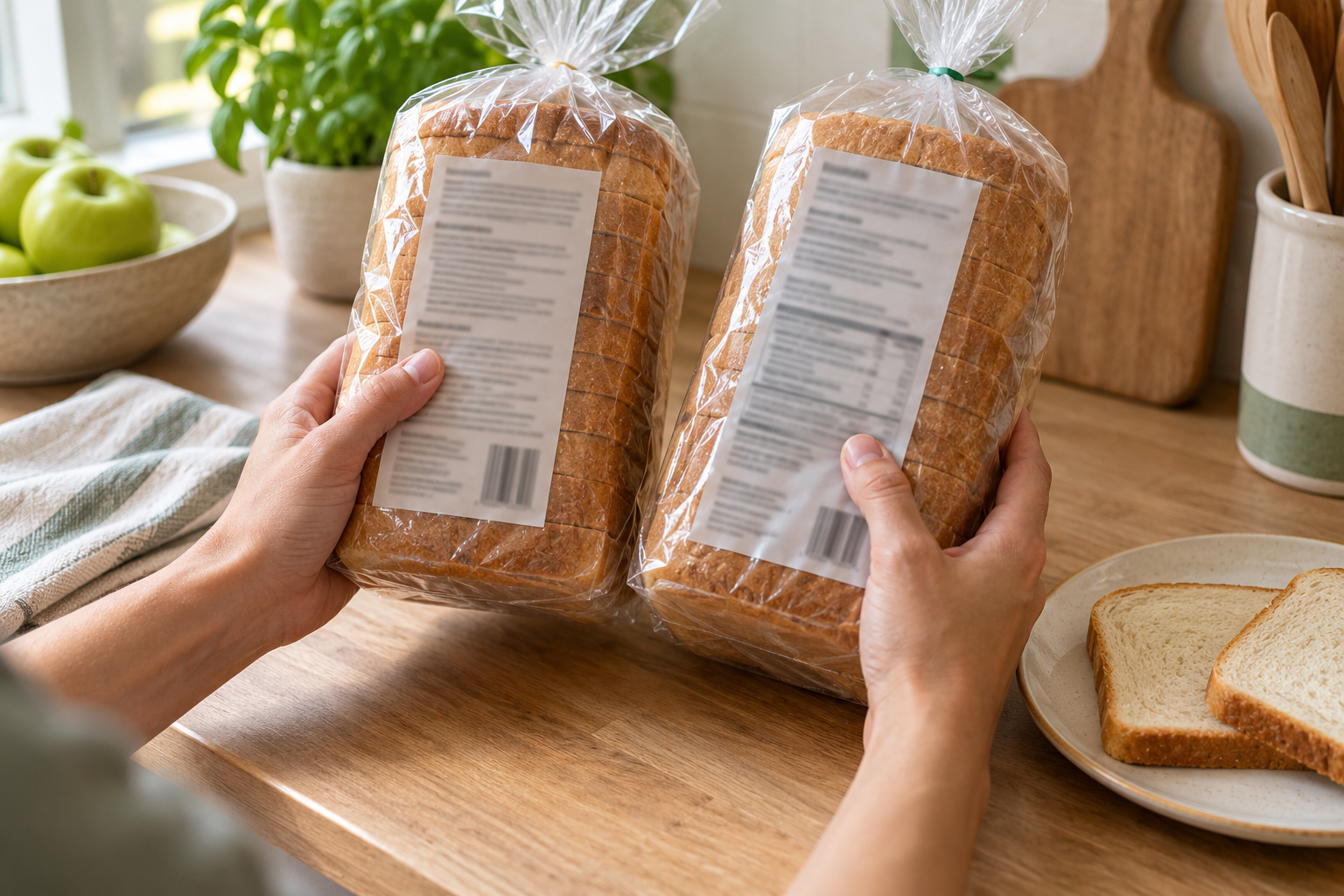
Start with the package’s Nutrition Facts panel, not an online claim about an isolated ingredient. Record total carbohydrate, fiber, sugars and calories for the amount you expect to eat. A “zero sugar” statement, where present, is not a substitute for reading the rest of that panel.
The FDA’s label-reading guide explains that the listed amounts relate to the labeled serving. Two servings mean twice those amounts. This sounds basic, but it prevents a misleading comparison between a loaf labeled per slice and one labeled per two slices.
Should you subtract glycerin when calculating net carbs?
Do not invent a glycerin subtraction from the ingredient list. If the bag does not disclose an amount, you have no number to subtract. An ingredient’s position in the list is not a measurement in grams.
If a brand advertises net carbs, read its explanation of the arithmetic. Keep the total-carbohydrate figure visible alongside it. If the explanation is missing or unclear, ask the manufacturer rather than assuming every unfamiliar ingredient can be deducted. Our net-carb label guide covers the broader comparison.
For a hypothetical example, imagine a label showing 12 grams of total carbohydrate and 8 grams of fiber per serving. Subtracting those two printed numbers gives 4 grams. If glycerin also appears in the ingredient list with no quantity, that does not supply an extra deduction. These are illustration numbers, not the nutrition of a reviewed bread or a dosing recommendation.
If you count carbohydrate for a medical plan or use insulin, follow the counting method agreed with your healthcare team. This ingredient guide does not establish an insulin adjustment or predict an individual glucose response.
What can the ingredient order tell you?
U.S. ingredient lists generally run from greater to smaller amounts by weight, with an exception for appropriately identified groups containing 2 percent or less. See 21 CFR 101.4. That helps you interpret the list, but it does not reveal a precise glycerin dose.
If you see glycerin near the end, avoid translating “near the end” into a specific number of grams. If it appears within a “2% or less” group, read that grouping correctly; the listed order within that group is not a dependable ranking of amounts. When the exact quantity matters, the manufacturer is the appropriate source to ask.
A practical comparison you can do in the store
- Choose your portion first. Write down whether lunch means one slice, two slices or another amount.
- Match the portions across loaves. Compare equal portions rather than the largest number printed on the front.
- Read the nutrition panel. Include total carbohydrate, fiber, calories, sodium and protein according to your priorities.
- Find glycerin in the ingredient list. Note the name and any grouping, without guessing its quantity.
- Check the rest of your requirements. Review allergens and any dietary certification you actually need.
- Use a small first purchase when possible. Decide whether the bread suits your normal sandwich or toast before stocking up.
For example, one bread might have the texture you prefer but more sodium for your usual two-slice sandwich. Another might fit your nutrition priorities but feel less flexible. There is no need to turn that into a verdict on glycerin itself. You are choosing a complete food for a real meal.
Questions worth sending to the manufacturer
When the label leaves a gap, a specific question works better than asking whether a loaf is “good for keto.” Include the exact product name and a photo of the current label so the company can identify the formula.
- Does the advertised net-carb calculation deduct glycerin, and where is that calculation explained?
- If source matters to my dietary preferences, what is the source of the glycerin in this exact product?
- Have the formula or serving size changed since the label shown on your website?
A vague answer does not justify filling in the blanks yourself. Keep the information that is printed and verified, and leave the unknown quantity unknown.
Is glycerin allowed in food?
The U.S. regulation 21 CFR 182.1320 recognizes glycerin as safe under good manufacturing practice. That statement concerns the conditions of its food use. It is not a recommendation to consume unlimited amounts or a guarantee that every bread suits every person.
This article is about reading packaged bread, not adding glycerin at home. You do not need to buy a bottle to understand the label, and this guide supplies no baking dose or substitution ratio. Keep this as a label-reading exercise rather than a reason to buy an extra ingredient.
Quick answers
Are glycerin and glycerol different ingredients?
The FDA inventory lists glycerol as another name for glycerin. Recognizing both helps you compare labels without treating the spelling change as a nutritional difference.
Does a moist slice tell me it will keep longer?
Do not use softness as a storage instruction. Follow the package directions and any after-opening guidance. For a wider explanation, see our guide to preservatives in bread.
Can I identify the best loaf just by avoiding glycerin?
You can choose a loaf without it if that is your preference. Still compare the serving, nutrients and finished texture. Removing one name from your checklist does not answer those other questions.
Save This Post on Pinterest
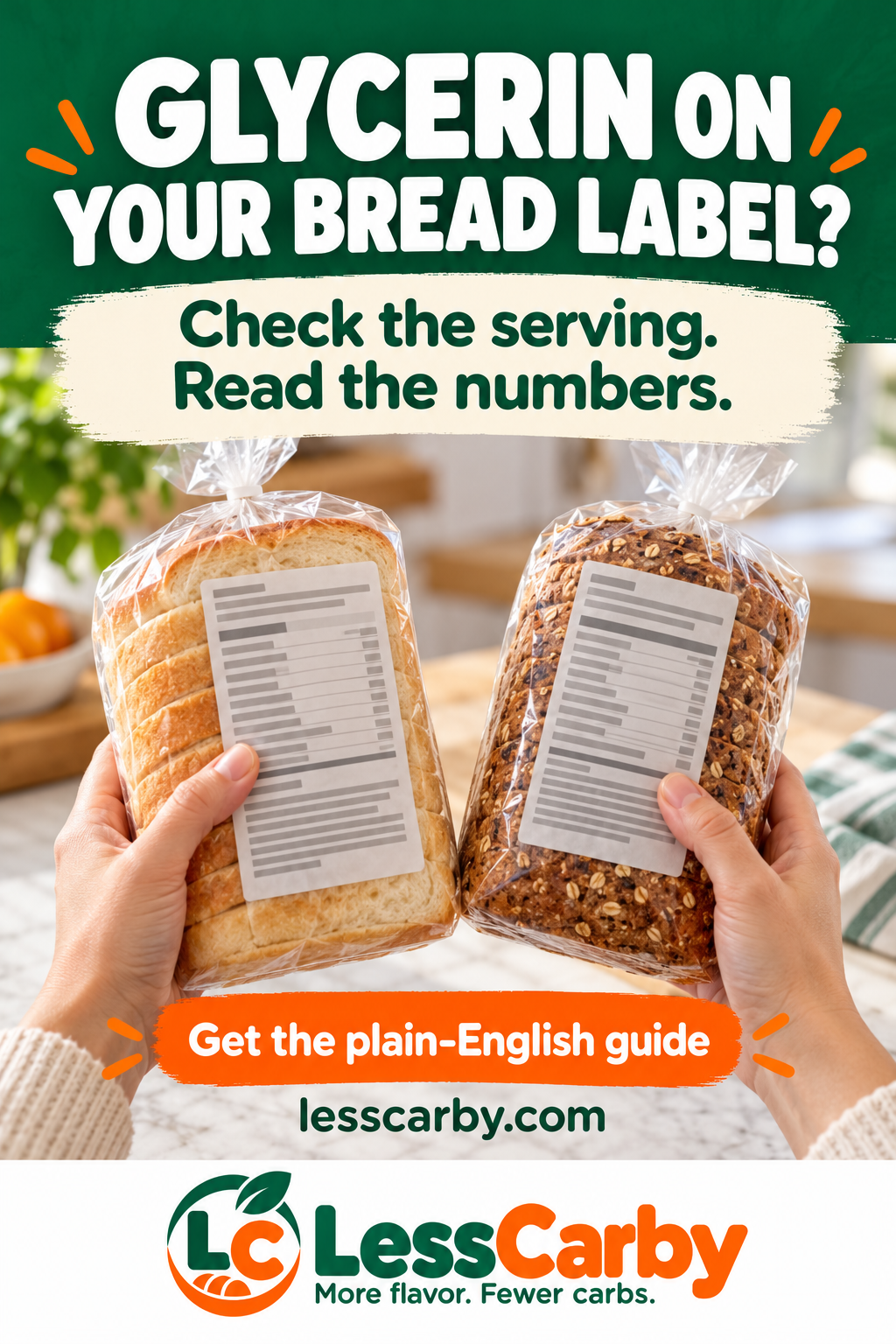
Keep a reminder of what to check when glycerin appears on a bread label.

The takeaway
Glycerin can serve a useful moisture-related role in bread. Its presence is not a shortcut to a carb count or a health verdict. Compare the portion you will eat, keep the printed nutrition numbers separate from ingredient guesses, and ask the maker about any unexplained net-carb deduction.
Sources checked October 18, 2026. This guide discusses U.S. packaged-food labels; rules and label formats can differ in other markets. Images are original illustrations, not product tests.
Plan Your Week with Our Free Meal Planner
Choose seven days of meals, adjust portions, and download your shopping list. No email signup needed.
Open the Free Planner →
