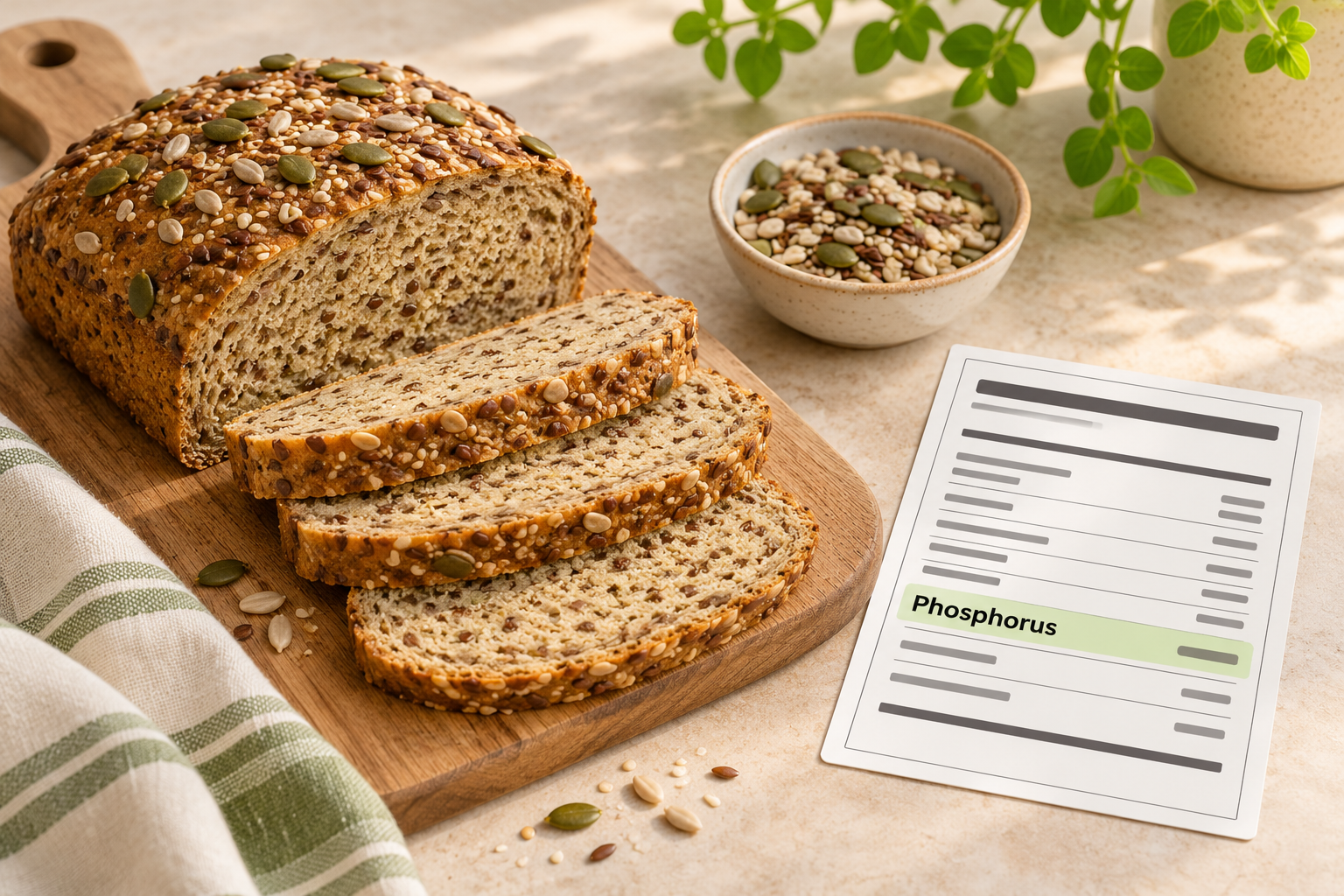
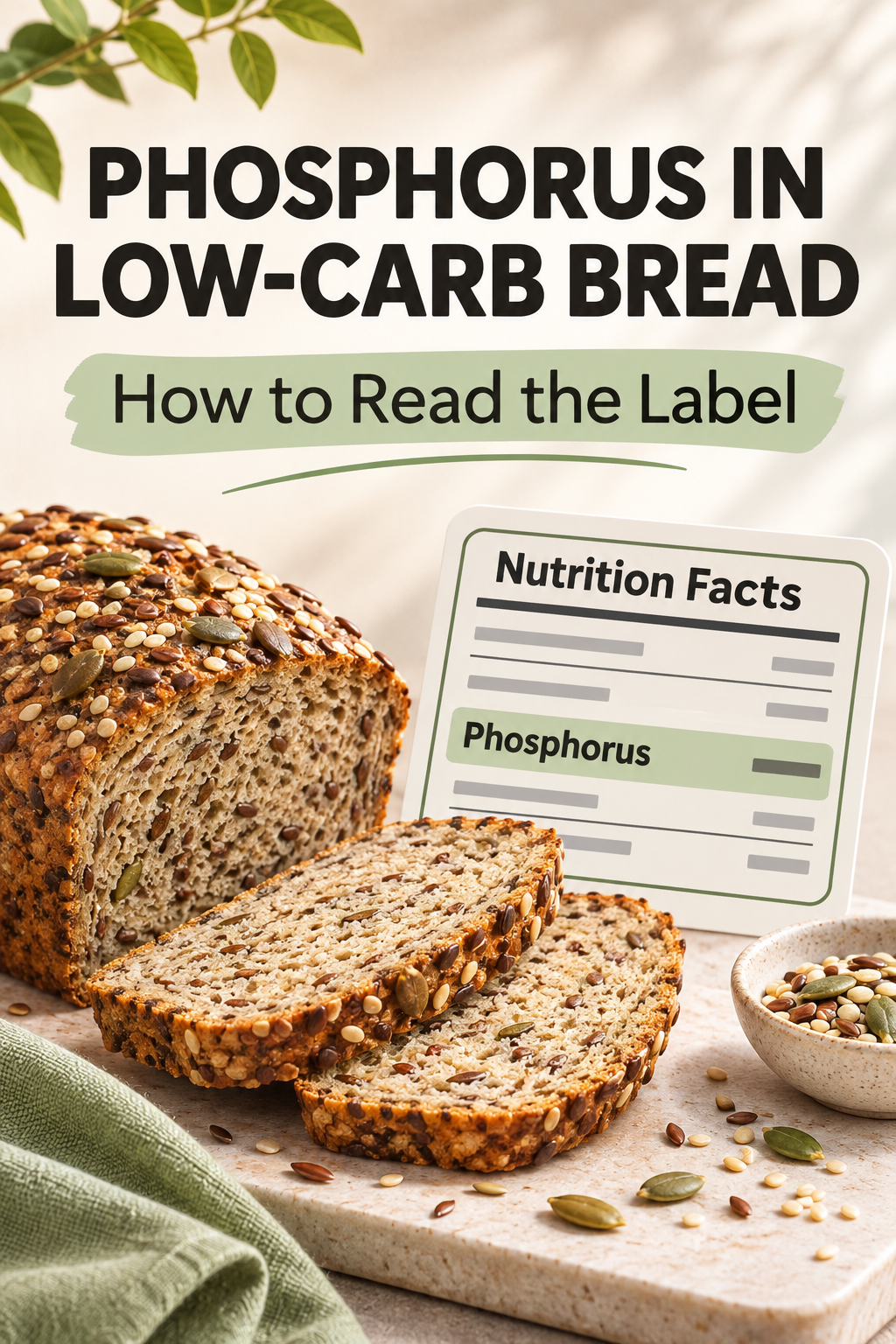
Quick answer: Phosphorus can appear on a bread’s Nutrition Facts panel, but many manufacturers are not required to list it. If the line is missing, that does not mean the bread contains zero phosphorus. Start with the serving size, compare milligrams or % Daily Value when they are provided, then check the ingredient list for phosphate additives.
Why phosphorus shows up in bread
Phosphorus is a mineral your body uses in bones and teeth, energy metabolism, and cell membranes. It occurs naturally in many foods, including grains, nuts, seeds, dairy products, eggs, and meat. Bread can contain phosphorus from its flour, seeds, dairy-based ingredients, leavening agents, and other additions.
The National Institutes of Health notes that bakery products contribute to phosphorus intake in the United States. That makes bread worth checking, but it does not make every loaf “high phosphorus.” Formulas vary, and the amount depends on the ingredients and the portion you actually eat.
Start with the serving size
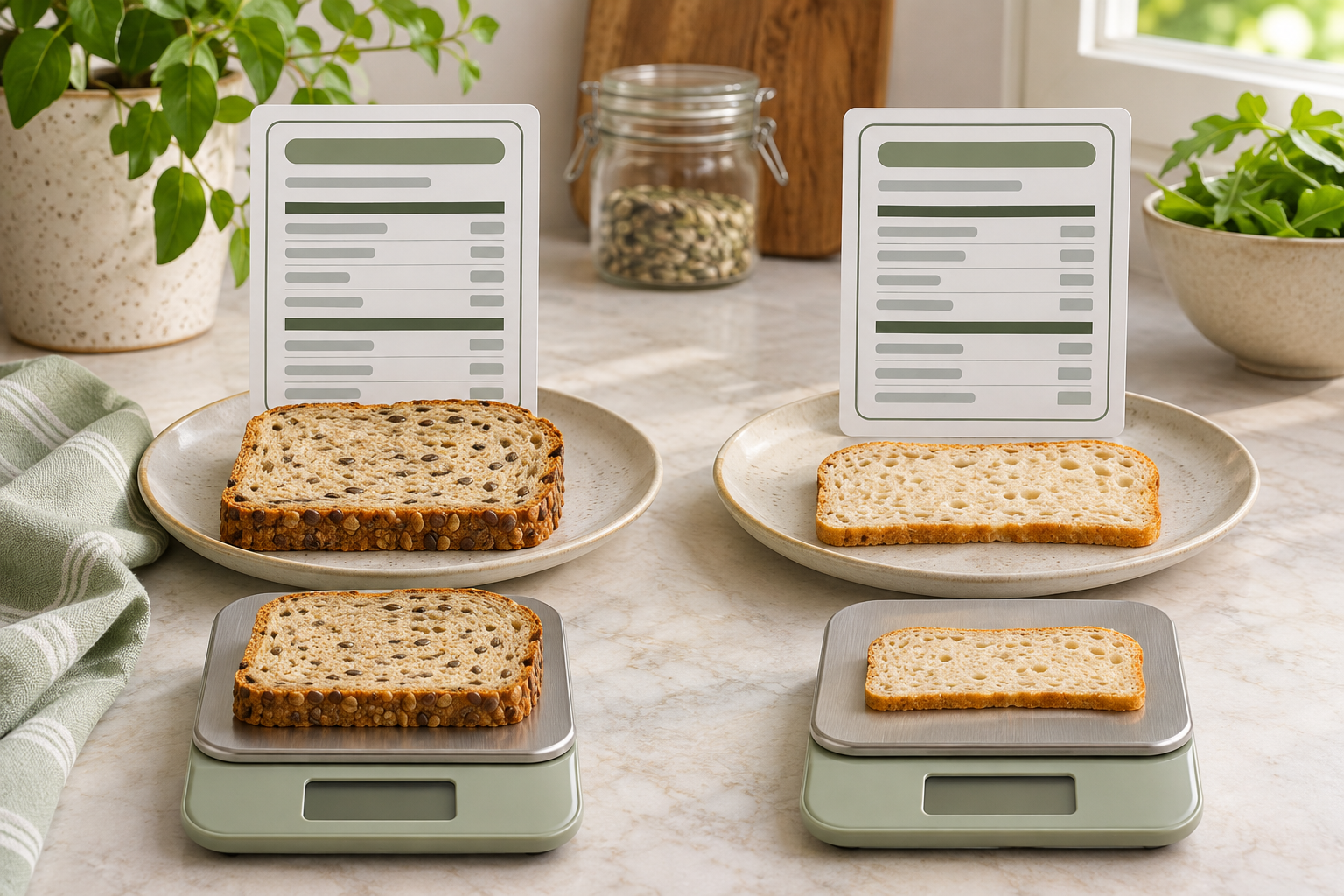
Before comparing two low-carb breads, match the serving sizes. One label may define a serving as one thin slice. Another may use two slices or a heavier piece. A smaller number on the phosphorus line can simply reflect a smaller serving.
- Find the serving size and the number of slices.
- Note the serving weight in grams.
- Convert both products to the portion you expect to eat.
If one slice has 80 mg of phosphorus and you eat two slices, your meal starts with 160 mg from the bread. That simple multiplication is more useful than comparing front-of-package claims.
How to read milligrams and % Daily Value
The U.S. Food and Drug Administration sets the Daily Value for phosphorus at 1,250 mg for adults and children age 4 and older. The % Daily Value tells you how much one labeled serving contributes to that reference amount.
For example, 125 mg is 10% of the Daily Value because 125 divided by 1,250 equals 0.10. FDA’s general label guide considers 5% Daily Value or less low and 20% or more high. Those thresholds describe the amount in one serving; they are not personal medical targets.
Do not confuse the phosphorus Daily Value with the adult Recommended Dietary Allowance. NIH lists an adult RDA of 700 mg, while the Nutrition Facts label uses the 1,250 mg Daily Value as a standard comparison tool.
Why the phosphorus line may be missing
On a conventional Nutrition Facts panel, vitamin D, calcium, iron, and potassium are the vitamins and minerals that must usually be declared. Other vitamins and minerals, including phosphorus, can generally be listed voluntarily. FDA says they must be listed when they are added to the food or when the package makes a statement about their amount or health effects.
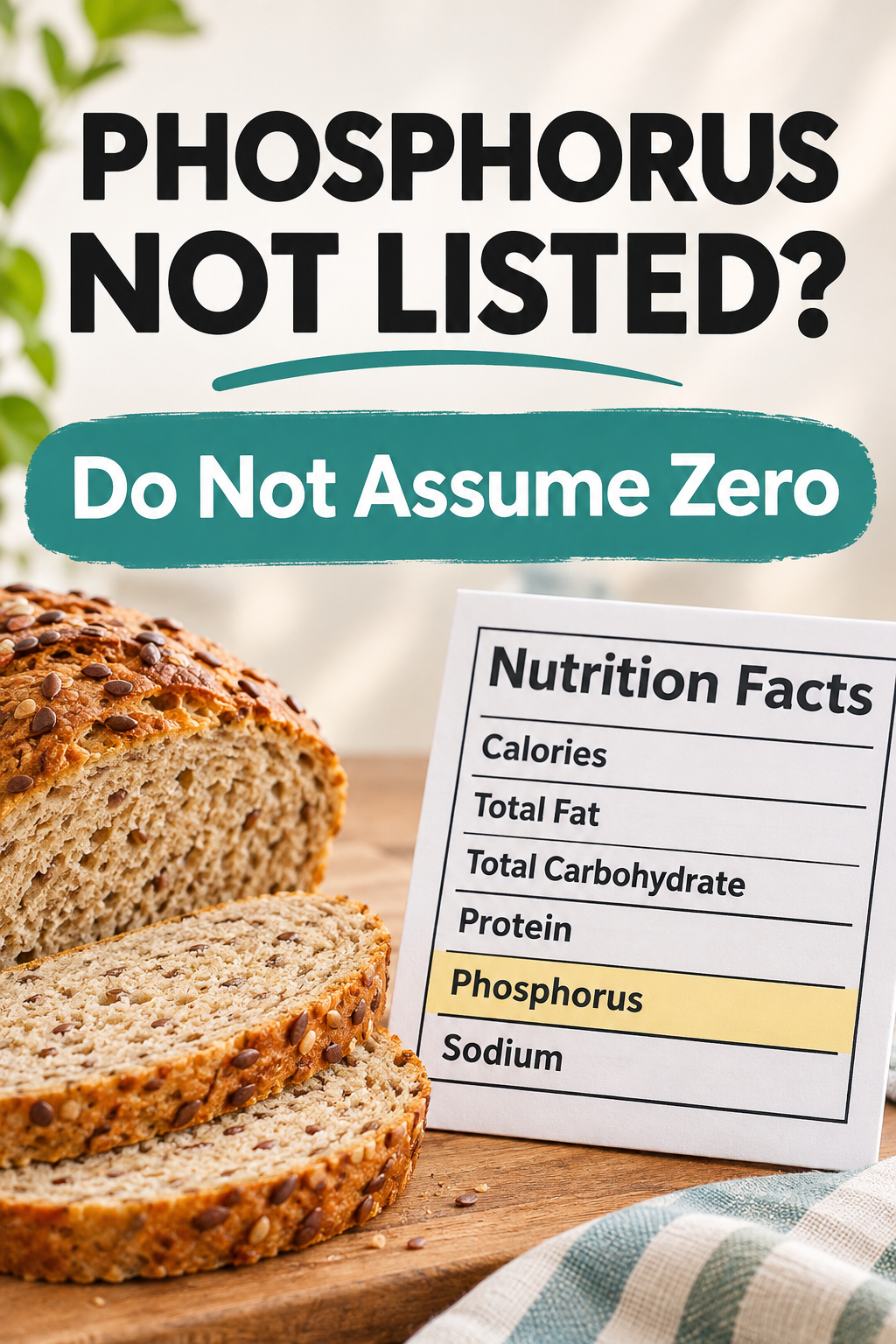
That is why two similar breads can have very different-looking panels. One may show phosphorus in milligrams and % Daily Value, while the other leaves the line out. Missing is unknown, not zero.
If phosphorus matters to your meal plan and the number is absent, check the manufacturer’s current product page or contact the company. Use the exact product name and serving size because recipes and labels can change.
Check the ingredient list for phosphate additives
The ingredient list cannot tell you the exact phosphorus amount, but it can reveal possible added sources. Look for ingredients with “phos” in the name. Examples that can appear in baked foods include:
- monocalcium phosphate;
- dicalcium phosphate;
- sodium phosphate;
- calcium phosphate; and
- phosphoric acid.
Some of these ingredients help dough rise, manage acidity, or improve texture. Seeing one does not prove that the bread is high in phosphorus, and its position in the list does not provide a milligram count. It is simply a useful clue when the Nutrition Facts panel gives no number.
NIH explains that phosphorus from additives is generally absorbed more readily than phosphorus naturally bound in plant foods. For most healthy shoppers, the practical task is still to compare the full label rather than panic over a single ingredient.
Read the whole bread label
A low net-carb claim does not answer every nutrition question. After checking phosphorus, compare the details that matter for your usual portion:
- Total carbohydrate and fiber: use the Nutrition Facts panel, not just a front-label number. Our net-carb label guide explains the calculation.
- Sodium: breads with similar carbs can differ substantially in sodium.
- Protein and calories: compare equal serving weights.
- Allergens: low-carb breads may use wheat, eggs, milk, soy, sesame, or nuts.
- Other minerals: see our guides to magnesium and calcium on bread labels.
What if you have chronic kidney disease?
People with chronic kidney disease may need individualized guidance because damaged kidneys can have trouble removing phosphorus from the blood. NIDDK recommends working with a health professional or renal dietitian rather than applying a generic limit on your own.
If you have been told to monitor phosphorus, bring the complete ingredient list and Nutrition Facts panel to that conversation. A missing phosphorus line is not enough evidence to call a bread suitable. Your clinician may consider your lab results, kidney function, medications, protein needs, and the rest of your diet.
A simple five-step comparison
- Match the serving size and serving weight.
- Record phosphorus milligrams and % Daily Value if listed.
- Multiply by the number of servings you plan to eat.
- Scan the ingredients for “phos” terms without guessing the amount.
- Compare carbs, fiber, sodium, protein, calories, and allergens before deciding.
Frequently asked questions
Does low-carb bread contain phosphorus?
Usually, yes. Grains, seeds, nuts, dairy ingredients, and leavening agents can all contribute phosphorus. The exact amount is product-specific.
Does an absent phosphorus line mean 0 mg?
No. It normally means the manufacturer did not declare the amount. Treat it as unknown unless you obtain a current value from the manufacturer.
Is a phosphate ingredient automatically a problem?
No. It tells you that a phosphorus-containing additive may be present, not how much is in a serving or whether the product fits your needs.
Which source should I trust for the current number?
Use the package in your hand first, then the manufacturer’s current page or customer service. For label rules and general nutrition context, use official sources such as the FDA Daily Value guide, the NIH phosphorus fact sheet, and NIDDK kidney nutrition guidance.
Save This Post on Pinterest
Keep this label-reading guide handy. These pins are scheduled; the images will be linked to their public Pinterest pages after provider confirmation.
The bottom line
Phosphorus is one piece of a low-carb bread label. Compare equal portions, use the listed milligrams or % Daily Value when available, and never translate a missing line into zero. The ingredient list can flag possible phosphate additives, while the full Nutrition Facts panel helps you judge the bread in the context of your own meal.
Plan Your Week with Our Free Meal Planner
Choose seven days of meals, adjust portions, and download your shopping list. No email signup needed.
Open the Free Planner →
