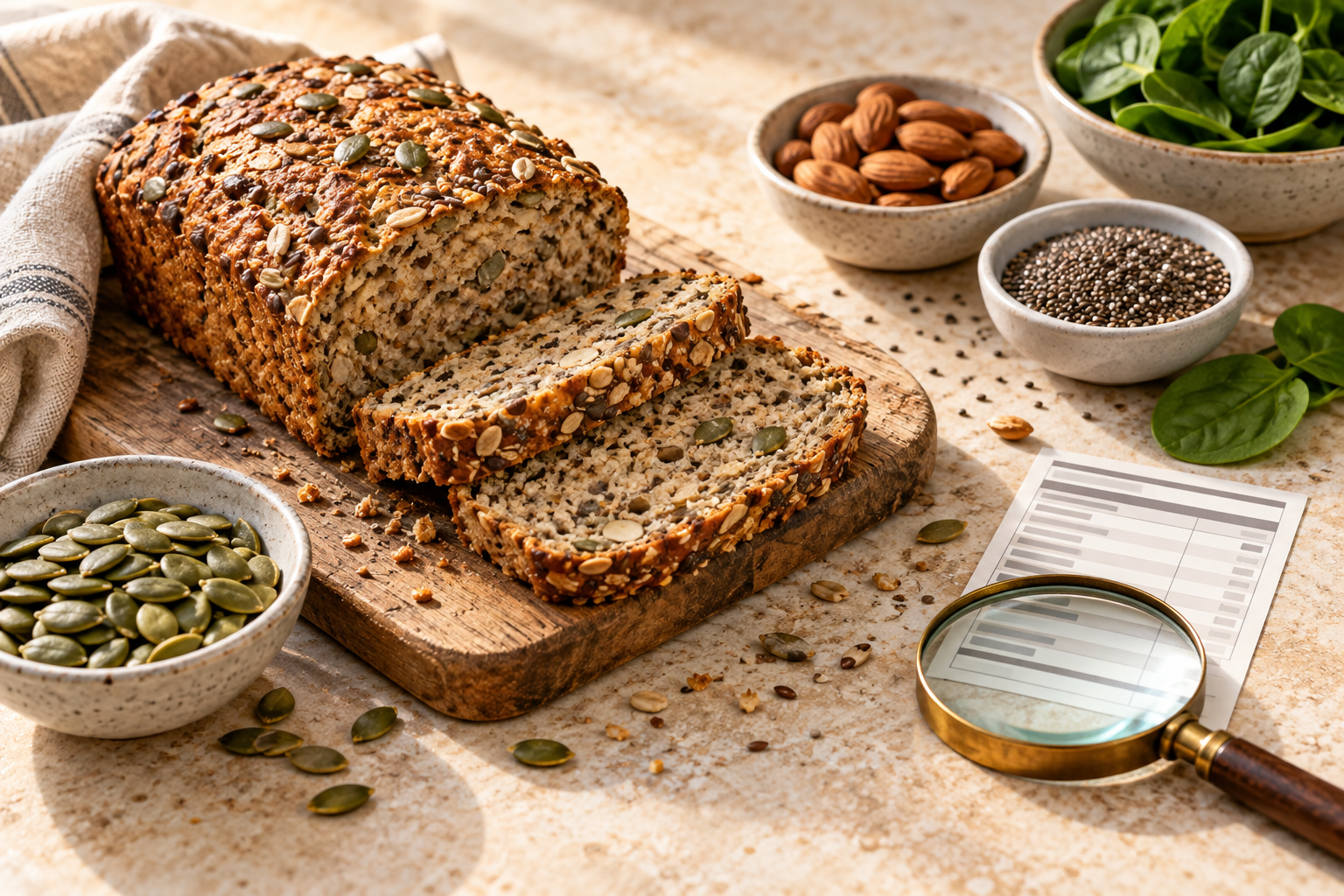
Magnesium may appear on a low-carb bread label, but an empty space where you expected to see it does not mean the bread contains none. On many conventional foods in the United States, magnesium is a voluntary line. That makes the label useful when the number is present—and easy to misread when it is not.
Quick answer: Start with the serving size. The current U.S. Daily Value for magnesium is 420 mg for adults and children age 4 and older. If the label lists magnesium, compare both milligrams and % Daily Value for the amount you actually eat. If it does not list magnesium, do not treat the omission as a zero.
Why magnesium matters—but should not become a marketing shortcut
Magnesium helps the body with hundreds of enzyme reactions. It is involved in muscle and nerve function, blood-glucose control, blood-pressure regulation, energy production, and the structure of bone. The National Institutes of Health magnesium fact sheet gives the fuller picture.
Those roles are important, but they do not turn one loaf into a treatment or guarantee a health result. A bread label can tell you how much magnesium is in a serving when the manufacturer declares it. It cannot tell you whether that bread will correct a deficiency, improve a condition, or meet your individual needs.
Read the serving size first
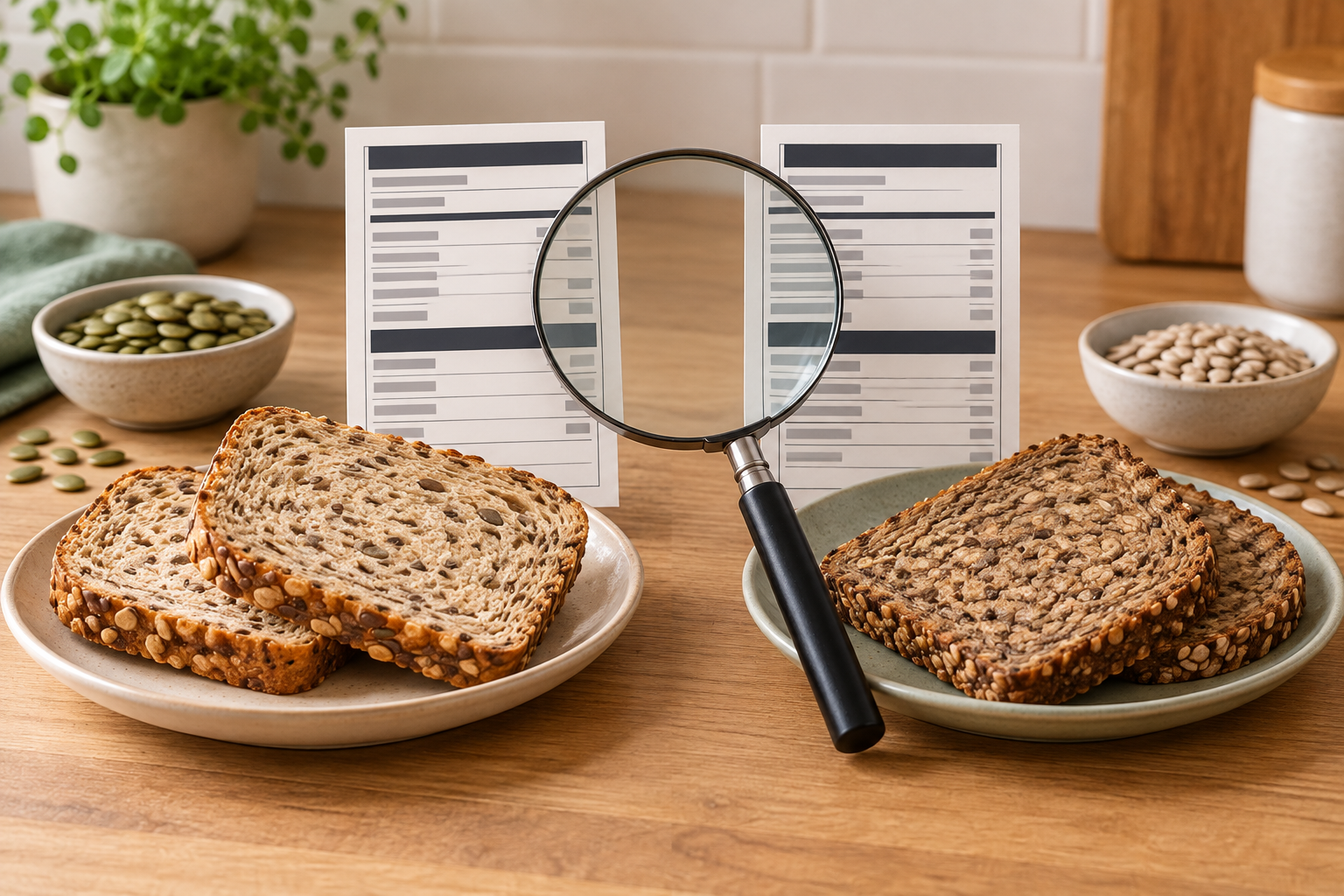
Every number on the Nutrition Facts panel belongs to the labeled serving. One loaf may use one slice; another may use two. Slice weights can also be very different. Compare equal portions before deciding which bread contributes more magnesium.
- Find the serving. Note the number of slices and gram weight.
- Match it to your real portion. Two slices equal two servings when the label is based on one slice.
- Read magnesium in mg and %DV. Keep both numbers with the serving size.
- Convert before comparing. Put both loaves on the same one-slice, two-slice, or equal-gram basis.
For example, imagine one label lists 42 mg of magnesium per slice and another lists 63 mg per two slices. On a two-slice basis, the first example would provide 84 mg. These are arithmetic examples, not values for any specific bread.
What % Daily Value means for magnesium
The U.S. Food and Drug Administration sets the Daily Value for magnesium at 420 mg. The % Daily Value tells you how much one labeled serving contributes to that reference amount.
You can check the math with this simple formula:
Magnesium mg per serving ÷ 420 × 100 = approximate % Daily Value
Because label values are rounded, your calculation may not match the printed percentage perfectly. Use the printed values for shopping and the formula as a reasonableness check. The FDA’s general guide says 5% DV or less is low and 20% DV or more is high. Foods between those points still contribute magnesium.
| What you see | How to interpret it |
|---|---|
| 42 mg and 10% DV | One serving contributes about one-tenth of the 420 mg Daily Value. |
| Only %DV is easy to notice | Look again for milligrams and keep the serving size with the percentage. |
| No magnesium line | The amount is not declared on that label; the omission does not prove zero. |
Why some bread labels omit magnesium
On conventional U.S. packaged foods, vitamin D, calcium, iron, and potassium are the vitamins and minerals that generally must appear on the standard Nutrition Facts label. Magnesium is usually voluntary. The manufacturer may need to declare it when magnesium is added as a nutrient or when the package makes a magnesium-related nutrient claim.
This distinction matters. A loaf made with seeds or whole-grain ingredients can contain magnesium even if the panel does not print a magnesium row. Without a declared value or reliable manufacturer data, however, you should not guess the amount from the ingredient list.
Ingredients that can contribute magnesium
NIH lists leafy greens, legumes, nuts, seeds, and whole grains among food sources of magnesium. Low-carb breads sometimes use almond flour, flaxseed, chia seeds, sunflower seeds, pumpkin seeds, wheat proteins, or fiber-rich ingredients. Those ingredients may contribute magnesium, but recipes vary widely.
The ingredient list can explain where magnesium might come from, not how many milligrams are in a slice. Ingredients are listed by weight, and processing, recipe proportions, moisture, and serving size all affect the final number. A seed-covered loaf is not automatically higher in magnesium than a smoother loaf.
For another example of reading a mineral in context, see our guide to calcium in low-carb bread. The key difference is that calcium is normally required on the label while magnesium often is not.
Do not let magnesium hide the rest of the bread label
A higher magnesium number can be useful, but it does not cancel out other parts of the label. Read the whole serving:
- Total carbohydrate and fiber: Use the regulated lines before relying on front-package net-carb wording. Our net-carb label guide explains the comparison.
- Sodium: Bread, cheese, deli meat, and condiments can add up in one meal.
- Protein: Compare grams for equal portions rather than assuming a low-carb label means high protein.
- Calories: Nut and seed ingredients can change energy density as well as minerals.
- Allergens: Check for wheat, tree nuts, sesame, soy, eggs, milk, and any other relevant warnings.
- Ingredients: Confirm that the loaf fits your preferences and tolerances, not just one nutrient target.
What to do when magnesium is not listed
First, check the manufacturer’s current product page or contact the company. Ask for magnesium per labeled serving and the date or formula the information covers. For some foods, USDA FoodData Central can offer a useful reference, but match the exact product and serving rather than substituting a generic bread value.
If you cannot find reliable data, leave the amount unknown. “Unknown” is more accurate than zero and safer than estimating from a similar loaf. Product recipes and labels can change, so recheck the package you are buying.
Food sources, supplements, and safety
Food is only one part of the magnesium picture. Supplements can provide much larger amounts than bread, and high supplemental intakes can cause diarrhea, nausea, or cramping. Magnesium can also interact with some antibiotics, osteoporosis medicines, diuretics, and acid-reflux medicines. People with reduced kidney function may have additional concerns.
If you have kidney disease, take prescription medicine, use a magnesium supplement, or have been given a clinical target, ask a qualified health professional how the label fits your plan. This guide is for reading food labels, not choosing a dose or treating a condition.
A practical shopping checklist
- Confirm the exact loaf and flavor; similar packaging can hide different formulas.
- Record slices and grams per serving.
- If magnesium is listed, compare both mg and %DV for your normal portion.
- If it is absent, mark the value unknown rather than zero.
- Use ingredients as context, not as a calculator.
- Check carbohydrate, fiber, sodium, protein, calories, allergens, and ingredients.
- Recheck the label when you buy again.
Frequently asked questions
Does low-carb bread usually contain magnesium?
It may, especially when the recipe includes nuts, seeds, legumes, or whole-grain ingredients. The amount varies, and a conventional label may omit magnesium even when some is present.
How many milligrams equal 10% Daily Value?
Using the current 420 mg Daily Value, 10% is about 42 mg. Printed values may be rounded.
Is a bread with more magnesium automatically healthier?
No. Magnesium is one useful detail. Serving size, total carbohydrate, fiber, sodium, protein, calories, allergens, and the overall eating pattern still matter.
Can I estimate magnesium from the seed content?
Not reliably. The ingredient list does not reveal exact recipe proportions or the amount per serving. Use a declared label value or current manufacturer data.
Save This Post on Pinterest
Keep this magnesium label-reading guide handy for your next bread comparison.
Bottom line: Read magnesium with the serving size, use milligrams and %DV together, and treat an omitted line as unknown—not zero. Then bring the rest of the bread label back into the decision.
Plan Your Week with Our Free Meal Planner
Choose seven days of meals, adjust portions, and download your shopping list. No email signup needed.
Open the Free Planner →
