

This low-carb chocolate babka is a tender yeast loaf with ribbons of cocoa filling and a glossy, twisted top. The dough uses vital wheat gluten, oat fiber, and ground golden flax instead of almond flour, while allulose supplies sweetness and helps the chocolate filling stay soft. Because low-carb doughs absorb water differently, use the texture cues below and treat the first loaf as a calibration for your ingredients.
This recipe is a researched formula and does not claim personal testing. Ingredient brands, humidity, mixer strength, and loaf-pan dimensions can change the result, so weigh dry ingredients when possible and watch the dough rather than forcing an exact mixing time.
Low-Carb Chocolate Babka at a Glance
- Yield: One 8½-by-4½-inch loaf, about 12 slices
- Active time: About 35 minutes
- Rising time: About 75–120 minutes total
- Bake time: Approximately 30–40 minutes
- Diet notes: Almond-free, but contains wheat, eggs, and dairy
Ingredients
For the dough
- 1 cup vital wheat gluten
- 1/2 cup oat fiber
- 1/4 cup finely ground golden flaxseed meal
- 1/3 cup granulated allulose
- 2 teaspoons instant yeast
- 1/2 teaspoon fine salt
- 2 large eggs, room temperature
- 1/2 cup warm water, plus 1–3 tablespoons if needed
- 3 tablespoons unsalted butter, softened
- 1 teaspoon vanilla extract
For the chocolate swirl
- 3 tablespoons unsalted butter, very soft
- 1/4 cup unsweetened cocoa powder
- 1/3 cup powdered allulose or a compatible powdered low-carb sweetener
- 1 teaspoon cinnamon
- Pinch of salt
- 1–2 tablespoons warm water, as needed for a spreadable paste
Optional finishing syrup
- 2 tablespoons allulose
- 2 tablespoons water
Important: Vital wheat gluten is concentrated wheat protein. This loaf is not gluten-free and is unsuitable for people with celiac disease or a wheat allergy.
How to Make Low-Carb Chocolate Babka
- Prepare the pan. Grease an 8½-by-4½-inch loaf pan and line the long sides and bottom with parchment, leaving enough overhang to lift the loaf.
- Combine the dry ingredients. In a mixer bowl, whisk vital wheat gluten, oat fiber, flax meal, allulose, yeast, and salt until evenly distributed.
- Mix the dough. Add the eggs, 1/2 cup warm water, softened butter, and vanilla. Mix with the dough hook on low until no dry pockets remain, then knead on medium-low for 6–8 minutes. The dough should become elastic and slightly tacky. If it feels stiff or tears immediately, add warm water one tablespoon at a time.
- Let it rise. Shape the dough into a ball, place it in a lightly greased bowl, cover, and leave in a warm place for 45–75 minutes. Low-carb dough may not double; look for visible puffiness and relaxation.
- Make the filling. Stir the softened butter, cocoa, powdered sweetener, cinnamon, and salt. Add just enough warm water to form a smooth paste that spreads without tearing the dough.
- Roll and fill. Roll the dough between two sheets of parchment into a rectangle about 9 by 14 inches. Remove the top sheet and spread the filling almost to the edges, leaving a 1/2-inch border on one short side.
- Form the twist. Starting at the opposite short side, roll the dough into a snug log. Chill it for 10 minutes if it feels too soft. Slice the log lengthwise with a sharp knife, turn both cut sides upward, and twist the two strands together.
- Proof again. Transfer the twist to the prepared pan. Cover and let it rise for 30–45 minutes, until visibly lighter and puffier.
- Bake. Heat the oven to 350°F (175°C). Bake for 30–40 minutes. Tent loosely with foil if the top darkens too quickly. The center should feel set rather than gummy.
- Finish and cool. If using the syrup, simmer allulose and water for 1–2 minutes and brush lightly over the hot loaf. Cool in the pan for 15 minutes, then lift it onto a rack. Wait until fully cool before slicing.
Why This Dough Is Different
Traditional babka relies on wheat flour for starch as well as gluten. In this version, vital wheat gluten supplies the elastic network, oat fiber adds bulk, and flax helps hold moisture. These ingredients are not interchangeable cup for cup. Adding extra oat fiber can make the loaf dry, while extra flax can produce a heavier crumb.
The dough also will not necessarily rise like conventional brioche. Look for expansion and a softer feel rather than waiting for a perfect doubling. If the room is cool, place the covered bowl in a turned-off oven with the light on, away from the heating element.
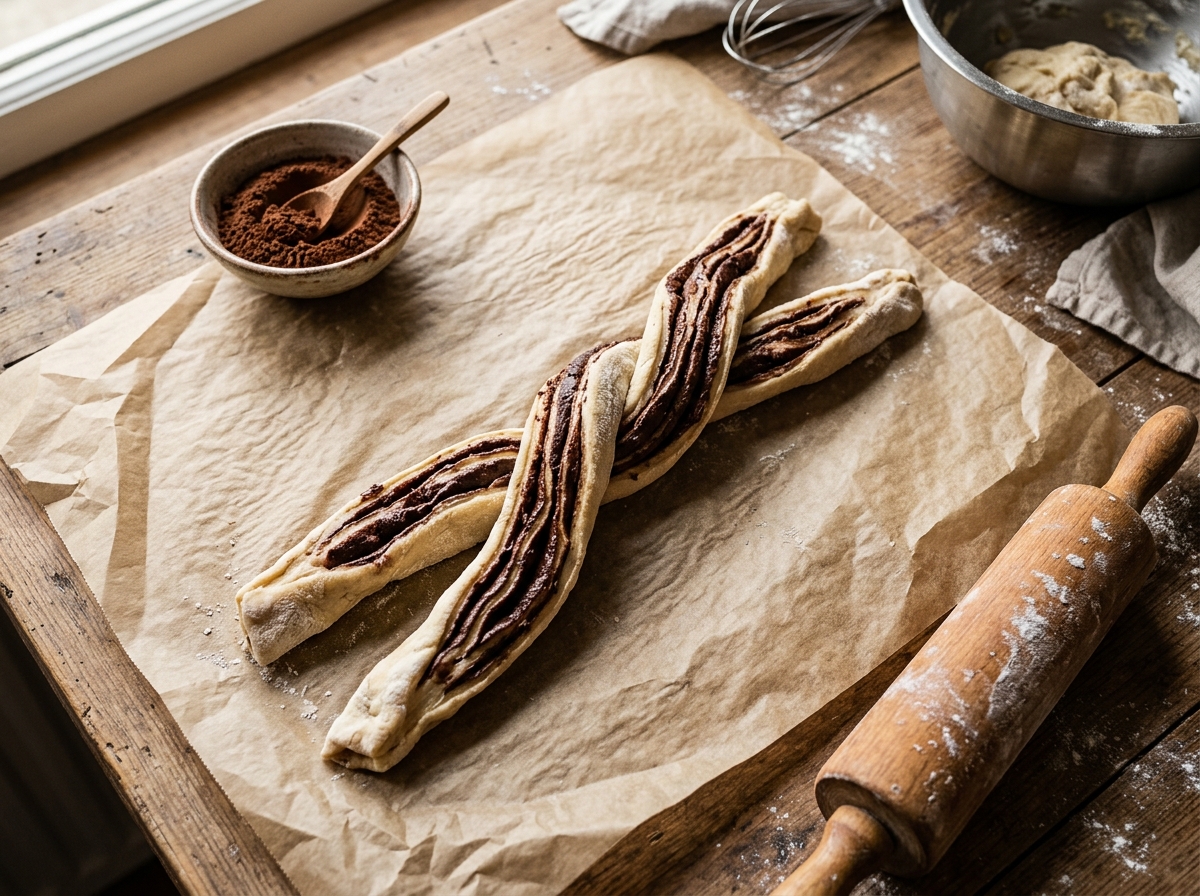
How to Create a Clean Chocolate Swirl
- Use powdered sweetener so the filling is less gritty.
- Keep the filling spreadable but not runny.
- Leave a small clean border so the roll can seal.
- Chill the rolled log briefly before cutting if the layers slide.
- Use a sharp, lightly greased knife and wipe it between cuts.
- Turn the cut faces upward before twisting so the chocolate layers remain visible.
Allulose and erythritol behave differently in baking. Allulose browns readily and stays softer; erythritol-based fillings may cool firmer. Our erythritol-versus-allulose comparison explains the tradeoffs.
Estimating Net Carbs
Calculate the loaf from the exact packages you use. Add total carbohydrate from every ingredient, subtract dietary fiber and only those sugar alcohols you normally count under your chosen method, then divide by the number of slices. The LessCarby net-carb calculator can help with the arithmetic.
The FDA explains that serving size and nutrients are based on the labeled portion, so compare ingredients by weight when labels use different household measures. Do not rely on a generic “keto” number for this loaf; oat fiber, cocoa, flax, and sweetener labels can vary.
Troubleshooting
The dough is stiff and tears
Add warm water one tablespoon at a time and knead after each addition. Oat fiber can be especially absorbent. Stop when the dough stretches without becoming wet and shapeless.
The loaf is dense
The yeast may be old, the liquid may have been too hot, the room may have been cool, or the dough may have needed more hydration. Check the yeast date and judge the proof by visible puffiness rather than the clock alone.
The center is gummy
The loaf may need a longer bake or a longer cooling period. Babka’s chocolate layers trap moisture, and slicing while warm compresses the crumb. Tent the top with foil and continue baking if the outside is browned before the center is set.
The filling leaked
A thin filling or loose roll can escape through the twist. Use only enough water to make a paste and leave a narrow border when spreading.
Serving and Storage
Slice the loaf only after it cools completely. Serve as-is or warm a slice briefly in a toaster oven. A thin layer of salted butter or cream cheese balances the cocoa without requiring more sweetener.
Store tightly wrapped at room temperature for up to two days, or refrigerate for up to five days. For longer storage, freeze individual slices with parchment between them for up to two months. Thaw at room temperature and rewarm gently.
Frequently Asked Questions
Is this babka gluten-free?
No. It contains vital wheat gluten and must not be served to anyone avoiding gluten because of celiac disease or wheat allergy.
Can I replace the vital wheat gluten?
Not in this formula. It provides the elasticity needed to roll and twist the dough. A gluten-free babka requires a separately developed recipe with a different binder system.
Can I use another low-carb sweetener?
Possibly, but sweetness, browning, texture, and digestive tolerance may change. Use a product formulated for baking and follow its sweetness-conversion guidance.
Can I make it without dairy?
A firm plant-based butter intended for baking may work, but water content varies. Coconut oil can make the filling firmer when cool and may change the dough texture.
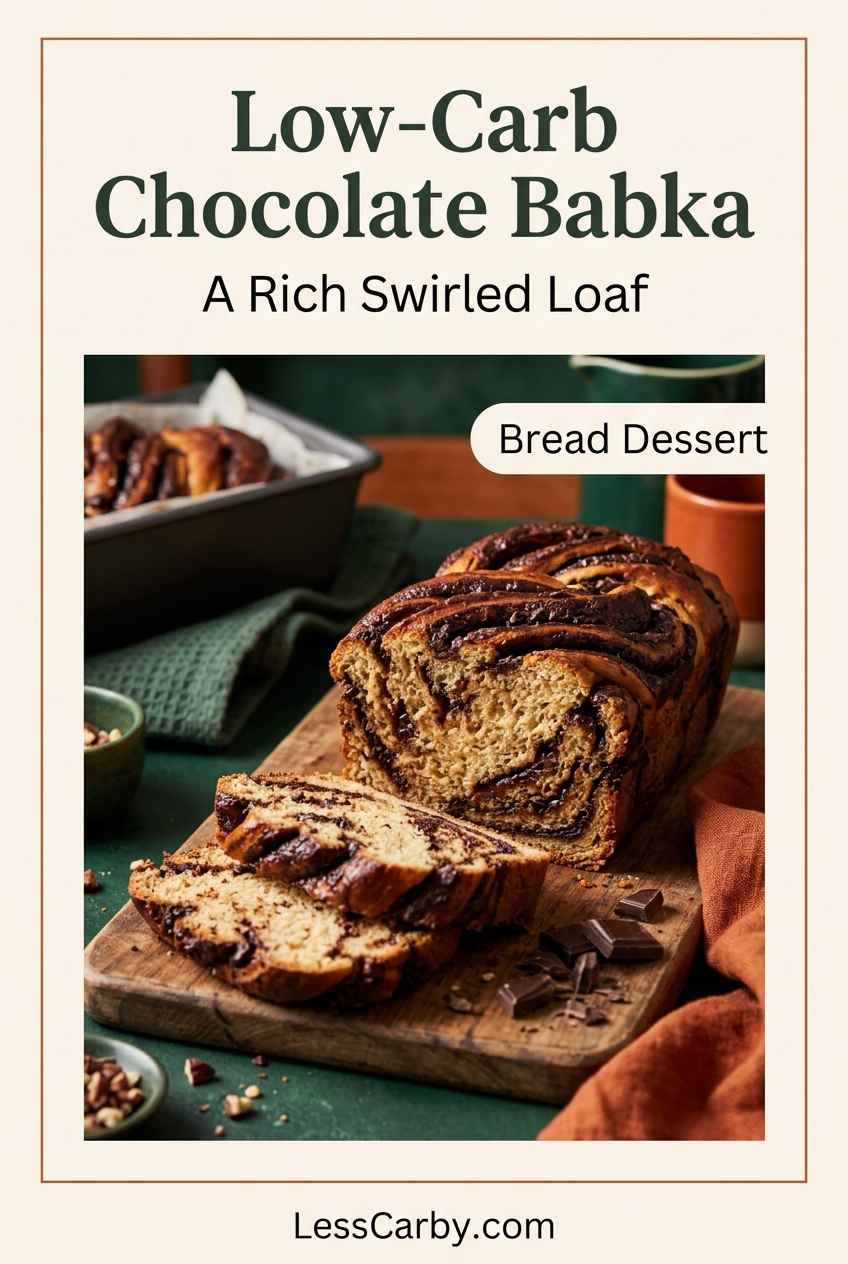
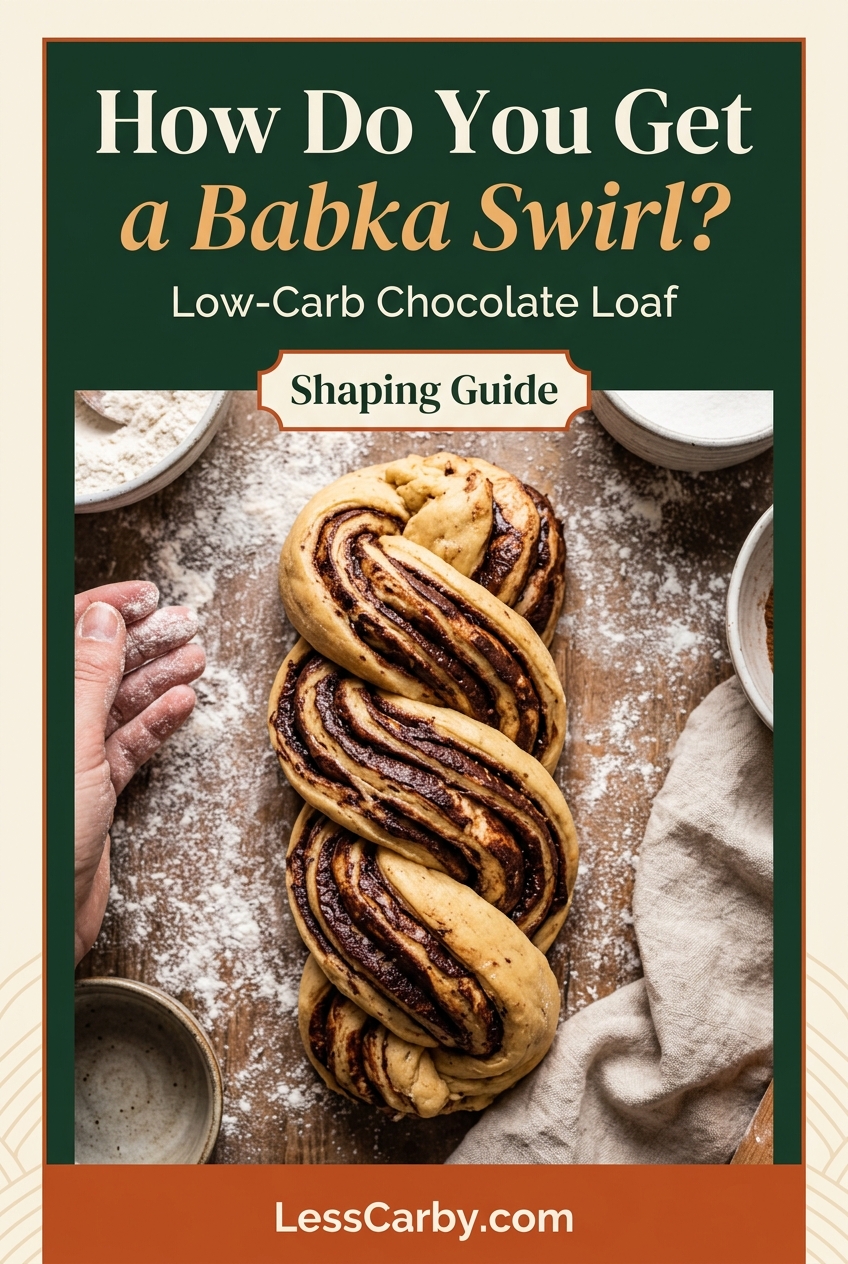
Save This Post on Pinterest
Save either version for the next time you want to shape a low-carb chocolate loaf.
The Bottom Line
A low-carb chocolate babka is possible when the dough has enough elastic wheat protein, careful hydration, and a filling thick enough to stay between the layers. Use the first loaf to learn how your oat fiber and sweetener behave, then adjust water or baking time—not the entire ingredient structure—on the next batch.
Sources
- FDA: How to Understand and Use the Nutrition Facts Label
- FDA: Gluten and Food Labeling
- NIDDK: Definition and Facts for Celiac Disease
Plan Your Week with Our Free Meal Planner
Choose seven days of meals, adjust portions, and download your shopping list. No email signup needed.
Open the Free Planner →
