

Vital wheat gluten is the concentrated protein portion of wheat. In many low-carb breads, it supplies the stretchy structure that lets dough trap gas, rise, and hold a sliceable crumb even when much of the usual starch has been replaced. It also adds protein. The tradeoff is simple but important: bread made with vital wheat gluten contains wheat and is not suitable for anyone with celiac disease or a wheat allergy.
Quick answer: Vital wheat gluten helps low-carb bread feel more like conventional bread because its elastic proteins form a network around gas bubbles. It is useful, not magical: the final texture still depends on water, fat, fiber, starches, fermentation, and baking technique.
What is vital wheat gluten?
Vital wheat gluten is made by hydrating wheat flour, separating much of the starch and other components, and drying the protein-rich material while preserving its elastic properties. Federal food regulations describe wheat gluten as the principal protein component of wheat, made mainly of gliadin and glutenin. “Vital” means the dried gluten can still develop elasticity when water is added.
That definition matters because vital wheat gluten is not a mysterious synthetic additive. It is a concentrated wheat-derived ingredient. You may see it listed as vital wheat gluten, wheat gluten, or occasionally gluten flour.
Why low-carb bread uses vital wheat gluten
Traditional wheat bread gets much of its structure from gluten that forms naturally when flour is mixed and kneaded. Low-carb formulas often replace a substantial share of ordinary flour with fibers, seed meals, nut flours, resistant starches, or other lower-net-carb ingredients. Those substitutions reduce the amount of conventional wheat flour available to build a strong dough.
Adding vital wheat gluten restores part of that structural network. In practical terms, it can help a loaf:
- stretch around carbon dioxide produced by yeast;
- rise upward instead of spreading into a dense, flat shape;
- hold together when sliced or used for a sandwich;
- develop the springy, chewy bite people associate with wheat bread; and
- carry more protein than a similar formula based mainly on starch.
A controlled baking study found that adding vital wheat gluten improved several bread-quality measures, including loaf volume, though the best result depended on the formula and amount used. More is not automatically better. Too much can make bread unusually firm, rubbery, or tough.
How gluten creates the “chew”
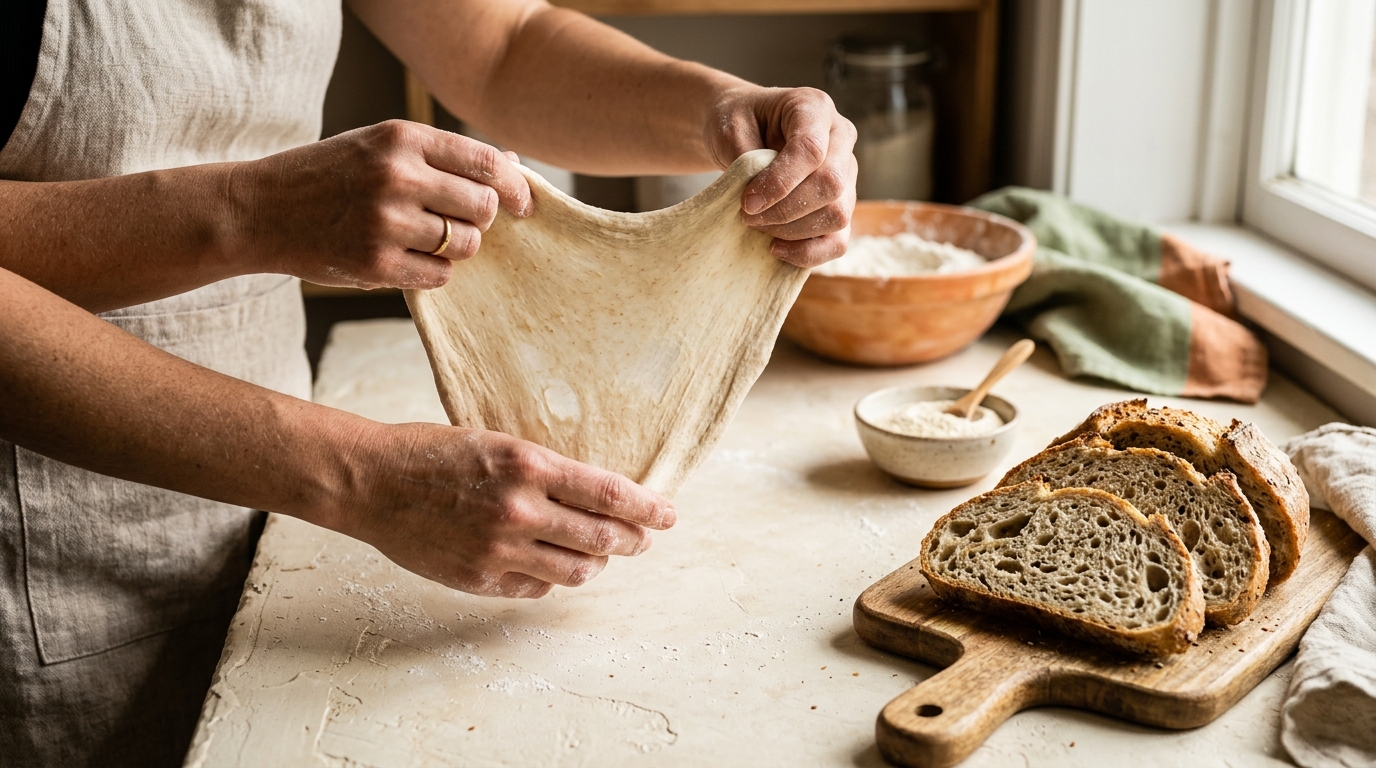
Gluten’s two main protein groups play different roles. Gliadins contribute flow and extensibility, while glutenins contribute strength and elasticity. Once hydrated and mixed, they form a viscoelastic network: flexible enough to expand, strong enough to resist tearing.
Think of the dough as a flexible mesh surrounding tiny gas pockets. Yeast fermentation expands those pockets. During baking, the loaf sets around them. If the mesh is too weak, gas escapes and the loaf can collapse. If it is excessively strong, the crumb may become tight and chewy. A good formula balances gluten with moisture and the other dry ingredients.
Does vital wheat gluten make bread low-carb?
Not by itself. Vital wheat gluten can support a low-carb formula because it replaces some starch-heavy flour with concentrated wheat protein, but the bread’s carbohydrate count comes from the complete recipe. Fibers, starches, sweeteners, serving size, and moisture all affect the Nutrition Facts panel.
Never assume a loaf is low-carb because vital wheat gluten appears near the top of the ingredient list. Use the label. Our guide to reading a nutrition label for net carbs shows the calculation, while the net-carbs beginner’s guide explains why the number is useful and where it can mislead.
Is vital wheat gluten high in protein?
Yes, the dry ingredient is protein-dense. USDA-linked nutrient data for vital wheat gluten report roughly 75 grams of protein per 100 grams, but a finished slice contains far less because the recipe also includes water and other ingredients. Brand labels are the right source for protein per slice.
Protein content also does not tell you everything about the food. Compare serving size, fiber, sodium, fat, total carbohydrate, and the full ingredient list. Our brand-by-brand protein comparison provides context for typical per-slice amounts, and our guide to protein and fullness explains why a higher-protein slice may be more satisfying without promising a guaranteed appetite or weight-loss effect.
Who should avoid vital wheat gluten?
People with celiac disease must avoid it. Gluten triggers an immune response that damages the small intestine in people with celiac disease. Vital wheat gluten is concentrated gluten, so bread containing it is not gluten-free.
People with a wheat allergy also need to avoid wheat-derived vital wheat gluten unless their clinician has given different individualized guidance. Celiac disease and wheat allergy are not the same condition: celiac disease is autoimmune, while wheat allergy is an allergic immune response to wheat proteins. Anyone with unexplained reactions should discuss them with a qualified healthcare professional rather than diagnosing the cause from an ingredient list.
Label warning: “Low-carb” and “keto” do not mean gluten-free. Check the ingredient list and allergen statement every time, especially after a product reformulation.
Vital wheat gluten versus common low-carb bread ingredients
| Ingredient | Main job in bread | Key limitation |
|---|---|---|
| Vital wheat gluten | Elastic structure, chew, protein | Contains wheat and gluten |
| Modified or resistant wheat starch | Bulk and a bread-like crumb | Digestive response and labeling calculations require context |
| Oat, bamboo, psyllium, or other fibers | Fiber, moisture control, bulk | Large amounts may affect texture or digestion |
| Almond or seed flour | Fat, flavor, tenderness, structure | May introduce allergens and a denser crumb |
These ingredients usually work as a system rather than as direct substitutes. For a broader explanation, see our guide to common low-carb bread ingredients.
How to evaluate it on a bread label
- Find its position in the ingredient list. Ingredients are listed by weight, so an early position suggests it is a major part of the formula.
- Confirm wheat disclosure. Look for wheat in the allergen statement as well as the ingredient list.
- Check protein per serving. Compare equal serving sizes; one brand’s slice may be much heavier than another’s.
- Read the whole carbohydrate line. Review total carbohydrate, dietary fiber, sugar alcohols when present, and the brand’s stated net-carbohydrate method.
- Consider your own tolerance and needs. High-fiber breads and concentrated wheat ingredients can feel different from conventional bread. Portion size matters.
Can you bake with vital wheat gluten at home?
Yes, but use a tested formula instead of adding a random scoop to any recipe. The correct amount depends on the flour’s starting protein, the amount and type of fiber, hydration, kneading, and desired texture. A spoonful that improves one dough could make another tough or dry.
If you want a low-carb homemade loaf, start with a recipe written around its specific flour system. Our almond-flour bread recipe takes a different approach and includes clear allergen notes. People avoiding almonds should follow its nut-free alternative carefully.
Frequently asked questions
Is vital wheat gluten the same as flour?
No. It comes from wheat flour, but much of the starch is removed, leaving a concentrated protein ingredient with very different baking behavior.
Is vital wheat gluten keto?
“Keto” is not a guarantee created by one ingredient. Vital wheat gluten can fit into some lower-carbohydrate bread formulas, but readers should judge the finished bread by its full label, serving size, and their own dietary targets.
Is vital wheat gluten gluten-free?
No. It is concentrated wheat gluten and is unsuitable for people who need a gluten-free diet.
Does vital wheat gluten raise blood sugar?
The ingredient is mostly protein, but blood-glucose response depends on the complete bread, portion size, meal, and individual. A low net-carb claim cannot predict every person’s response. People who monitor glucose should use their clinician’s guidance and their own verified readings.
The practical takeaway
Vital wheat gluten is one reason many low-carb loaves can rise, bend, toast, and hold sandwich fillings more like ordinary wheat bread. Its value is structural as much as nutritional. Check the full label rather than treating it as a health halo, and avoid it completely if you have celiac disease or a wheat allergy.
Save This Post on Pinterest
Save either version for a quick reference when you are comparing low-carb bread ingredients.
Sources
- Electronic Code of Federal Regulations: Wheat gluten
- U.S. Food and Drug Administration: Gluten and food labeling
- National Institute of Diabetes and Digestive and Kidney Diseases: Celiac disease facts
- Peer-reviewed study: Vital wheat gluten and bread quality
- USDA FoodData Central
Plan Your Week with Our Free Meal Planner
Choose seven days of meals, adjust portions, and download your shopping list. No email signup needed.
Open the Free Planner →
