
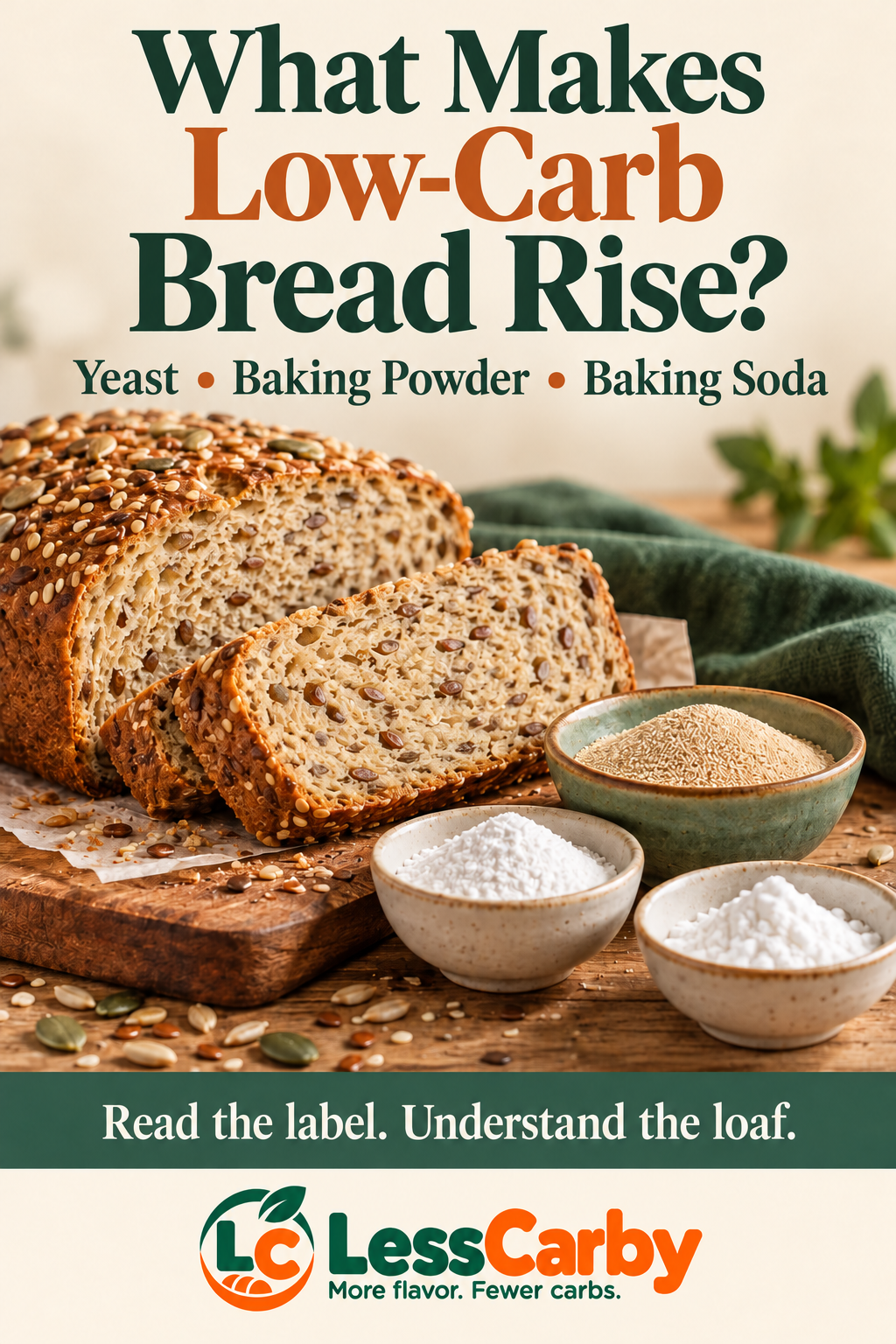
Yeast, baking powder, and baking soda can all help low-carb bread rise, but they work differently. Yeast ferments available sugars. Baking soda reacts with acid. Baking powder supplies a ready-made combination of base and acid. Some breads also rely on air beaten into eggs and the expansion that happens in the oven.
For a packaged loaf, use those names to understand the bread’s design. Use the Nutrition Facts panel to compare carbohydrates and portions. For homemade bread, follow the leavening system in a recipe written for your particular flour or fiber blend. Swapping the rising agent rarely fixes an unsuitable base mixture.
What leavening actually does
A leavener helps create the gas that makes dough or batter expand. The loaf also needs a structure that holds those bubbles long enough to set during baking. A useful way to picture the difference: the leavener fills the balloons; the dough has to keep the balloons intact.
This matters when bread contains less ordinary wheat flour. A mixture of almond flour, fibers, eggs, and proteins behaves differently from wheat dough. Adding extra yeast will not automatically give it a sandwich-bread crumb. The balance of ingredients, mixing, hydration, and baking all affect the result.
Our low-carb bread ingredient glossary explains the other jobs on a label, including fibers, proteins, and starches. Here, the focus is the ingredients and techniques that provide lift.
The main leaveners, side by side
| Leavener | What starts it | Practical clue |
|---|---|---|
| Baker’s yeast | Fermentation in suitable dough | Usually needs rising time |
| Baking soda | Acid and moisture | Keep the recipe’s acidic ingredients |
| Baking powder | Moisture; double-acting types also react during heating | Measure the specified amount |
| Whipped eggs / steam | Mixing and oven heat | Handling and structure matter |
Yeast: fermentation, time, and bread flavor
Baker’s yeast uses available sugars and releases carbon dioxide, along with fermentation byproducts that contribute flavor. In conventional wheat dough, gluten helps retain the gas. King Arthur’s yeast guide explains why suitable food, moisture, temperature, and dough strength all matter.
A low-carb recipe may still contain yeast. The words “low carb” do not tell you whether its mixture supplies enough fermentable carbohydrate or whether it has enough structure to rise. Read the whole recipe before changing its flour, sugar, or resting time.
Stevia and similar sweeteners do not feed yeast in the same way as sugar. Red Star’s baking questions address this distinction. A sweet-tasting dough is not proof that the yeast has usable food. Conversely, adding a little sugar to activate yeast does not prove that all of it will disappear before baking. Avoid subtracting an assumed amount from a homemade nutrition calculation.
When buying packaged bread, seeing yeast does not reveal how much fermentation occurred. It also cannot establish a loaf’s remaining carbohydrates. Use the actual serving information rather than estimating what the yeast might have consumed.
Baking soda: keep its acid partner
Baking soda is sodium bicarbonate. In baking, it reacts with an acidic ingredient and moisture to release carbon dioxide. A recipe may supply that acidity through yogurt, buttermilk, lemon juice, or another ingredient. Those ingredients also affect flavor and moisture, so removing one can change several things at once.
If a low-carb quick bread calls for baking soda and yogurt, replacing the yogurt with a neutral liquid is not a simple dairy swap. Find a version designed for the replacement, or use a substitution the recipe developer has checked. Adding more soda is a poor first response to a heavy loaf.
Excess soda can leave an unpleasant alkaline taste. Measure level spoonfuls with a proper measuring spoon, and keep household cleaning mixtures separate from food ingredients. A larger amount does not guarantee more useful rise.
Baking powder: a prepared leavening mixture
King Arthur explains baking soda and baking powder in more detail, including why substitutions require changes elsewhere in the recipe. Keep that distinction in mind when a recipe asks for both: the developer may be balancing acidity as well as lift. Cross out neither ingredient simply because the other is already present.
Baking powder combines sodium bicarbonate with acid ingredients and usually a starch carrier. Many supermarket powders are double-acting, with gas release beginning after mixing and continuing during heating. Check the container and the recipe rather than assuming every product behaves identically.
King Arthur’s guide to bread without commercial yeast describes chemical leavening and the role of air and steam. These methods are useful for quick breads, but baking powder is not a direct replacement for yeast in a dough built around fermentation.
The starch carrier in baking powder may matter if you avoid a particular ingredient. Read its own label. Do not infer the finished bread’s carbohydrate count from a tiny ingredient name near the end of the list; the amount used and the loaf’s serving size still matter.
Air and structure explain some “no yeast” breads
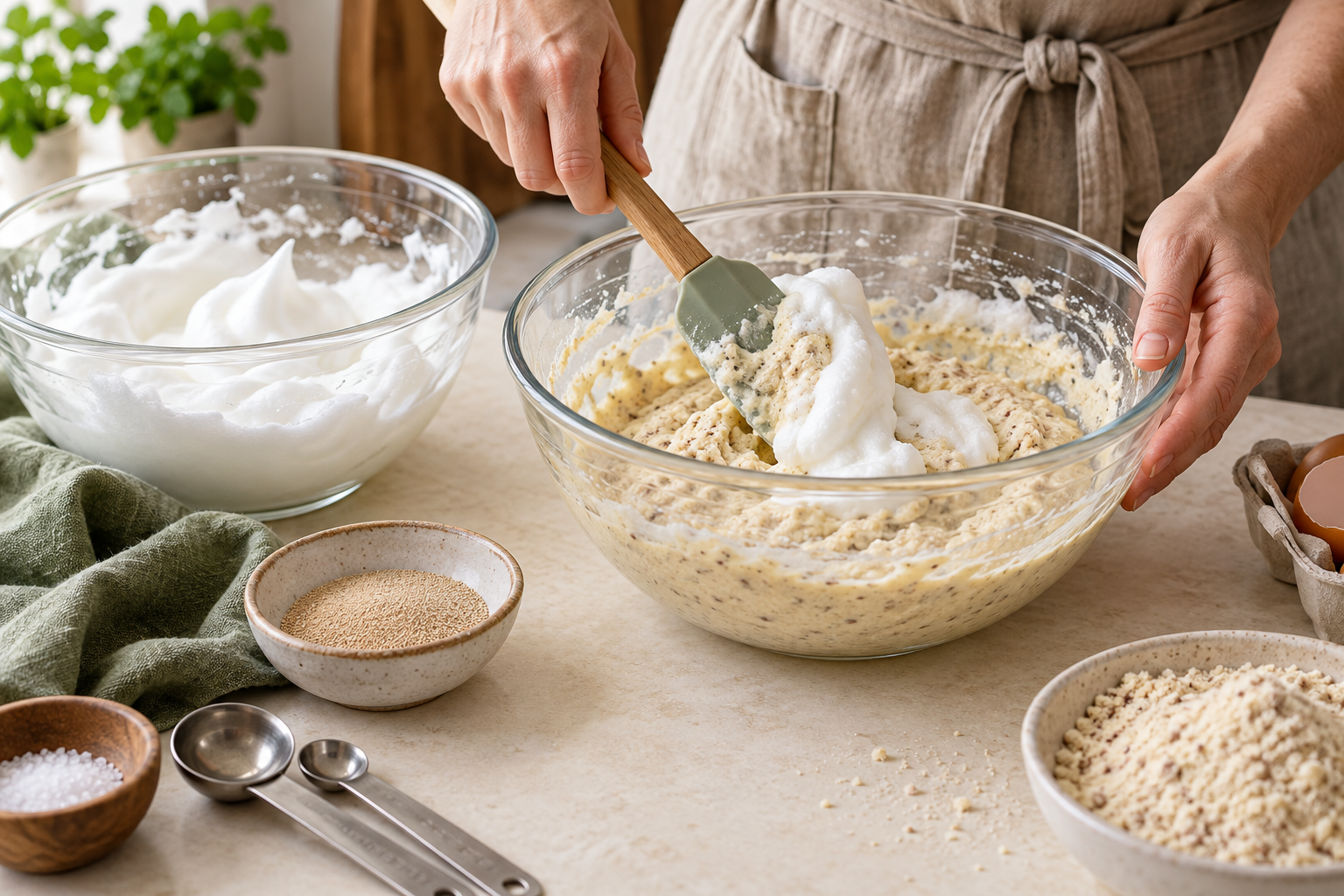
Beating eggs can introduce air into a mixture, while heating expands gases and creates steam. A recipe that asks you to whip whites and fold them into batter depends on that handling. Stirring vigorously after folding can undo part of the work.
Gas retention deserves as much attention as gas production. King Arthur’s explanation of gluten-free bread structure describes why an expandable support system is needed when gluten is absent. Low-carb and gluten-free are separate categories, but the structure question is useful in both.
Some low-carb loaves contain wheat gluten; others use different proteins and binders. Neither yeast nor baking powder tells you whether the finished loaf is gluten-free. Check the full ingredient and allergen information if that distinction matters for you.
Read packaged-bread labels without overinterpreting them
You may see yeast listed individually, or a group called “leavening” followed by names in parentheses. U.S. ingredient rules allow that grouped form. The names can include baking soda and phosphate salts; unfamiliar wording alone does not tell you that the bread is unsuitable.
The ingredient-listing rule also distinguishes leavening from yeast nutrients and dough conditioners. These categories describe different jobs. A yeast nutrient supports yeast activity; a dough conditioner may change handling or texture. They are not interchangeable names for baking powder.
The FDA’s ingredient guide explains the general weight-based order of ingredients. That order helps identify the main components, but it does not give you a usable recipe or exact quantities for the leavening mixture.
- Find the leavener and read any parentheses.
- Look at the main flour, starch, fiber, and protein ingredients.
- Compare serving weight and the number of slices you will eat.
- Check total carbohydrate, fiber, sodium, and relevant allergens.
The FDA’s Nutrition Facts explanation makes serving size the starting point. If a label lists one slice and you eat two, double that serving’s listed amounts. A yeast-free claim cannot replace that calculation.
Before changing a homemade loaf
Keep the recipe, ingredient brands, pan size, and measurements together in a short baking note. Record whether the dough failed to expand, rose and collapsed, or baked with a damp center. Those are different problems; treating all of them with extra leavener makes troubleshooting harder.
Check freshness and storage instructions on your yeast or baking powder container. Follow the recipe’s liquid temperature and mixing order. If you changed almond flour to coconut flour, or replaced a fiber with another powder, restore the original mixture before judging the leavener. Our almond-flour bread recipe is one starting point for seeing how a complete formula fits together.
For shopping, choose a loaf by its full label and the texture you want. For baking, choose a recipe designed for the ingredients you have, then follow its leavening method before experimenting. That gives you a more useful next step than searching for a single “best” rising agent.
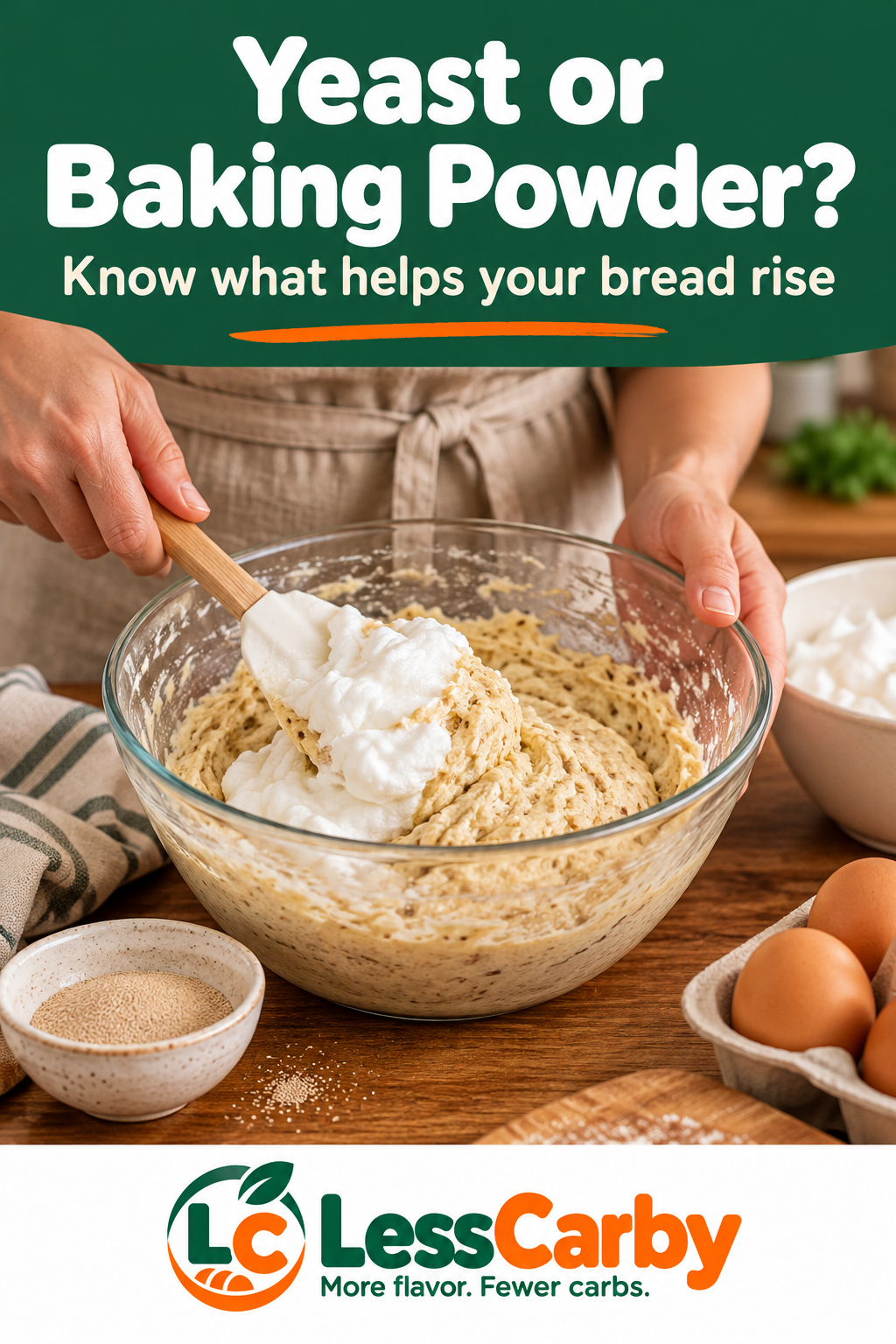
Save This Post on Pinterest
Keep this leavening guide handy when you compare bread labels or plan your next loaf.
Plan Your Week with Our Free Meal Planner
Choose seven days of meals, adjust portions, and download your shopping list. No email signup needed.
Open the Free Planner →
