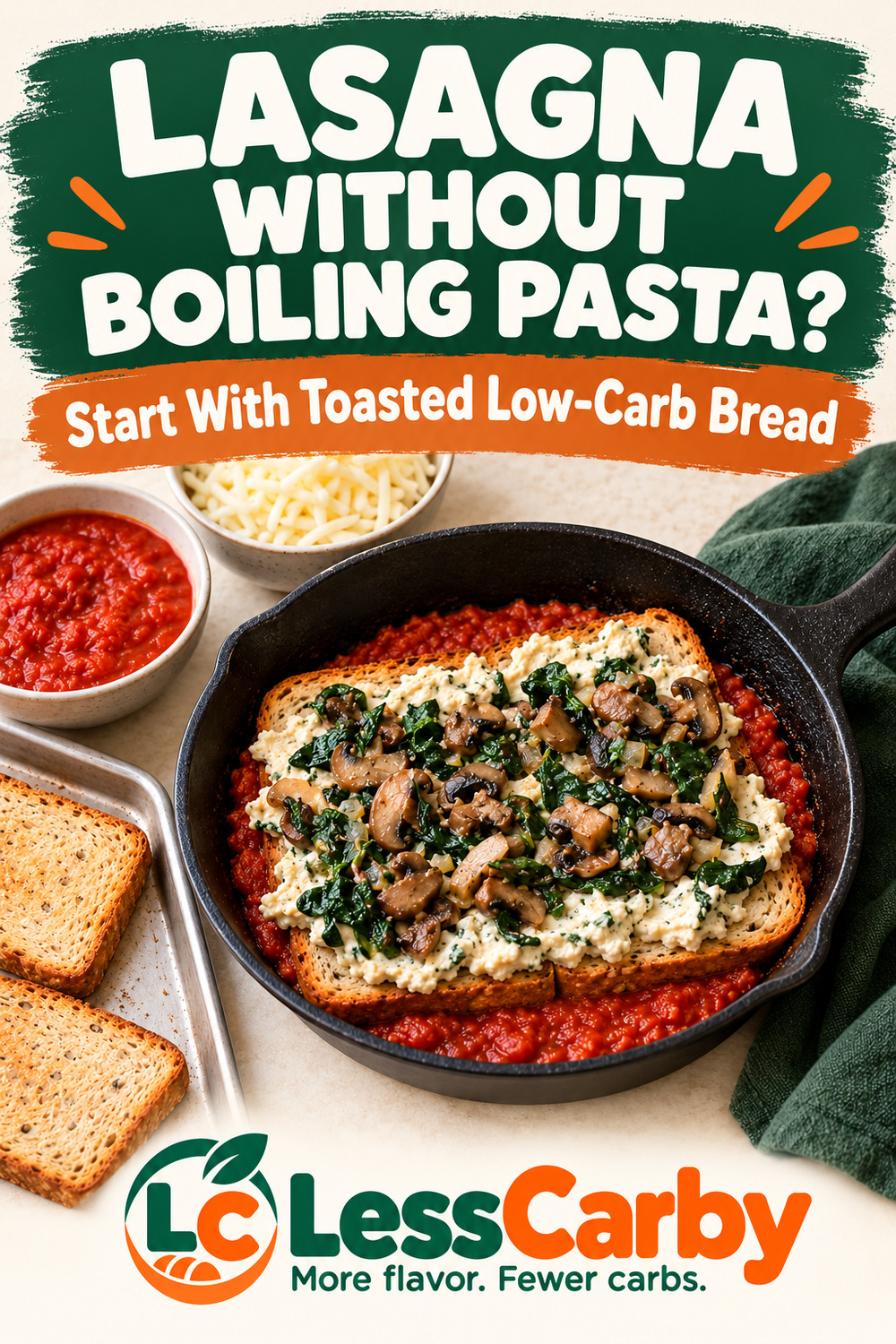
Make this low-carb bread lasagna by toasting the bread first, cooking moisture out of the vegetables, and layering everything with a measured amount of tomato sauce. A small oven-safe skillet gives you a bubbling, cheesy dinner without boiling pasta or making a large casserole. The bread softens between the layers, so expect a tender bake rather than the chew of traditional lasagna noodles.
This version uses mushrooms, spinach, ricotta, and mozzarella. It makes three moderate portions, with a salad or roasted vegetables alongside. The method is designed around ordinary sliced low-carb bread; timing and texture will vary with your loaf and pan. It is an original recipe method, not a claim of a measured kitchen test.
The important part: dry bread, cooked vegetables, and thick sauce. Adding more liquid will not make this bake more like pasta lasagna; it usually makes the bread layer softer.
Recipe at a glance
- Yield: 3 portions
- Pan: an 8-inch oven-safe skillet, at least 2 inches deep, or a similarly sized 1.5-quart baking dish
- Preparation: about 20 minutes
- Baking: approximately 20–30 minutes, plus 8–10 minutes resting
- Oven: 375°F (190°C)
Check the skillet manufacturer’s oven-temperature limit, including its handle and lid. A non-oven-safe pan can cook the vegetables, but transfer everything to a baking dish for the oven. You do not need a special lasagna pan.
Ingredients
- 4 slices plain low-carb sandwich bread, about 120 g total
- 2 teaspoons olive oil (10 mL), plus a little for greasing the pan
- 150 g mushrooms, finely chopped
- 120 g fresh spinach, roughly chopped
- 1 garlic clove, minced
- 1 cup thick marinara sauce (about 240 g), divided
- ⅔ cup ricotta (150 g), drained if watery
- 1 cup shredded low-moisture mozzarella (100 g), divided
- ¼ cup finely grated Parmesan (20 g)
- ½ teaspoon dried oregano
- ¼ teaspoon black pepper
- Fresh basil, optional
Start without extra salt because bread, sauce, and cheeses can already contribute plenty. Taste the cooked vegetables and sauce before assembly, then add a small pinch only if needed. For the closest match to these quantities, weigh the bread and cheeses; loosely filled cups vary.
Choose bread and sauce that will hold up
A plain, sturdy sandwich loaf works better here than a sweet cinnamon bread or an extremely delicate slice. The bread should cover the bottom of the skillet in one mostly even layer using two slices cut to fit. A few small gaps are fine. Do not stack extra bread into thick patches just to fill every space.
Read the actual package rather than assuming every keto-labeled loaf has the same carbohydrate count. Our ingredient glossary explains common fibers and proteins on these labels. If your loaf is much thinner than the recipe’s approximate 120 g total, begin with the same four slices and be especially conservative with sauce.
Use a thick marinara, not a thin tomato soup or a watery fresh salsa. “No added sugar” can be useful information, but it does not mean zero carbohydrate. Compare the serving size and total carbohydrate on the jar. If the sauce pours like broth, simmer it separately until it coats a spoon, then measure the recipe amount.
How to make the small skillet bake
- Heat the oven and toast the bread. Set the oven to 375°F (190°C). Put the bread on a sheet pan and toast for about 6–10 minutes, turning once, until dry at the surface and lightly colored. Thin slices may finish sooner. Let them cool briefly, then cut or tear them to fit two layers.
- Cook the vegetables. Heat the olive oil in a skillet over medium heat. Add the mushrooms and cook for about 5–7 minutes, stirring, until their released liquid has mostly evaporated. Add the garlic for 30 seconds, then the spinach. Cook until wilted and no puddle remains. If liquid collects, continue cooking; do not pour it into the layers.
- Mix the filling. Remove the vegetables from the heat. Stir the ricotta, oregano, pepper, Parmesan, and half the mozzarella together in a bowl. Keep the remaining mozzarella for the top. The filling should be spreadable, not pourable.
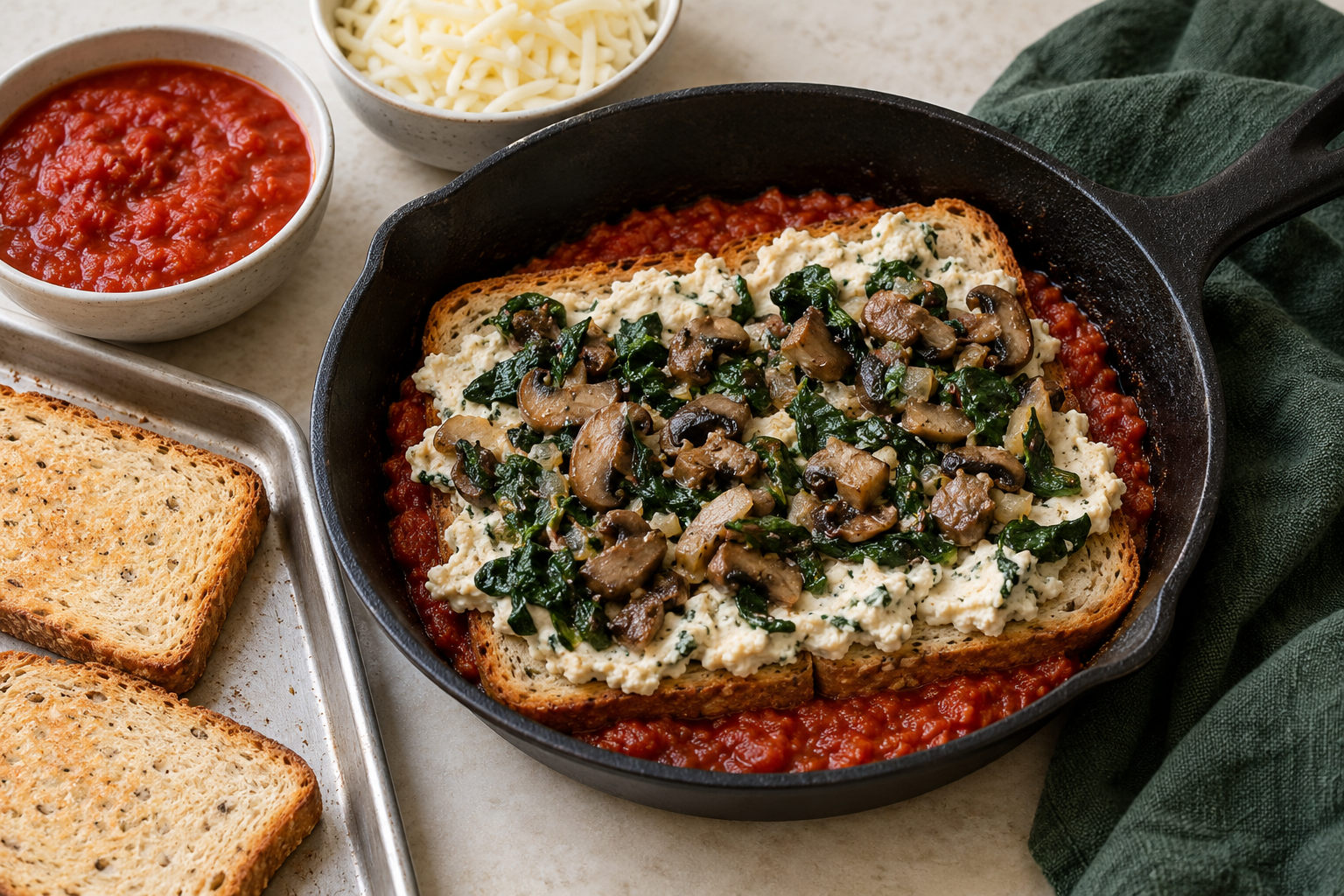
- Build two even layers. Lightly grease the oven-safe skillet. Spread 2 tablespoons of marinara over the base. Add half the toasted bread, half the ricotta mixture, half the vegetables, and ⅓ cup marinara. Repeat the bread, ricotta, and vegetables. Spread the remaining sauce over the top and finish with the reserved mozzarella.
- Bake until hot through. Bake uncovered for about 20–30 minutes. Look for bubbling sauce around the edges and melted cheese, but check the center with a food thermometer. FoodSafety.gov lists 165°F (74°C) for casseroles, including meatless ones. If the top browns before the center is hot, loosely cover with foil.
- Rest, then serve. Leave the skillet on a heatproof surface for 8–10 minutes before cutting into three portions. This is a tender bake; use a broad spatula or spoon rather than expecting perfectly rigid squares. Add basil if you like.
Keep the bread from turning soggy
Toasting is not a waterproof barrier. Its job is to start with a drier slice so the bread can take up a controlled amount of sauce. The other two controls—dry vegetables and a modest sauce layer—matter just as much. Avoid pouring extra sauce around the edges before baking.
Fresh mozzarella balls carry more moisture than the shredded low-moisture mozzarella specified here. If that is what you have, drain and blot them well, and expect a softer result. Frozen spinach also needs thawing and a very thorough squeeze; use about 60 g after squeezing in place of the fresh spinach.
If the finished bake is still too soft for your taste, serve it with a spoon and reduce sauce slightly next time. Extra baking can dry the top without repairing an already soaked bottom. For a crisper bread-and-tomato meal, our low-carb bread pizza is the better fit.
Simple changes without upsetting the balance
For a meat version, replace the mushrooms with 150 g cooked, well-drained ground beef or turkey. Cook raw meat separately to its safe internal temperature before layering; do not add it raw to the bread bake. Keep the spinach and measured sauce. This substitution changes nutrition and the shopping list.
For a milder flavor, use less Parmesan and add that weight in mozzarella. For more heat, stir a pinch of crushed red pepper into the sauce. Avoid loading the pan with raw zucchini or extra tomato: both add water that this small bake is not designed to absorb.
Carbohydrates, portions, and allergens
There is no single reliable nutrition number without naming the exact bread, sauce, and cheeses. To calculate your version, add the label amounts for all ingredients used and divide by three. For example, if your bread label lists 10 g total carbohydrate per slice, the four slices contribute 40 g to the entire pan before sauce, vegetables, and dairy are counted. That is a calculation example, not this recipe’s measured nutrition.
Count fiber separately if you track it, and do not treat a front-label net-carb claim as a guarantee of a blood sugar response. Portion size and your individual plan still matter. The recipe contains milk; the bread may contain wheat, egg, soy, sesame, nuts, or other allergens. Check every package. Low-carb does not mean gluten-free.
Make ahead, store, and reheat
For the most predictable texture, toast the bread and cook the vegetables ahead, refrigerate the vegetables promptly, and assemble just before baking. Keeping wet filling against bread overnight produces a softer result. Refrigerate the ricotta mixture separately in a covered container.
After serving, portion leftovers into shallow containers and refrigerate within two hours, or within one hour above 90°F (32°C). Keep the refrigerator at 40°F (4°C) or below. Use refrigerated leftovers within 3–4 days, and reheat the center to 165°F (74°C), following USDA leftover guidance. Do not leave the skillet on the counter waiting to cool completely.
Reheat one portion, covered, in the microwave in short intervals, or in a covered oven-safe dish at 350°F (175°C). Check the center, not just the melted cheese. Freezing is possible, but thawed bread will usually be softer; freeze individual cooled portions promptly if you will not use them within the refrigerated window.
Questions before you start
Can I use frozen bread?
Yes. Toast it from frozen until the surface is dry, then proceed. Do not add icy slices directly to the skillet layers.
Do I need an egg in the ricotta?
No egg is required in this version. The filling is meant to stay creamy, and the bread provides structure. Letting the bake rest is more useful than adding an unplanned binder.
Can I double it?
Use a larger baking dish rather than building twice as many layers in the small skillet. A deeper bake heats differently, so rely on the 165°F center temperature and allow extra time.
If you enjoy this style of small bread-based dinner, try our savory low-carb bread pudding for a different egg-and-bread approach.
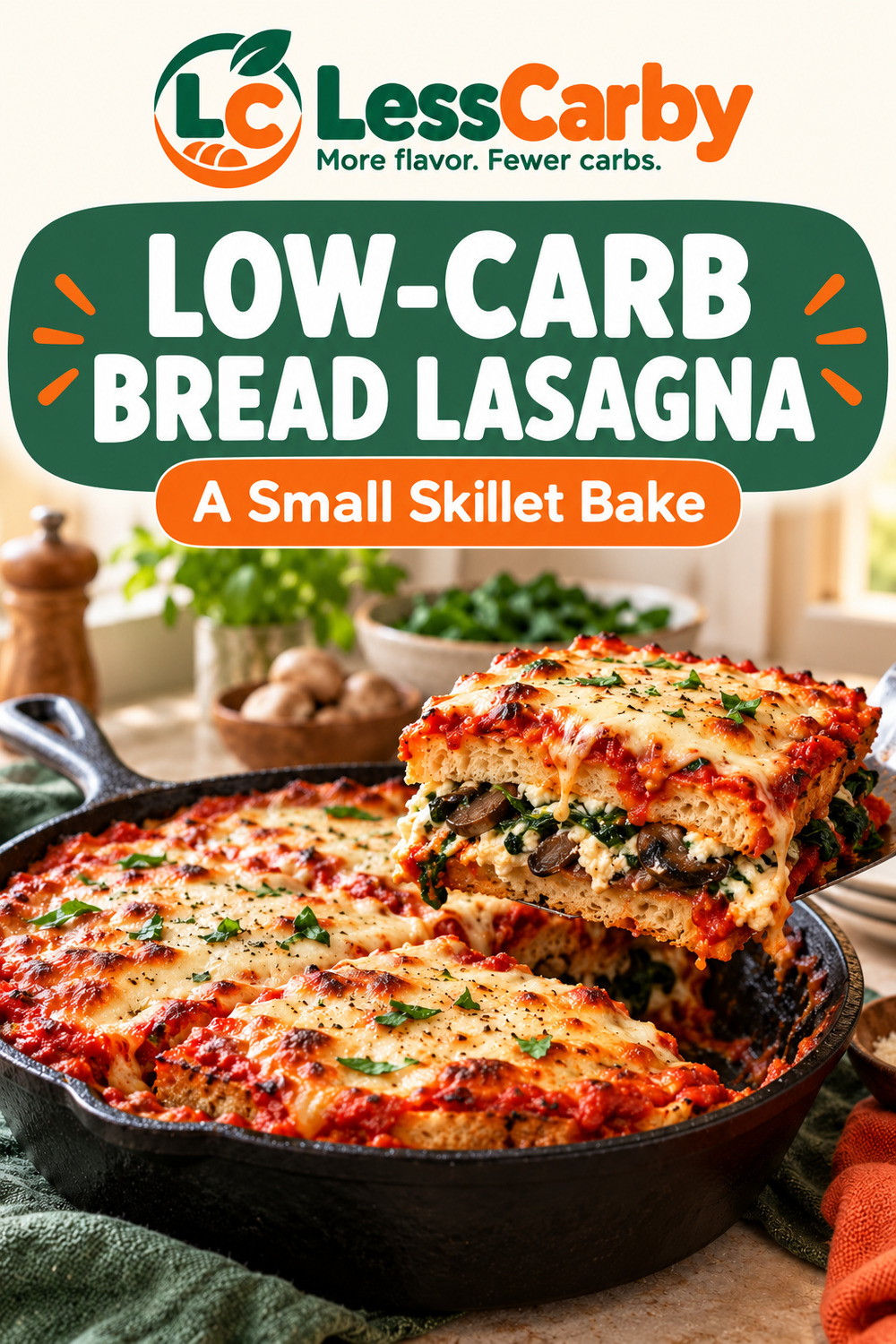
Save This Post on Pinterest
Keep the layering method and moisture-control tips handy for your next small skillet dinner.
Plan Your Week with Our Free Meal Planner
Choose seven days of meals, adjust portions, and download your shopping list. No email signup needed.
Open the Free Planner →
