
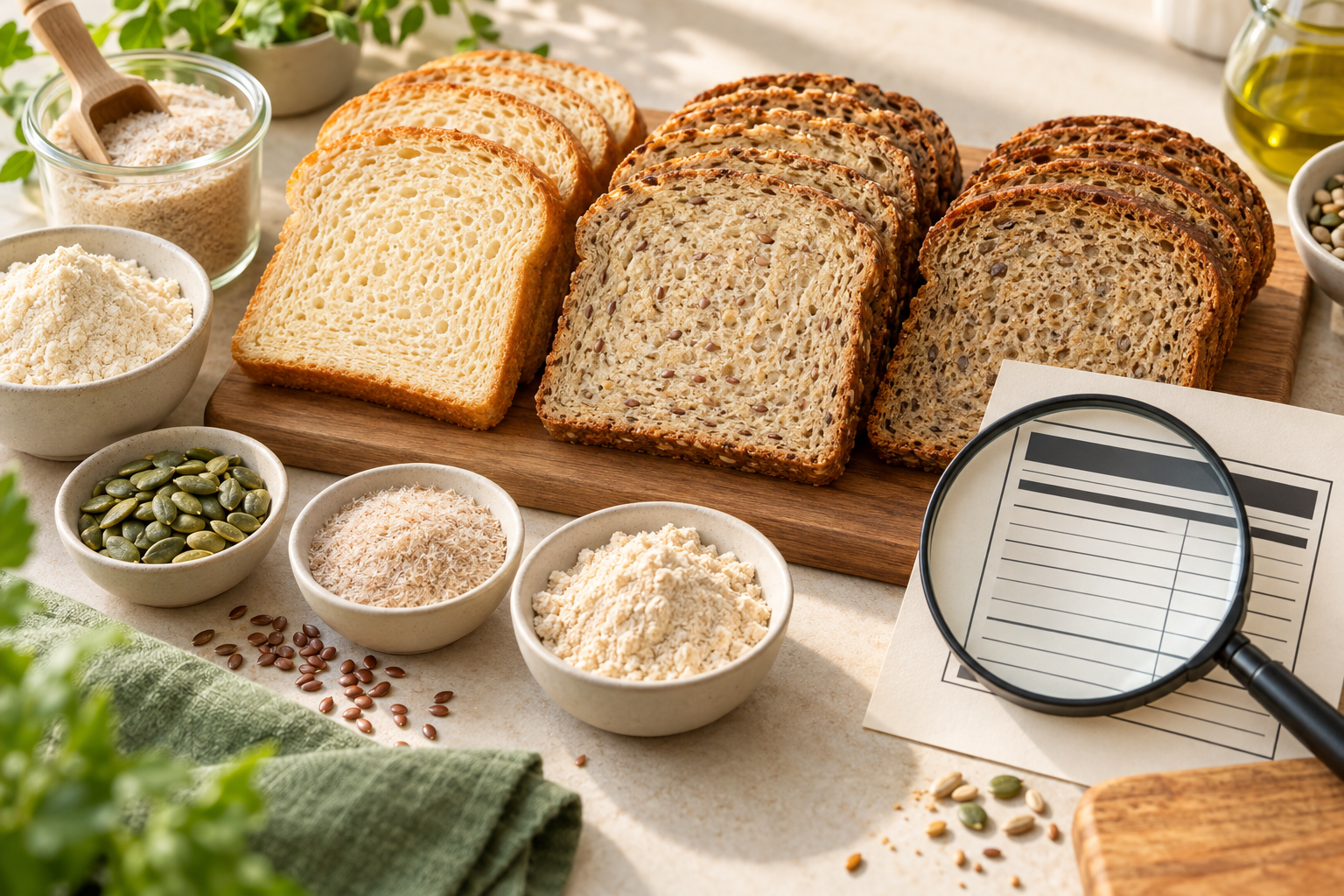
Short answer: a low-carb bread label is easier to understand when you separate three questions: how much carbohydrate is in one serving, which ingredients supply the structure and fiber, and whether the loaf fits your own needs for allergens, sodium, protein, and portion size. A “keto” or “net carb” claim on the front is only a starting point.
Why low-carb bread labels look unfamiliar
Traditional sandwich bread usually relies on wheat flour for most of its structure. Low-carb breads often replace part of that flour with added fibers, protein isolates, modified starches, seeds, or gums. Those ingredients change texture, moisture, shelf life, and the numbers shown in the Nutrition Facts panel.
The ingredient list is ordered by weight, but it does not tell you the exact amount of each ingredient. The Nutrition Facts panel gives quantities per serving. You need both sections: the list explains what the loaf is made from, while the panel shows how much carbohydrate, fiber, sodium, protein, and fat the labeled serving provides.
The numbers to read first
Serving size
Start here. A serving may be one slice, two slices, or a weight in grams that does not match how you normally eat the bread. The FDA explains that Nutrition Facts values are generally based on one labeled serving. If you eat two servings, you consume twice the listed nutrients. That is why comparing “one slice” from one loaf with “two slices” from another can be misleading.
Total carbohydrate
Total carbohydrate is the regulated number on the label. It includes starch, sugars, and dietary fiber. For a consistent comparison, write down the total carbohydrate for the portion you will actually eat.
Dietary fiber
Fiber is included inside total carbohydrate, not added on top of it. Many low-carb breads use ingredients such as resistant wheat starch, oat fiber, cellulose, inulin, or psyllium husk to raise the fiber content. These fibers do not all behave identically in baking or digestion. A high number alone does not tell you whether you will like the texture or tolerate the portion comfortably.
Net carbs
“Net carbs” is commonly calculated as total carbohydrate minus dietary fiber, and sometimes minus certain sugar alcohols. It is not a line that the FDA requires in the Nutrition Facts panel, so brands may explain the calculation differently. Use the company’s math as a convenience, then verify it against the regulated values. Our guide to reading a nutrition label for net carbs walks through the calculation.
Sodium
Sodium supports flavor, dough performance, and shelf stability, but amounts vary substantially among loaves. Compare the milligrams for the same number of slices, especially if bread is only one part of a sandwich with cheese, deli meat, sauces, or pickles. See our deeper guide to sodium in low-carb bread.
Protein
Protein can come from wheat gluten, wheat protein isolate, soy, pea protein, egg, milk, or seeds. More protein may make a slice more filling, but it does not automatically make the bread better for every diet. Check the source when allergies or dietary preferences matter.
Common ingredient terms, in plain English
Vital wheat gluten
Vital wheat gluten is concentrated wheat protein. It gives dough stretch and helps a high-fiber loaf hold together. It is not gluten-free and is unsuitable for people with celiac disease or a medically required gluten-free diet. Read our full explanation of vital wheat gluten in low-carb bread.
Wheat protein isolate
This is a concentrated wheat-derived protein used to add structure and protein while reducing the amount of conventional flour. It still comes from wheat and should not be treated as allergen-free.
Modified wheat starch
Modified wheat starch is wheat starch changed to perform differently in food production. Some products use forms that contribute substantial dietary fiber or resist digestion, while others use starch mainly for texture. The name alone does not reveal the carbohydrate effect; check the product’s Nutrition Facts and the manufacturer’s explanation. Our modified wheat starch guide adds context.
Resistant starch
Resistant starch is starch that resists digestion in the small intestine to varying degrees. It may be counted as dietary fiber when it meets labeling requirements. Processing, formulation, and the specific starch matter, so “resistant” does not mean every product or serving produces the same response.
Oat fiber
Oat fiber is usually made from the outer fibrous portion of oats. It adds bulk and fiber with little digestible carbohydrate. It is different from oat flour, which contains more starch, and from oatmeal. People who avoid gluten should look for appropriate gluten-free labeling rather than assuming any oat-derived ingredient is suitable.
Cellulose and powdered cellulose
Cellulose is a plant fiber used to add bulk, manage moisture, and support texture. On a bread label it may contribute dietary fiber. Its presence is not a shortcut for judging the whole product; serving size, total fiber, other ingredients, and your own tolerance still matter.
Inulin and chicory root fiber
Inulin is a fermentable fiber often sourced from chicory root. It can add fiber and mild sweetness, but larger amounts may cause gas or bloating for some people. If a very high-fiber loaf is new to you, begin with a modest portion. Learn more in our guide to inulin and chicory root fiber.
Psyllium husk
Psyllium is a soluble, gel-forming fiber. It helps homemade and packaged breads retain moisture and hold a flexible crumb. It absorbs water strongly, which is why psyllium-based breads can feel soft or slightly springy. Our psyllium husk guide explains its baking role.
Gums: xanthan, guar, and cellulose gum
Gums thicken, bind water, and improve sliceability. Small amounts can help replace some of the structure lost when flour or gluten is reduced. They are functional ingredients, not a reliable sign that a loaf is either good or bad.
Dough conditioners and emulsifiers
Dough conditioners help dough mix, rise, or remain consistent in commercial production. Emulsifiers help water and fat stay distributed and can support softness. Names may include mono- and diglycerides, DATEM, lecithin, or enzymes, depending on the formula. For more detail, see our guides to dough conditioners and emulsifiers.
Enzymes
Enzymes assist reactions during dough mixing, fermentation, or baking. They may improve volume, texture, or shelf life. The word describes a function category rather than a single ingredient. Our article on enzymes in low-carb bread covers the basics.
Allulose, erythritol, and other sweeteners
Some breads use sweeteners to balance bitterness or support browning. Allulose and erythritol contribute less usable energy than regular sugar, but they are not the same ingredient. Sugar alcohols can cause digestive discomfort for some people, particularly in larger portions. Check both the ingredient list and any separate sugar-alcohol line.
Preservatives
Calcium propionate, sorbic acid, and cultured ingredients may be used to slow mold growth and extend shelf life. A preservative-free loaf may need refrigeration or freezing sooner. Follow the package storage directions, not a blanket rule. See our guide to preservatives in low-carb bread.
Allergens and gluten: do not rely on the front label
Low-carb does not mean gluten-free. Many low-carb breads deliberately use wheat gluten or wheat protein. The FDA identifies wheat, milk, egg, soy, sesame, peanuts, tree nuts, fish, and crustacean shellfish as the nine major food allergens. Look for allergens in the ingredient list and in any “Contains” statement. Advisory wording such as “may contain” addresses possible cross-contact and is different from an ingredient declaration.
People with celiac disease should use products specifically labeled for their needs. A low net-carb claim does not answer the gluten question.
A practical comparison method
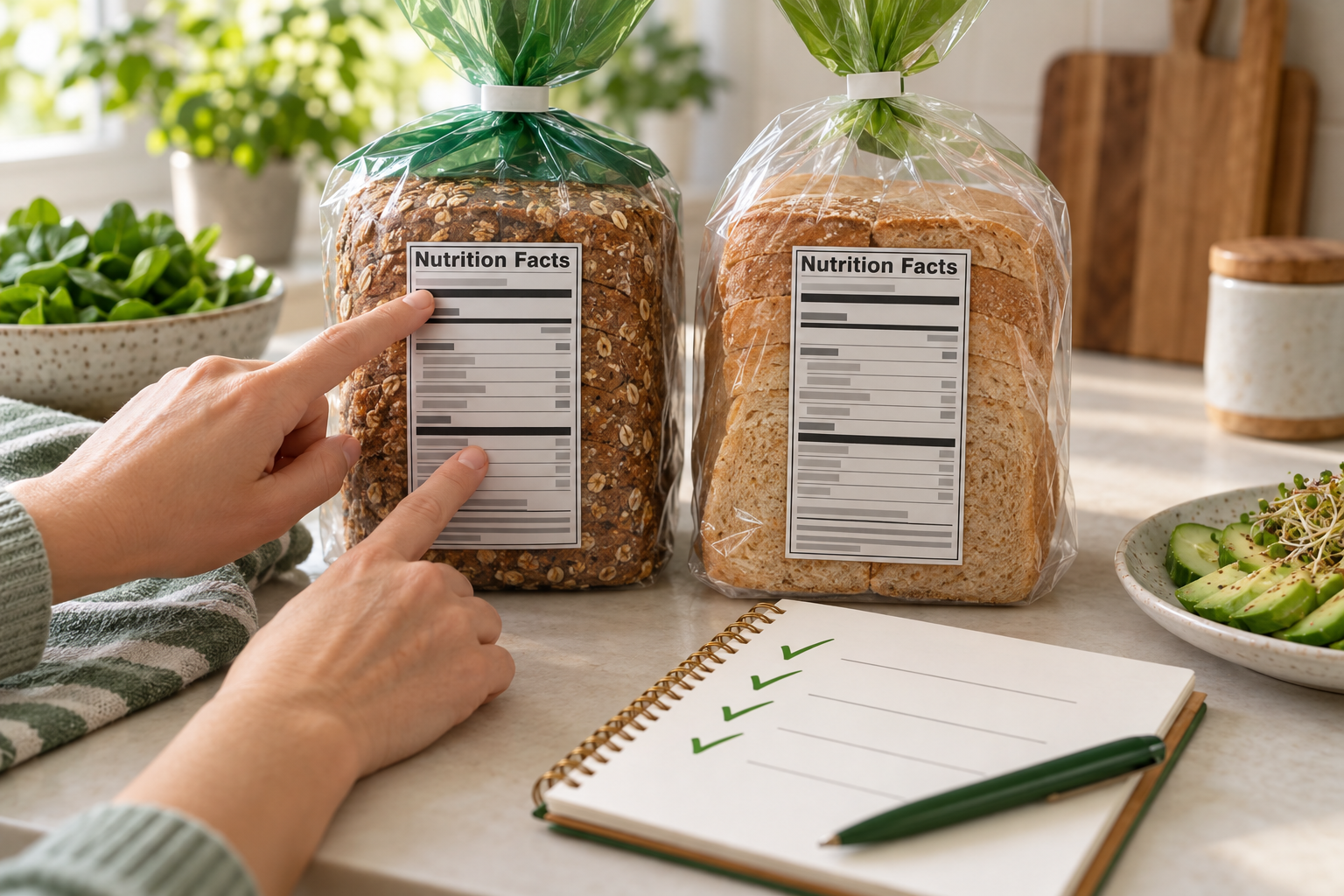
- Match the portion. Compare one slice with one slice, or equal grams.
- Record total carbohydrate and fiber. Check the arithmetic behind any net-carb claim.
- Read the first ingredients. Identify the main structural ingredients and fiber sources.
- Check sodium and protein. Consider the whole meal, not bread in isolation.
- Review allergens. Look at both ingredients and the Contains statement.
- Consider texture and use. A thin flexible slice may suit sandwiches; a firmer slice may toast better.
- Test a normal portion. Personal comfort and, when relevant, glucose response can differ.
Frequently asked questions
Does a long ingredient list mean the bread is unhealthy?
Not by itself. Low-carb bread often needs several fibers, proteins, and texture-supporting ingredients to behave like sandwich bread. Evaluate the serving, nutrients, allergens, ingredient roles, and how the product fits your eating pattern.
Is “keto” a regulated nutrition definition?
The useful information remains on the Nutrition Facts and ingredient labels. Check the actual serving and carbohydrate values instead of assuming every product using the word “keto” follows the same standard.
Why does one slice have so much fiber?
Manufacturers may replace much of the digestible flour with resistant starches or isolated fibers. Increase high-fiber foods gradually if you are not used to them and drink adequate fluids.
Should I use total carbs or net carbs?
Total carbohydrate is the regulated label value. Net carbs can be a useful calculation, but methods vary. If you use insulin or follow a clinician-directed plan, use the method your healthcare team recommends.
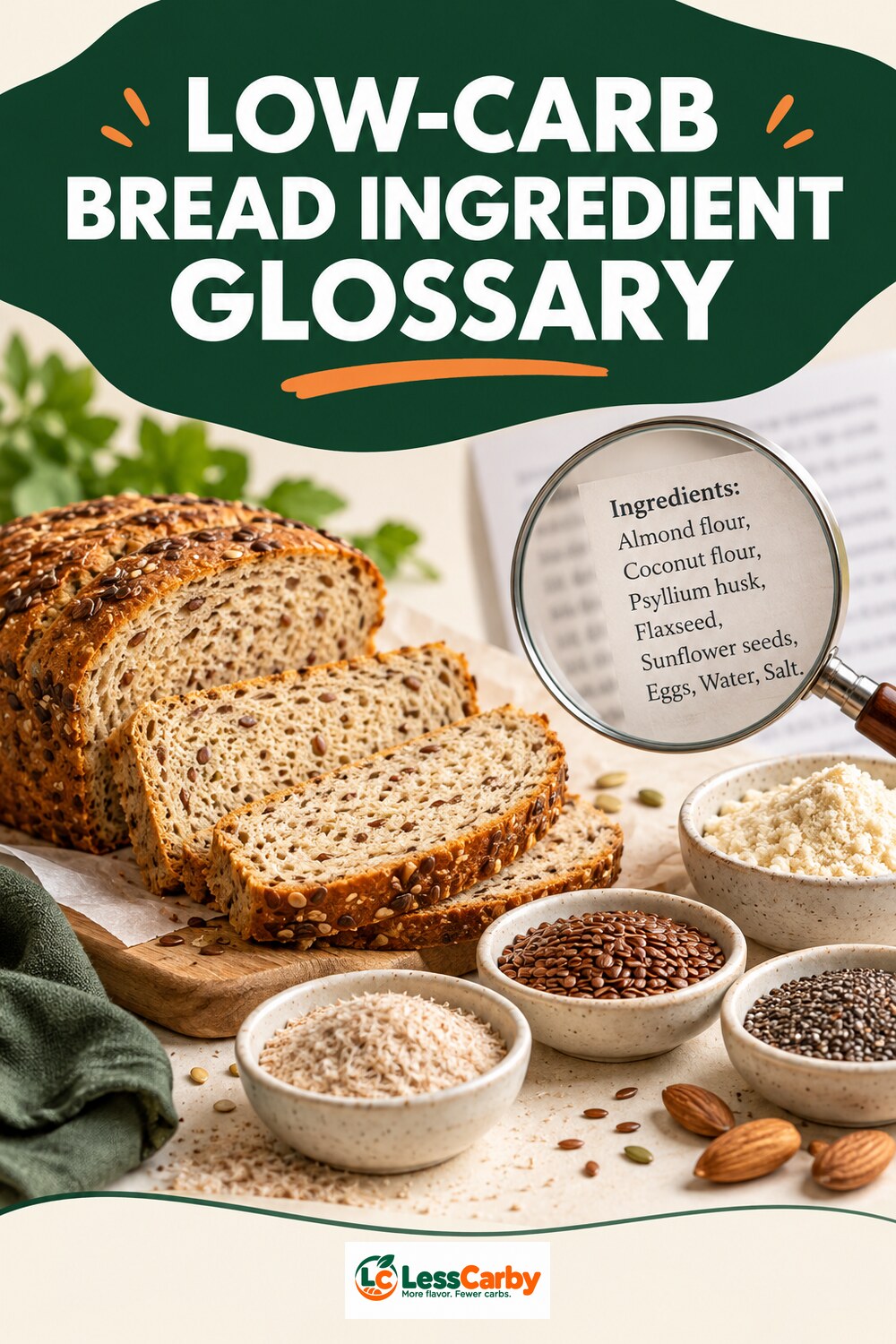
Save This Post on Pinterest
Choose the version you prefer. Each graphic will link to its exact Pinterest post after the scheduled pin is confirmed live.
Bottom line
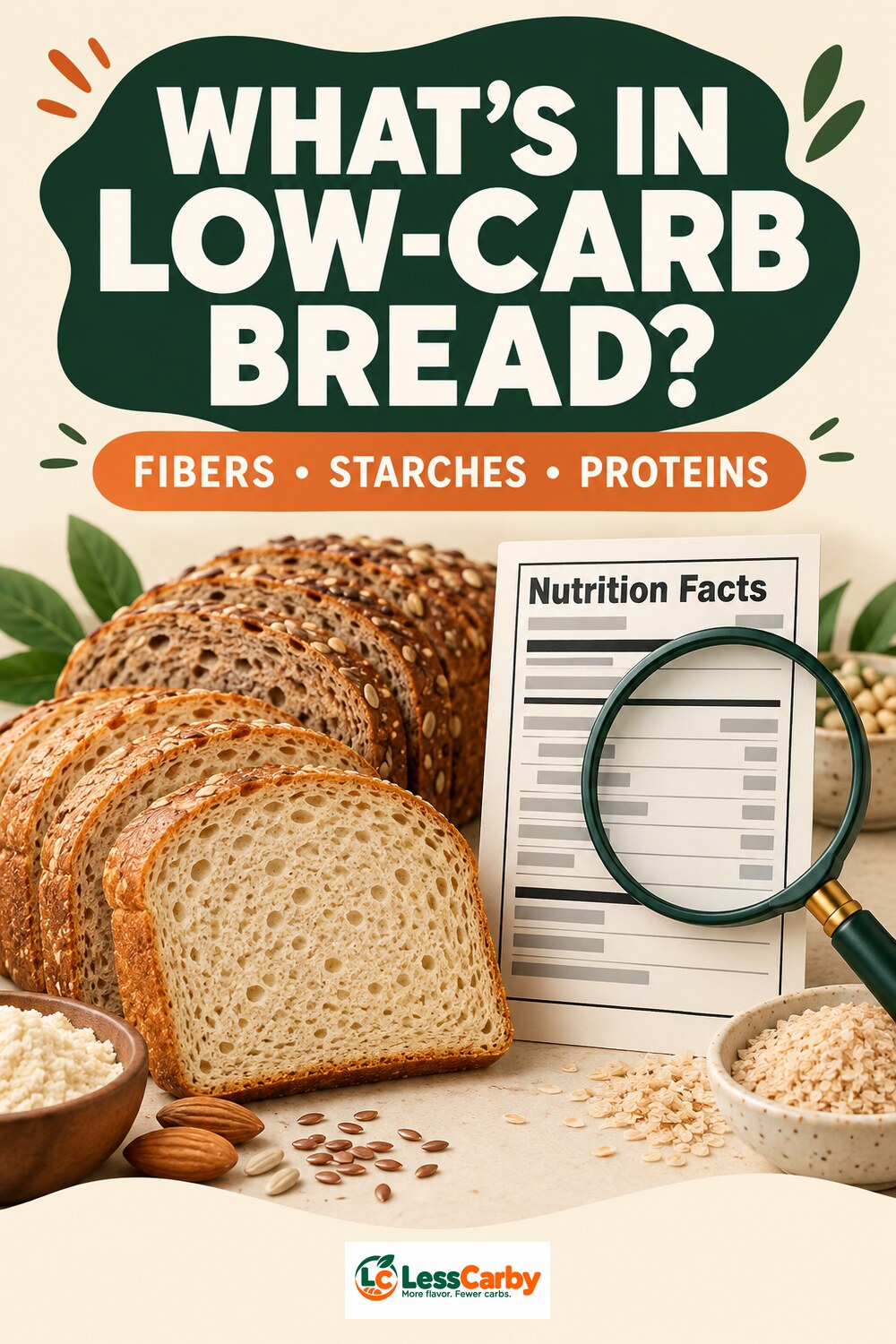
The most reliable low-carb bread comparison starts with serving size and total carbohydrate, then checks fiber, sodium, protein, ingredients, and allergens. Ingredient names sound less mysterious once you connect each one to its job: structure, moisture, fiber, sweetness, or shelf life. Use the front-of-package claim to find candidates, but let the full label make the decision.
Sources
- FDA: How to Understand and Use the Nutrition Facts Label
- FDA: Types of Food Ingredients
- FDA: Food Allergies
Plan Your Week with Our Free Meal Planner
Choose seven days of meals, adjust portions, and download your shopping list. No email signup needed.
Open the Free Planner →
