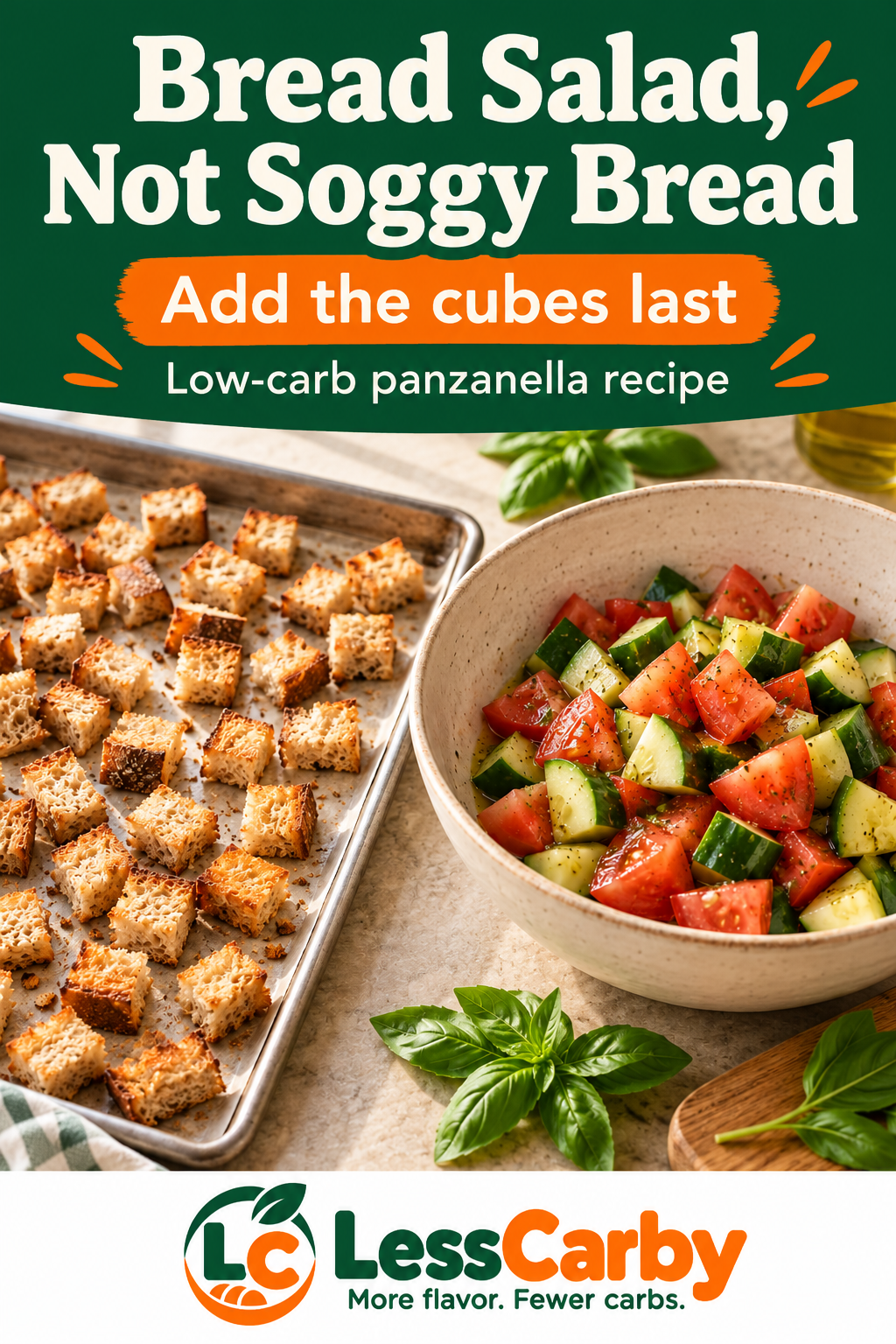
For low-carb bread panzanella that stays pleasant to eat, toast the bread separately, dress the tomatoes and cucumber first, and add the cooled cubes shortly before serving. You want bread with a little give after it meets the juices, not a bowl of wet crumbs. This tomato-cucumber salad uses four slices for four side portions, with basil and a simple oil-and-vinegar dressing.
It is a practical use for the last few sound slices of a loaf. Choose a bread you already enjoy toasted. A very sweet loaf can pull the salad in the wrong direction, while a strongly seeded loaf will bring its own flavor. This is an original panzanella-inspired adaptation, not a claim that every low-carb loaf behaves like traditional country bread or that the recipe has been kitchen-tested by LessCarby.
The recipe at a glance
Makes: 4 side portions. Active work: about 15 minutes. Oven: 325°F (about 160°C). Allow roughly 35–45 minutes including toasting and cooling, with vegetable preparation overlapping the oven time. Bread formulas and ovens vary; use the texture checks below rather than a fixed finish time.
For a light lunch, divide it between two people and add a separately prepared protein you like. That changes the portion size and nutrition. For a dinner side, four smaller bowls leave room for fish, chicken, eggs, tofu, or another main dish. Keep raw meat preparation separate from the ready-to-eat vegetables.
Ingredients for four side portions
- 4 slices low-carb sandwich bread, about 100–140 g total, cut into ¾-inch (2 cm) cubes
- 450 g ripe tomatoes, roughly 1 lb, cut into bite-size pieces
- 200 g cucumber, about 7 oz, cut into half-moons or small chunks
- 3 tablespoons (45 mL) olive oil, divided
- 2 tablespoons (30 mL) red wine vinegar
- About 10 g fresh basil leaves, a loose small handful, torn
- ¼ teaspoon fine salt, or less to suit the bread and your needs
- Black pepper to taste
Use tomatoes with good flavor, whether they are small cherry tomatoes or larger slicing tomatoes. Scoop out a very loose, watery cucumber seed core if necessary. You do not have to strip out every tomato seed; the juices are part of the dressing. The aim is to control the amount that reaches the bread, not make a dry vegetable salad.
How to make low-carb bread panzanella
1. Wash and prepare the vegetables
Wash hands and use a clean board. Rinse tomatoes, cucumber, and basil under running water, then dry them. Scrub the cucumber with a clean produce brush if you are keeping its skin. The FDA’s produce guidance recommends running water rather than soap or detergent. Cut away damaged areas and discard rotten produce.
2. Toast the bread gently
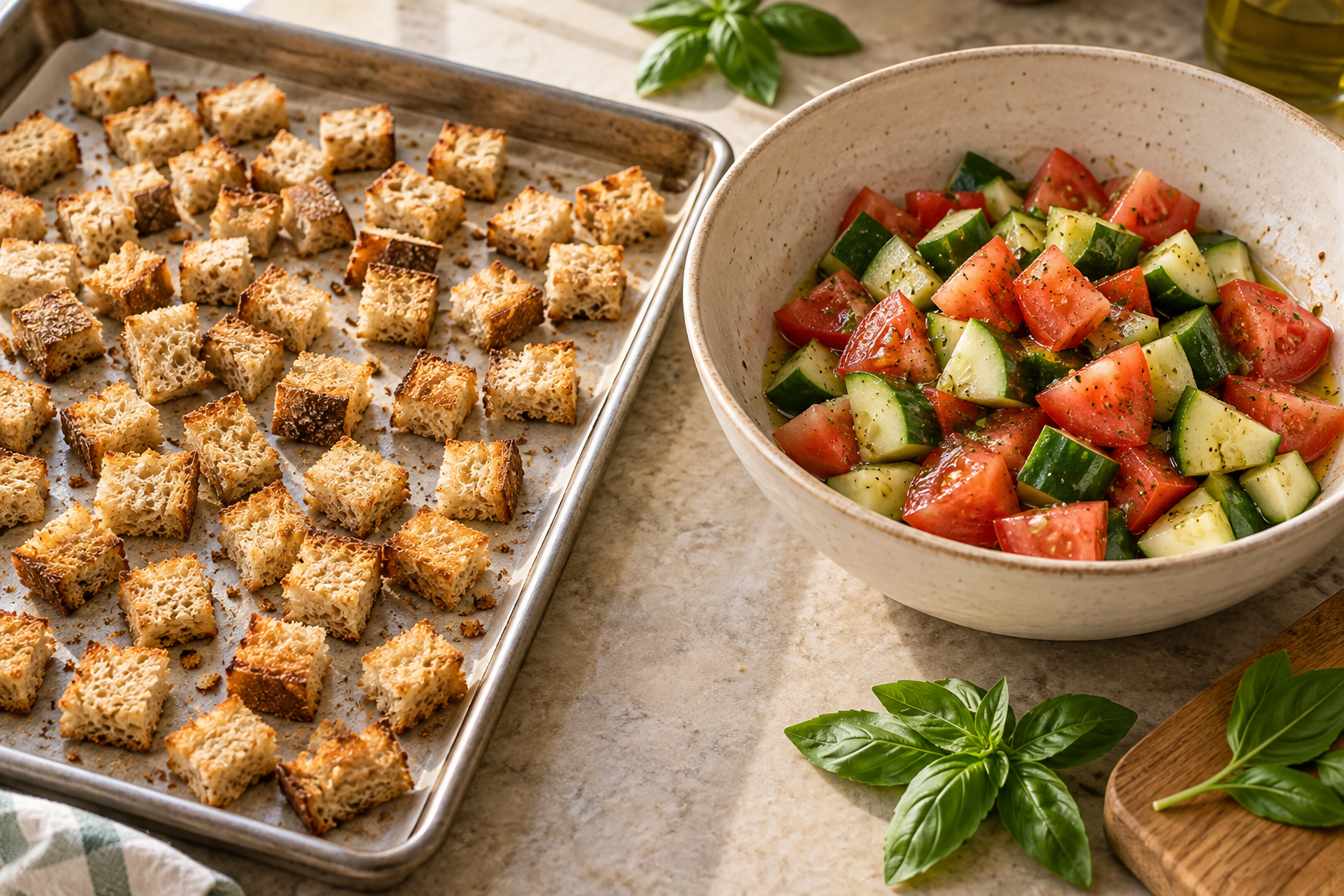
Heat the oven to 325°F (about 160°C). Toss the cubes with 1 tablespoon of the oil and spread them in one layer on a sheet pan. Bake for about 15–25 minutes, turning after 10 minutes and checking often toward the end. Small pieces may finish earlier. They should feel dry on the surface and lightly colored, without dark or bitter edges.
Cool the cubes uncovered for about 10 minutes. Taste one when safe to handle. If its center is damp or gummy, return the batch to the oven briefly and check again. A very soft, fiber-rich loaf may need more drying time. Our low-carb crouton guide covers the fuller drying method if your bread needs it.
3. Make the vegetable base
Put the chopped tomatoes and cucumber in a large bowl. Add the vinegar, remaining 2 tablespoons of oil, salt, and pepper. Fold gently and let the vegetables stand for about 10 minutes while the bread cools. Taste a piece of tomato. Add a little more vinegar only if it needs brightness; extra oil is not the answer to every dressing problem.
If a deep pool forms, spoon some into a small cup and reserve it. Start the salad with lightly coated vegetables. You can always add a spoonful of the reserved juices after the bread goes in, but you cannot easily pull the liquid back out of soaked cubes.
4. Add the bread close to serving
Fold in the cooled bread and basil. Let it sit for about 5 minutes, then try a cube. It should have a seasoned outside and a center you still enjoy. Add a little reserved tomato dressing if it seems too dry. Serve once the texture suits you; there is no need to hold delicate sandwich bread for the long soak used with some sturdier loaves.
Divide the vegetables and bread evenly among four bowls. If the bread floats on top and the last serving gets mostly dressing, the portions will not match the recipe’s intended balance. A broad spoon helps lift both vegetables and cubes from the bottom.
Choose the bread by flavor and structure
A plain white or mild wheat-style low-carb sandwich loaf is a sensible starting point. Check the current package, including serving size and allergens. Four thin slices and four thick slices are not the same amount of bread, which is why the approximate total weight is included.
Before committing the whole batch, toast a few cubes and put one into a spoonful of tomato dressing. Wait a few minutes and try it. If it falls apart immediately, keep most of the bread separate and scatter it over each serving instead. That gives you the same ingredients with a more reliable texture.
For a specific mild wheat option, our bettergoods Keto Wheat Bread opinion explains its tradeoffs. It is an option to assess, not a requirement for this recipe. Use a loaf that fits your taste, budget, ingredient needs, and usual carbohydrate-counting approach.
Carbohydrate math without a misleading salad total
The recipe provides one slice per side portion when divided evenly. The following is bread-only arithmetic, not the nutrition of the finished salad. If a slice’s label shows 13 g total carbohydrate and 10 g fiber, subtracting fiber gives 3 g calculated net carbohydrate. Four such slices contribute 52 g total carbohydrate and 40 g fiber to the whole recipe, or 3 g calculated net carbohydrate per side portion from bread.
Tomatoes, cucumber, vinegar, and any additions still contribute their own nutrients. Use the actual loaf and weighed ingredients in your usual calculator for a finished-recipe estimate. Do not log the bread-only number as the entire salad. A two-person lunch uses two slices per person, so the bread contribution doubles. Follow the counting method in your personal care plan rather than assuming a net-carb label predicts your response.
Make-ahead and safe storage
For the best texture, prepare the cooled toasted bread and dressed vegetables separately, then combine just before eating. Refrigerate the cut vegetables promptly in a covered container. Keep the bread separate and dry; use the same day for the simplest plan. Add torn basil near serving so it stays more attractive.
The FDA’s storage guidance calls for a refrigerator at or below 40°F (4°C) and no more than two hours out for foods requiring refrigeration, reduced to one hour above 90°F (32°C). Vinegar in this dressing is not a tested preservation process. Refrigerate assembled leftovers promptly; use them the next day for quality, recognizing that the bread will be softer. Discard food that has exceeded safe holding time.
If the first bowl needs adjusting
Too wet? Reserve more vegetable liquid next time and add the bread to individual bowls. Too hard? Give the cubes another minute or two with a spoonful of dressing. Too sharp? Check that the oil was measured and taste it with the tomatoes before adding more vinegar. If the bread itself tastes strongly sweet or bitter, change the loaf rather than covering it with more seasonings.
The base recipe has no added cheese, nuts, or eggs, but the bread may contain wheat, sesame, soy, milk, eggs, or nuts. Read the exact package; low-carb does not mean gluten-free or allergy-safe. For a gluten-free version, use a suitable verified loaf and avoid cross-contact.
Keep the remaining loaf for another meal rather than adding extra slices just to empty the bag. Our bread-freezing guide can help with the rest. Start with the four-slice batch, adjust when the bread joins the salad, and let the next bowl reflect the texture you actually liked.
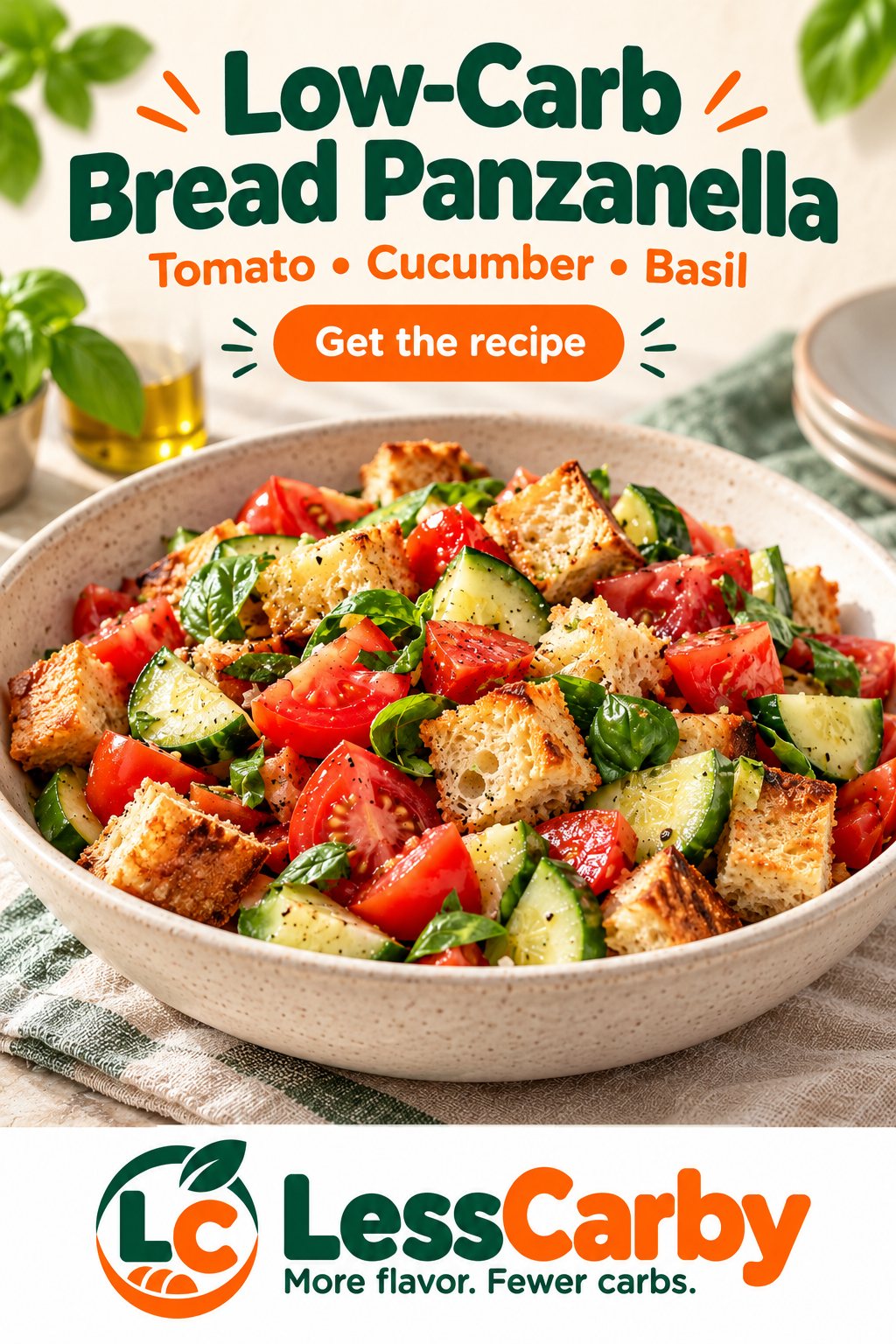
Save This Post on Pinterest
Keep these recipe reminders handy. Select either image to open its live Pinterest pin.
Plan Your Week with Our Free Meal Planner
Choose seven days of meals, adjust portions, and download your shopping list. No email signup needed.
Open the Free Planner →
