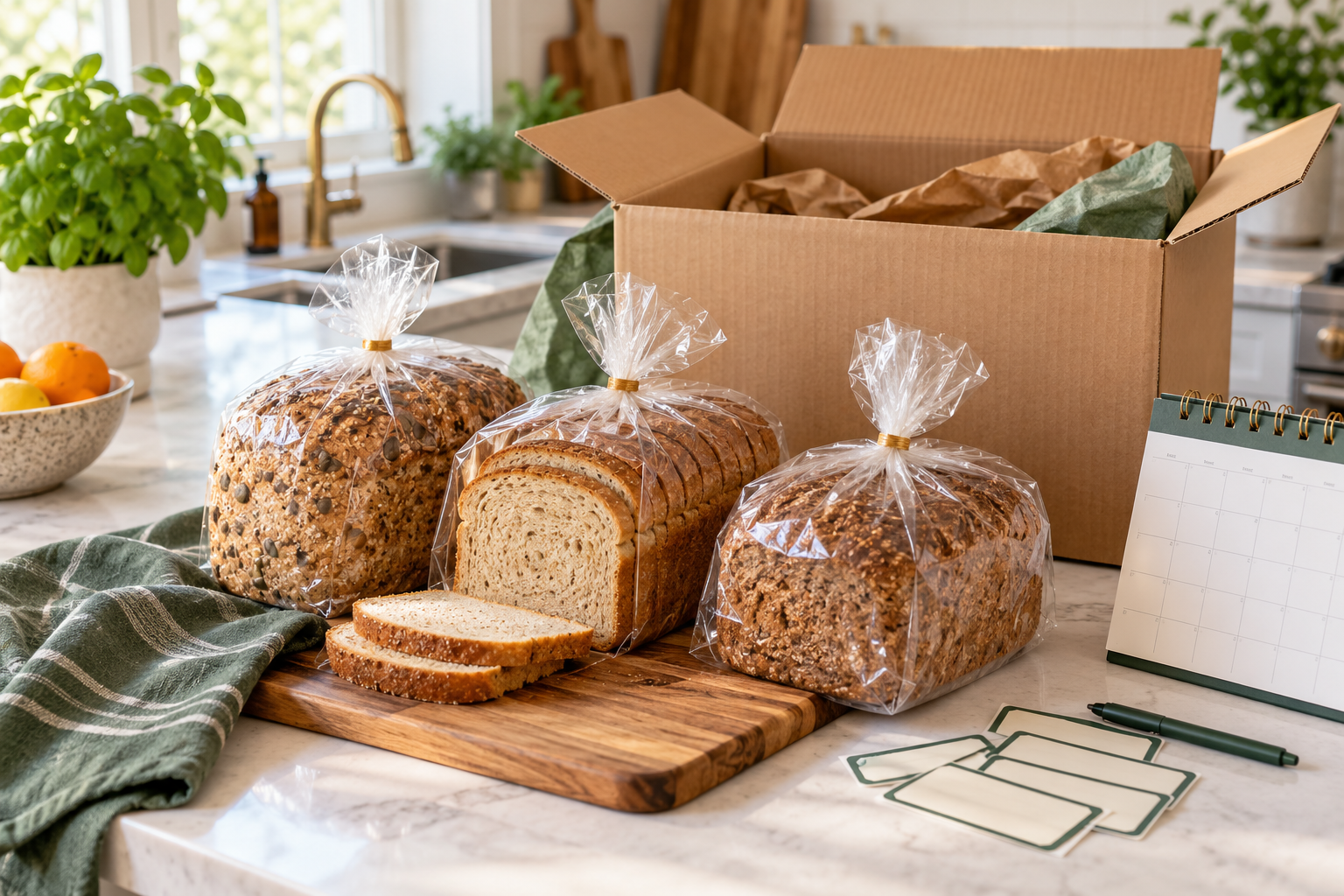
Short answer: a low-carb bread subscription makes sense when you already finish the same amount on a predictable schedule, the delivered cost is competitive, and you can pause or cancel without friction. It is a poor fit when you are still testing brands, your household use changes from week to week, or the shipment is larger than your freezer can handle.
The word “subscription” can describe several arrangements: a bread brand’s automatic shipment, a retailer’s repeat-delivery option, or a curated box containing several products. The details matter more than the label. Before enrolling, compare the bread, the portion you actually eat, the full delivered price, the shipment interval, and the cancellation terms.
LessCarby recommendation: treat recurring delivery as a convenience tool, not a commitment. Start with one ordinary order whenever possible. Subscribe only after the bread, package size, and cadence have already proved useful in your kitchen.
What to check before subscribing
1. Estimate how many loaves you really use
Begin with your normal routine, not the quantity promoted by the seller. Count how many slices your household uses in a week, then divide by the slices in one loaf. A person who uses two slices on five days needs about ten slices weekly. If a loaf contains fourteen slices, that is roughly three loaves every four weeks, not automatically four.
Include weeks when you eat out, travel, or rotate breakfast foods. A subscription can look efficient on paper and still create waste if the calculation assumes bread every day. If your use changes often, a manual reorder or retailer pickup may be easier than managing skips.
2. Compare the landed cost, not the advertised loaf price
The useful comparison is the total amount charged divided by the number of loaves you will keep and use:
Landed cost per usable loaf = (bread price + shipping + required fees − clear discounts) ÷ loaves you expect to use
Do not count a promotional discount as permanent unless the terms say it repeats. Also check whether the discount depends on a minimum shipment, membership, or prepaid plan. Compare the result with your realistic alternatives, including store pickup and one-time delivery. Our guide to store pickup versus bread delivery explains the convenience tradeoff, while the low-carb bread multipacks guide covers bulk-order math in more detail.
| Question | Good sign | Warning sign |
|---|---|---|
| Quantity | Matches your normal use | Requires extra loaves for the discount |
| Cadence | Easy to skip or move | Fixed interval with no buffer |
| Cost | Full delivered price is clear | Fees appear late at checkout |
| Cancellation | Simple instructions are visible | Terms are hard to find or understand |
3. Read the renewal and cancellation terms before checkout
The Federal Trade Commission advises consumers to identify exactly what they are agreeing to, how long a trial lasts, when charges begin, and how to cancel future shipments. It also recommends keeping cancellation records and monitoring later statements. Read the FTC’s current subscription and auto-renewal guidance before entering payment details.
Look for a cutoff date for skipping the next box, a minimum number of shipments, prepaid periods, return rules, and whether cancellation must be completed through a particular channel. Save the order confirmation and a screenshot or email showing the terms that applied when you enrolled.
4. Check whether the bread and label stay consistent
A recurring order only saves time if the product still fits your needs. Compare the exact loaf name, package size, slices per loaf, serving size, total carbohydrate, dietary fiber, protein, sodium, allergens, and ingredient list. The FDA notes that Nutrition Facts values are tied to the labeled serving, so two products are not fairly compared until their serving sizes are aligned. Its serving-size guide explains why the number at the top of the label controls the rest of the panel.
Do not assume a familiar box always contains the same formula. Read the package when each shipment arrives, especially if the appearance, loaf weight, slice count, or nutrition numbers change. For a practical refresher, use our guide to reading a bread label for net carbs.
5. Plan for delivery day and freezer space
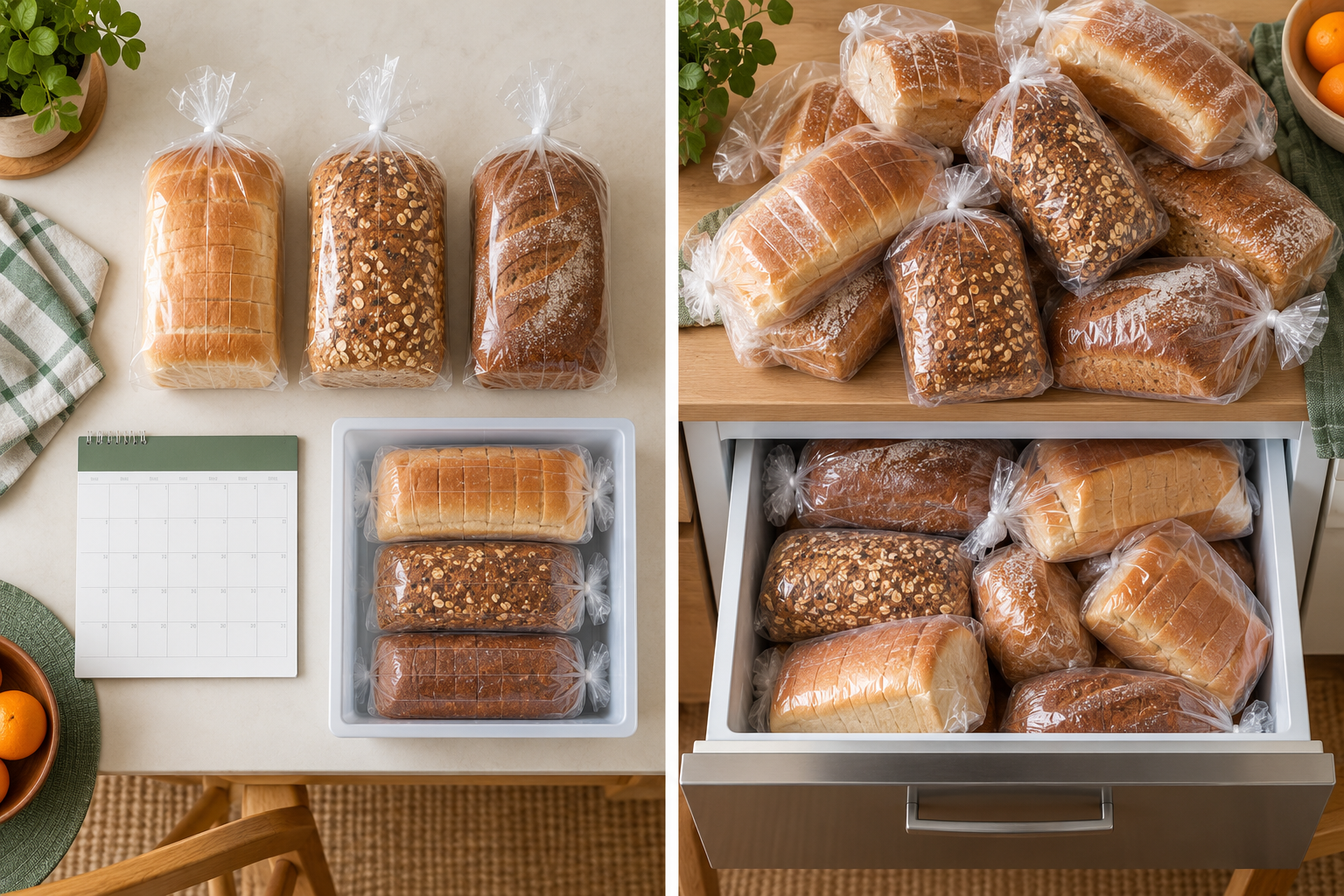
Multiple loaves need a storage plan before they arrive. USDA guidance says commercially baked breads and rolls generally keep their quality for about three months in the freezer. That is a quality estimate, not a promise that every specialty loaf will taste the same after thawing. Follow the package instructions when they are more specific.
Freeze only what you will not use soon, keep the original label with the bread, and protect the loaf from air. If you prefer taking out a few slices at a time, separate portions before freezing. Check the available shelf or freezer space honestly; a discount is not useful if the shipment crowds out other food or the bread develops freezer burn.
Choose a cadence with a safety margin
Do not schedule the next box for the exact day you expect to run out. Delivery timing can move, but ordering too early can create a growing backlog. A practical starting point is your measured usage interval plus a small buffer of several days. For example, if your household finishes three loaves in about four weeks, begin with a four- or five-week option rather than automatically choosing monthly delivery. Recheck after the first two cycles.
Services that let you move the next order, reduce the quantity, or skip without losing your account are more useful than plans built around a large headline discount. Put the change deadline on your calendar, not just the shipment date. That gives you time to look at what remains in the pantry and freezer before the seller processes another charge.
If a company changes the product, price, loaf count, or shipping terms, run the comparison again. A subscription that worked last month does not have to remain the best option. Convenience should continue earning its place in your routine.
When a subscription is likely worth it
- You already buy the same loaf repeatedly. The subscription removes a routine task instead of locking you into an experiment.
- Your household use is steady. The shipment interval closely matches how quickly you finish the bread.
- The delivered cost is genuinely competitive. Shipping, fees, and unused loaves do not erase the discount.
- You can adjust the schedule. Skipping, delaying, changing quantity, and canceling are clear and practical.
- The product is hard to find locally. Reliable delivery prevents repeated searches or long store trips.
- You have a workable storage routine. The extra loaves can be frozen, labeled, and rotated without waste.
When a one-time order is the better choice
- You have not tried the exact loaf yet.
- You switch brands often or buy based on current store availability.
- Your household use changes sharply from week to week.
- The first-order discount requires more bread than you normally finish.
- The seller does not clearly show the full cost, next charge date, skip deadline, or cancellation method.
- The bread’s package, formula, or nutrition information is difficult to verify.
A simple first-order test
If the service allows a one-time purchase, use it as a trial without enrolling. When the order arrives, record the delivery condition, loaf count, expiration or best-by information, slice count, and how quickly your household finishes it. Then calculate the real cost per used loaf.
If a subscription is the only ordering option, choose the smallest practical quantity and the longest useful interval. Put the next charge and skip deadline on your calendar immediately. After the first cycle, ask three questions: Did we finish the bread? Did the delivered cost beat our realistic alternative? Was changing or skipping the order straightforward?
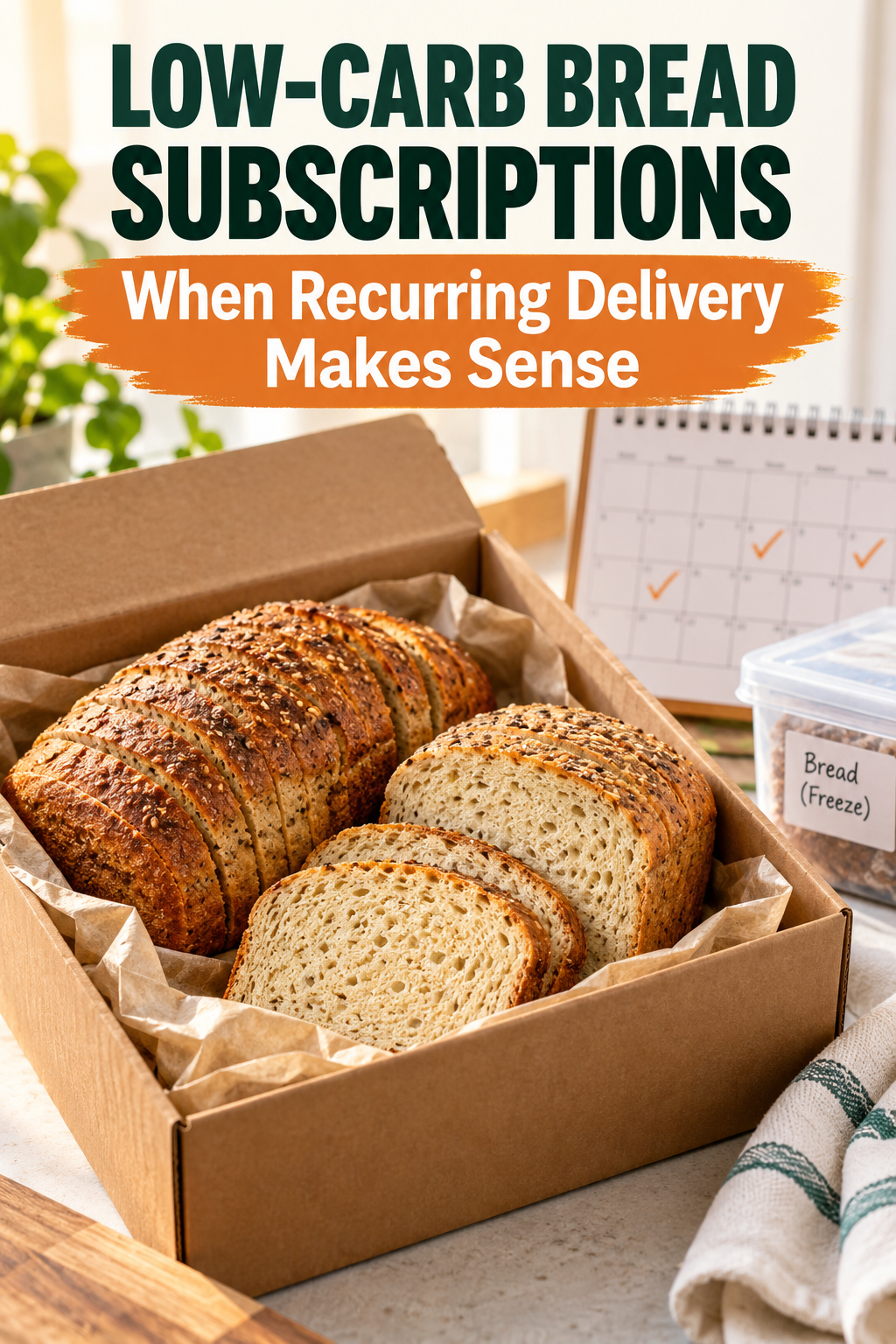
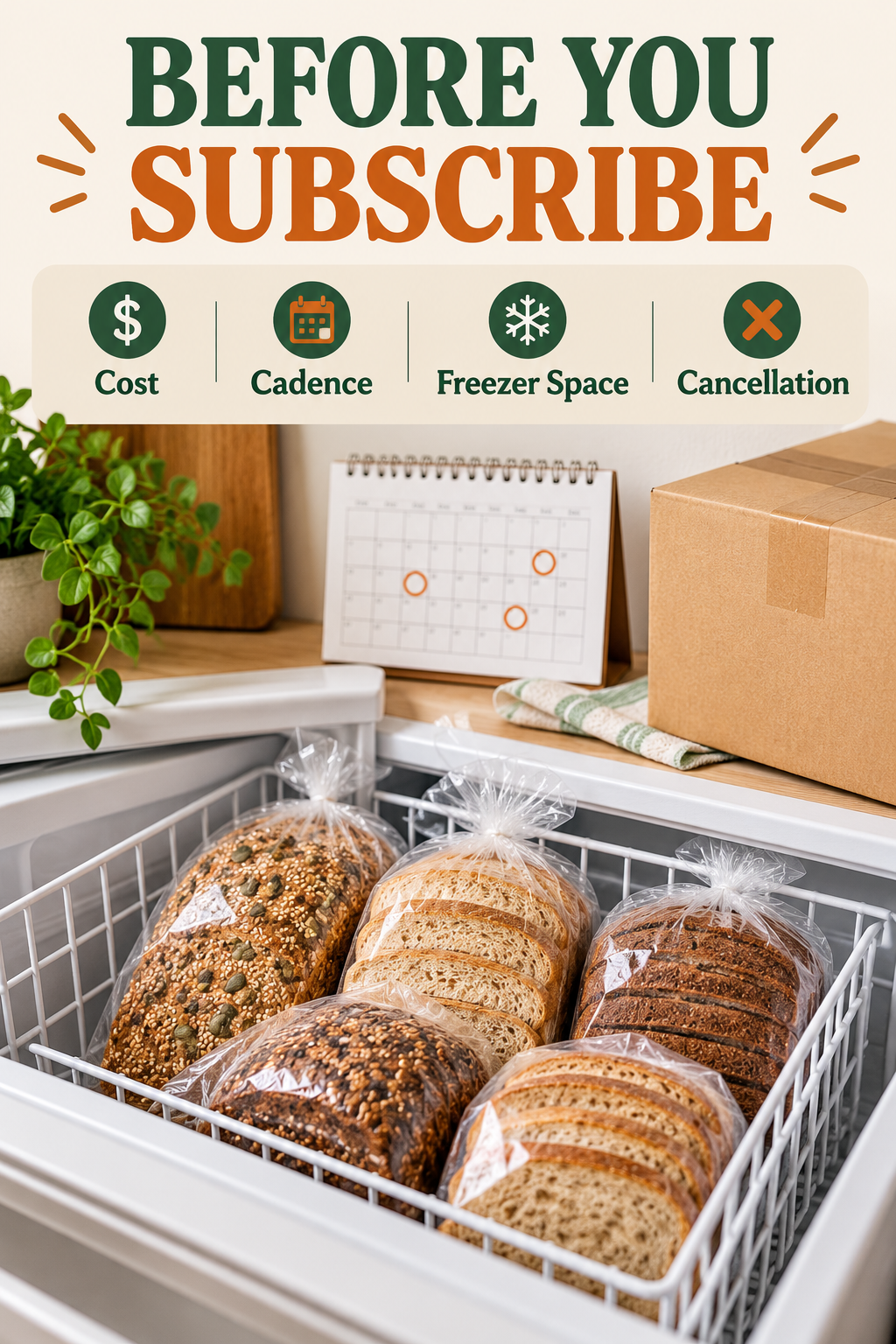
Save This Post on Pinterest
Keep this subscription checklist handy for the next time you compare recurring bread delivery.
Bottom line
A low-carb bread subscription is worthwhile when it matches an established habit, not when the discount is trying to create one. Confirm the exact product and serving information, calculate the full delivered cost, make sure the quantity fits your storage space, and understand the renewal controls before paying. If any of those pieces are unclear, place a one-time order or keep shopping manually until the choice becomes obvious.
Plan Your Week with Our Free Meal Planner
Choose seven days of meals, adjust portions, and download your shopping list. No email signup needed.
Open the Free Planner →
