\n
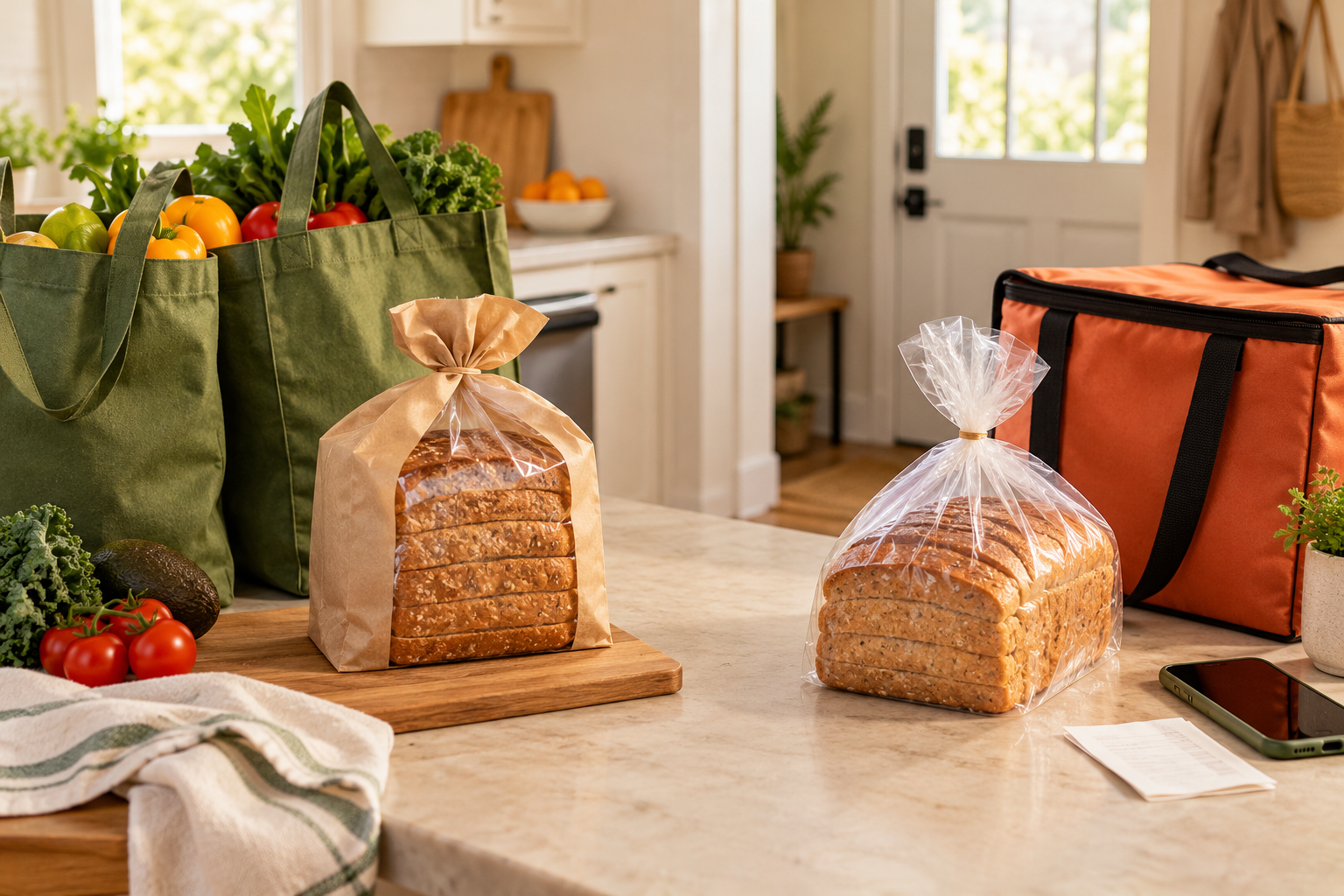
Store pickup is usually the better value for a small low-carb bread order you can collect during a normal errand. Delivery can win when the bread is hard to find locally, you are buying enough to spread the fees across several useful items, or the trip would cost more time and fuel than the checkout charges.
The shelf price alone does not answer the question. Compare the final checkout total, the number of loaves you will actually use, substitutions, travel, and how the bread will be stored when it arrives. A “free delivery” banner can still leave service fees, minimums, tips, or higher item prices. A “free pickup” order can still be poor value if you add products you did not need just to meet a minimum.
Quick comparison: pickup or delivery?
| Question | Pickup often wins when… | Delivery often wins when… |
|---|---|---|
| How much are you buying? | You need one or two loaves. | Several planned items spread the fees. |
| Is the exact loaf local? | The store shows it in stock nearby. | The variety is only available online or far away. |
| Can you combine the trip? | You already pass the store. | The trip would be separate or difficult. |
| Do substitutions matter? | You want to inspect the exact package before leaving. | You can reject substitutions and wait for another order. |
| Is the bread refrigerated or frozen? | You can take it straight home. | The seller uses appropriate cold packaging and someone can receive it. |
Start with the real delivered or collected cost
Use the checkout screen, not the search result or promotional banner. Write down:
- item total for the exact variety and package size;
- delivery, service, pickup, small-order, handling, and packaging fees;
- tip, when applicable;
- taxes and deposits;
- membership cost only if you would pay for it because of these orders;
- fuel, tolls, parking, and the value you place on a separate trip.
Instacart says its delivery fee varies by retailer, delivery window, and order total, and that service fees may still apply. It also notes that some retailers charge a pickup fee. Those details make the final checkout screen more reliable than assuming every pickup is free or every membership order has no added cost. See Instacart’s current fees and taxes guidance and pickup-order guidance.
Retailer rules vary. Walmart’s current U.S. help page, for example, lists free pickup on qualifying orders over its stated minimum and a fee below the minimum; it also lists a standard store-delivery charge for nonmembers. Check the current terms for your location because fees, eligibility, time slots, and promotions can change. The details are on Walmart’s site and app help page.
Calculate cost per loaf—and cost per usable loaf
A simple comparison is:
Cost per loaf = final order total attributable to the bread ÷ number of bread loaves.
If the order includes other groceries, do not assign the whole delivery fee to bread unless bread is the only reason for the order. One reasonable method is to compare the order total with and without the bread. The difference is the bread’s incremental cost.
Then ask how many loaves you will use before quality drops. A six-loaf case is not a bargain if two loaves are wasted. If you can freeze the extras correctly, a larger order may make sense. Our guide to freezing low-carb bread explains portioning, wrapping, and thawing.
\n
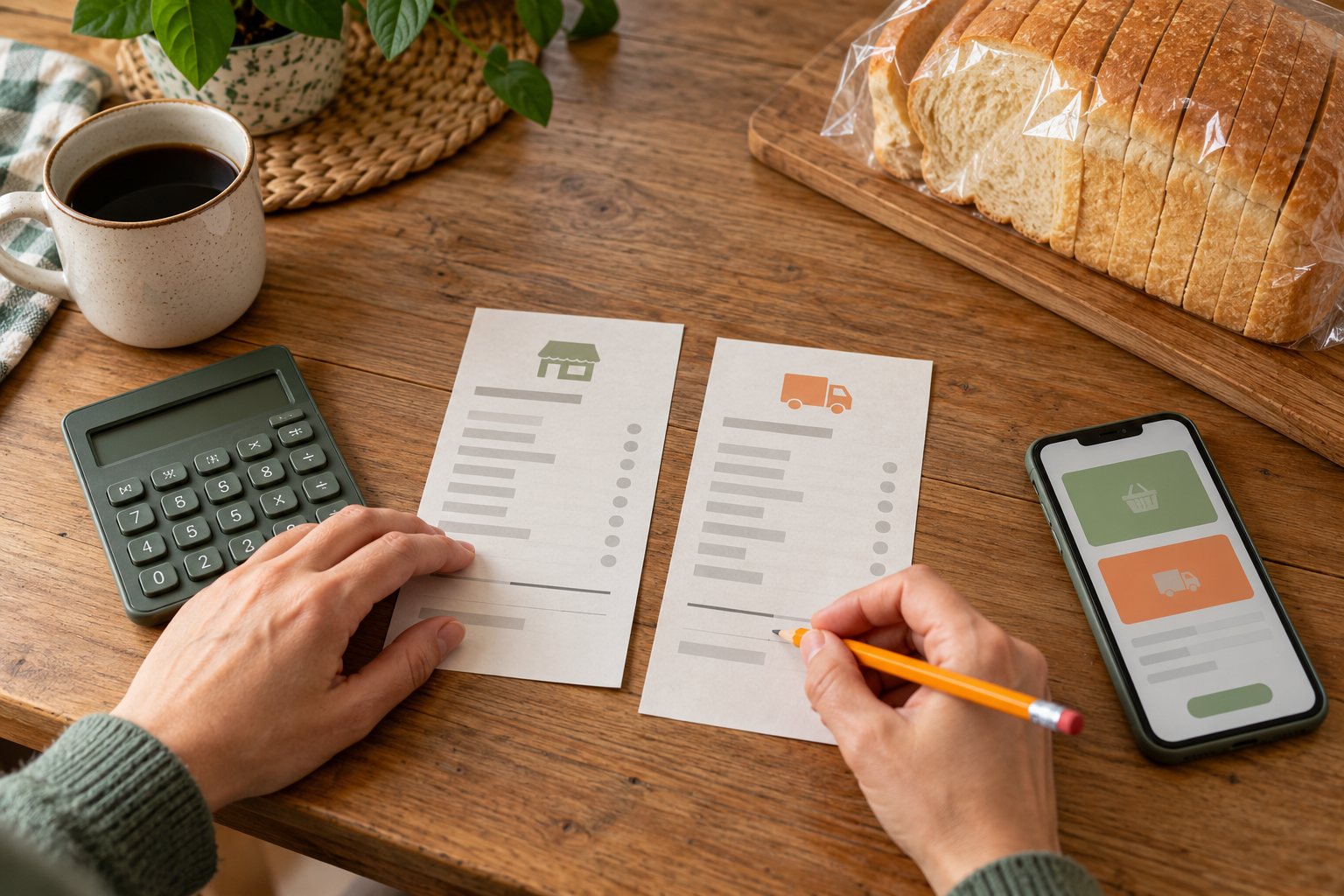
Use a two-cart test before ordering
- Build the pickup cart. Select the exact store, loaf, quantity, and time slot.
- Build the delivery cart. Use the same retailer, items, and quantities when possible.
- Open both final checkout summaries. Record every fee and the final total before placing either order.
- Check substitutions. Choose “no substitution” when a replacement could change the carb count, allergens, package size, or price.
- Add travel cost only to pickup. Count a dedicated round trip, not a trip you were already making.
- Compare the number of useful loaves. Include freezer space and realistic use.
Take a screenshot or note the totals because fees and availability can change between shopping sessions. Do not place both orders; this is only a comparison method.
Availability and substitutions can change the result
Low-carb bread formulas and package sizes can be easy to confuse. A substitute may have a different serving size, total carbohydrate, fiber, allergens, or storage instructions. Check the exact product name and current label before accepting it.
Walmart’s substitution guidance says customers can allow or disallow substitutions and may accept, decline, or return a substitute, depending on the order. Other retailers use different rules. Review the controls before checkout rather than assuming the shopper will choose a nutritionally similar loaf. Walmart explains its process on its substitutions page.
If the nutrition label is your priority, compare the stated serving and total carbohydrate rather than the marketing on the front. Our net-carb label guide explains how to check the numbers without guessing.
Freshness, damaged packages, and cold products
For shelf-stable bread, inspect the closure, package, and date information as soon as you receive it. Report a torn bag, broken seal, crushed loaf, or wrong product through the retailer’s stated process. Pickup gives you a chance to check the package before driving away, although curbside procedures vary.
Some low-carb breads are sold refrigerated or frozen. USDA guidance says perishable food should arrive cold or frozen as expected and should not spend more than two hours in the 40°F to 140°F “danger zone,” or one hour when the air temperature is above 90°F. FDA guidance similarly recommends refrigerating or freezing perishables within two hours of purchase. See USDA’s mail-order food safety guidance and the FDA’s safe food handling page.
These temperature rules matter only when the product requires cold storage. Follow the package directions for the exact bread. Do not assume every loaf belongs in the refrigerator or freezer.
Three realistic comparisons
One loaf during a normal grocery trip
Pickup usually wins. The order is small, the store visit is already planned, and delivery fees are hard to spread across the purchase. Confirm the loaf is actually in stock before leaving.
Four loaves from a brand not sold nearby
Delivery may win if the loaves will be used or frozen and the final cost per loaf remains reasonable. Compare that with the fuel and time for a long drive. For bigger orders, use our multipack buying guide to check waste and freezer capacity.
A mixed grocery order you already need
Delivery can be competitive because the bread is only one item in a planned basket. Still compare the final total, tip, service fee, substitutions, and membership cost. Pickup may remain better if the retailer’s delivery pricing is substantially higher for your address.
Our practical verdict
Choose pickup when the bread is local, the order is small, and the trip fits your schedule. Choose delivery when it solves a real availability or travel problem and the final checkout total still works after every fee.
Neither method is automatically cheaper. Run the two-cart test with the exact loaf and location. Protect the value by refusing unsuitable substitutions, checking the package promptly, and buying only the quantity you can use or freeze.
Save This Post on Pinterest
Keep this pickup-versus-delivery checklist handy. Choose either graphic below and save it with this article.
Frequently asked questions
Is grocery pickup always free?
No. Some retailers waive pickup fees above a minimum, while others may charge a pickup or small-order fee. Check the final checkout page for your store and location.
Does free delivery mean the order has no fees?
Not necessarily. Service fees, minimums, tips, handling charges, or membership costs may still apply. Read the full total before placing the order.
Should I accept a different low-carb bread as a substitute?
Only after checking the exact label, package size, allergens, and price. “Low carb” does not guarantee that two loaves have similar nutrition or ingredients.
How many loaves should I order?
Order the amount you can realistically use while quality is good. Include freezer space and storage instructions in the calculation rather than choosing the lowest advertised cost per loaf.
Policies and retailer examples reviewed October 25, 2026. Fees, minimums, availability, and substitution rules can change by retailer and location.
Plan Your Week with Our Free Meal Planner
Choose seven days of meals, adjust portions, and download your shopping list. No email signup needed.
Open the Free Planner →
