

Soluble fiber mixes with water and can form a gel, while insoluble fiber adds bulk and helps material move through the digestive tract. Low-carb bread may contain either type—or both—but the Nutrition Facts panel usually lists only total dietary fiber. The ingredient list often gives the better clue.
That distinction matters because two loaves with the same fiber number may feel different when you eat them. One might rely on psyllium or inulin; another may use cellulose, oat hull fiber, wheat bran, or a blend. The total grams help with label math, but they do not tell the whole story about texture, digestion, or tolerance.
The short answer
Neither type is automatically “better.” Soluble and insoluble fibers behave differently, and a varied diet can provide both. For low-carb bread, check the total fiber per serving, read the ingredient list, and pay attention to how the loaf works for you.
Soluble vs. insoluble fiber at a glance
| Fiber type | What it does with water | Common ingredient clues | What you may notice in bread |
|---|---|---|---|
| Soluble | Dissolves or disperses; some forms become gel-like | Psyllium, beta-glucan, inulin, chicory-root fiber | Moisture retention, softness, or a slightly gummy texture |
| Insoluble | Does not dissolve in water; holds structure and adds bulk | Cellulose, wheat bran, oat hull fiber | A drier crumb, more structure, or a coarse texture |
These are useful categories, not perfect predictions. Fibers also differ in viscosity and fermentability, so two soluble fibers can behave differently in the body and in a loaf.
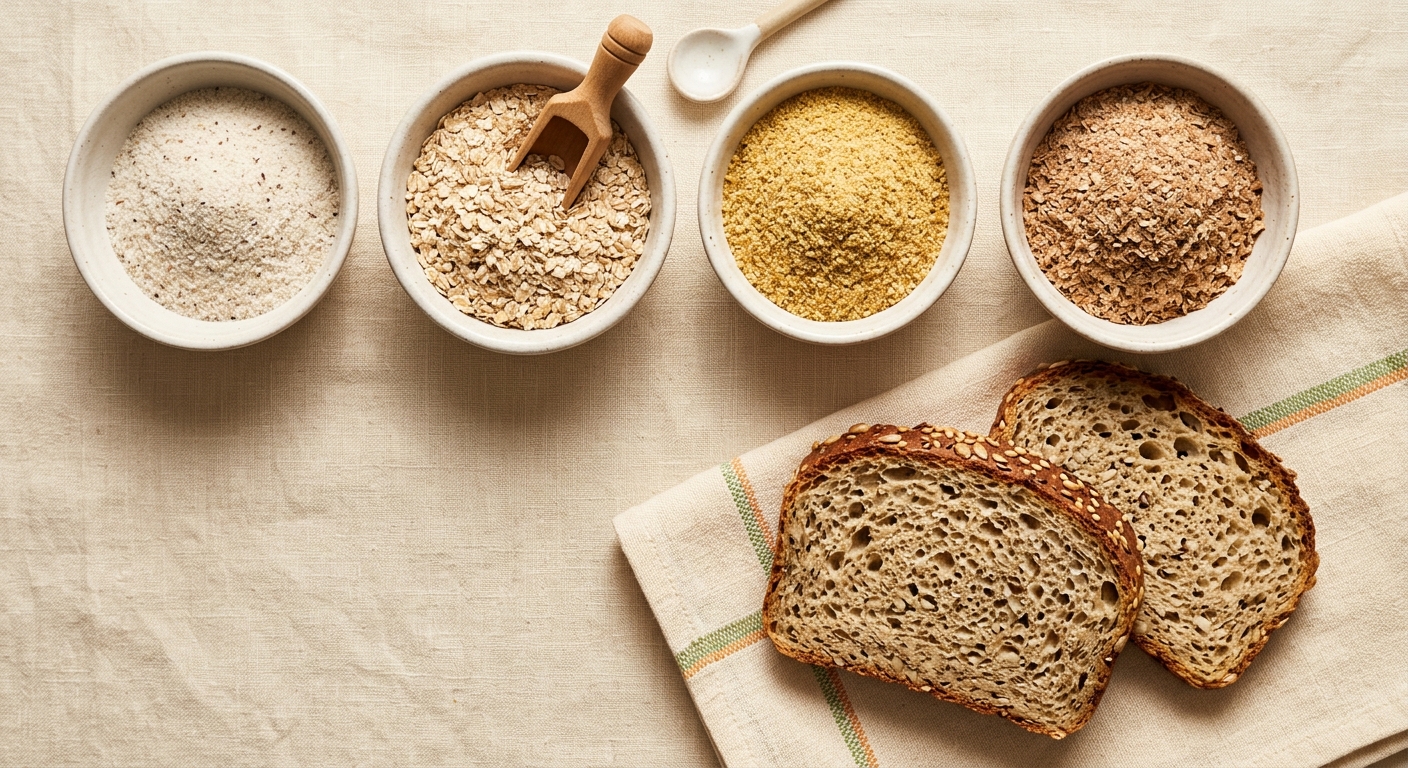
What is soluble fiber?
Soluble fiber attracts water and may thicken into a gel during digestion. According to MedlinePlus, sources include oat bran, barley, beans, lentils, some fruits and vegetables, nuts, seeds, and psyllium.
In bread making, gel-forming fibers can help trap water and support a flexible crumb. That is useful in low-carb formulas because removing much of the ordinary flour also removes starches that normally help bread hold moisture and shape.
Soluble does not mean that every fiber behaves identically. Psyllium is strongly water-binding. Inulin and chicory-root fiber are more readily fermented by gut bacteria and can cause gas or bloating for some people, especially in larger amounts. Beta-glucan, found in oats and barley, has its own viscosity and food-function properties.
What is insoluble fiber?
Insoluble fiber does not dissolve in water. It adds bulk to stool and can help food move through the stomach and intestines, as the same MedlinePlus explanation notes. Wheat bran, many vegetables, and whole grains are familiar food sources.
Low-carb bread makers may use cellulose, wheat bran, or oat hull fiber to add bulk without adding much digestible carbohydrate. These ingredients can also provide structure, but too much may produce a dry, rough, or crumbly slice. Manufacturers often blend fiber with wheat protein, resistant starch, gums, fats, and emulsifiers to balance those effects.
“Oat fiber” deserves special attention. It is commonly made from the outer hull and is not the same as oat flour or oat bran. Oat bran naturally contains beta-glucan and other components, while isolated oat hull fiber is largely insoluble. The ingredient name matters.
Which fiber ingredients appear in low-carb bread?
The front of a package may advertise a high fiber count without explaining where it comes from. Scan the ingredient list for these common clues:
- Psyllium husk: A water-binding fiber used to improve flexibility and hold moisture, especially in gluten-free or grain-free recipes.
- Inulin or chicory-root fiber: Soluble, fermentable fibers that can add body and mild sweetness. Some people tolerate them well; others notice gas or bloating.
- Cellulose: An insoluble plant fiber used for bulk and structure.
- Wheat bran: Mostly insoluble fiber from the outer layer of the wheat kernel. It can add a coarser texture.
- Oat fiber: Usually an insoluble ingredient made from oat hulls; it is different from carbohydrate-containing oat flour.
- Resistant starch: Starch that resists digestion in the small intestine. It is often discussed alongside fiber, but its behavior cannot be predicted from the soluble-versus-insoluble labels alone.
For a broader ingredient-by-ingredient explanation, see Low-Carb Bread Ingredients Explained.
Why the Nutrition Facts label rarely shows the split
U.S. labels must declare total dietary fiber, but separate soluble and insoluble amounts are generally voluntary. Under 21 CFR 101.9, a manufacturer may list either subtype and must declare it when making a claim specifically about that subtype.
That is why a bread label might show “11 g dietary fiber” without saying how many grams are soluble. The ingredient list can suggest the likely sources, but it cannot tell you the exact ratio. A proprietary blend also makes precise estimates impossible.
The FDA defines dietary fiber for labeling as certain nondigestible soluble and insoluble carbohydrates, plus lignin, that are intrinsic and intact in plants—or isolated or synthetic nondigestible carbohydrates the agency recognizes as having beneficial physiological effects. The FDA dietary-fiber Q&A explains which added fibers can count toward the declared number.
Does fiber type change net-carb math?
Not on a standard U.S. label calculation. The common net-carb formula subtracts the listed dietary fiber from total carbohydrate; it does not ask you to separate soluble from insoluble fiber. Our guide to why fiber is subtracted from carbs explains both the formula and its limits.
Remember that “net carbs” is not a separately regulated line on the Nutrition Facts panel. It is a calculation used by shoppers and food companies. Serving size, sugar alcohols, ingredient type, and individual response still matter.
Checking a bread label?
Enter the numbers from the exact serving you plan to eat.
How to choose a fiber-rich low-carb bread
- Confirm the serving size. Compare one slice with one slice. Some labels use two slices per serving.
- Read total carbohydrate and dietary fiber together. Use the nutrition-label guide if sugar alcohols or allulose are also present.
- Check the first several ingredients. They reveal whether the loaf relies on wheat protein, resistant starch, psyllium, cellulose, seed meals, or a combination.
- Look beyond fiber. Sodium, protein, allergens, slice size, and the rest of your meal can be just as important.
- Judge tolerance gradually. A high number is not automatically better if a normal serving leaves you uncomfortable.
The FDA sets the Daily Value for dietary fiber at 28 grams for a 2,000-calorie diet. Its Nutrition Facts guidance describes 20% Daily Value or more per serving as high. Some low-carb breads reach that threshold in a single slice, so two sandwiches can add fiber quickly.
Increase high-fiber bread gradually
A sudden jump in fiber may cause gas, bloating, or changes in bowel habits. The National Institute of Diabetes and Digestive and Kidney Diseases advises people with IBS to add fiber gradually; it gives 2 to 3 grams per day as one way to reduce gas and bloating. NIDDK also recommends adequate fluids when increasing fiber.
You do not need to force that exact pace if it does not fit your situation. Start with a normal serving, keep the rest of the meal familiar, and note how you feel. Anyone managing IBS, gastroparesis, bowel narrowing, or another digestive condition should follow individualized advice from a clinician or registered dietitian.
Frequently asked questions
Is psyllium soluble or insoluble fiber?
Psyllium contains both, but its gel-forming soluble fraction is responsible for much of its water-binding behavior. In low-carb bread, it can improve moisture retention and flexibility.
Is oat fiber soluble?
Commercial oat fiber is usually made from oat hulls and is largely insoluble. Oat bran is different and contains soluble beta-glucan. Do not assume “oat” ingredients are interchangeable.
Which fiber is better for constipation?
Both total fiber and fluid intake can matter, but the right type varies by person and health condition. Increasing fiber too quickly can worsen symptoms. Persistent constipation, pain, vomiting, blood in the stool, or unexplained weight loss warrants medical advice.
Can I tell the fiber type from the Nutrition Facts panel?
Only when the manufacturer voluntarily lists soluble or insoluble fiber, or makes a claim that requires the subtype to be declared. Otherwise, use the ingredient list for clues rather than assuming an exact ratio.
The practical takeaway
Use soluble and insoluble fiber as a way to understand a loaf, not as a contest with one winner. Soluble fibers tend to hold water; insoluble fibers add bulk and structure. For a low-carb bread purchase, combine the total fiber number with the ingredient list, serving size, and your own tolerance. That gives you a more useful answer than the front-of-package carb claim alone.
Save This Post on Pinterest
This article provides general nutrition information, not individualized medical advice. Product formulas and labels can change, so verify the package you are using.
Plan Your Week with Our Free Meal Planner
Choose seven days of meals, adjust portions, and download your shopping list. No email signup needed.
Open the Free Planner →
