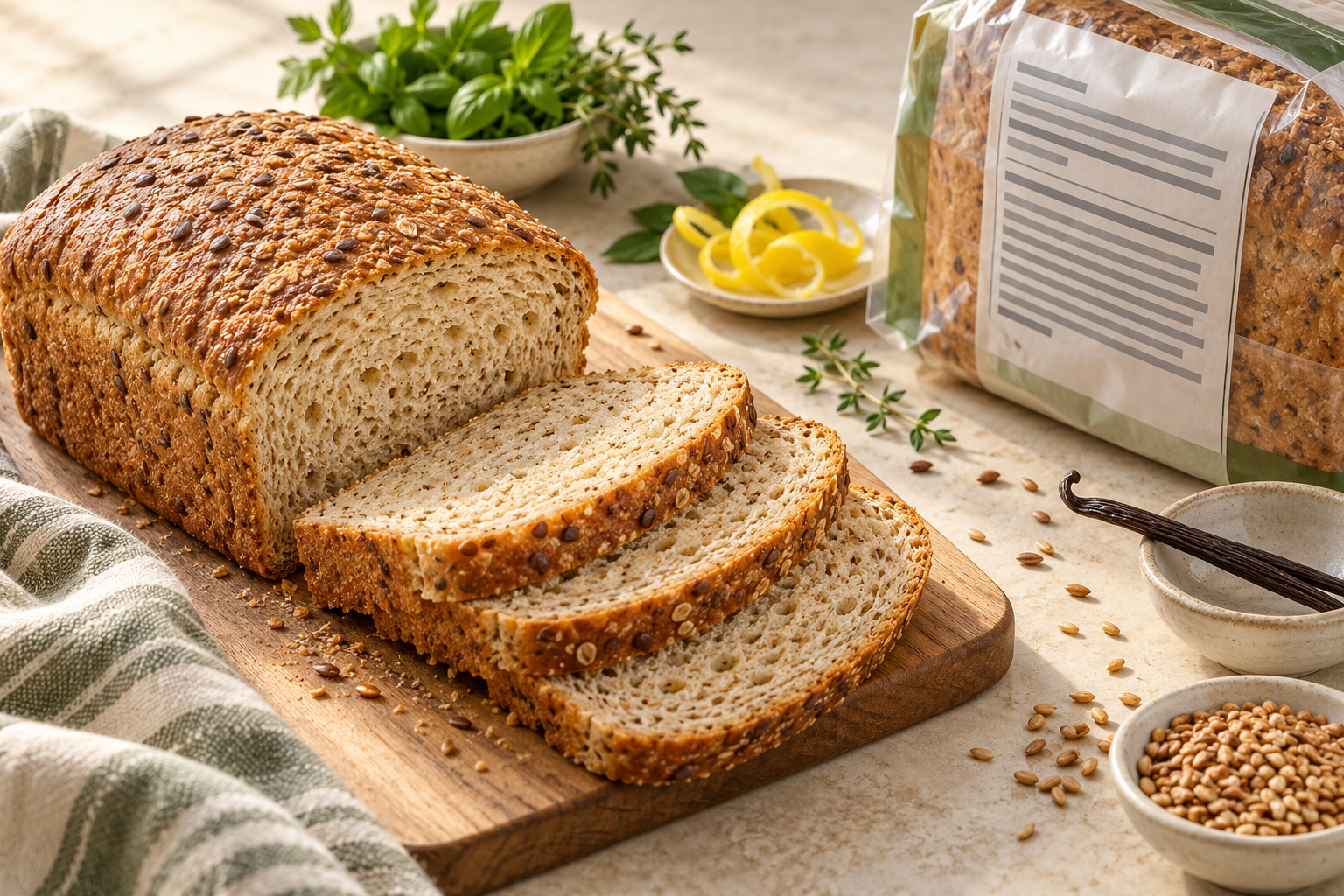
“Natural flavors” is a regulated ingredient-label category, not a grade for health, quality, or carbohydrate content. On a low-carb bread label, the phrase tells you that flavoring ingredients came from sources covered by the federal definition and that their main job is flavor. It does not tell you the exact recipe, whether the bread is minimally processed, or whether it fits every allergy or dietary preference.
The practical approach is simple: read “natural flavors” in context. Check the full ingredient list, the Nutrition Facts panel for your serving, and the allergen declaration. If a specific source matters to you and the package does not identify it, contact the manufacturer before buying.
What “natural flavor” means on a U.S. food label
Federal labeling rules define natural flavor broadly. The category can include flavoring substances derived from spices, fruit, vegetables, edible yeast, herbs, plant materials, meat, seafood, poultry, eggs, dairy products, or fermentation products. The significant function must be flavoring rather than nutrition. You can read the full definition in 21 CFR 101.22.
That definition explains why the phrase can cover more than a home cook might expect. “Natural” describes the qualifying source and use of the flavoring under the rule. It does not mean the entire bread is natural, organic, unprocessed, plant-based, or nutritionally superior.
It also does not require the label to name every flavoring component separately. The phrase is useful as a category, but it is not a complete flavor formula.
What the label tells you—and what it does not
| You can reasonably conclude | You cannot conclude from the phrase alone |
|---|---|
| A flavoring covered by the federal category is present. | The exact source or complete formula. |
| Its significant function is flavor rather than nutrition. | That the whole loaf is minimally processed or organic. |
| Major allergens still have labeling requirements. | That it is vegan, vegetarian, gluten-free, or safe for every sensitivity. |
| You should use the Nutrition Facts panel for carbohydrate numbers. | How many carbs the flavor contributes by itself. |
Why a low-carb bread might use natural flavors
Low-carb breads often combine fibers, proteins, seeds, sweeteners, fats, and leavening ingredients in ways that differ from conventional sandwich bread. A flavoring may be used to round out aroma, add a familiar bread note, or balance another ingredient’s taste. The label usually does not identify which of those jobs applies to a particular loaf.
Do not turn that possibility into a product claim. Unless a manufacturer explains the purpose, the ingredient list only confirms that flavoring is present. It does not prove that the bread would taste unpleasant without it, and it does not tell you whether you will enjoy the result.
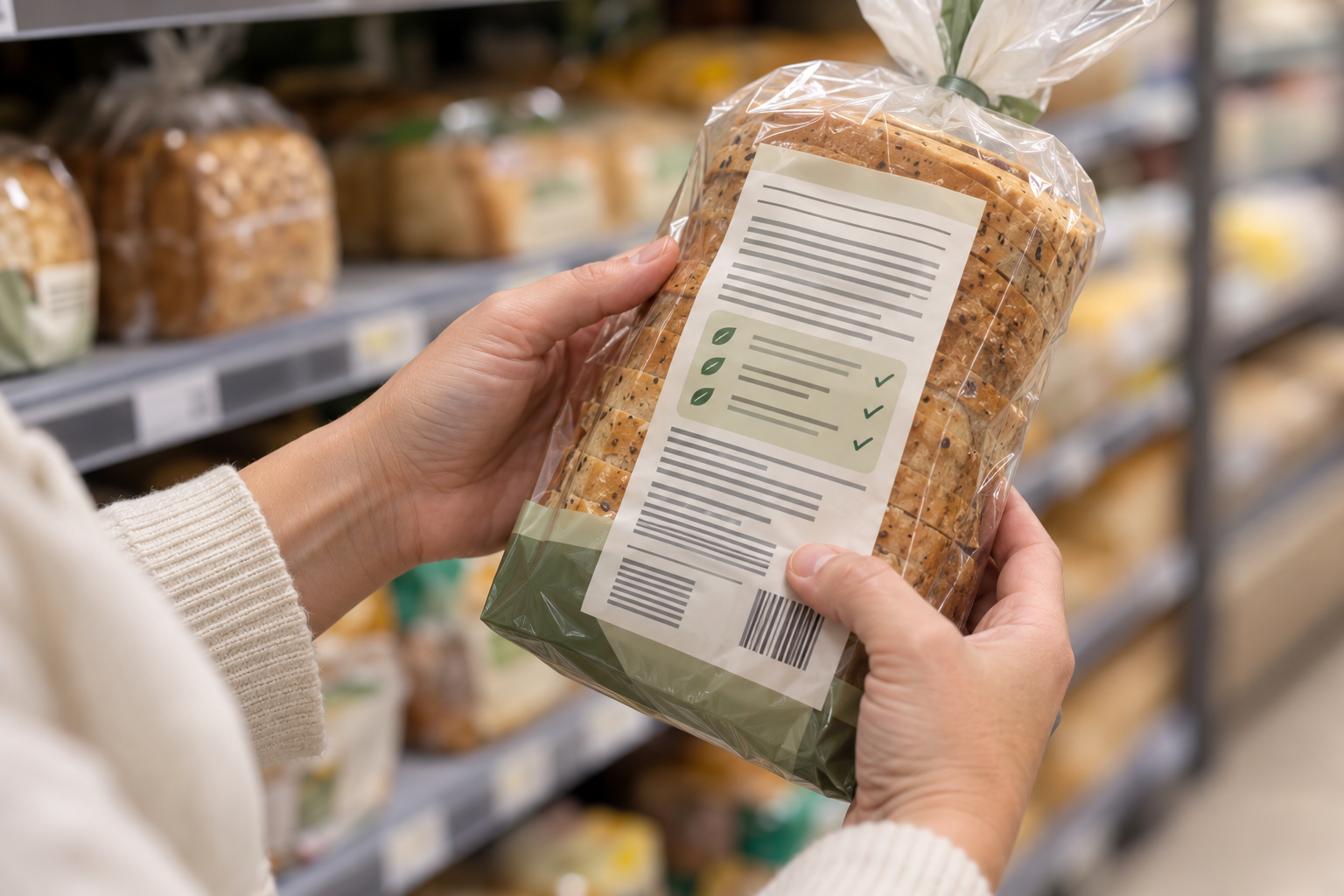
The phrase also should not outweigh the rest of the label. If you are comparing two loaves, serving size, total carbohydrate, fiber, protein, sodium, allergens, and the ingredients that matter to you are more useful than treating one line as an automatic pass or fail.
Does “natural flavors” change the carb count?
The ingredient line does not provide a separate carbohydrate amount for natural flavors. Use the Total Carbohydrate value in the Nutrition Facts panel for the stated serving. Then adjust that number to the number of slices you plan to eat.
For example, if a label lists 10 grams of total carbohydrate per slice, a two-slice sandwich starts with 20 grams from the bread. The presence of “natural flavors” does not give you a reliable reason to add or subtract a separate number.
If the package advertises net carbs, check how the manufacturer calculates them instead of guessing from the flavor line. Our guide to reading a Nutrition Facts label for net carbs walks through serving size, total carbohydrate, fiber, and sugar alcohols. You can also use the LessCarby net-carb calculator for label math. Those tools explain the numbers; they do not predict an individual glucose response.
Allergies: read beyond the flavor line
If a flavoring contains a major food allergen, federal law requires the food source to be declared. The FDA explains that major allergens may appear in parentheses after an ingredient or in a nearby “Contains” statement. A natural flavor containing peanut protein, for example, cannot hide the required peanut declaration behind the generic phrase. The FDA’s consumer allergen-label guide gives examples.
Still, read the entire ingredient list every time you buy a product. Formulas can change, and not every food sensitivity is one of the nine major allergens. Advisory statements such as “may contain” or “made in a facility” address possible cross-contact and are different from a “Contains” statement for ingredients.
If you have a serious allergy and the package does not answer your question, contact the manufacturer using the information on the label. Ask about the exact variety and current package, not just the brand name. When the answer remains unclear, choose another bread.
Natural flavor does not automatically mean vegan or gluten-free
The federal definition includes both plant and animal sources. That means “natural flavors” alone cannot confirm a vegan or vegetarian product. Look for a reliable certification or a clear manufacturer statement, and ask the company when the source matters.
The same caution applies to gluten. A low-carb claim is not a gluten-free claim, and many low-carb breads deliberately use wheat protein or wheat gluten for structure. Check the ingredient list, allergen declaration, and a gluten-free label when medically necessary. Do not use the word “natural” as a shortcut.
A five-step label check at the store
- Confirm the exact variety. Similar packages from one brand can use different formulas.
- Read the serving size. Note both slices and grams.
- Check total carbohydrate and fiber. Compare the amount you will actually eat.
- Read ingredients and allergens. Treat “natural flavors” as one part of the formula, not a verdict.
- Decide whether the missing detail matters. If you need the source for an allergy, religious practice, or plant-based diet, ask the manufacturer.
For other unfamiliar terms, our low-carb bread ingredient glossary explains common fibers, proteins, sweeteners, preservatives, and dough helpers.
Questions worth asking the manufacturer
Keep your question narrow so the company can answer it accurately:
- Are the natural flavors in this exact variety derived only from plant sources?
- Does the flavor contain or come from an ingredient I need to avoid?
- Has the formula changed from the package shown on your website?
- Where can I find the current ingredient and allergen statement for this size?
A customer-service representative may not disclose a proprietary formula, but the company can often answer a source or allergen question. Save the package name, UPC, lot code, and best-by date if the issue is important.
Our practical verdict
Do not reject or approve a low-carb bread solely because it lists natural flavors. The phrase is too broad to serve as a nutrition score. Use it as a prompt to read the rest of the label. For most shoppers, serving size, carbohydrate information, allergens, and the overall ingredient list deserve more weight.
If you avoid a specific source, need a vegan product, or manage a serious allergy, the unanswered detail may be important enough to contact the manufacturer. Otherwise, compare the bread on the same practical points you use for any loaf: the portion you eat, the numbers on the current package, ingredients you tolerate, availability, and whether the bread works for the meal you want to make.
Frequently asked questions
Are natural flavors the same as artificial flavors?
No. Federal rules define the categories separately. The distinction is based on the flavoring source and the applicable labeling definition, not a promise that one finished bread is healthier than another.
Can natural flavors contain a major allergen?
They can be derived from sources that include major allergens, but required major-allergen food sources must be declared on the label. Read both the ingredient list and any “Contains” statement.
Can I calculate net carbs from the ingredient list?
No. Start with the Nutrition Facts panel and the serving you will eat. The ingredient list helps you identify what is present, but it does not give the gram amounts needed for a net-carb calculation.
Does “natural flavors” mean the bread is plant-based?
No. The definition includes plant and animal sources. Look for a clear vegan statement or ask the manufacturer when that distinction matters.
Save This Post on Pinterest
Keep this label-reading guide handy for your next bread comparison. Select either graphic to save its live pin.
Information reviewed October 24, 2026. Ingredient formulas and labels can change, so check the package you are buying.
Plan Your Week with Our Free Meal Planner
Choose seven days of meals, adjust portions, and download your shopping list. No email signup needed.
Open the Free Planner →
